Double eyelid revision surgery is performed not only because of dissatisfaction with the shape or size of the line, but many people also visit the clinic to correct uneven eyes.
The asymmetry of the double eyelids can have various causes and may not simply be due to a difference in the designed height of the fold. Therefore, accurately identifying the cause of the uneven eyes makes it easier to plan the surgery.
Several years ago, the patient underwent double eyelid surgery at another hospital and says they spent a great deal of time on eyelid tape and makeup because of the asymmetry.
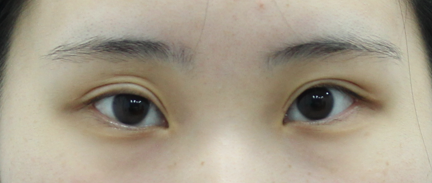
Preoperative left-right asymmetry
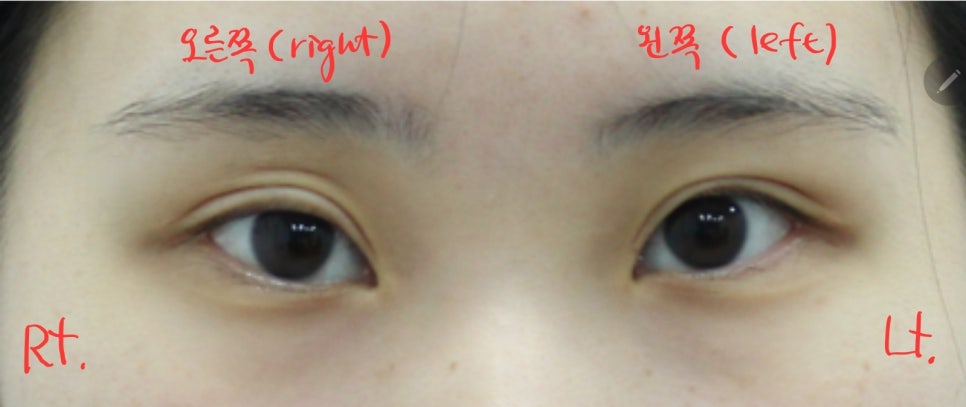
Left-right comparison before surgery
The right and left sides were distinguished from the patient's perspective, not from the computer screen.
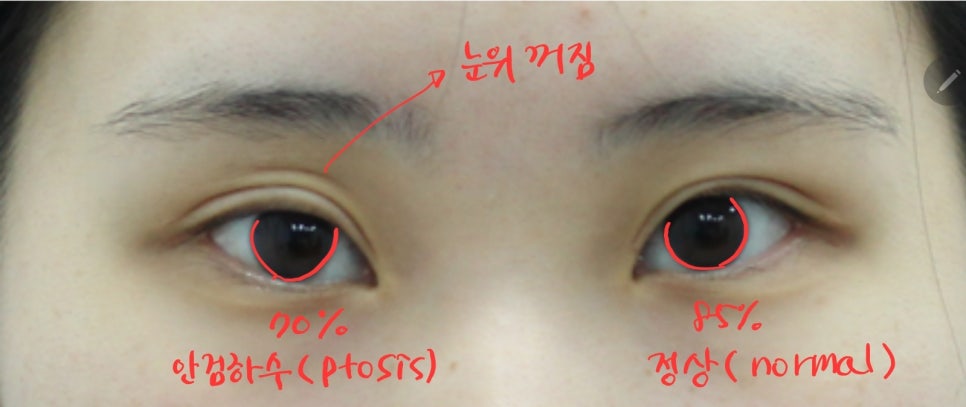
Hollowing above the right eye and ptosis
There is hollowing in the upper eyelid area of the right eye.
The degree of pupil exposure also differs between the two sides. The right eye has about 70% pupil exposure, indicating ptosis,
while the left eye has about 85% pupil exposure, which is within the normal range.
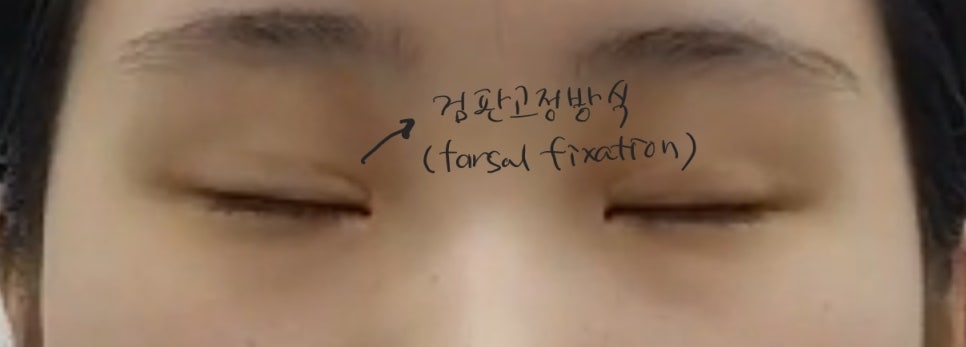
Scars from the previous double eyelid surgery
When looking at the eyes closed, the double eyelid scar is quite noticeable, and this is due to the fixation method used for the double eyelid.
To create a double eyelid, the internal structure of the eye and the skin are connected. However, when the fold is made on a firm tissue called the tarsus, the drawback is that the scar can become more noticeable.
Also, in some cases of double eyelid surgery performed using tarsal fixation, ptosis may occur as the tarsus and the levator muscle fascia separate.
Of course, excessive removal of upper eyelid fat was also one of the causes of this patient's uneven eyes.
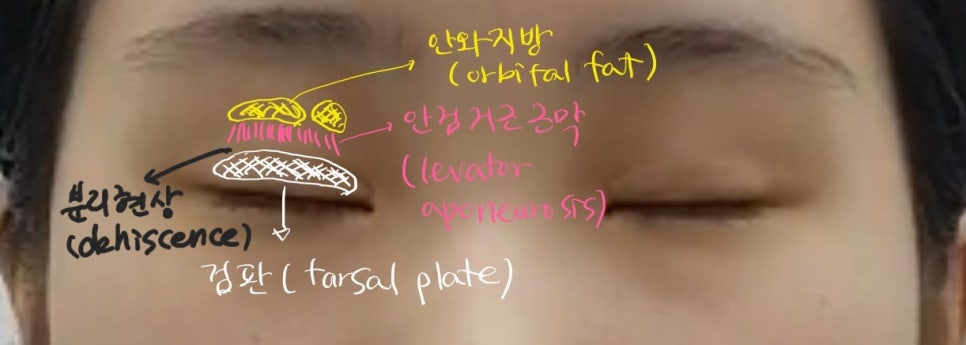
Separation between the levator aponeurosis and the tarsus
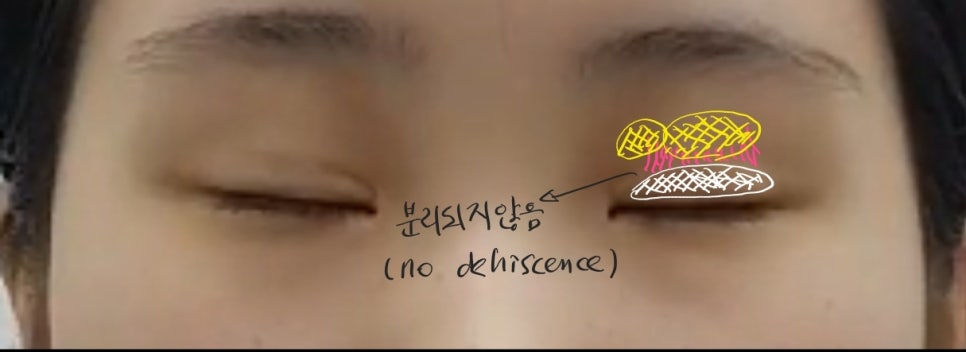
Left eye without separation
In this patient, there was separation between the tarsus and the levator aponeurosis in the right eye, and because a lot of fat had been removed, orbital fat had shifted upward, creating a shortage.
In the left eye, there was no separation between the tarsus and the levator aponeurosis, and the orbital fat had not been removed too much.
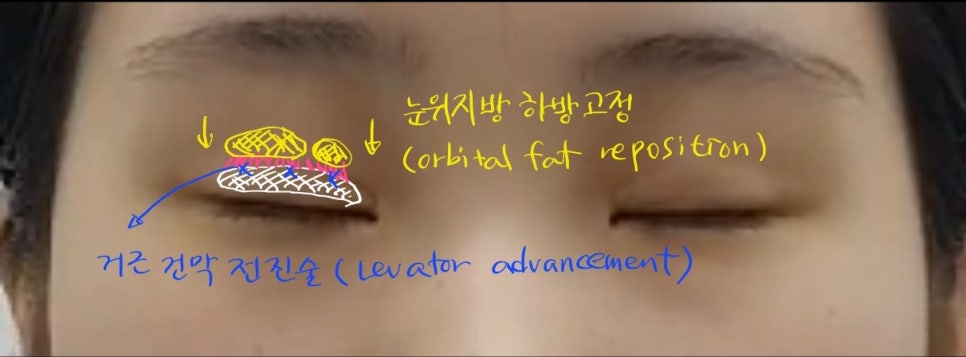
Correction of ptosis and repositioning of upper eyelid fat
Through surgery, the levator aponeurosis was advanced and reattached to the tarsus, and the deficient fat above the eye was brought down and fixed in place.
Of course, in addition to correcting the ptosis, a double eyelid was also created. When making the fold, the skin was not directly fixed to the tarsus; instead, it was fixed to the soft part at the end of the levator fascia.
This has the effect of improving the depressed scar of the double eyelid.
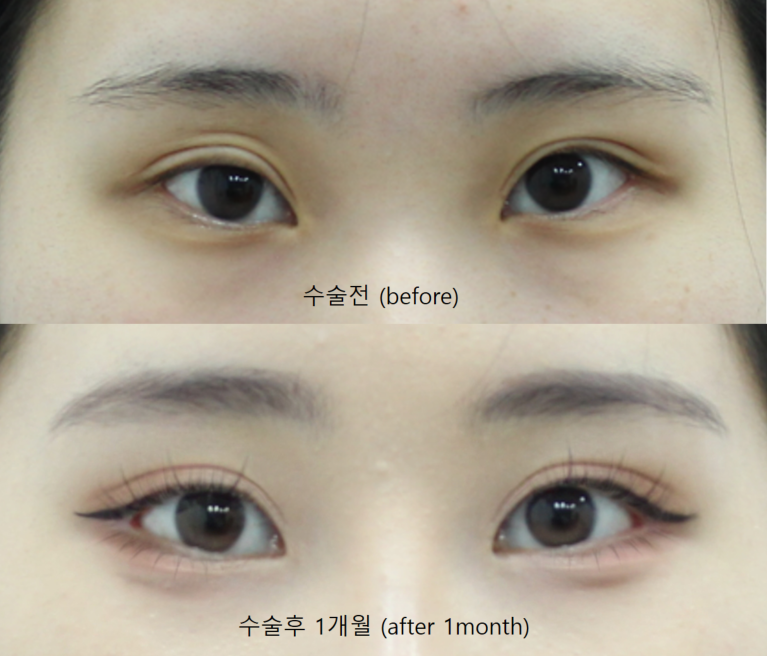
Before surgery, the difference in pupil exposure and the hollowing above the eyes made the uneven eyes appear more severe, but after surgery the symmetry improved significantly.
The ptosis in the right eye improved, and the hollowing above the eye was also greatly reduced.

Trademark registration for Round Eye eye-correction by the Korean Intellectual Property Office
When there is a difference in the strength of eyelid opening between the left and right sides, uneven eyes can occur.
And in double eyelid surgery, care must be taken not to remove too much eyelid fat.
Ptosis correction surgery (eye-correction surgery) is often essential not only for making the eyes look more open and refreshed, but also for correcting uneven eyes.

This is a real model who has consented to disclosure.