If there is a hollow in the side cheek, the cheekbones can look more prominent and the face line can appear uneven, so many people want correction.
The hollowing of the side cheek can occur after orthodontic treatment, and it can also happen due to cheekbone prominence, inappropriate dosage or placement of jaw Botox procedures, weight loss, side effects of lifting devices such as Ulthera, and various other causes beyond those mentioned.
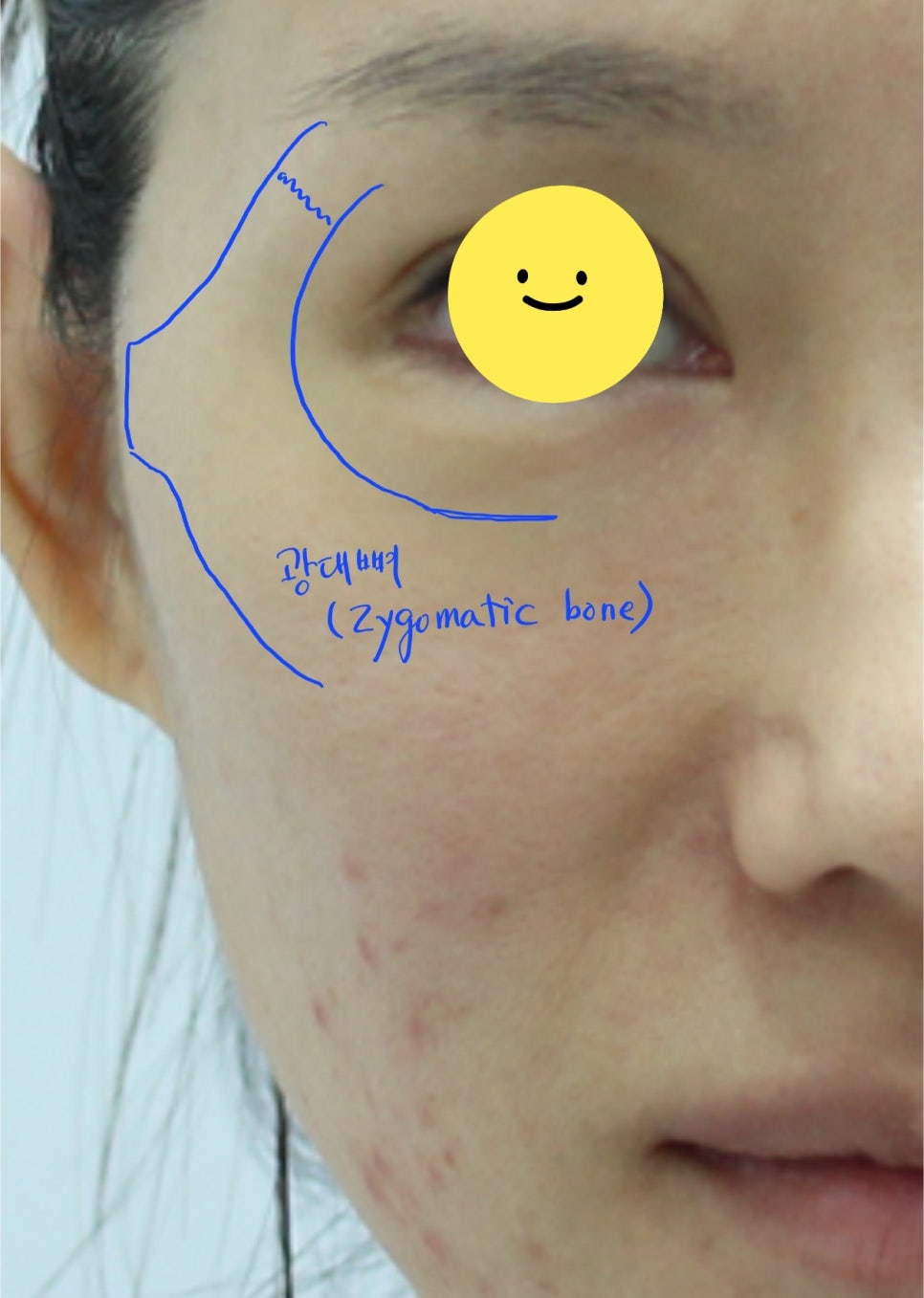
Hollowing of the side cheek below the cheekbone
Hollowing in the side cheek makes the cheekbone structure look more exposed, which can make the expression seem stronger and also make the face look older.
Especially under bright lighting, cheek hollows tend to look more noticeable, so people often visit after noticing them while taking selfies in bright light.
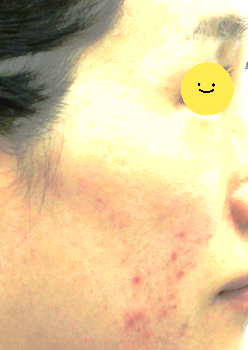
Side cheek hollowing that looks more distinct with brightness adjustment
Many people undergo procedures such as fillers, collagen injections, and fat grafting to correct hollowing in the side cheek, but it is difficult to inject precisely into the desired area, and side effects can occur, such as unwanted bulging in other areas.
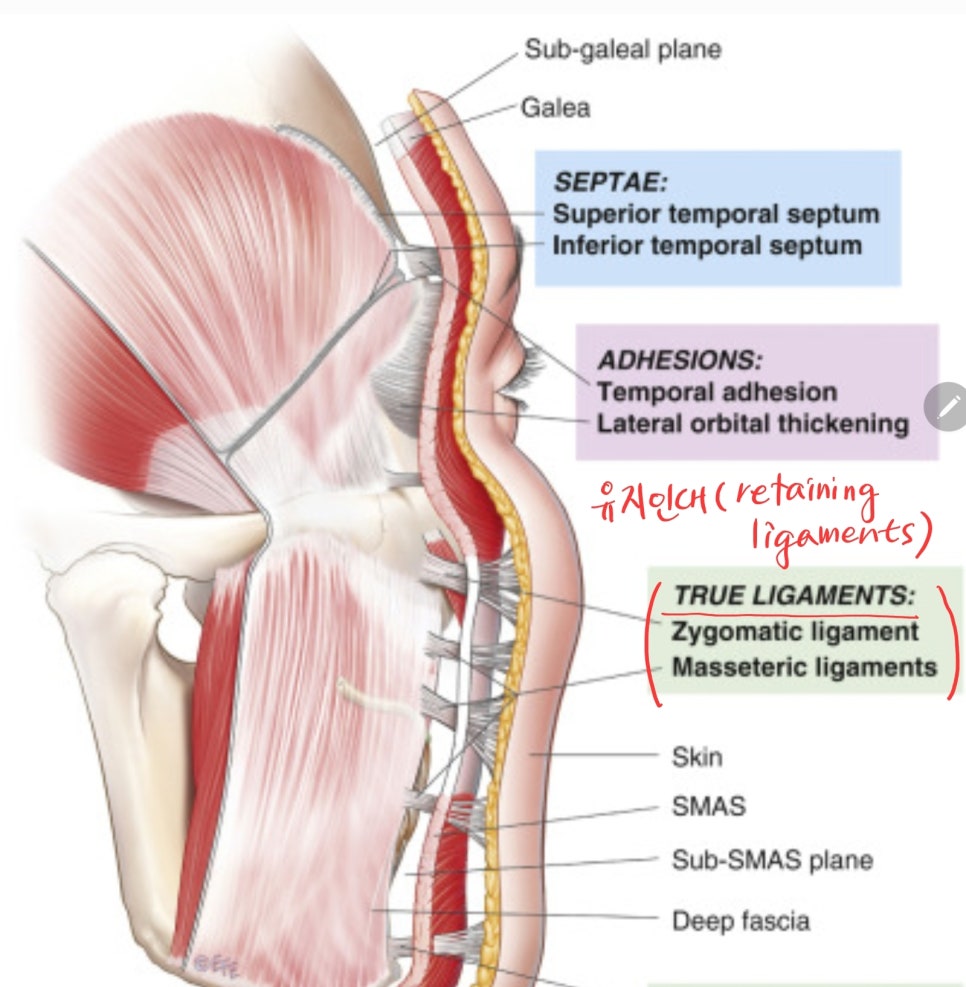
First, it is important to understand the anatomical structure of the side cheek area.
Strong facial retaining ligaments attach around the cheekbone and the muscles of mastication. These retaining ligaments are structures that help prevent facial sagging, but in the side cheek they can also be structures that cause hollowness.
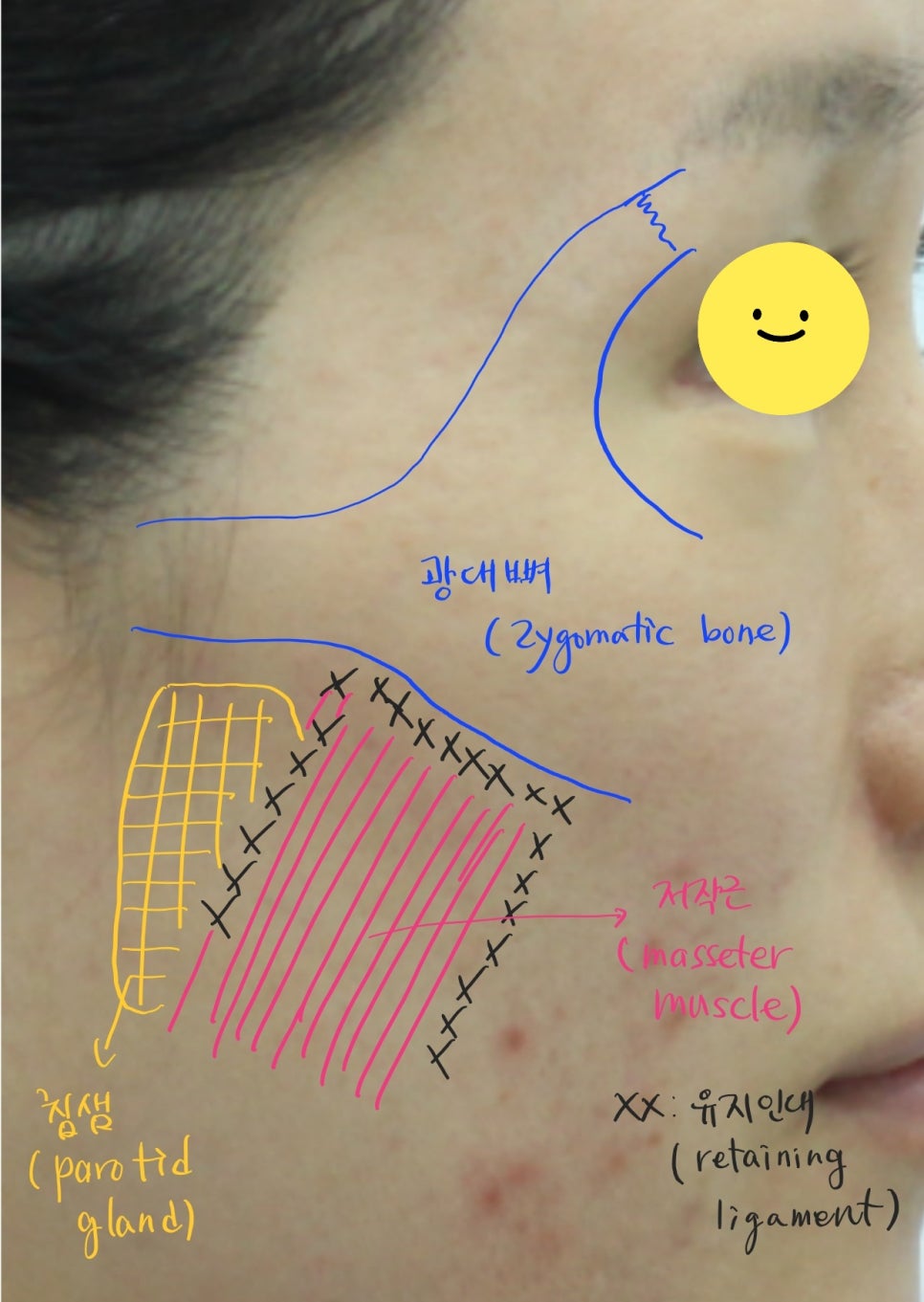
Anatomical structures of the side cheek and the location of the facial retaining ligaments
Some of the retaining ligaments in this area cause side cheek hollowing, and before filling this area with fat grafting, it is essential to carefully release these retaining ligaments.
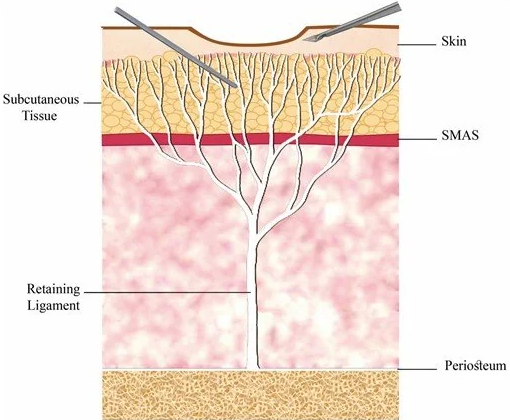
Releasing the retaining ligaments with a special needle
A specially designed needle is used to separate the retaining ligaments in this area. Through this process, appropriate space is created under the skin in the hollowed area, so that when fat grafting is performed, the depressed area can be lifted.
Because only part of the retaining ligaments and only the superficial layer are separated, the ligaments do not break in a way that causes facial sagging.
However, the process of dissecting this area with a needle is not easy.
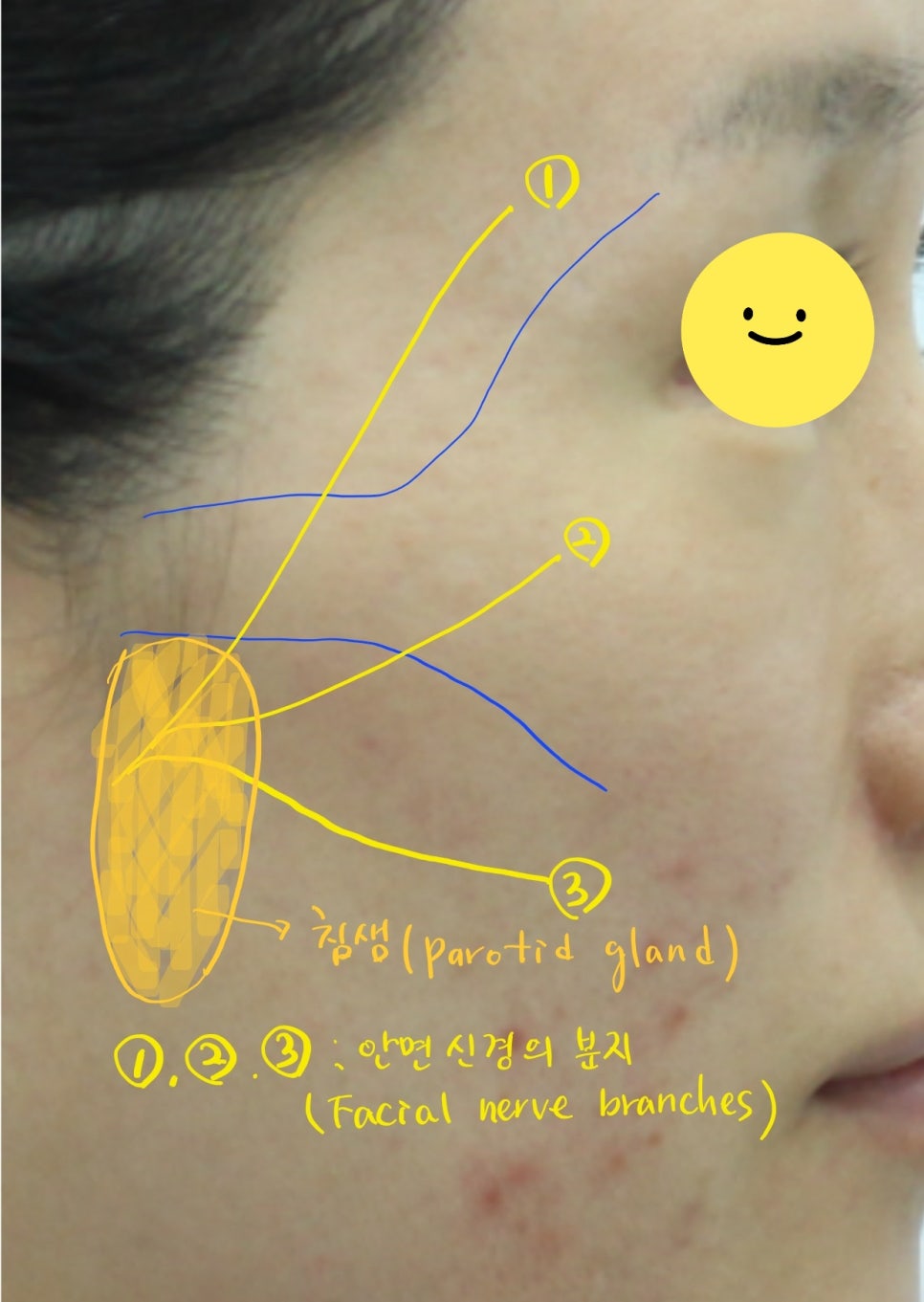
Branches of the facial nerve and the salivary gland
Important structures such as branches of the facial nerve run through this area, and because structures that should not be damaged, such as the salivary gland and salivary duct, are located here, a sufficient understanding of facial anatomy is necessary to perform the procedure properly.
By carefully separating the retaining ligaments in this area at the appropriate layer and to the necessary extent to create space, and then filling the empty space with fat grafting, the procedure is completed.
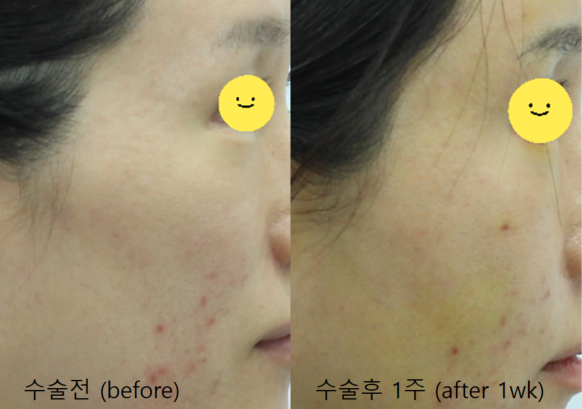
Side comparison before and after surgery
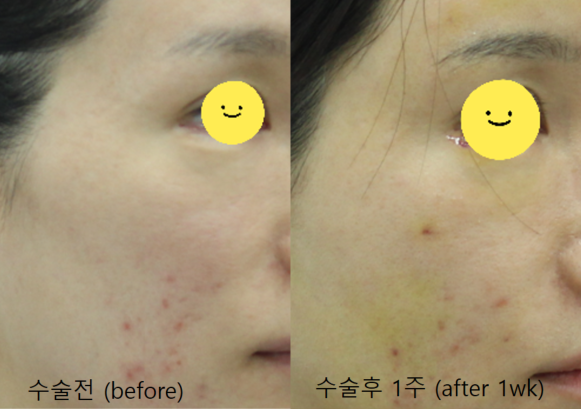
45-degree comparison before and after surgery
From the side and at 45 degrees, the hollow area below the cheekbone appears to have been well lifted through fat grafting.
Of course, this is one week after surgery, so there is still a little swelling and bruising, but recovery is progressing well.
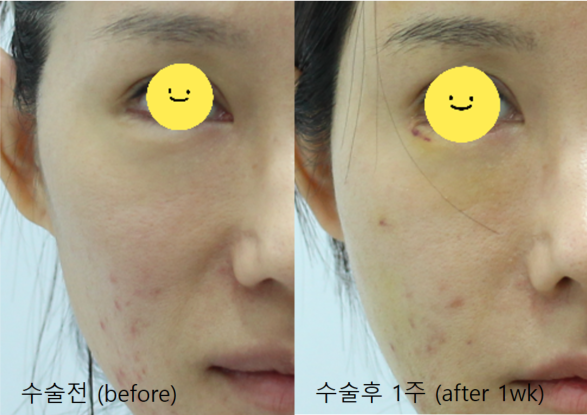
Frontal comparison before and after surgery
After surgery, the line from the cheekbone to the jaw appears smooth in the front view.
Of course, because the swelling and graft survival rate of fat grafting vary from person to person, longer-term progress still needs to be observed, but in side cheek fat grafting, creating space well is the most important step.