When you start looking into rhinoplasty, the first cartilage materials you usually come across are septal cartilage and ear cartilage.
These two types of cartilage are generally the materials most often used in primary rhinoplasty rather than revision surgery.
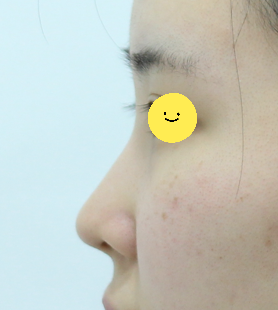
The most common low, small nose in East Asians
In the case of the small, low nose commonly seen in East Asians, a silicone implant is used to raise the bridge, and the tip is elevated with autologous cartilage material.
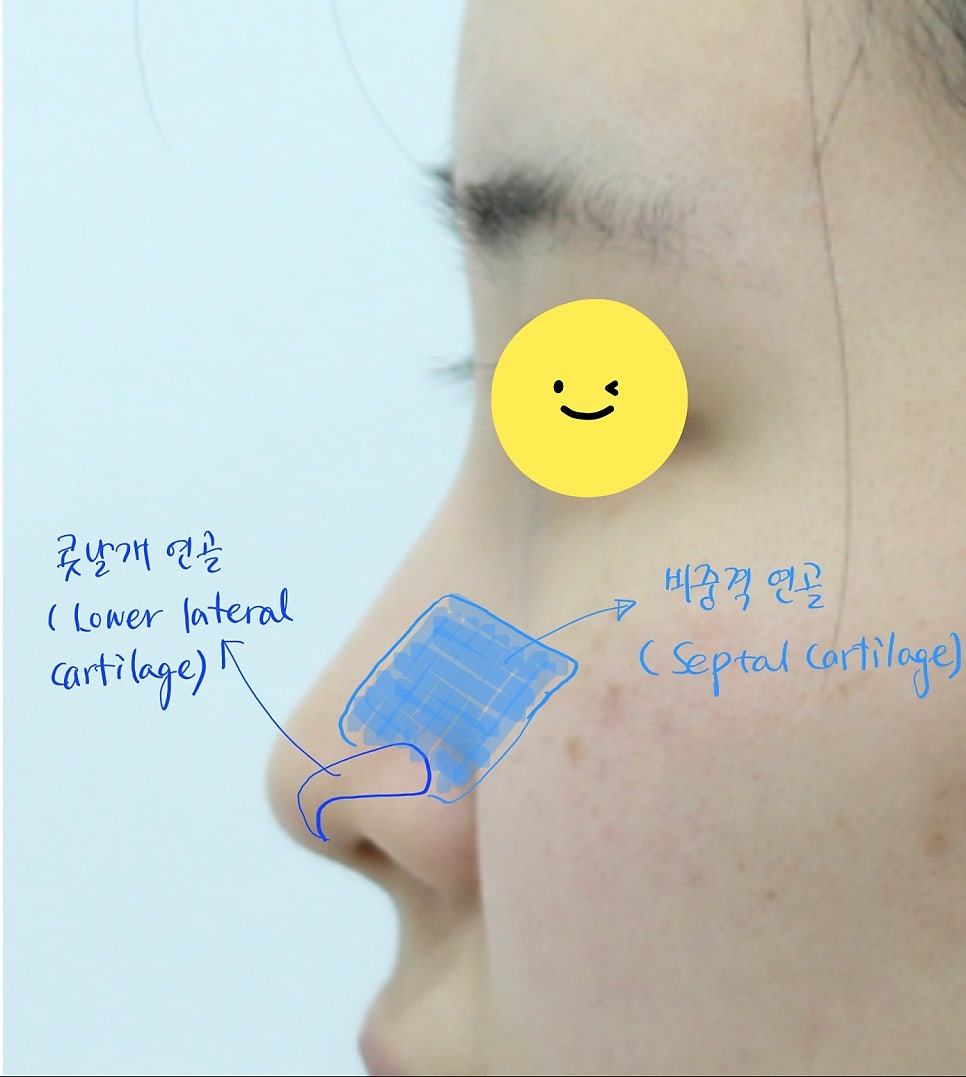
Alar cartilage and septal cartilage
Septal cartilage is the cartilage structure inside the nose that separates the nostrils from left to right, and it has a relatively flat shape.
In rhinoplasty, part of this septal cartilage is harvested and used as material to raise the nasal tip.
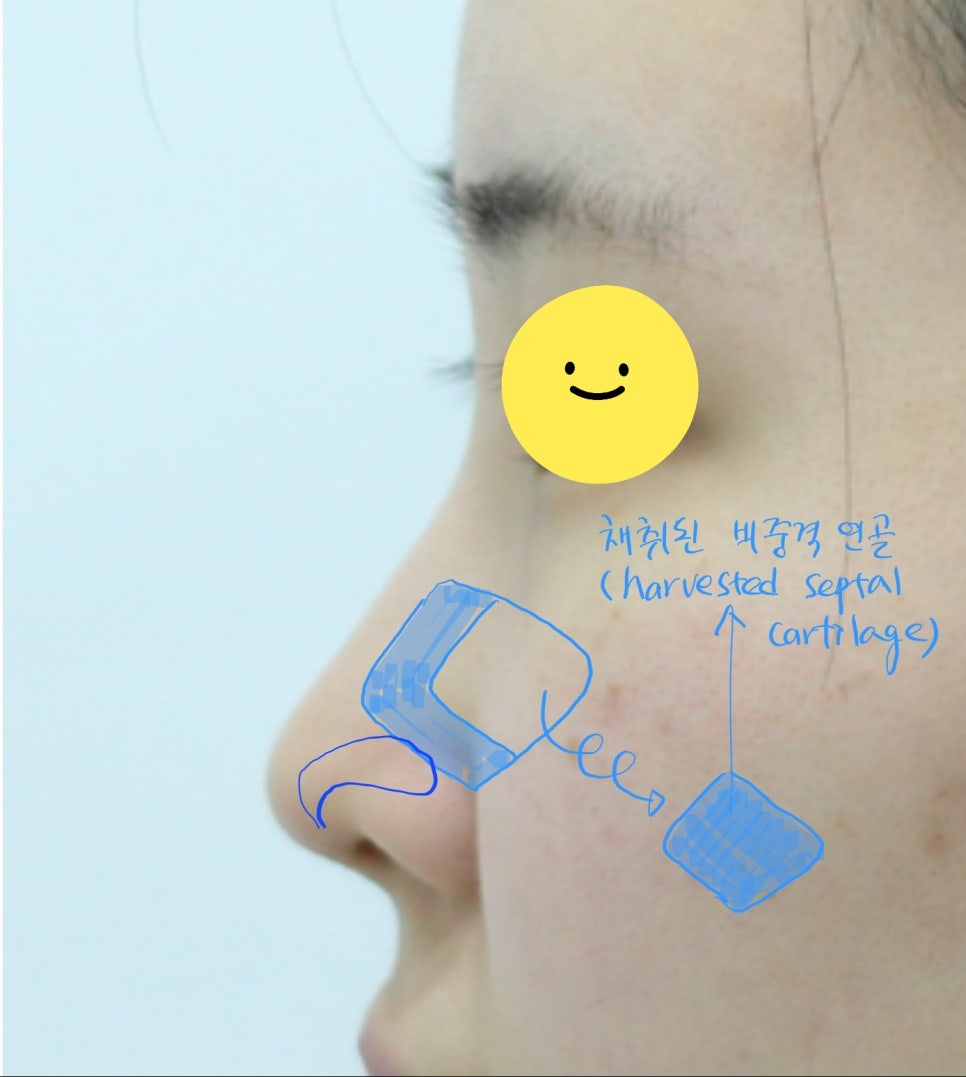
Harvesting septal cartilage
Because septal cartilage forms the nose’s support structure, a certain width must be left behind while the remaining portion is harvested in order to maintain the nasal support.
As a result, the amount of septal cartilage that can be harvested is inevitably limited. In particular, for East Asians with low, small noses, the septal cartilage is also small, so the size of cartilage that can be harvested is inevitably limited.
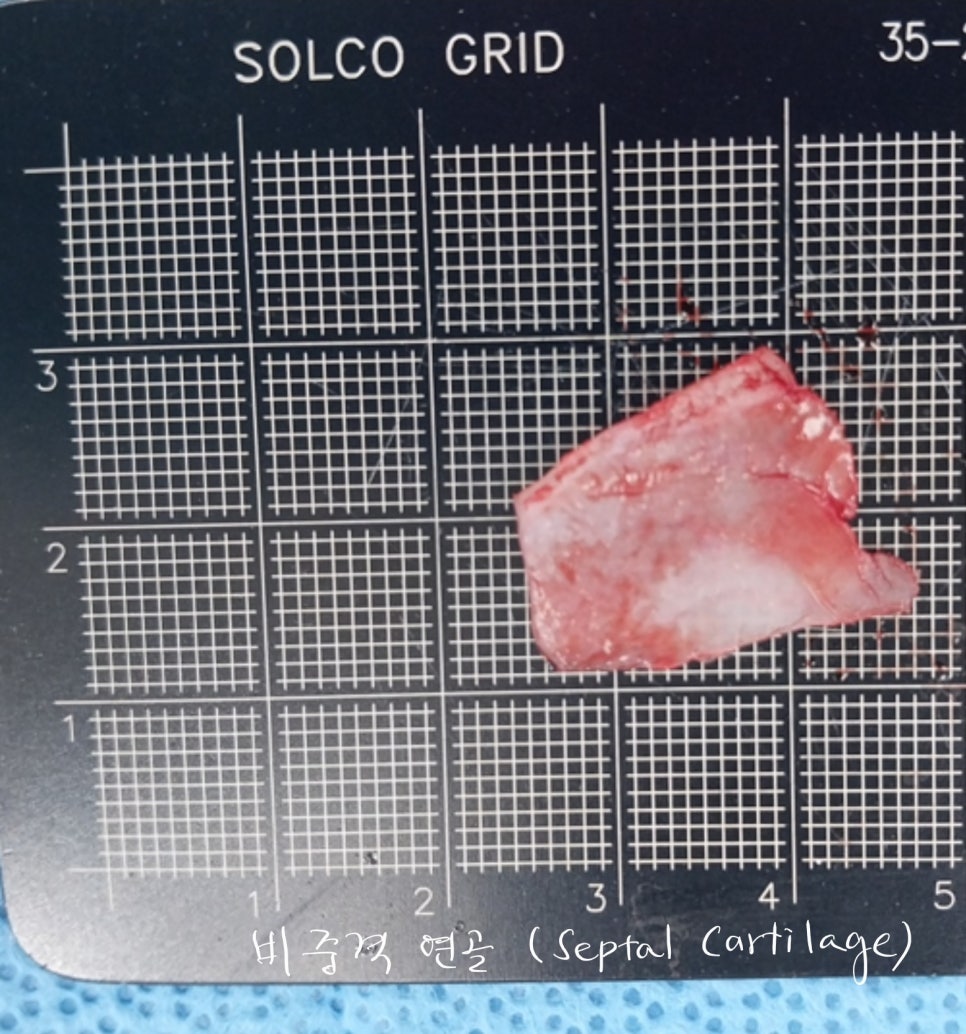
Septal cartilage harvest
Because septal cartilage is flat and shaped like a bookend, it is good for building support for the nasal tip.
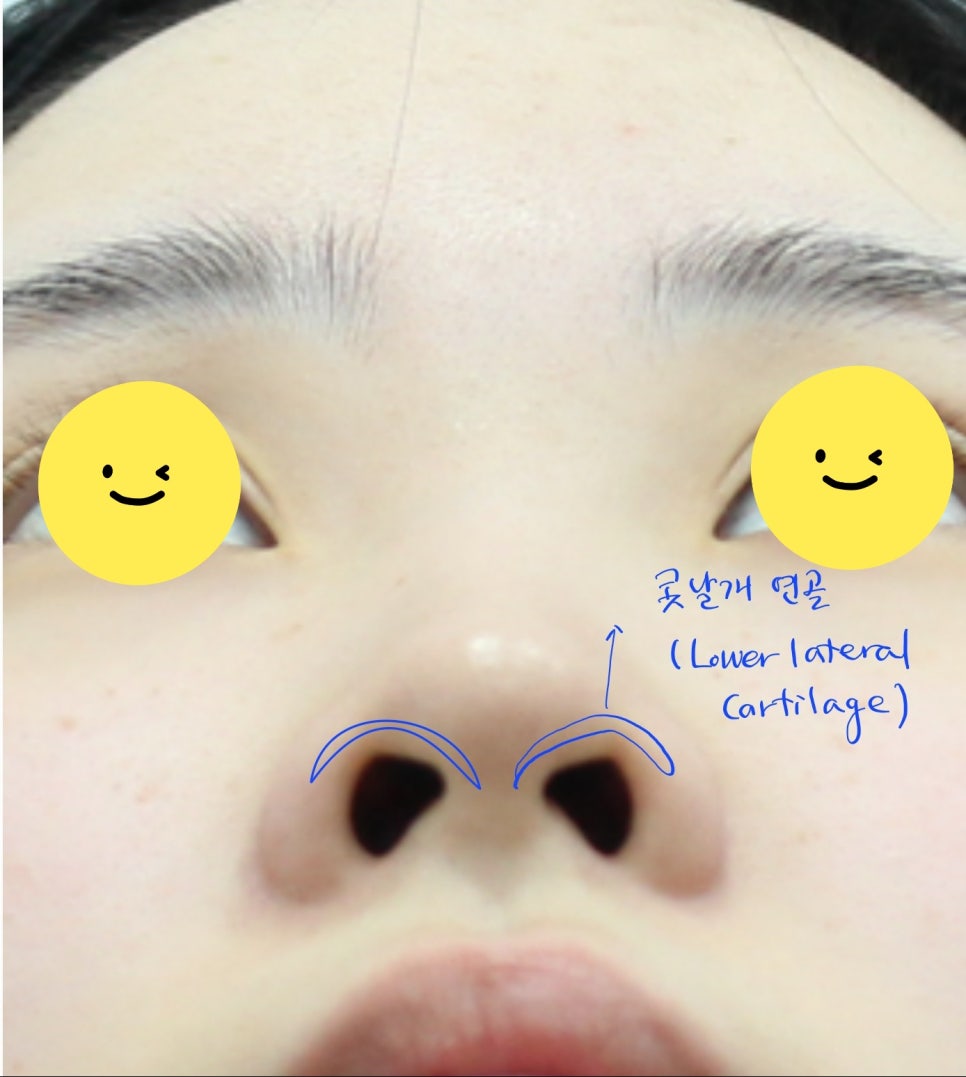
Wide alar cartilage and a low nasal tip
In low noses among East Asians, the alar cartilage often appears spread out. By using septal cartilage to create support for the nasal tip and tying the alar cartilage together, it is possible to raise the nasal tip while bringing the spread-out alar cartilage together.
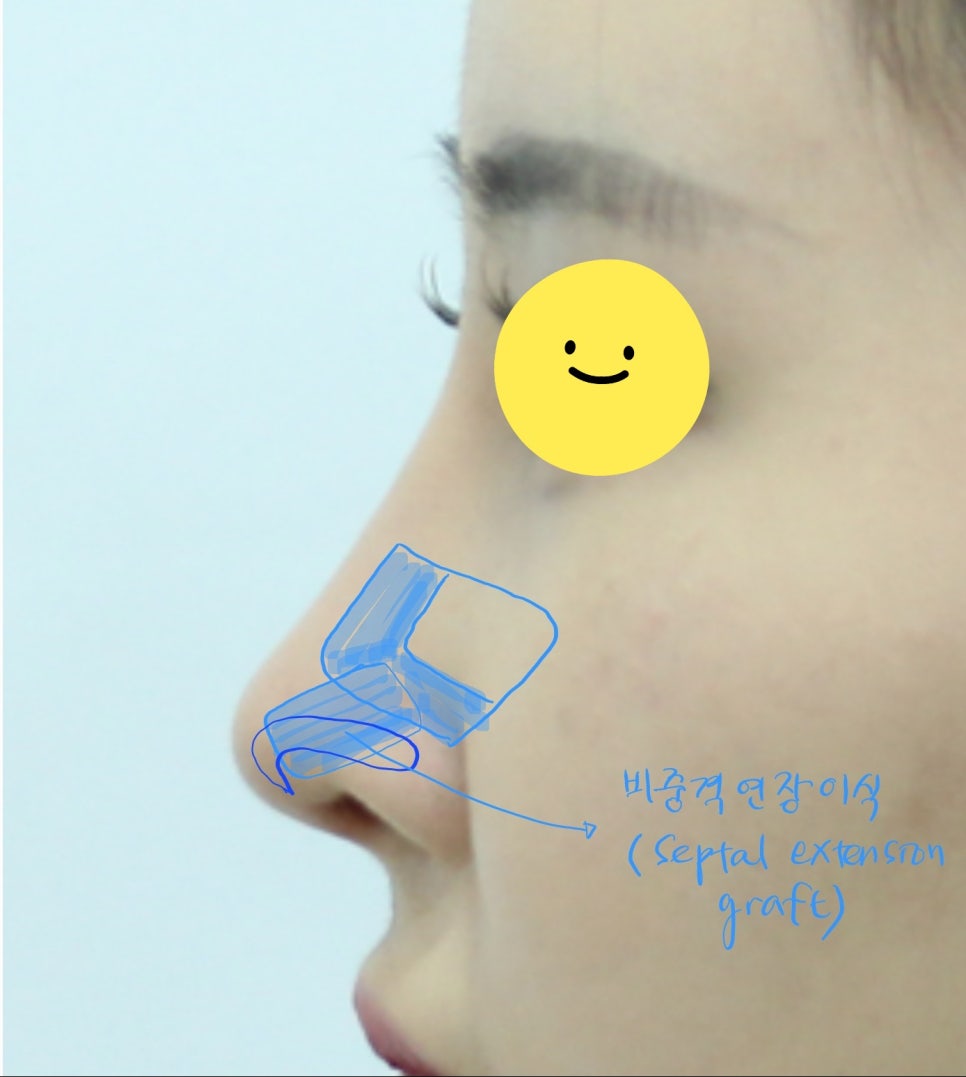
Septal extension graft
The method of attaching the harvested septal cartilage to the end of the existing septum is called a septal extension graft, and this method can be used to adjust the height and length of the nasal tip.
However, in East Asians, there are many cases where there is not enough septal cartilage available for harvest, so ear cartilage is often harvested additionally.
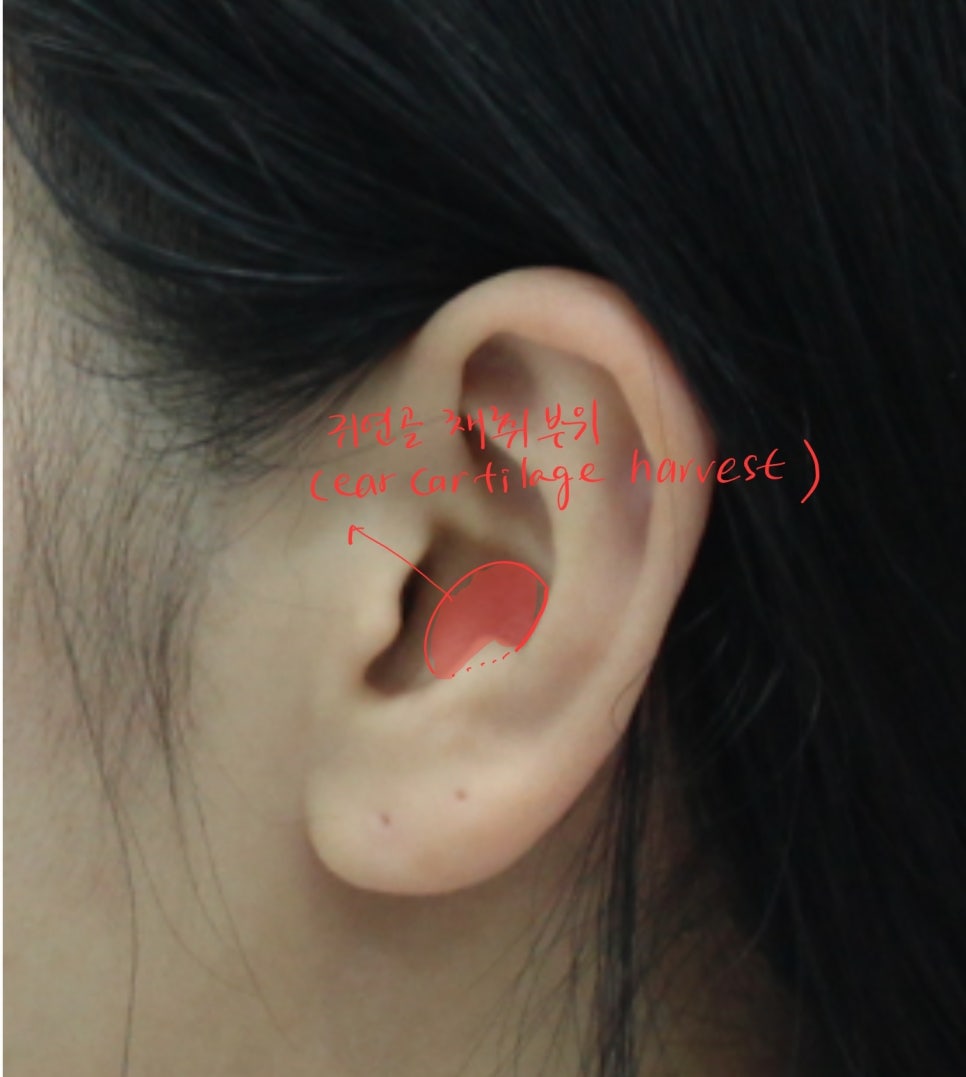
Harvest site for ear cartilage
Ear cartilage is mainly harvested from behind the ear, where the incision is not visible, and it has a soft, curved shape.
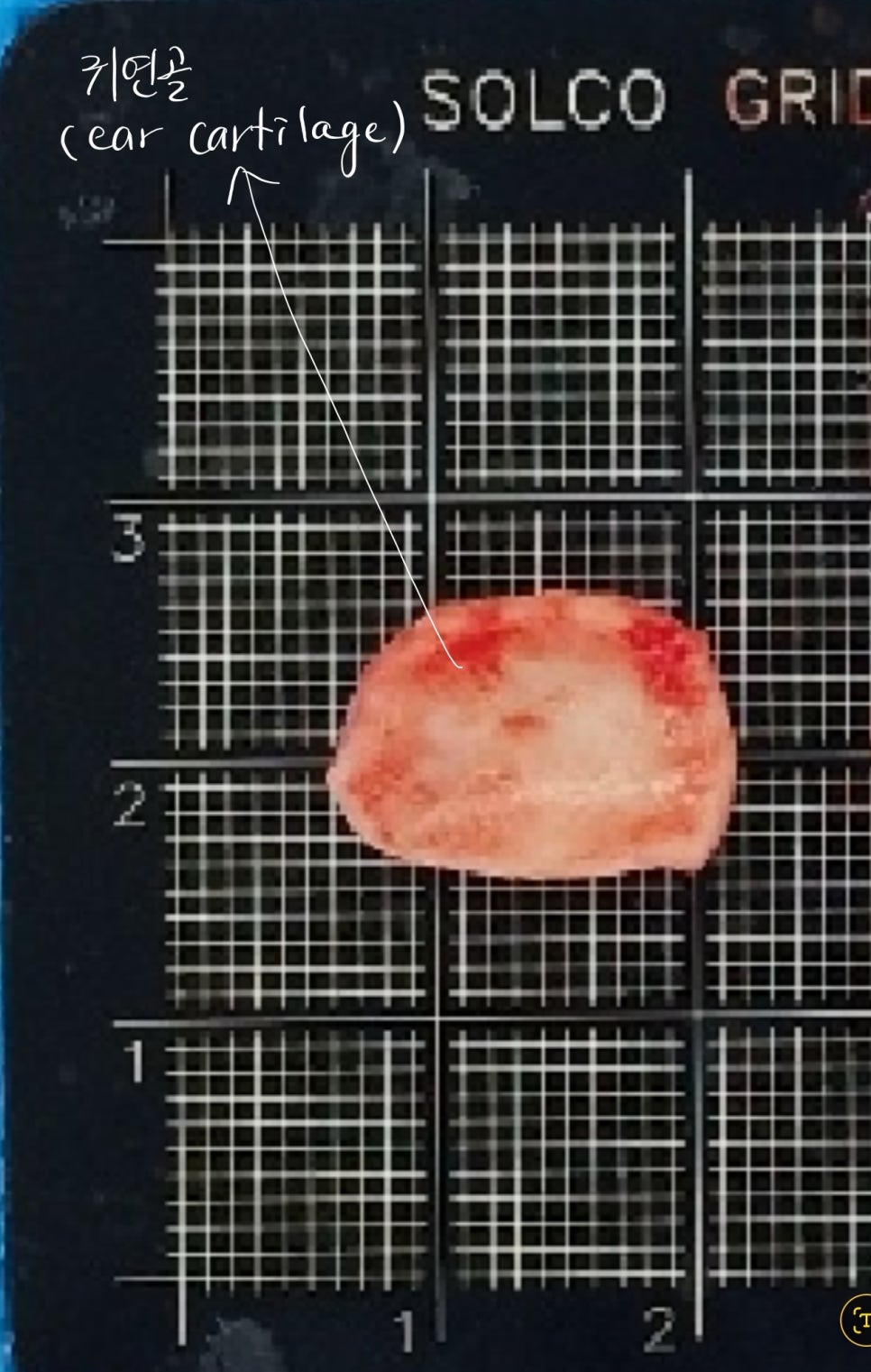
Harvested ear cartilage
The harvested ear cartilage is usually placed on top of the nasal tip, and this method is called a cartilage onlay graft.
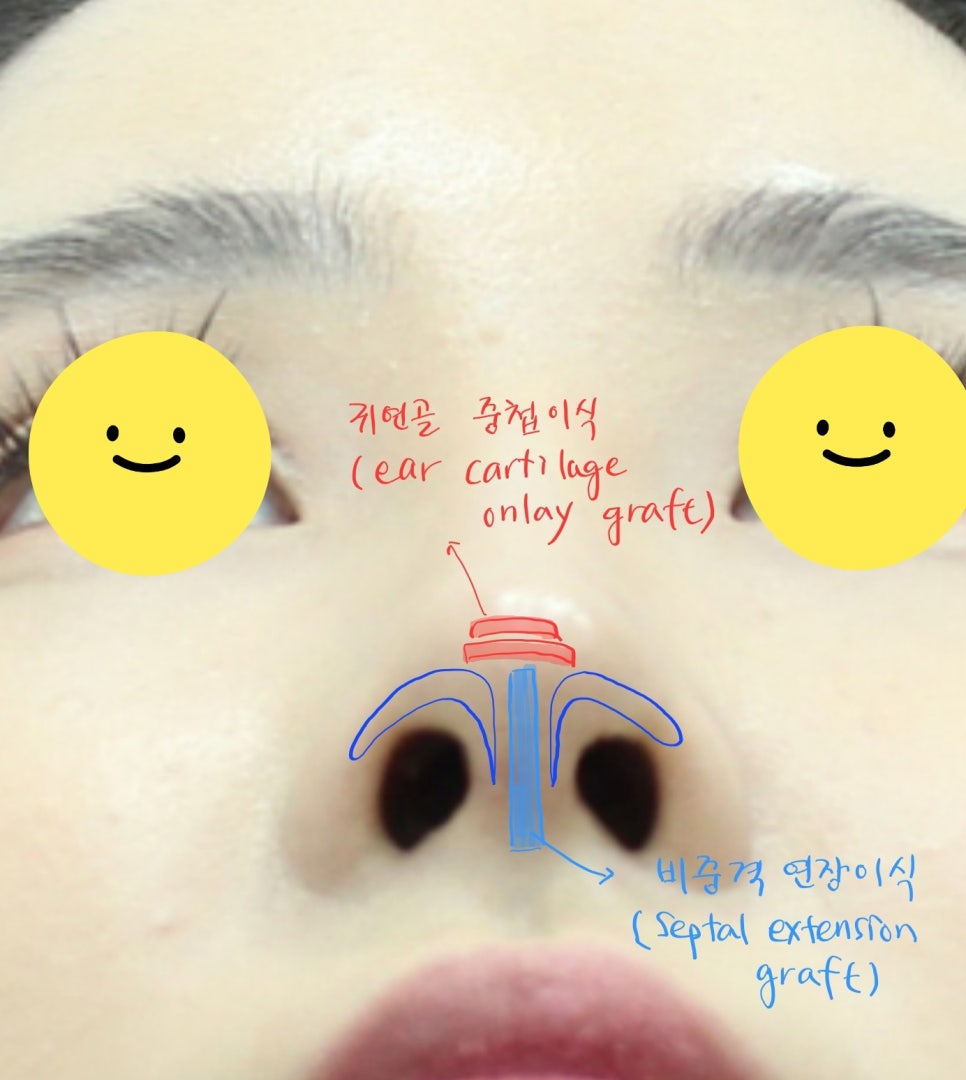
How to raise the nasal tip using two types of cartilage
First, the nasal tip is raised using septal cartilage. As a result, the spread-out nostril shape becomes slightly longer and changes into a more refined shape, while also strengthening the support structure of the nasal tip.
Second, if the soft, curved ear cartilage is overlaid and used to raise the nasal tip once more, the texture of the nasal tip does not become too hard, and it settles into a shape that fits the contour of the nasal tip.
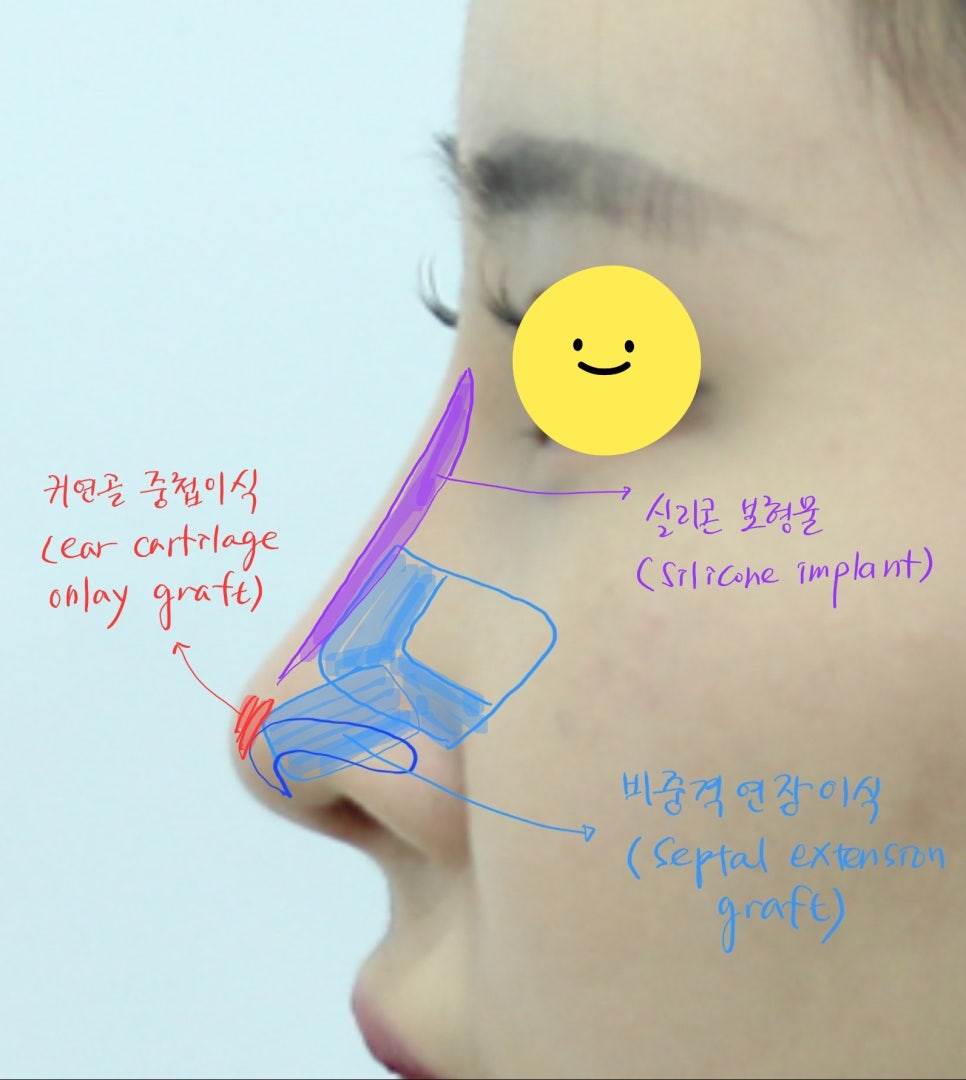
Diagram of rhinoplasty using silicone, septal cartilage, and ear cartilage
Finally, a silicone implant of appropriate height is inserted into the bridge to raise the nose, and the skin is sutured to complete the rhinoplasty.
Let’s compare the results before and after surgery.
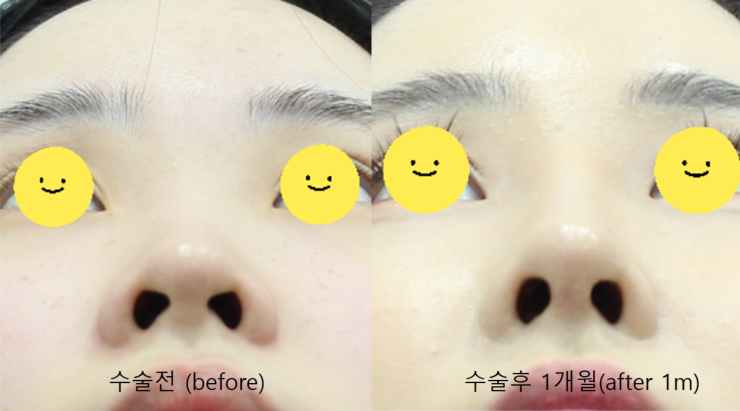
Before-and-after comparison, 1 month post-op
The low nasal tip was raised appropriately, and the spread-out alar cartilage was brought together by the septal extension graft, making the nostril shape longer and more refined.
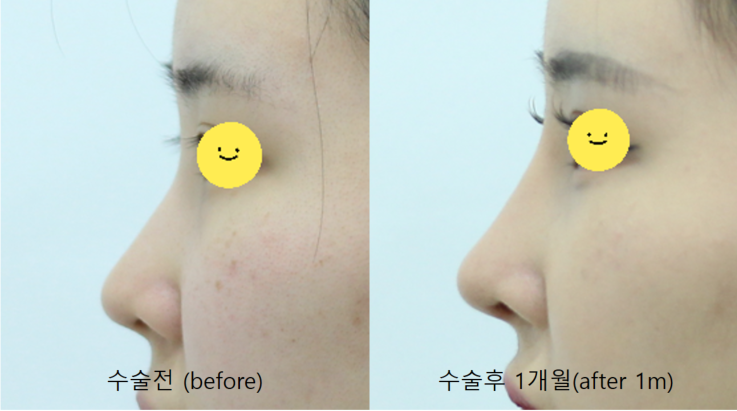
Before-and-after comparison, 1 month post-op
A 4 mm silicone implant was used to raise the bridge, and septal and ear cartilage were used for the nasal tip.
The balance between the bridge and the tip was maintained so that it would not look overly upturned or elongated.
We have looked at the approximate characteristics of septal cartilage and ear cartilage, which are cartilage materials used to raise the nasal tip in primary rhinoplasty, and explained how the nasal tip is raised using them.
Autologous cartilage materials each have their own characteristics, advantages, and disadvantages, so it is important to carefully consider the characteristics of the cartilage and use the appropriate cartilage material in the appropriate location.

This is a real model who consented to public release.