The reasons why the nose may look crooked after rhinoplasty vary, but in most cases the difference is slight, so it often does not stand out much.
However, in some cases, when a patient visits for revision surgery because the nose has become very crooked after rhinoplasty at another hospital, it is important to check the internal condition of the nose.
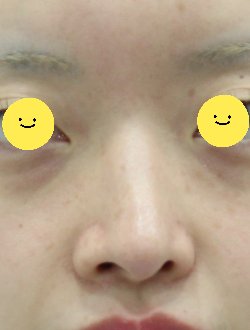
Crooked nose after the first rhinoplasty
The patient said that the first nose surgery was performed using the septal cartilage, and that it was an implant-free rhinoplasty without silicone.
In implant-free rhinoplasty that does not use silicone, symmetry of the nasal bridge must be created using the patient’s own nasal structure, so it is considered a relatively difficult surgery.
It is necessary to check the internal condition of the nose through a preoperative CT scan.
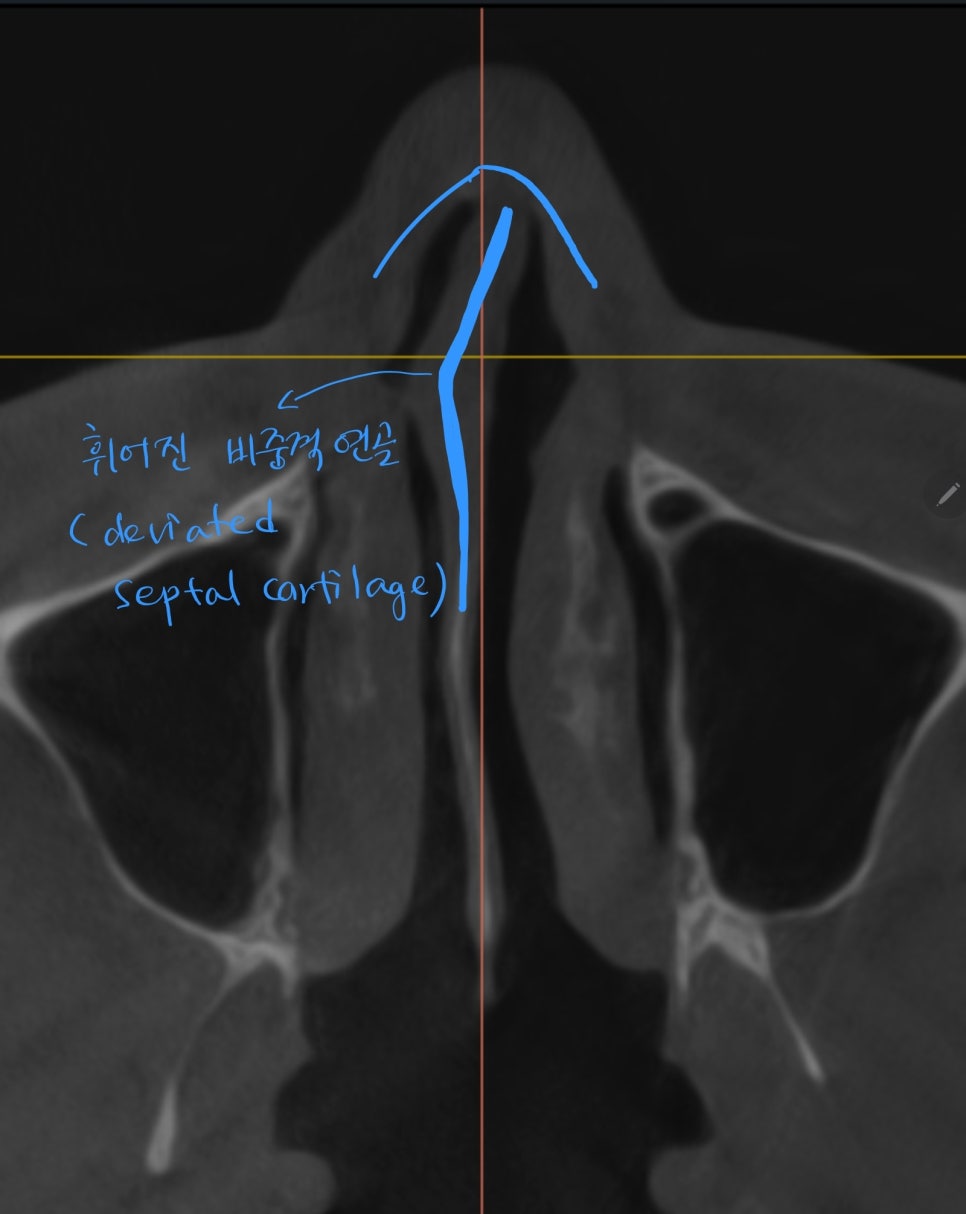
CT scan of a deviated septal cartilage
In such cases, the septal cartilage is often found to be significantly deviated.
And because the septal cartilage supports the upper lateral cartilage between the nasal tip and the nasal bones,
when the septal deviation becomes severe, it is also common for the upper lateral cartilage to collapse.
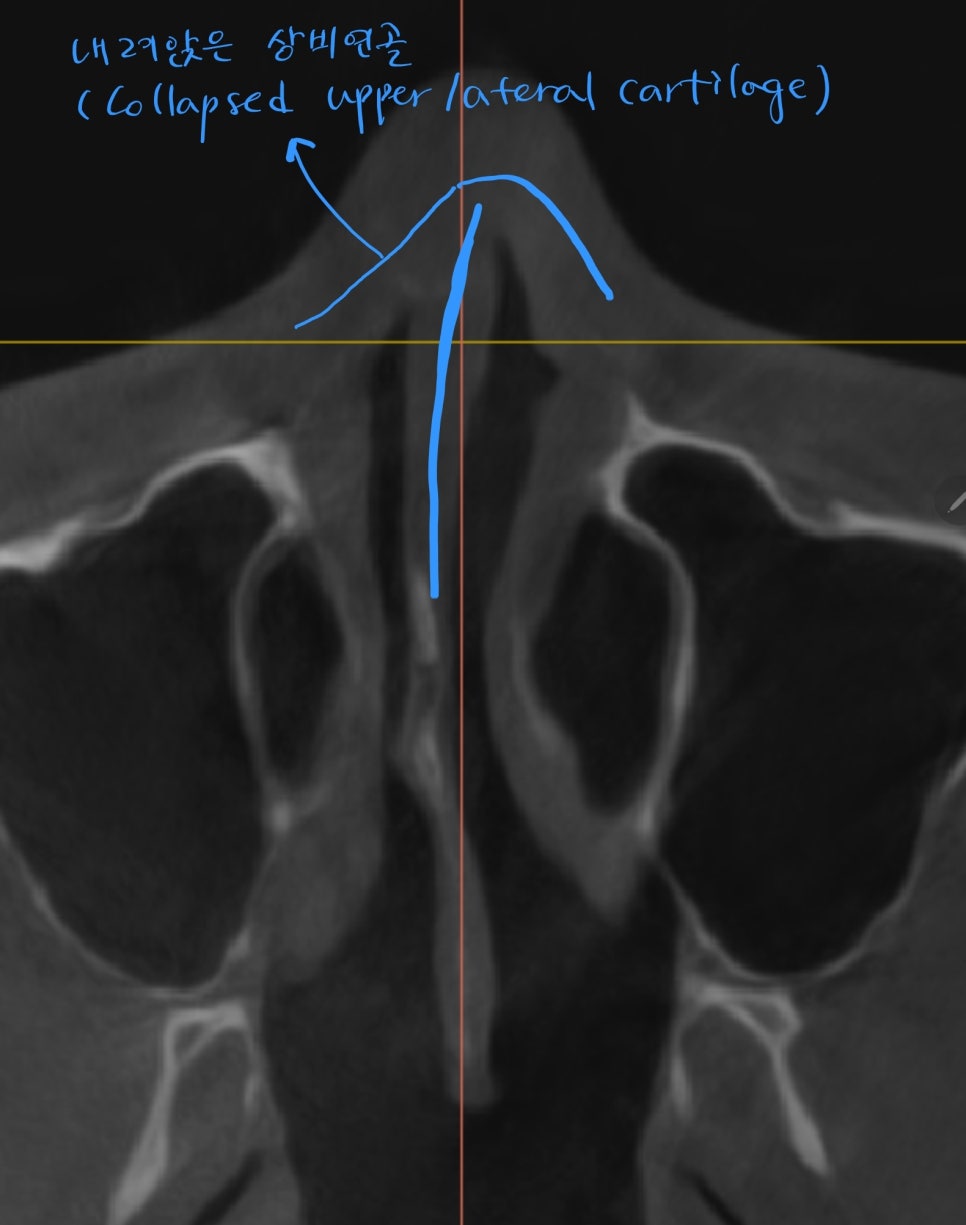
CT scan of collapsed upper lateral cartilage
When the upper lateral cartilage collapses, the nose may look crooked from the outside, and in many cases nasal valve obstruction occurs as well, making breathing uncomfortable.
Let me briefly explain the structure of the nose, including the septal cartilage and upper lateral cartilage.
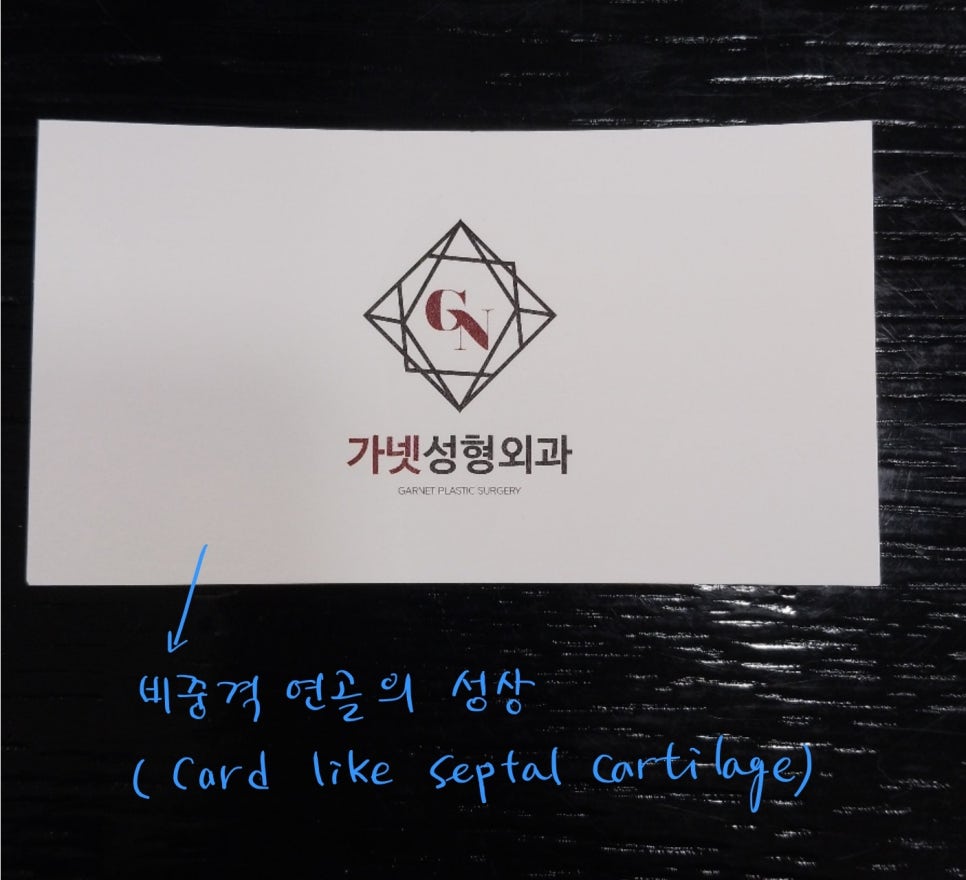
The characteristics of the septal cartilage
The septal cartilage is thin and flat, like a business card or a folder divider, and has a certain degree of elasticity.
It also serves as a support structure for the upper lateral cartilage, which forms the roof of the nose.
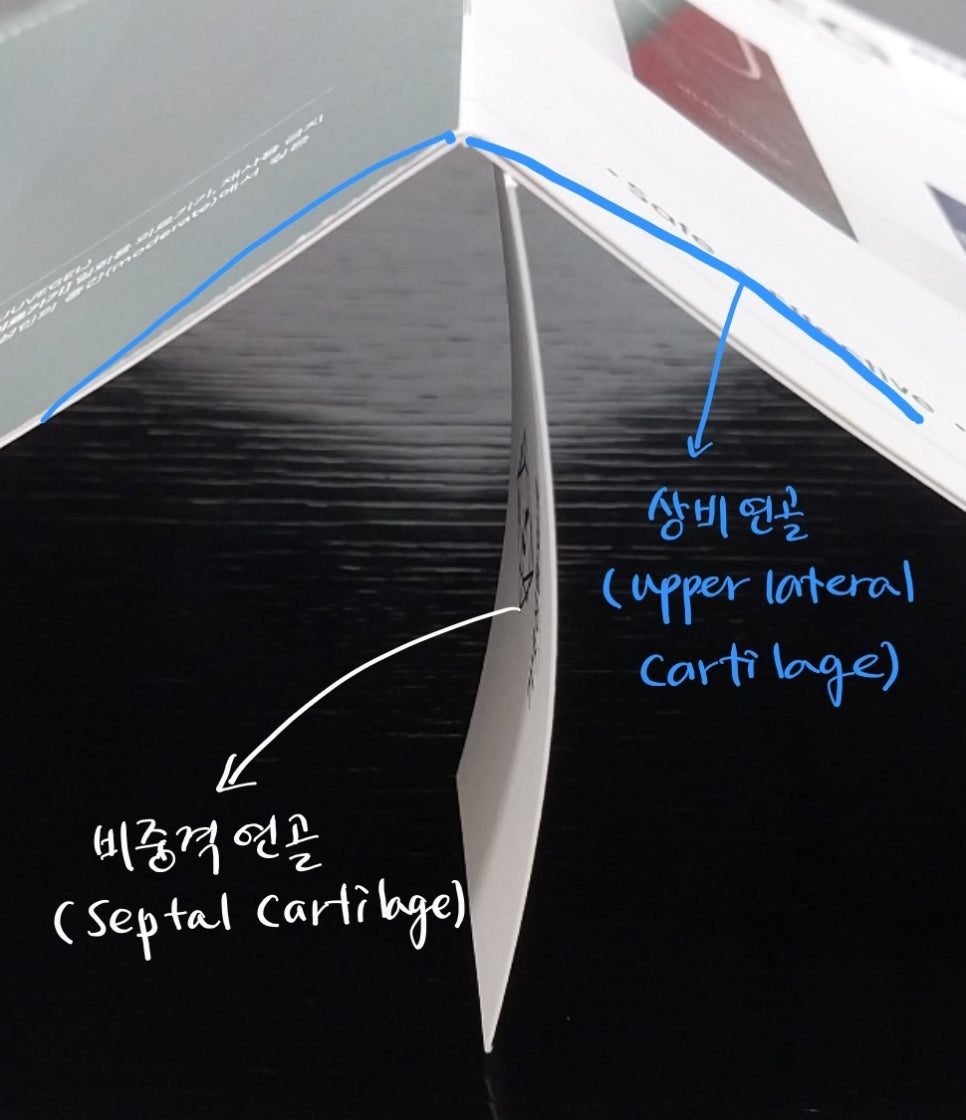
Explanation of the nasal structure
The septal cartilage can be slightly bent in anyone, and in everyday life a mild septal deviation is usually not a major problem.
However, when septal cartilage is harvested for rhinoplasty, the support of the septum may weaken, and if the tension from the skin is strong during the process of raising the nose, the septal deviation may become more severe.
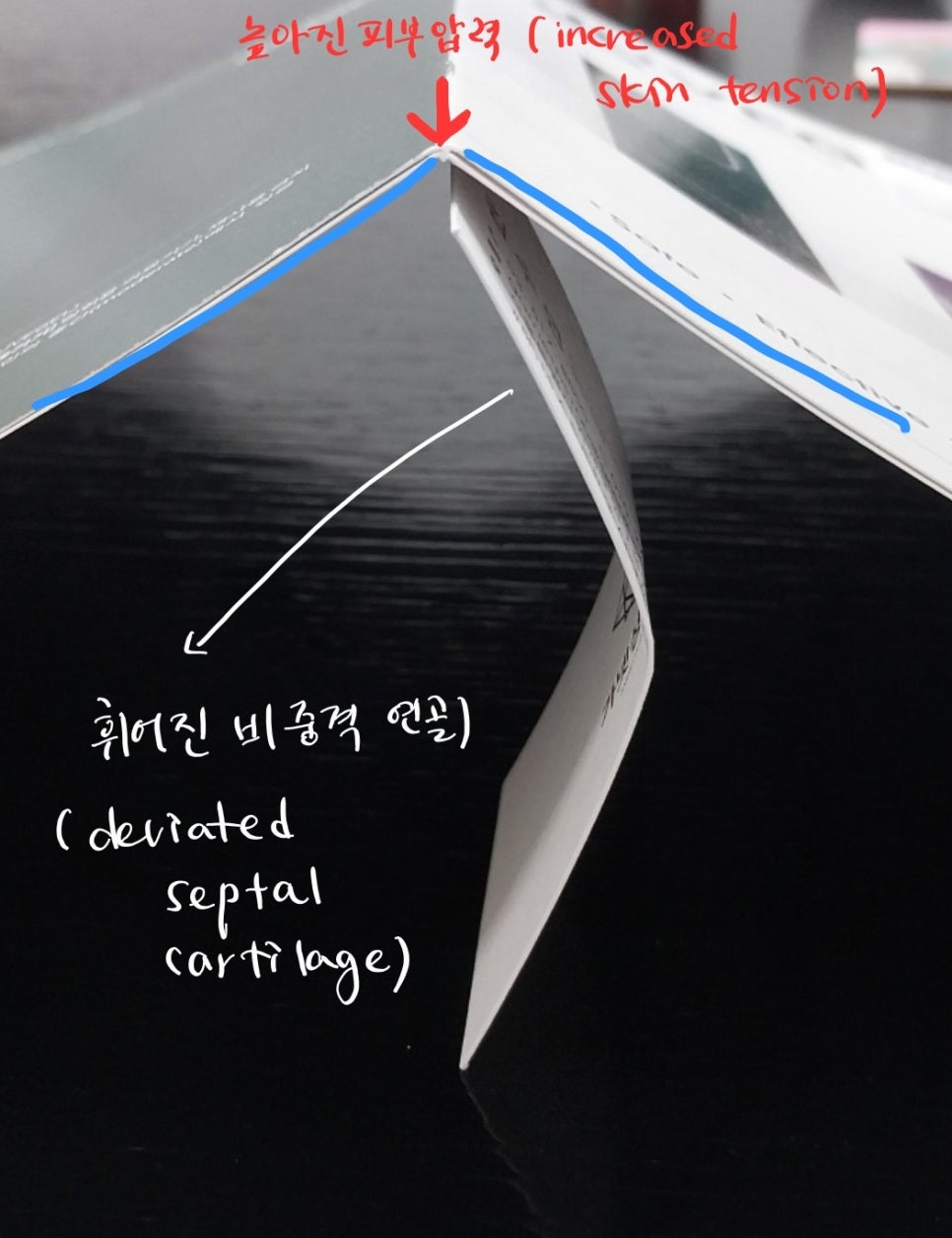
When septal deviation worsens after rhinoplasty
If septal deviation becomes severe in this way, the nose may appear crooked from the outside, and nasal congestion may become more severe inside the nose.
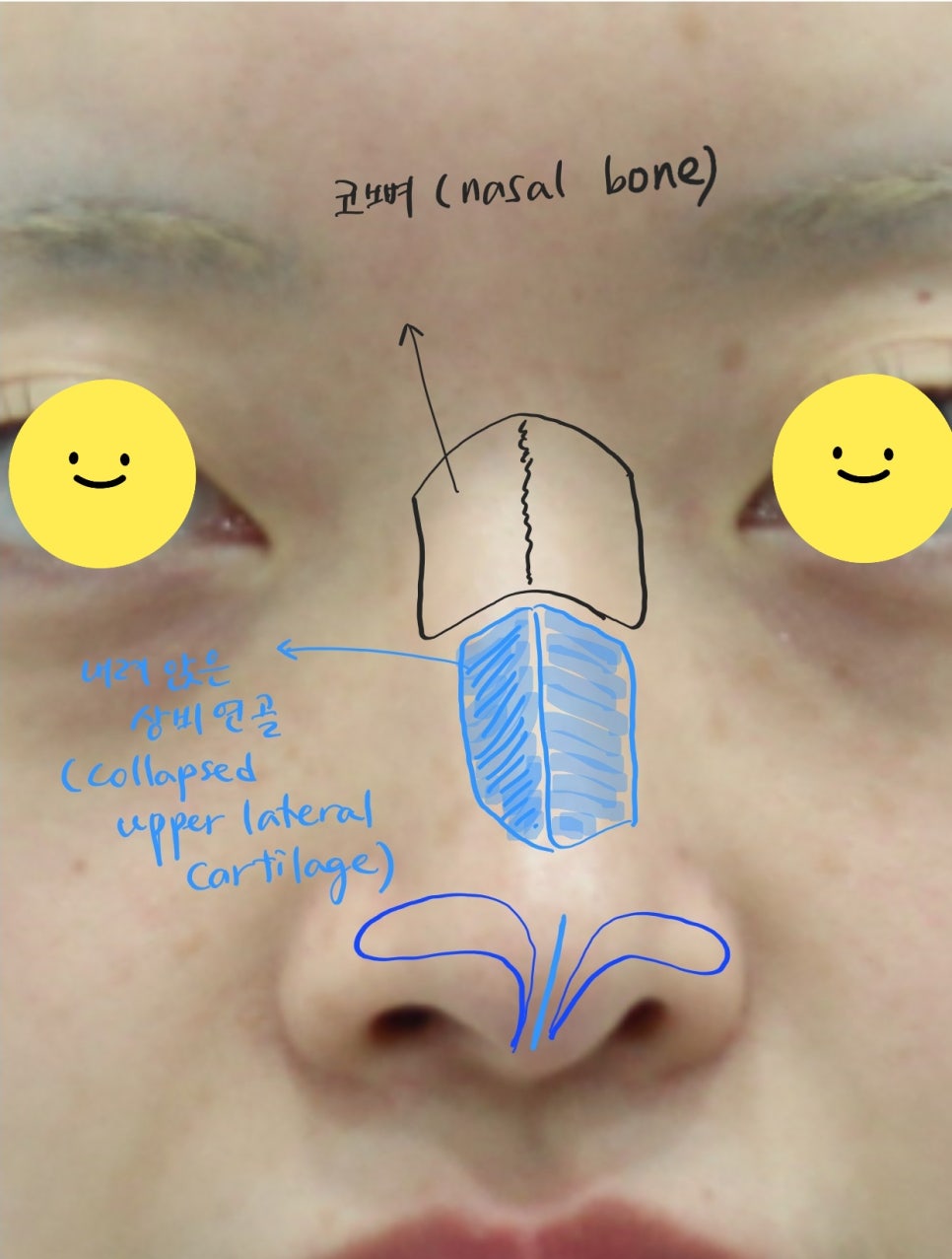
Structure of a crooked nose
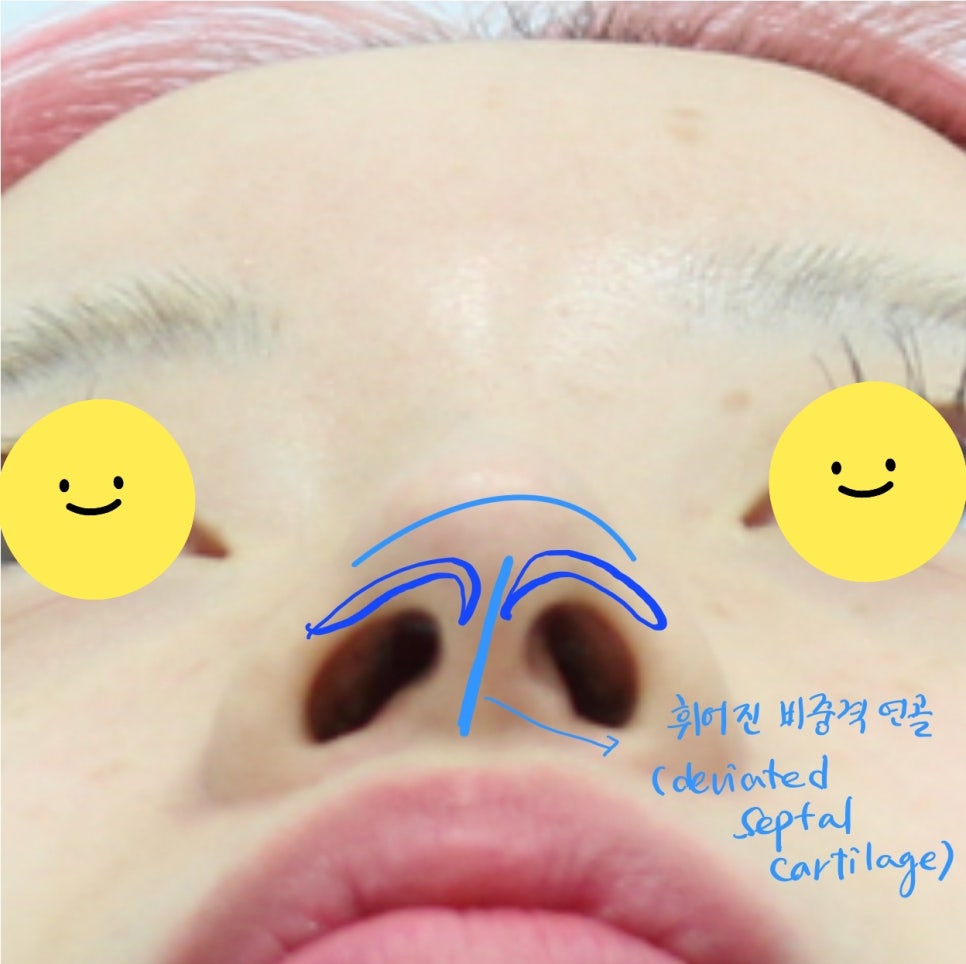
Deviated septal cartilage and nostril asymmetry
And a deviated septum often causes not only the nose itself to look crooked, but also asymmetry of the nostrils.
Because a large amount of cartilage material is needed for the surgery, autologous rib cartilage must be harvested.
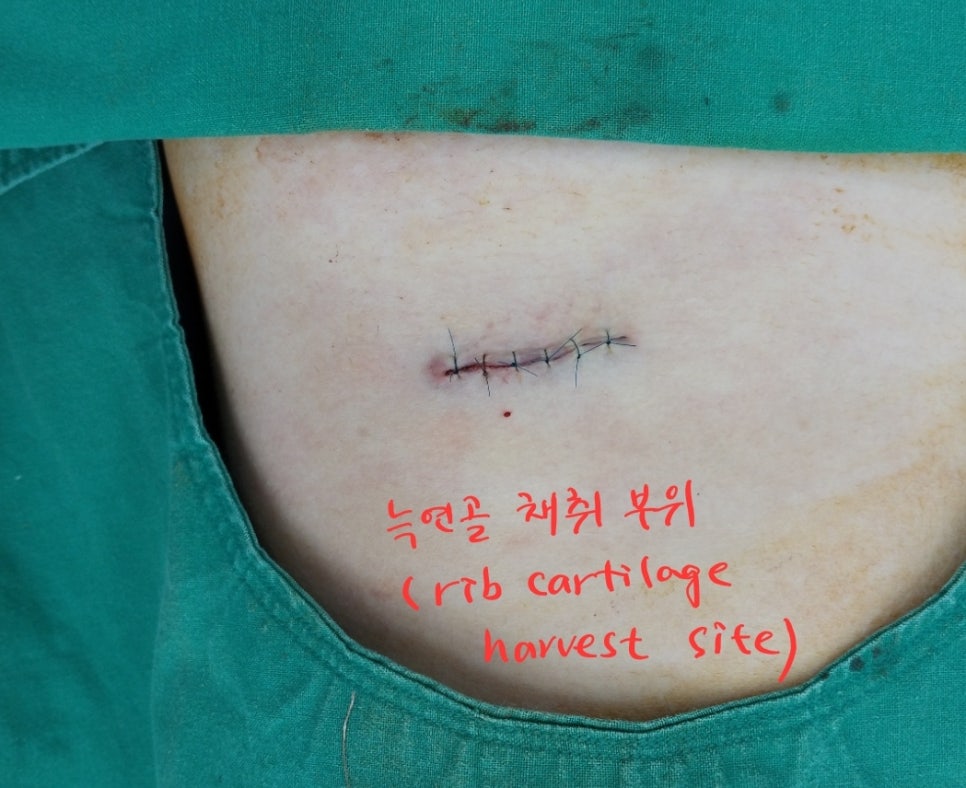
Harvest site for autologous rib cartilage
In women, rib cartilage is harvested through a 2.5 cm incision at the inframammary fold.
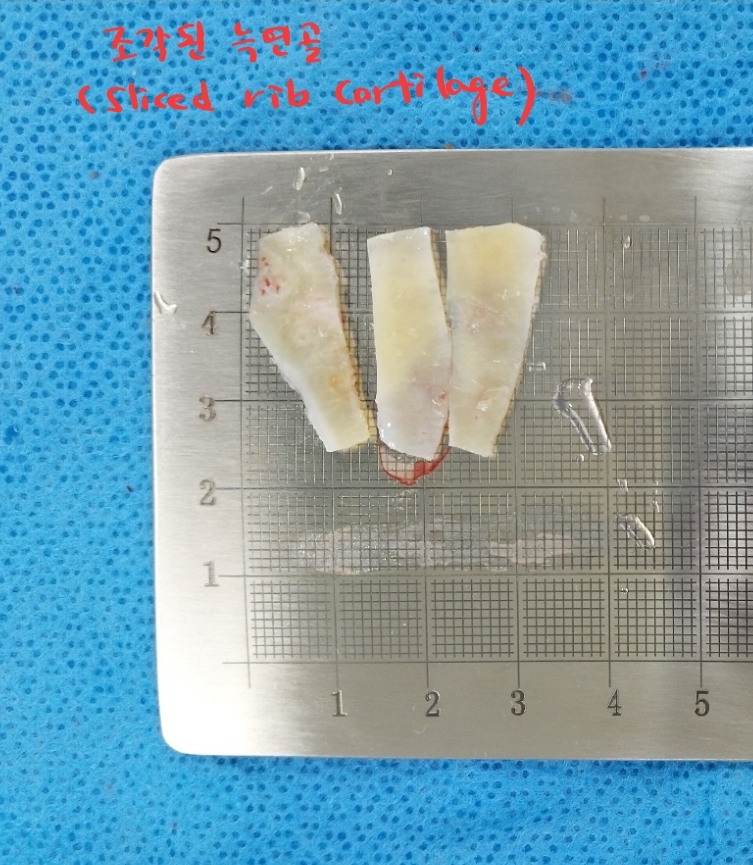
Fragmented pieces of harvested rib cartilage
The harvested rib cartilage is cut into thin fragments and used for rhinoplasty, and it is grafted in the form of a support structure to raise the nasal tip.
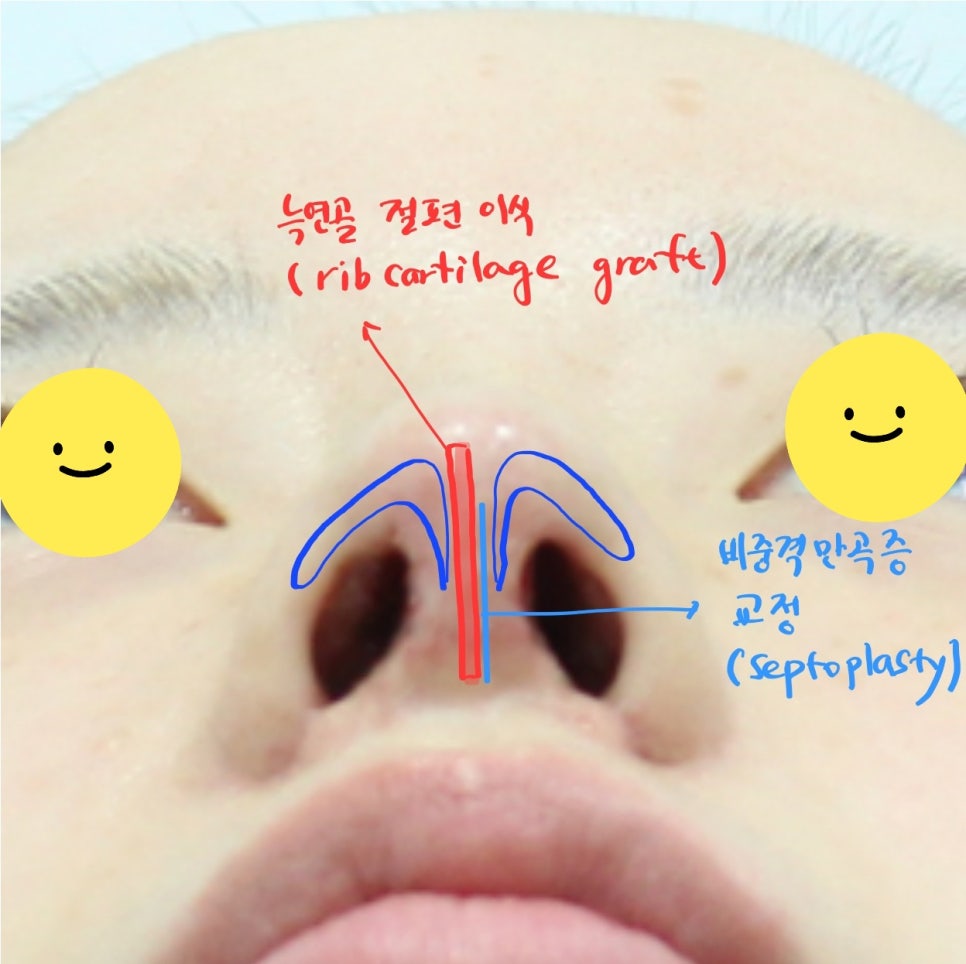
Rib cartilage support graft after correction of septal deviation
After correcting the septal deviation, the most important step is to firmly create a nasal tip support structure using rib cartilage fragments so that the deviation does not recur.
And the overall crookedness of the nose, especially the width and height of the upper lateral cartilage extending from the nasal bones to the nasal tip, is corrected.
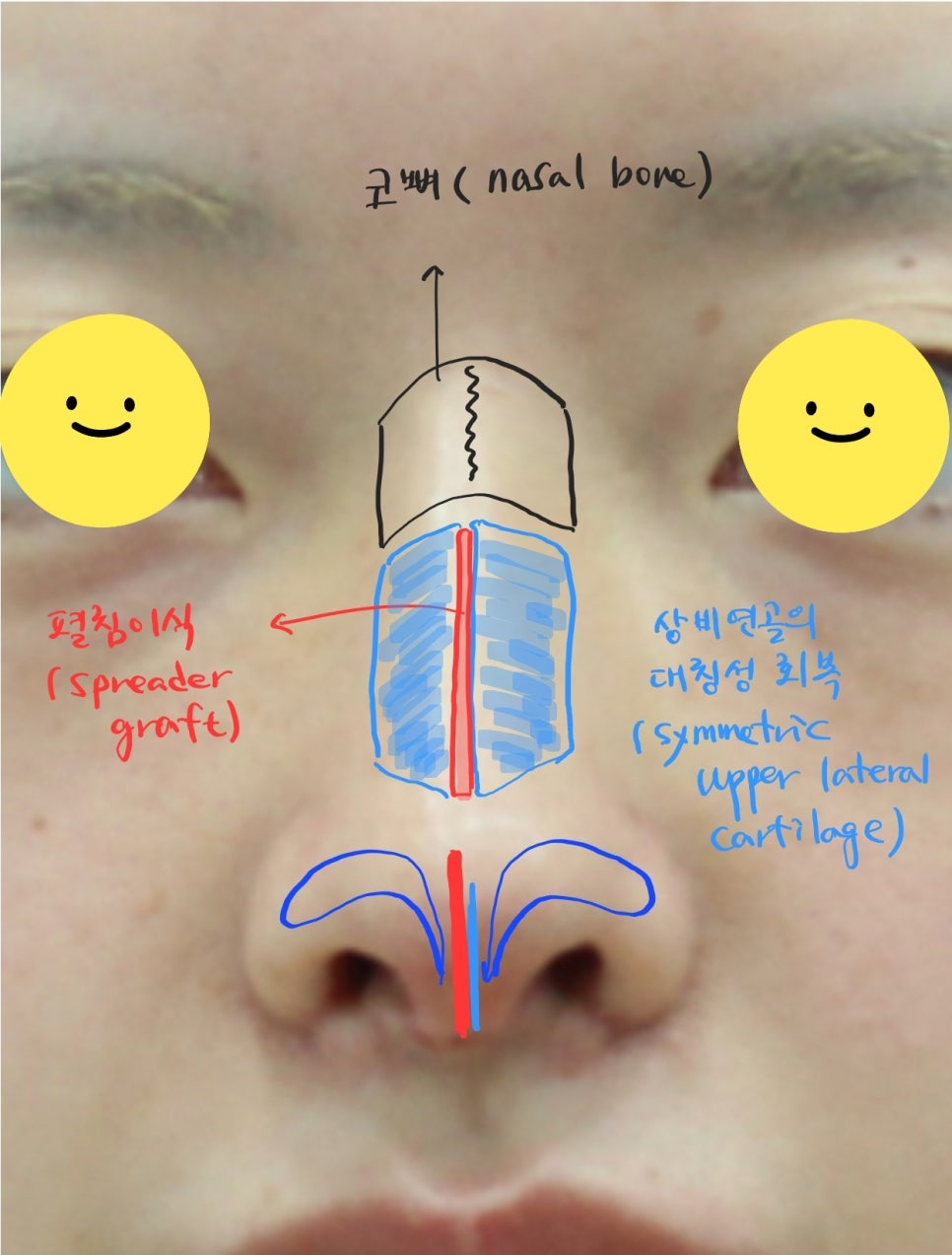
Spreader graft for crooked nose correction
To achieve symmetry in the width and support of the upper lateral cartilage, a spreader graft is placed on the weaker side. This restores the sunken area between the nasal bones and the nasal tip, and also widens the internal nasal valve.
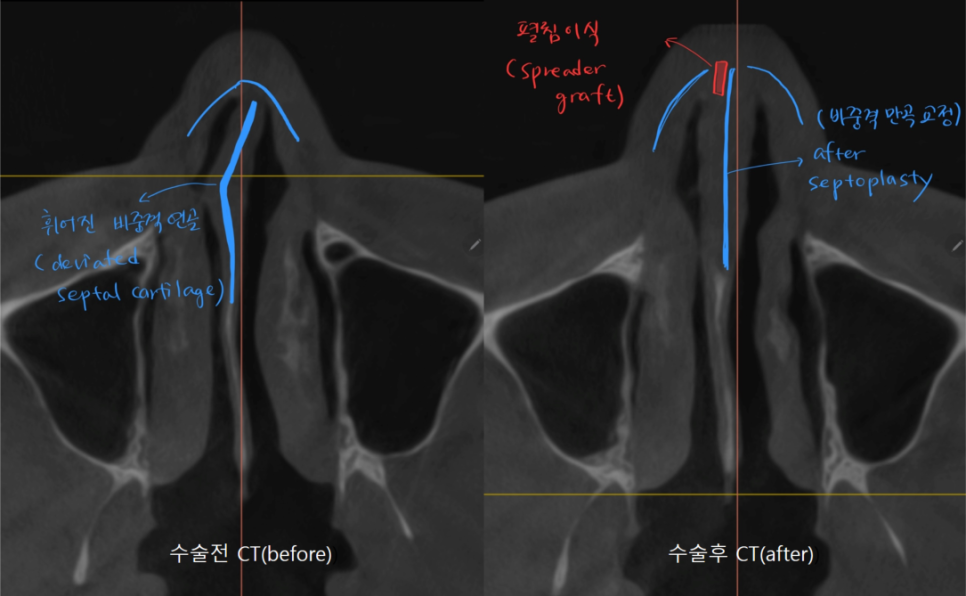
Comparison of CT scans before and after surgery
Although this CT scan was taken 9 days after surgery, so soft tissue swelling is still visible on the CT, the septal deviation was well corrected.
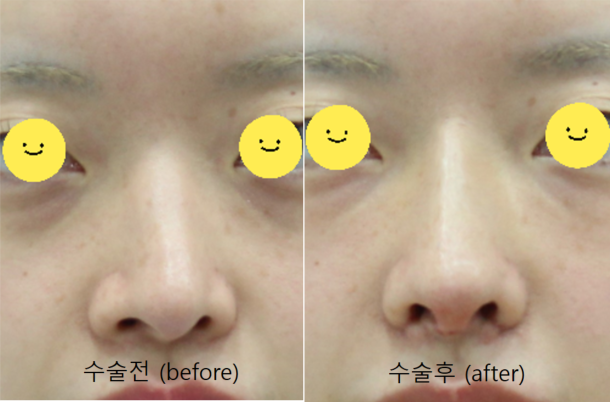
Front view comparison before and after surgery on postoperative day 9
The symmetry of the nasal bridge and nasal tip, which had been crooked to one side before surgery, improved significantly.
The patient came from overseas and, due to the customs of their country, did not want silicone implants to be used.
Because the patient wanted surgery without using a silicone implant in the nasal bridge, this was a high-difficulty crooked nose surgery, and it was a challenging case in which symmetry had to be created through the patient’s own nasal structure.
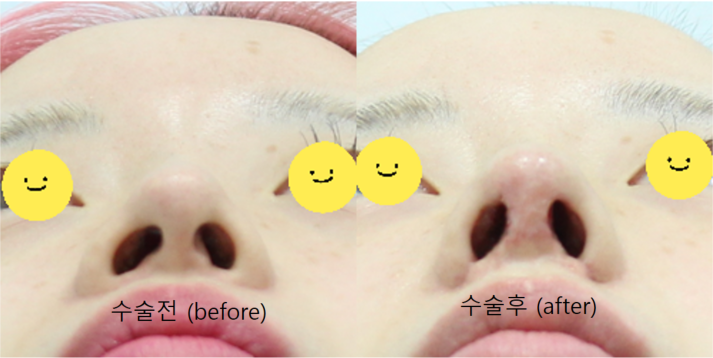
Lower view comparison before and after surgery on postoperative day 9
The asymmetry of the nostrils also recovered well after surgery, and because the internal structure of the nose was corrected, nasal congestion also improved.
In some cases, septal deviation becomes more severe after rhinoplasty. It is important to identify the exact cause through a preoperative CT scan and establish a surgical plan.
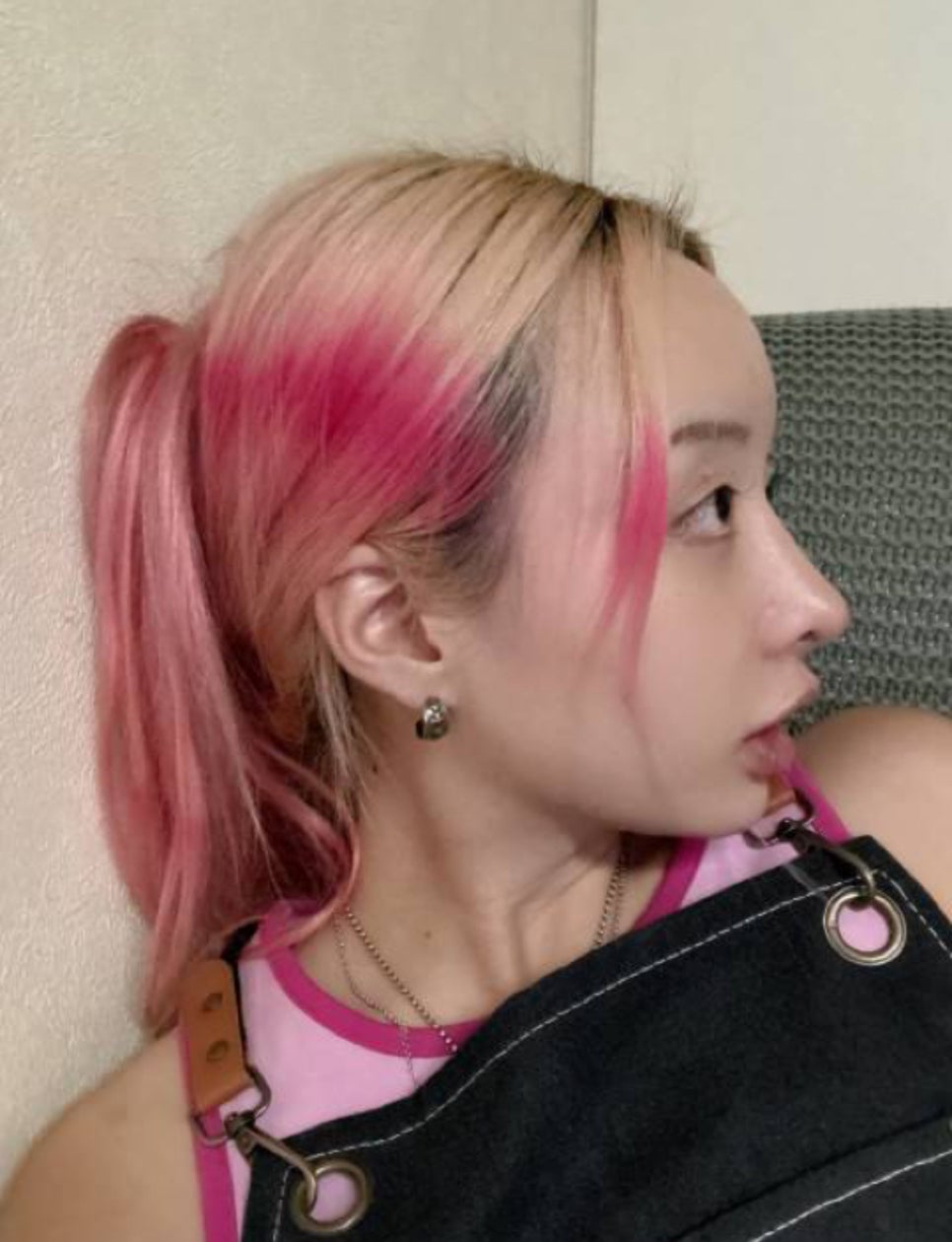
Review after crooked nose correction. This is a real model who consented to be 공개. Review after crooked nose rhinoplasty. Review after crooked nose surgery.