People who want a facelift are often most psychologically anxious about the long incision line and whether there will be a scar.
The most traditional facelift incision, and the one that tends to produce the best results, is a long continuous incision from the front hairline or temple area to the hairline behind the ear.
Although the facelift incision is long, there are proper surgical methods that can minimize postoperative scarring, so if these are followed carefully, concerns about scars can be reduced a great deal.
There are two types of front incision methods in a facelift.
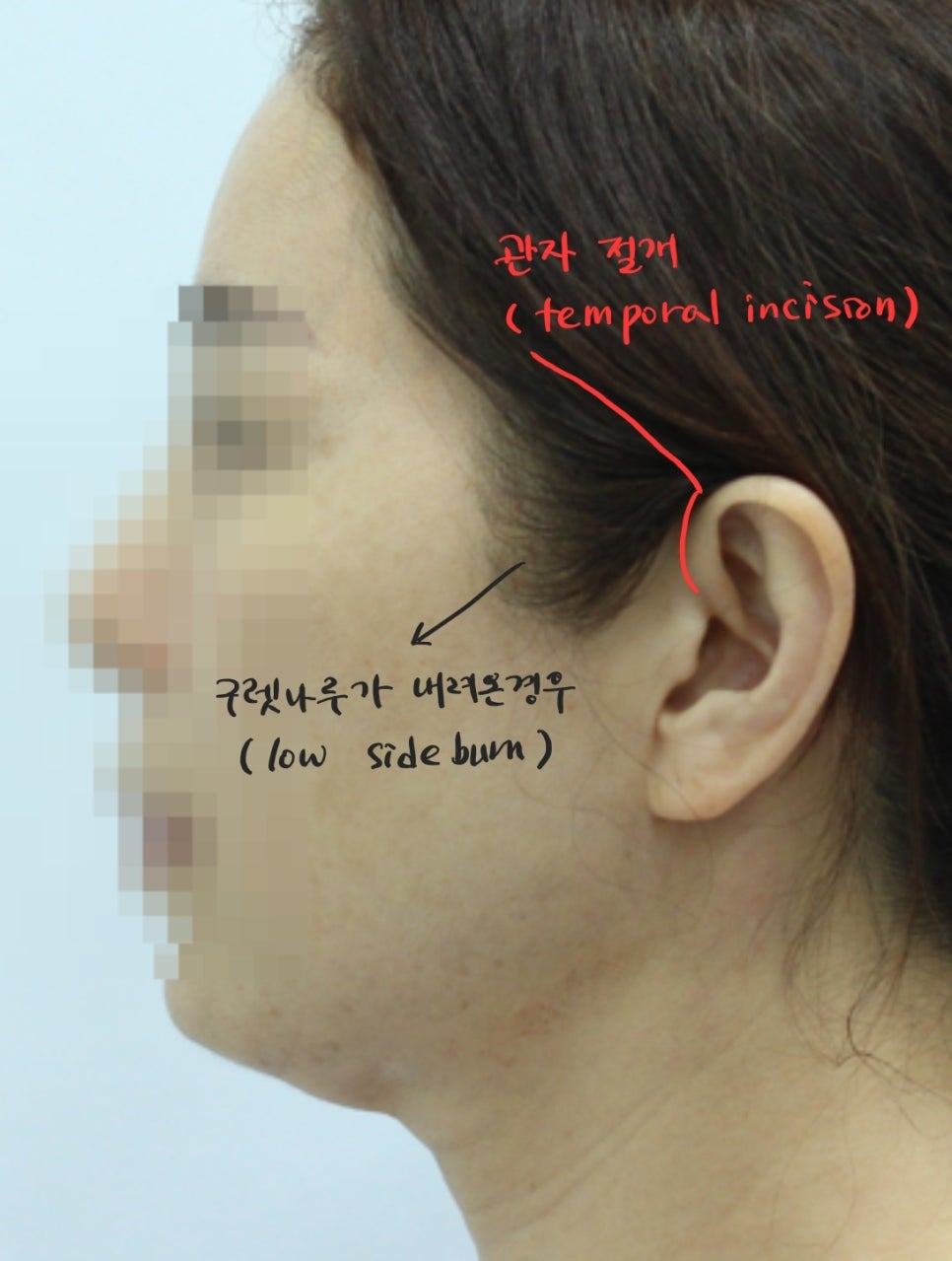
Incision method when sideburns have dropped
First, there is the temporal incision, and this incision is usually determined depending on how low the sideburns have descended.
If the sideburns have descended sufficiently and the hair is thick, an incision can be made in the temple area so that the front incision line can be hidden inside the scalp.
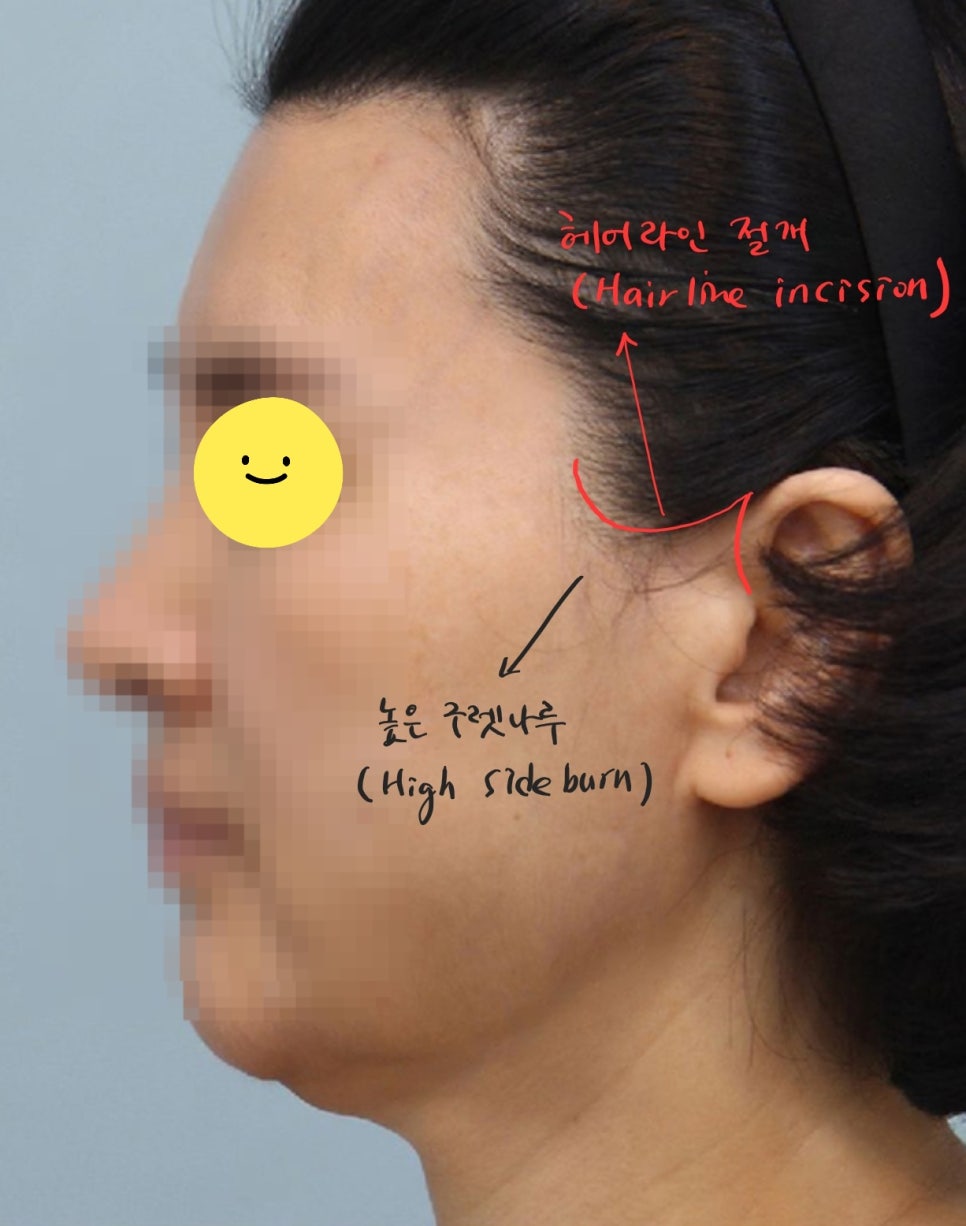
Incision method when sideburns are high
Second, if the sideburns are positioned high and the hair is not thick, it is better to make the incision along the hairline.
The reason for making the incision this way is that lifted skin may shorten the sideburns, and an incision along the hairline can preserve the shape and length of the sideburns.
There are also two methods for the incision around the ear.
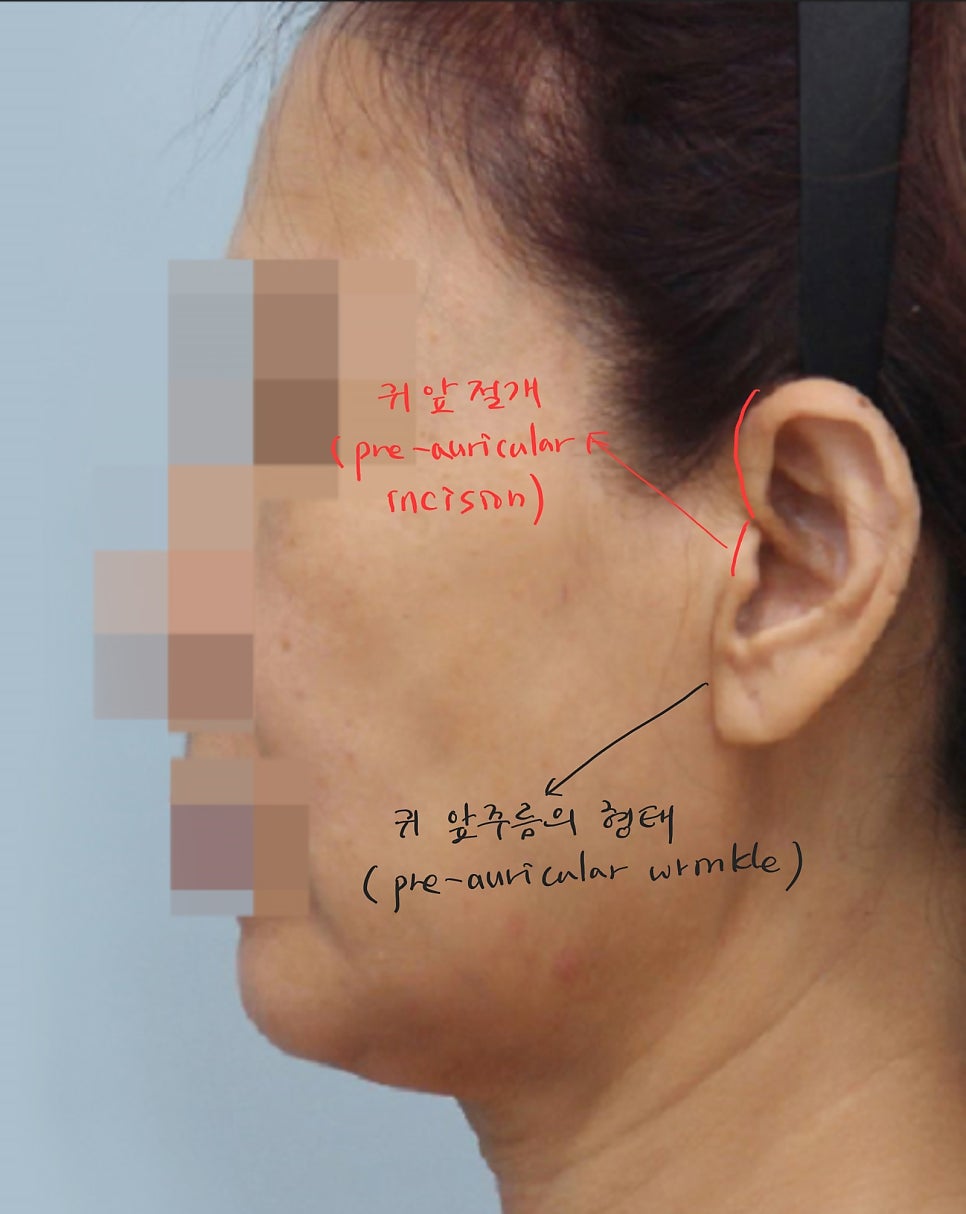
First, if you look at the shape of the ear, it has a complex structure, and the part that must be considered carefully in a facelift is the part called the tragus.
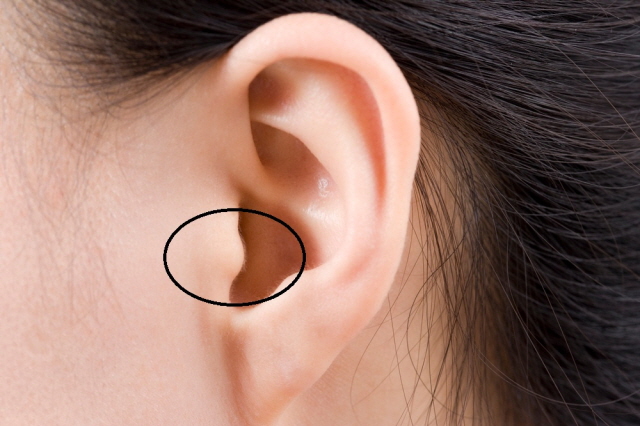
The tragus of the ear
Usually, people have a slight crease line in front of the ear, so the incision is decided by carefully examining its shape.
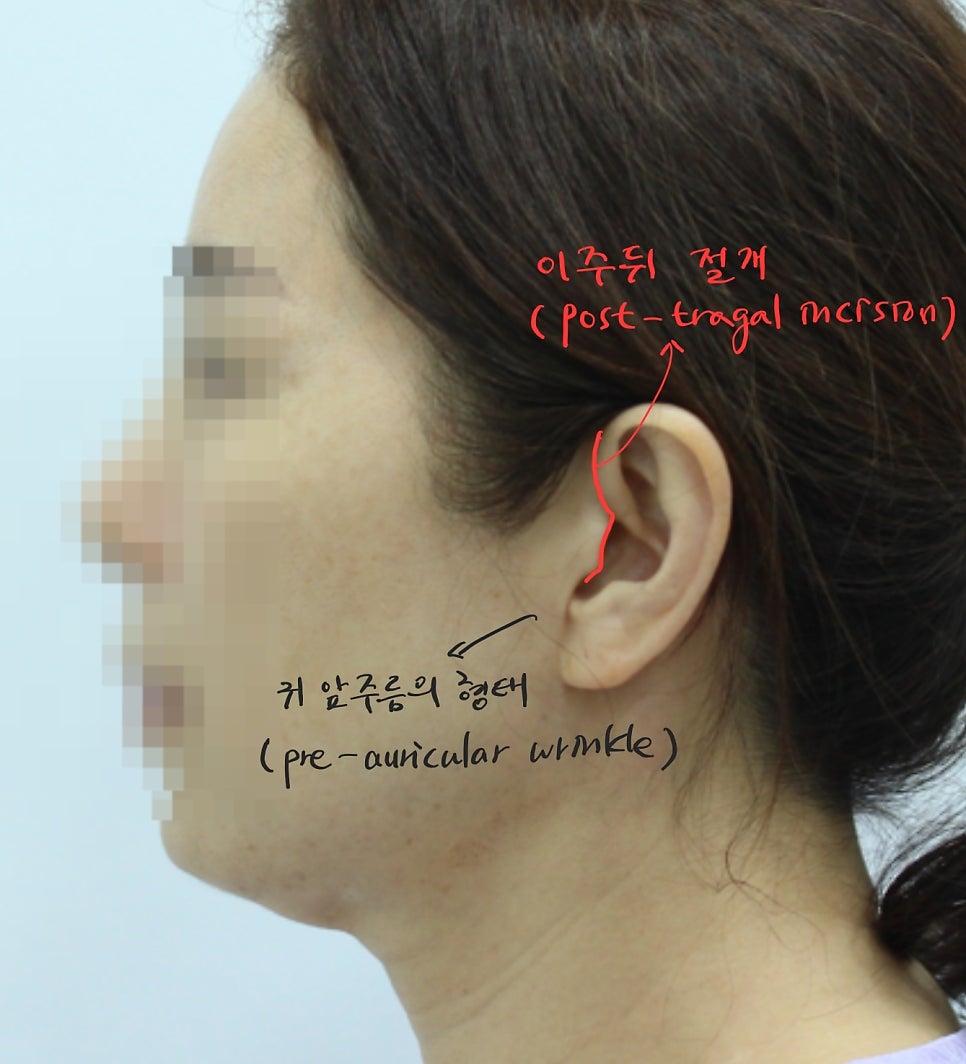
Incision behind the tragus
If the crease in front of the ear has a shape that runs into the tragus, it is better to place the facelift incision behind the tragus.
However, depending on the person, the crease in front of the ear may instead run along the front of the ear.
Pretragal incision
In that case, it is better to choose a pretragal incision that places the cut along the normal crease line in front of the ear.
In the case of the front scalp and the area in front of the ear, these are relatively noticeable parts of the facelift incision, so they must be chosen appropriately. But the incision that goes around behind the ear and into the back hairline is not easily visible, so the nearly fixed incision method is applied in the same way.
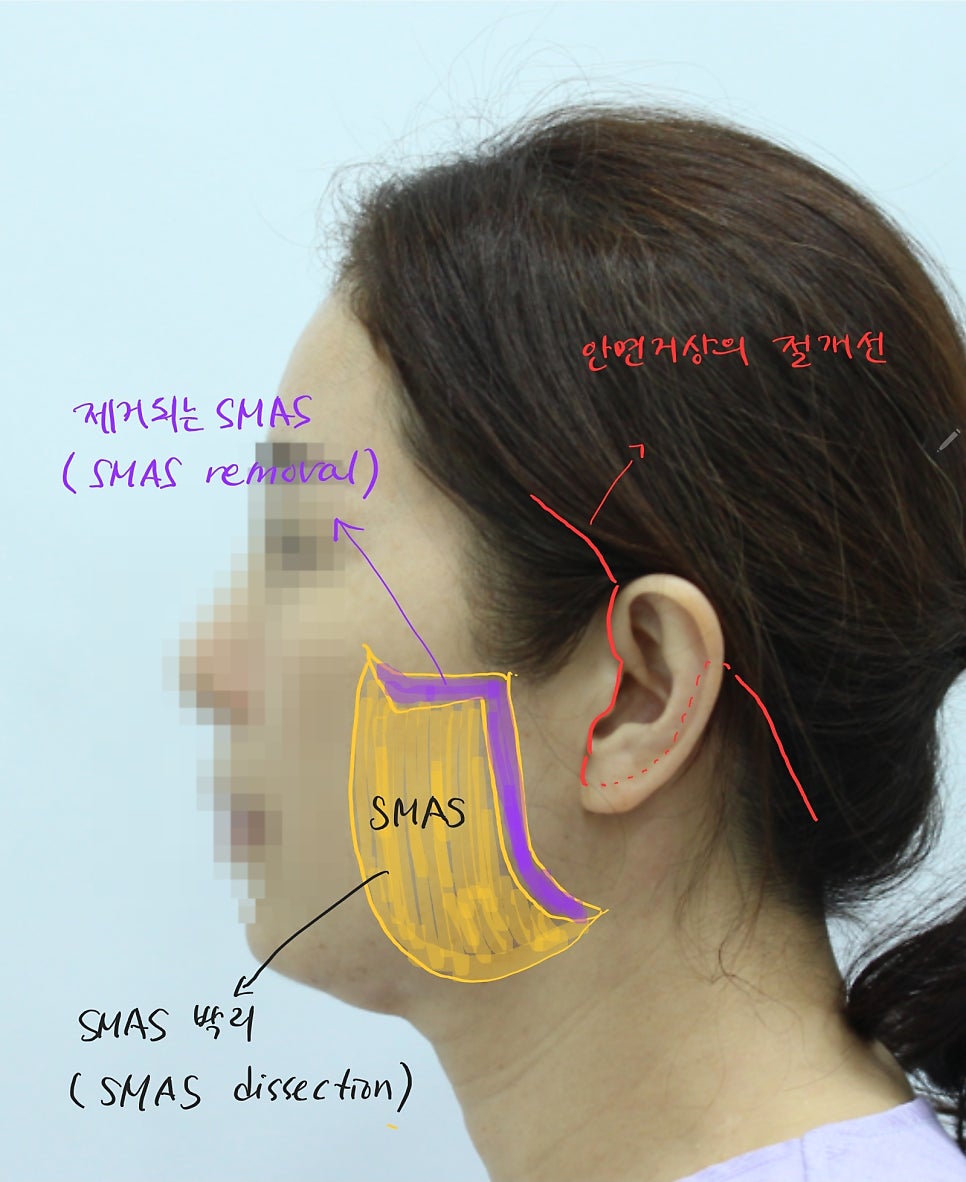
Facelift incision line and SMAS dissection
And more important than the skin incision line is the dissection of the SMAS, which can be said to be the core of a facelift.
Although a facelift requires a long incision, the reason scars are not very visible after surgery is that the SMAS is properly dissected and lifting is performed. If the tension from the facial lift is made to act on the SMAS rather than on the skin incision line, then very little tension is placed on the skin, so there is no side effect of the scar being pulled and widening.
Another important point for hiding scars after facelift surgery is preserving the shape of the ear.
If the lifting tension is placed on the skin incision line instead of the SMAS, not only can the scar widen, but the shape of the ear can also change. A representative example is pixy ear deformity.
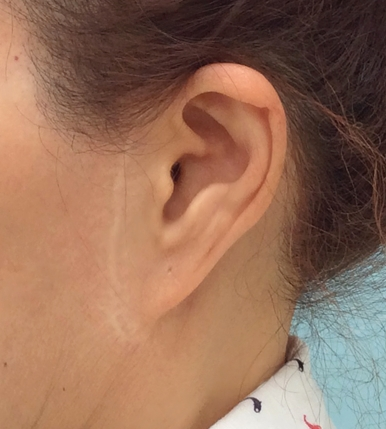
Pixy ear deformity that occurred after surgery at another hospital
Sutures from the facelift incision line are usually removed between 10 and 14 days after surgery, and once the scar maturation period has passed, the incision line scar is hardly noticeable.
These are follow-up photos of scars after facelift surgery.
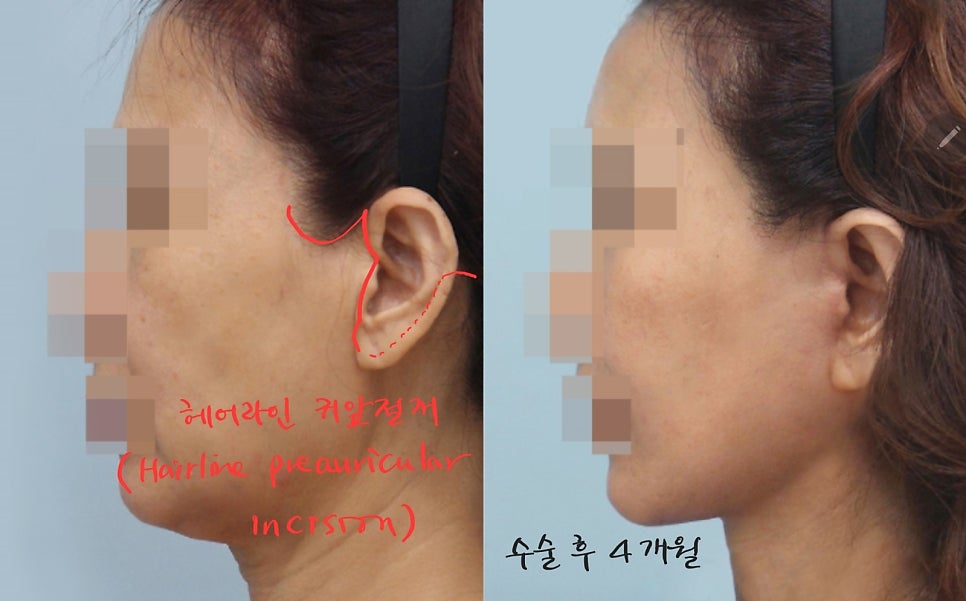
Progress after facelift surgery through the hairline and pretragal incision
This is a 4-month follow-up after a facelift performed with an incision along the hairline and along the crease line in front of the ear.
The incision behind the ear and the back hairline incision are, of course, not visible, and the incision in front of the ear and the front hairline incision are also hardly noticeable.
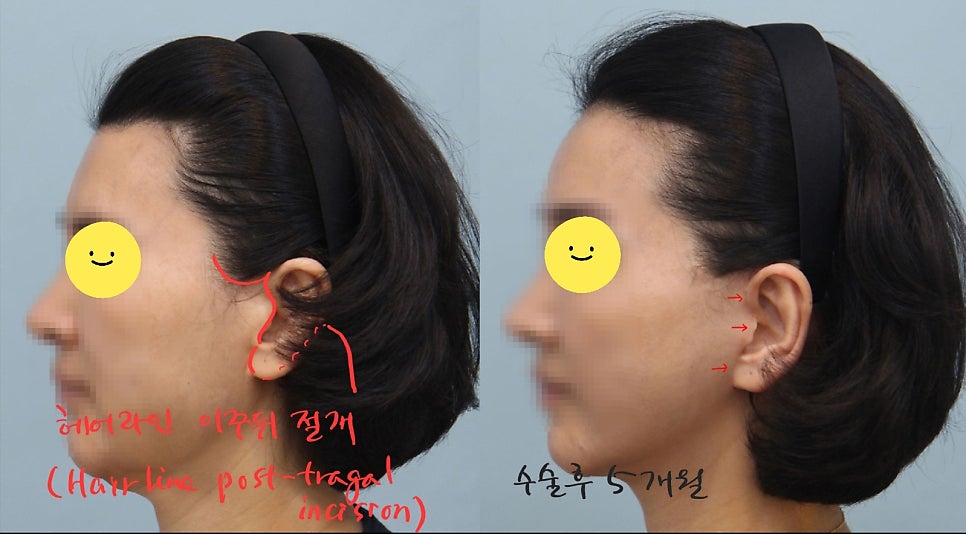
5 months after facelift surgery through the hairline and behind-the-tragus incision
This is a 5-month follow-up after a facelift using the front hairline and behind-the-tragus incision.
Because the ear shape is well preserved and the scar is hardly noticeable, various hairstyles can be created, including short hairstyles or styles that use a headband.
Since a facelift requires a long incision, it is important to choose the location of the incision line well and preserve the shape of the ear in order to avoid leaving scars.
And the most important point in a facelift is to properly dissect the SMAS layer and the retaining ligaments so that the lifting tension is applied to the SMAS layer and not to the skin. This can be said to be the key technique for achieving a good lifting effect without leaving scars.