Fillers and fat grafting are the most commonly used methods to make the forehead look rounder and more feminine, but some people also choose to insert a forehead implant for a semi-permanent effect.
'Complications Caused by Forehead Implants'
In the past, instead of making implants based on 3D CT, some were made by taking a mold over the forehead skin, and as a result, problems sometimes occurred due to forehead implants.
And representative side effects of forehead implants can include bone erosion, implant migration, seroma where fluid collects, hematoma where blood collects, inflammation, calcification of the implant, nerve irritation symptoms in the forehead or face, and headaches. Cosmetic problems may also occur, such as the implant becoming visible through the skin or the implant creating a noticeable boundary.
However, in most cases, even if you have a forehead implant, it does not cause problems, so if you do not have any issues, there is no need to worry.
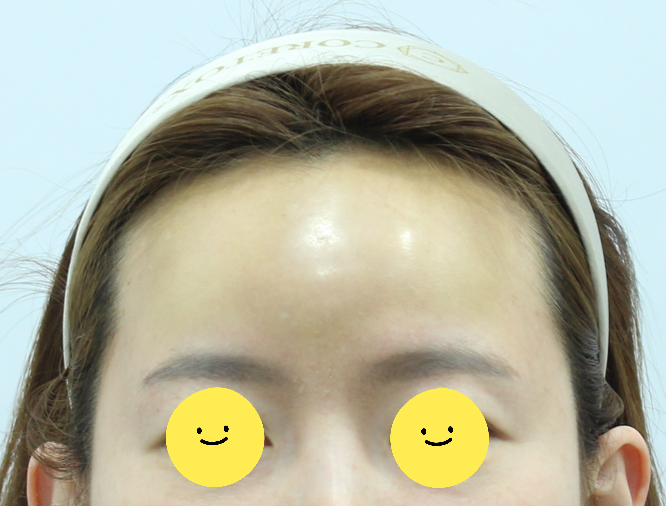
Skin color change caused by blood pooling around a forehead implant
Because a forehead implant covers the entire forehead, fluid can sometimes accumulate where the implant does not fit the curved surface of the forehead exactly, and the thin edge of the implant may occasionally irritate the blood vessels around the forehead and cause blood pooling.
If fluid accumulates in the forehead, people may live by periodically draining it with a syringe, but if blood pools, the skin color can darken like a bruise on the forehead, making daily life difficult.
If you decide to have the forehead implant removed, the most concerning issue is whether the forehead will look too sunken after removal.
This problem can be predicted to some extent with a preoperative CT scan.
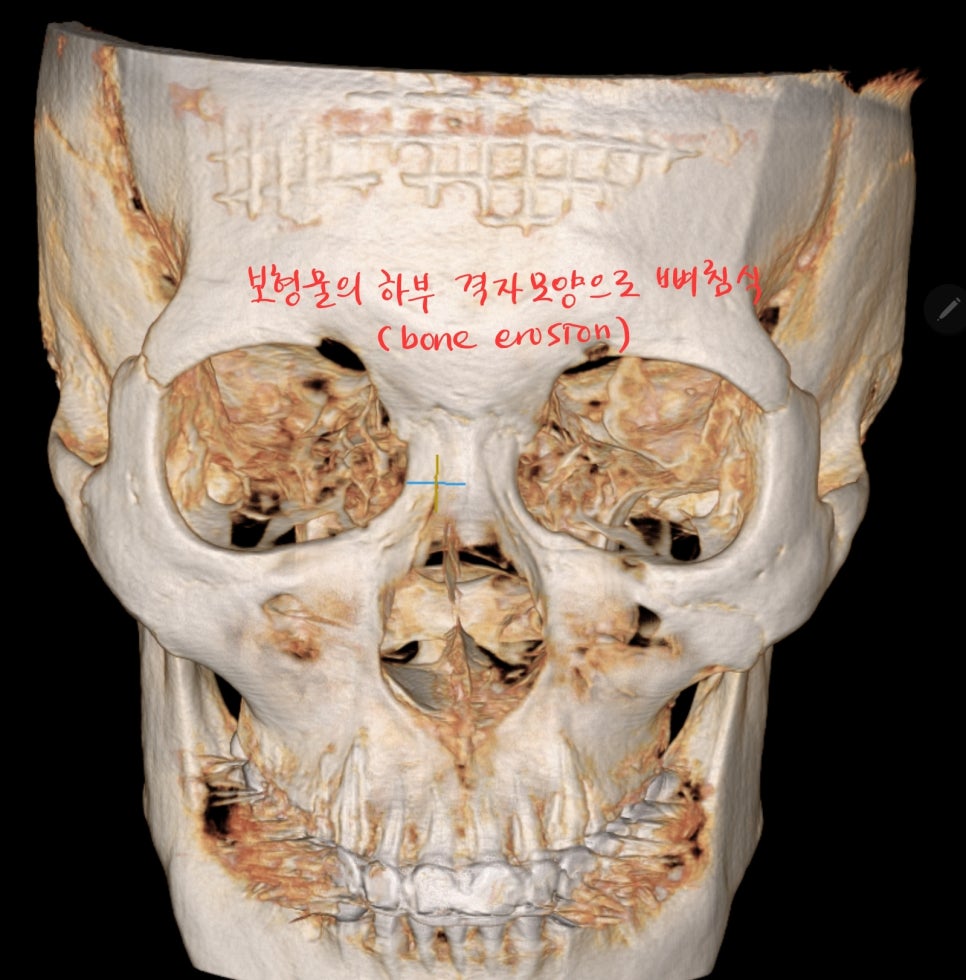
Erosion of the forehead bone caused by a forehead implant confirmed on CT scan
In the past, when making forehead implants, some surgeons added cuts to the bottom of the implant or made the lower surface of the implant into a grid pattern to prevent the implant from moving.
This method of making the implant can temporarily prevent movement, but in the long term it can cause irregular bone erosion of the forehead bone and make it uneven.
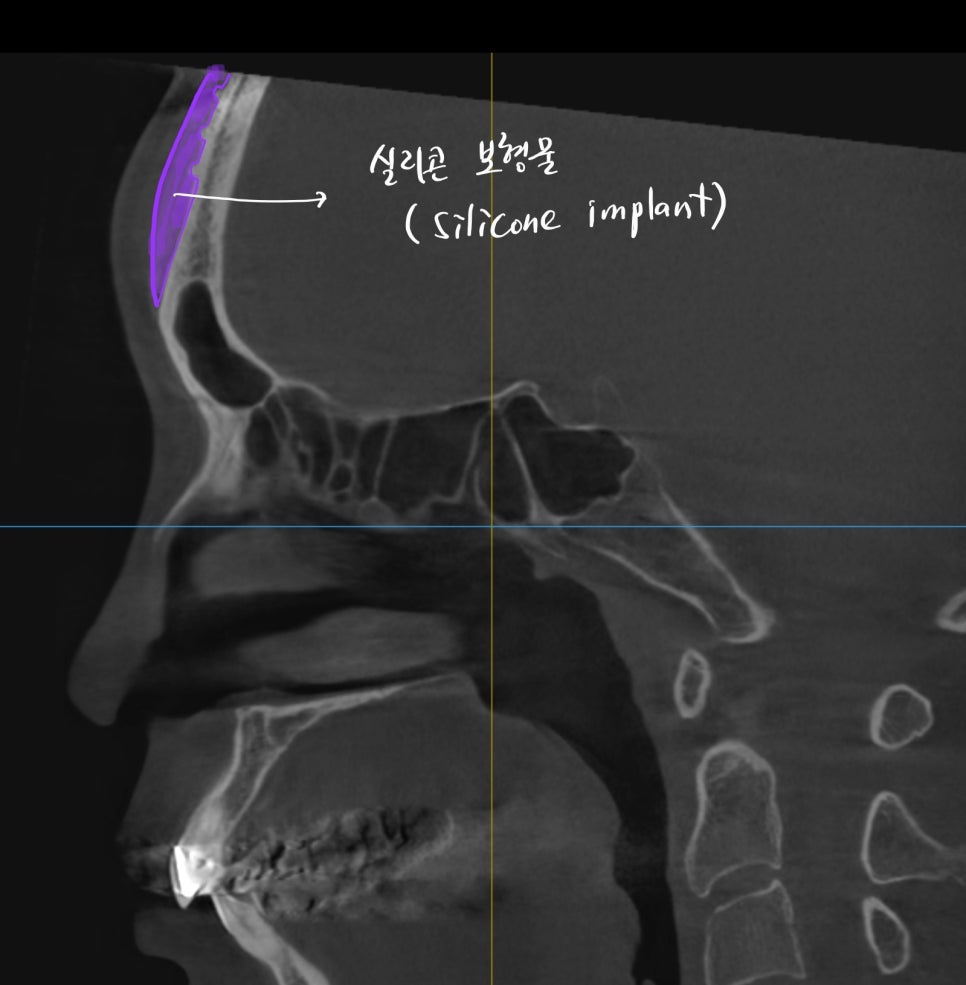
Erosion of the forehead bone caused by a silicone implant confirmed on CT scan
In addition, forehead implants can cause overall long-term erosion of the forehead bone, making the forehead bone sink overall.
'Minimal-Incision Forehead Implant Removal Using Endoscopy (Pentafix Method)'
Even if the implant in the forehead is large, a large incision is not necessary to remove it.
This is because the implant can be removed using endoscopy, and through this incision, if needed, a forehead lift can also be performed while removing the implant.
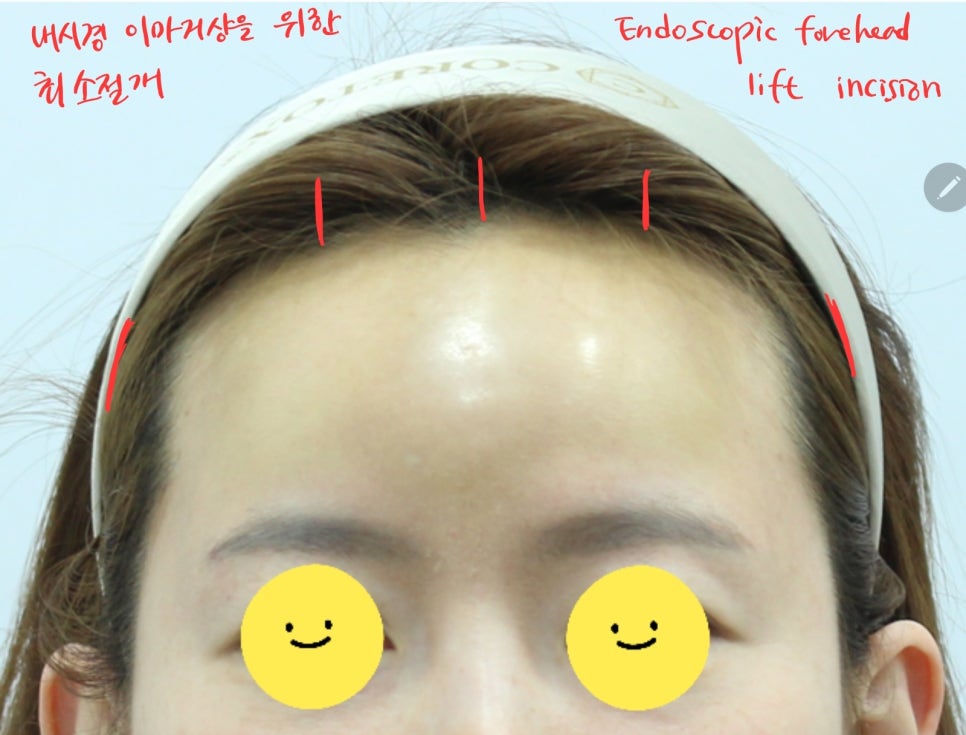
Minimal-incision forehead implant removal and forehead lift using endoscopy
The surgery begins by separating the large forehead implant into several pieces and removing them under endoscopic visualization through small incisions in the scalp.
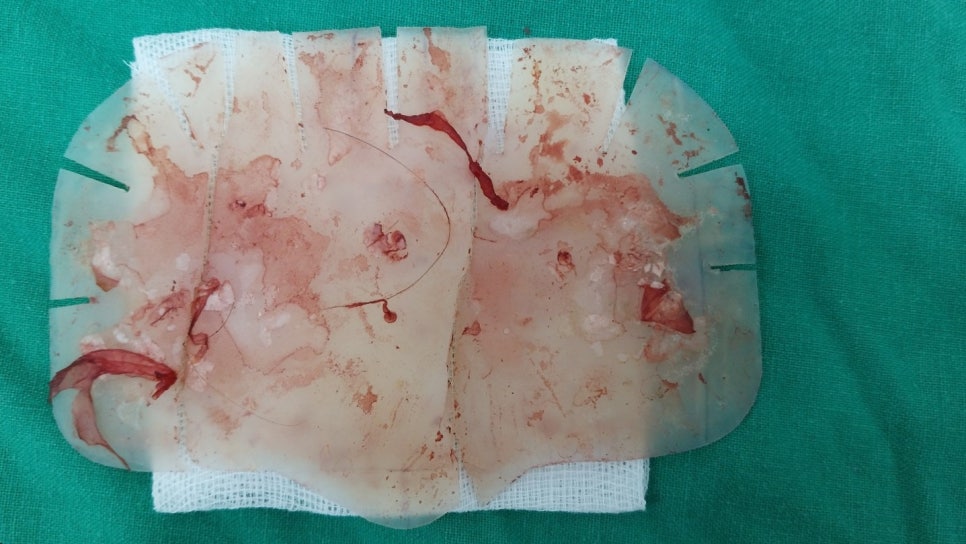
Removed forehead implant and calcified lesion
To make sure that all pieces of the implant have been removed, it is necessary to confirm under endoscopic visualization so that no fragments remain in the forehead.
Forehead implants that have been inside the body for a long time form a capsule, and when calcium components build up around this capsule, the implant becomes calcified.
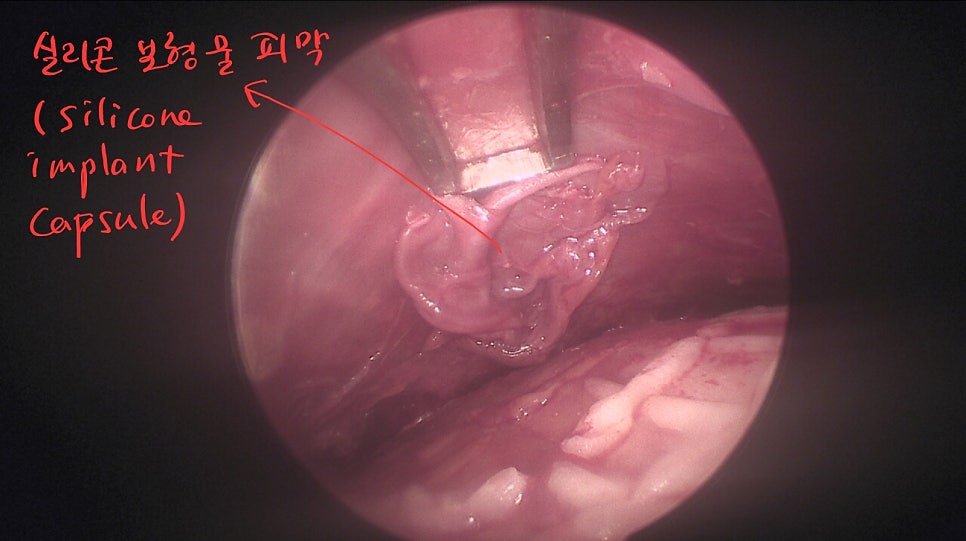
Removing the capsule as well after removing the implant under endoscopic visualization
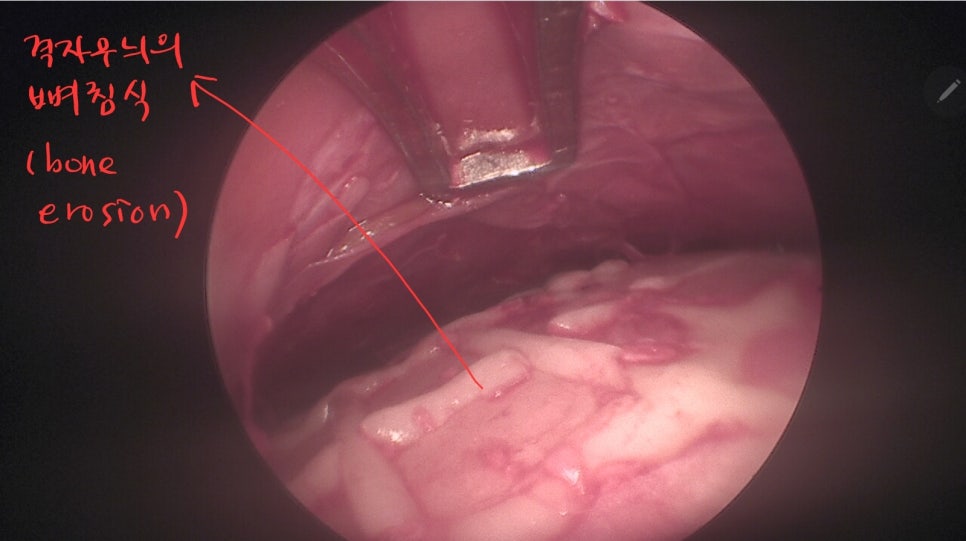
Bone erosion caused by the grid pattern on the bottom of the forehead implant
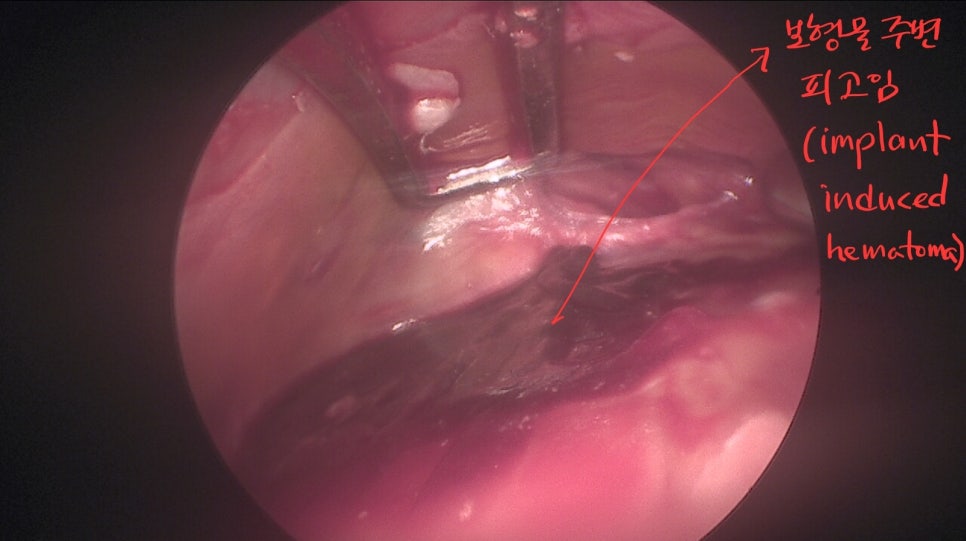
Blood pooling around the implant caused by vessel irritation from the forehead implant
Using Full HD high-definition endoscopy, the forehead implant and the surrounding capsule are removed, the bone erosion caused by the implant is smoothed out, and the pooled blood is washed away.
'Pentafix Forehead Lift and Forehead Fat Grafting'
Then the endoscopic forehead lift is performed according to the original surgical plan.
Again, under the high-definition endoscopic view, the periosteum of the forehead, the corrugator muscles, and the retaining ligaments are carefully dissected while avoiding damage to nerves and blood vessels so that the lifting effect can last longer.
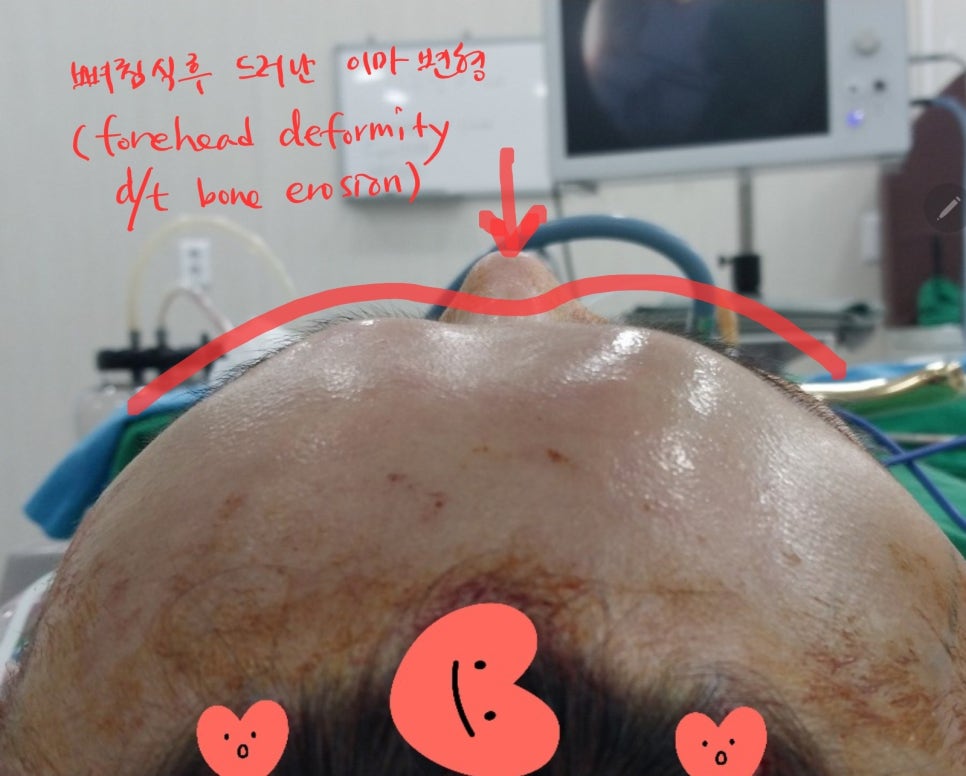
Forehead deformity caused by bone erosion exposed after forehead implant removal
Even if a forehead lift is performed after the implant is removed, the bone erosion at the site where the implant was removed can still be visible through the skin. For a more feminine forehead appearance, fat grafting to the forehead is recommended.
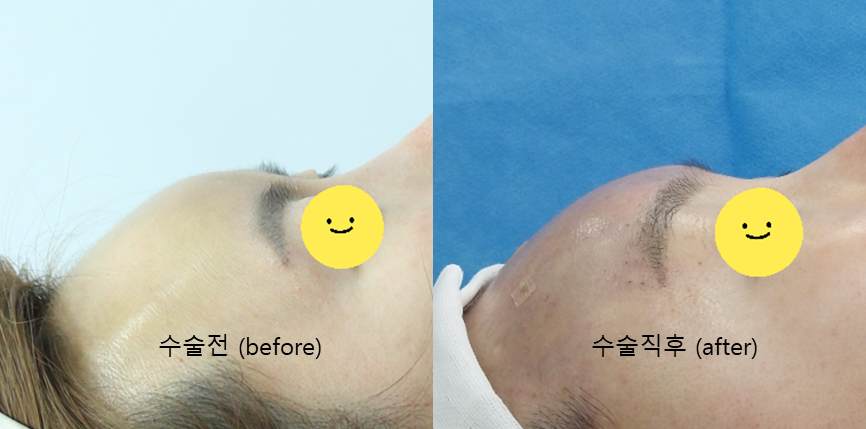
Comparison immediately after forehead lift and forehead fat grafting following minimal-incision forehead implant removal
Side effects of forehead implants may include inflammation related to the implant in the short term, and in the long term, fluid collection around the implant (seroma), blood collection (hematoma), and erosion of the forehead bone can also occur.
To remove the implant, a long and large incision is not necessary like when the implant was inserted.
The implant can be removed through a small incision inside the scalp using endoscopy (the Pentafix forehead lift method), and if needed, the forehead shape can be refined to look prettier and more youthful with an endoscopic forehead lift or forehead fat grafting.
Pentafix forehead lift at Garnet Plastic Surgery