When consulting with patients who had previously undergone a facelift and are seeking revision surgery, many ask about scar problems and changes in ear shape.
A facelift requires a long incision, so it is important to place the incision in an appropriate area and hide the parts that can be concealed inside the scalp or behind the ear.
And because the incision in front of the ear is in a highly visible area, it must be handled with the utmost care in a facelift.
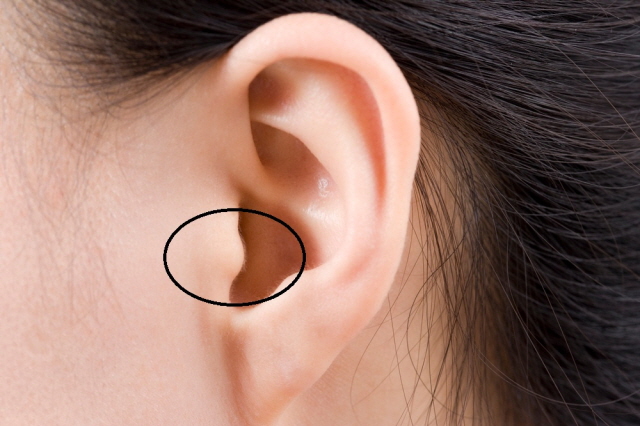
The Curvature of the Ear and the Tragus
Although the structure of the ear varies slightly from person to person, it has a rounded curved shape depending on the cartilage, and there is a bead-like cartilage structure called the tragus.
Therefore, for the incision in front of the ear during a facelift, a straight incision should be avoided as much as possible; following the cartilage curve of the ear makes the scar less noticeable.
And if the dissection of the SMAS layer is insufficient and only the skin layer is pulled, the scar may be pulled forward, leading to a deformation of the ear shape.
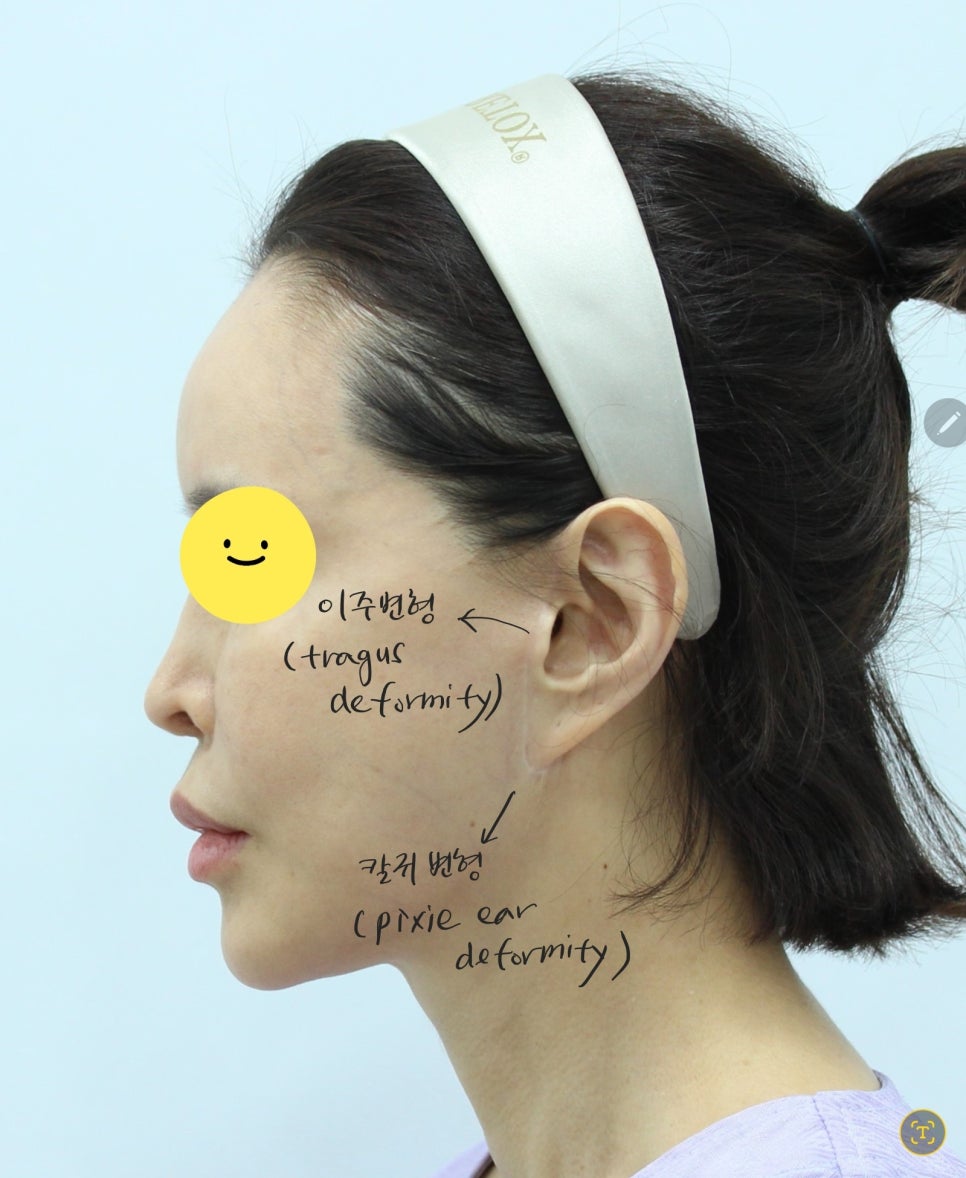
Scarring and Ear Shape Deformity After a Previous Facelift
Among the cartilage structures of the ear, there is a cartilage structure called the tragus, which normally lies backward and covers the ear canal.
However, if only the skin layer is pulled in a facelift, the scar is drawn forward, causing a deformity in which the shape of the tragus disappears, and as a result, the ear canal may become exposed in side view.
And if the scar is pulled toward the jawline, the shape of the earlobe changes, resulting in pixie ear deformity.
'Deep Mini Facelift (Deep Plane Mini Facelift)'
Since there is no fixed surgical method for a mini facelift, there are various incision methods, and the surgical technique differs from clinic to clinic.
Usually, the most common minimal-incision mini facelift uses an incision inside the scalp.
However, even in a mini facelift, an incision in front of the ear may sometimes be necessary in order to more effectively dissect sufficiently beneath the SMAS layer and address the retaining ligaments.
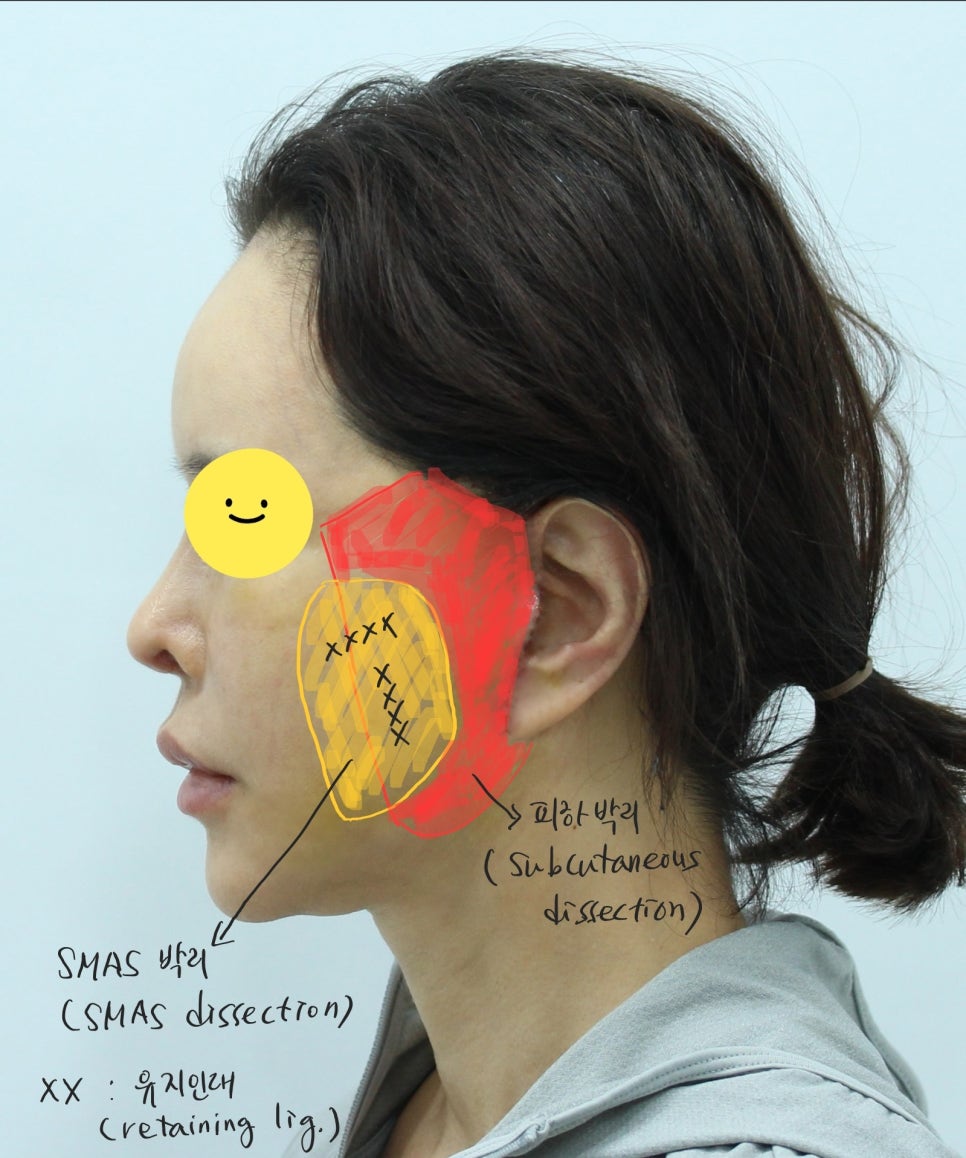
Dissection Range and Management of Retaining Ligaments in the Deep Plane Mini Facelift
In the case of a deep plane mini facelift, the dissection range is similar to that of a facelift, and the difference from a traditional facelift is that there is less dissection in the jawline area, allowing lifting that focuses on the midface.
Even in a deep plane mini facelift, as with a facelift, the most important part is dissection of the SMAS, and it is important to properly address the retaining ligaments so that tension from the lifted tissues is not placed on the skin layer.
Only by performing the surgery in this way can the lifting effect last longer, the scar remain inconspicuous, and ear shape deformity be prevented.
'Deep Mini Facelift (Deep Plane Mini Facelift) Before and After'
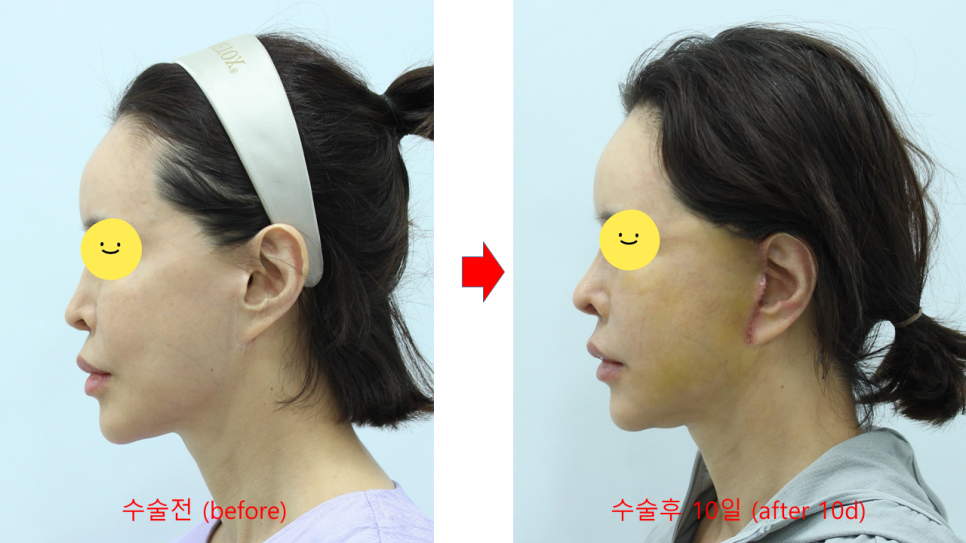
Deep Plane Mini Facelift: 10-Day Follow-Up
This photo was taken immediately after stitch removal on day 10 after surgery, and the slight redness at the incision site will return to normal skin color through the scar maturation process.
The deformity of the tragus caused by the pulling of the scar from a previous facelift has been corrected, and the ear canal is naturally covered.
In addition, the pixie ear deformity caused by the pulling of the skin toward the jawline has also been corrected to some extent.
Of course, to properly correct pixie ear deformity, it would be much better to undergo revision facelift surgery with an incision extending behind the ear rather than a mini facelift focused on midface lifting, but please keep in mind that the surgery was performed according to the patient's preference.