In the first rhinoplasty, septal cartilage or ear cartilage is often used at the nasal tip to raise it.
In rhinoplasty, even though a support structure is created at the nasal tip using autologous cartilage such as septal cartilage or ear cartilage, various forces such as the tension of the stretched skin after surgery, the action of facial expression muscles, and gravity can cause the height of the nasal tip to decrease slightly. This is called nasal tip drooping, and in a way, it can be considered a normal postoperative course.
When the nasal tip droops after the first surgery, it often leads to aesthetic dissatisfaction, and it is important to identify and address the cause of the drooping.
'Nasal tip drooping that occurred after the first rhinoplasty at another hospital'
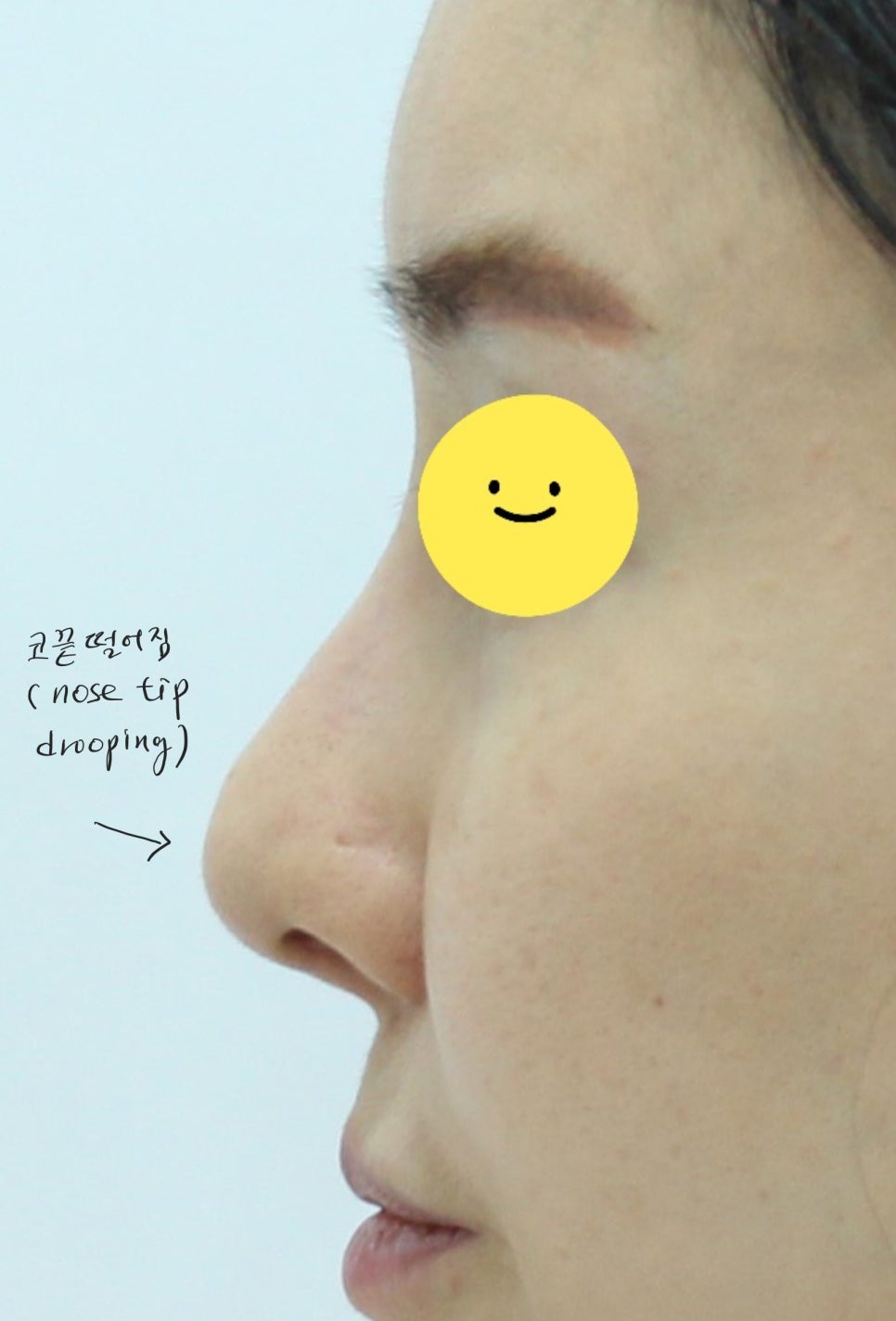
Nasal tip drooping after the first surgery
This patient visited us because of nasal tip drooping after the first rhinoplasty using septal cartilage at another hospital.
The patient said that over time after the nose surgery, the nasal tip drooped and that the nose became bent as the tip drooped.
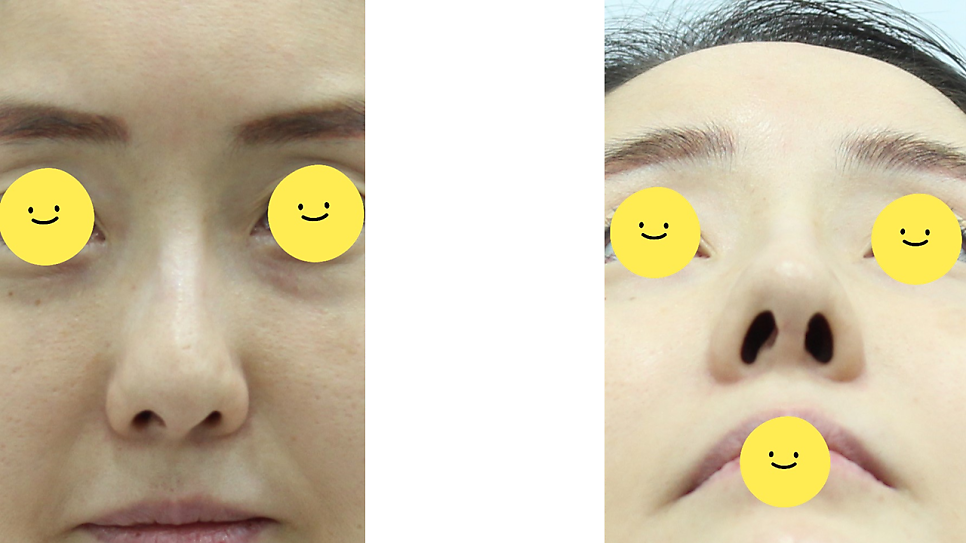
Nasal tip drooping caused by a bent nasal tip
Usually, the causes of nasal tip drooping after the first surgery vary, but when septal cartilage was used, it is important to check whether a deviated septum remains.
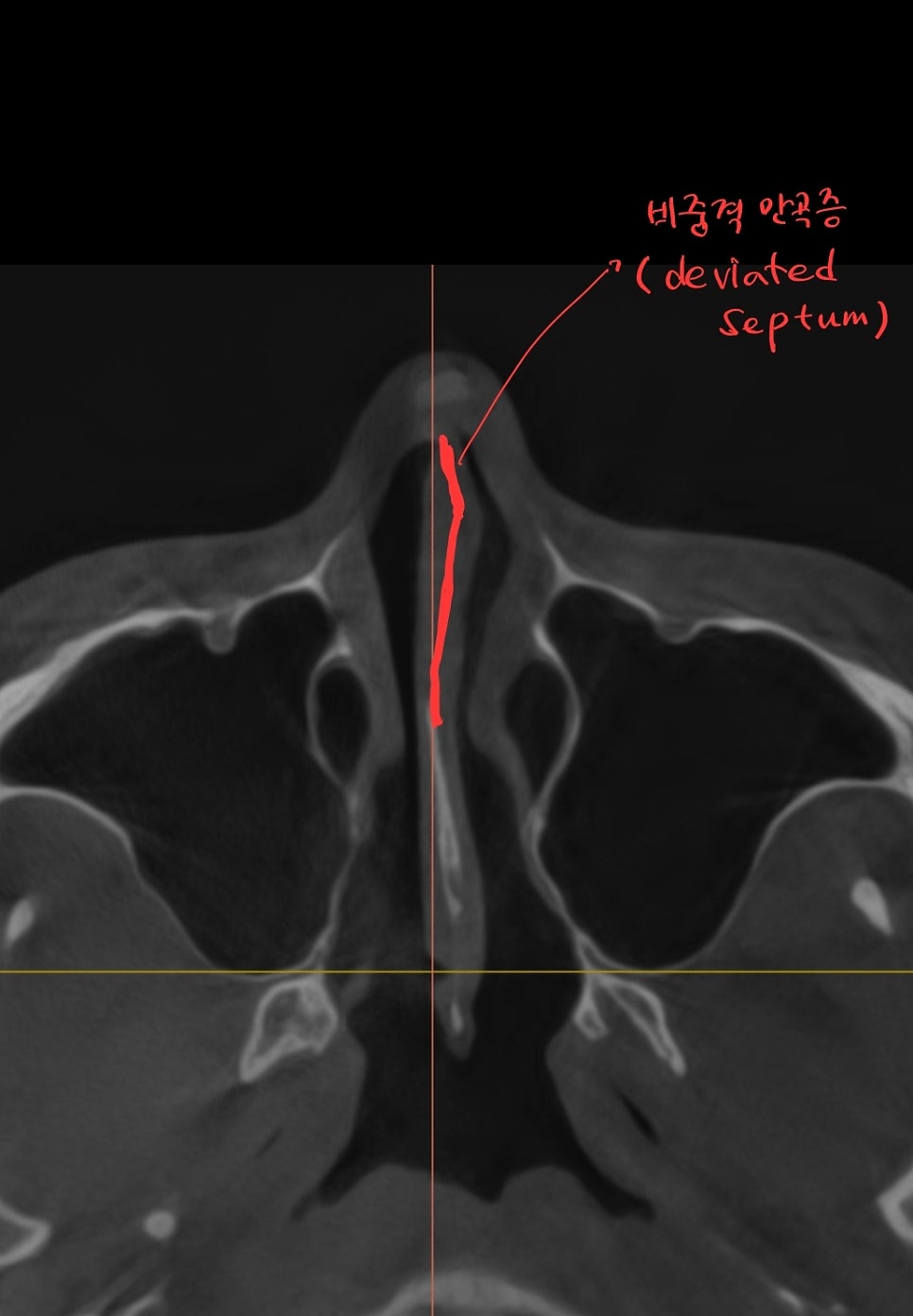
Preoperative CT scan showing septal deviation and a bent septum
If septal lengthening is performed while septal deviation remains, the stretched skin tension at the nasal tip often causes the tip to droop and worsens the septal deviation.
In such cases, the nasal tip bends due to the worsened septal deviation, resulting in nasal tip drooping.
'Drooping Nasal Tip Rib Cartilage Revision Surgery'
If nasal tip drooping occurs, the cause from the previous surgery must be identified and corrected in order to minimize recurrence.
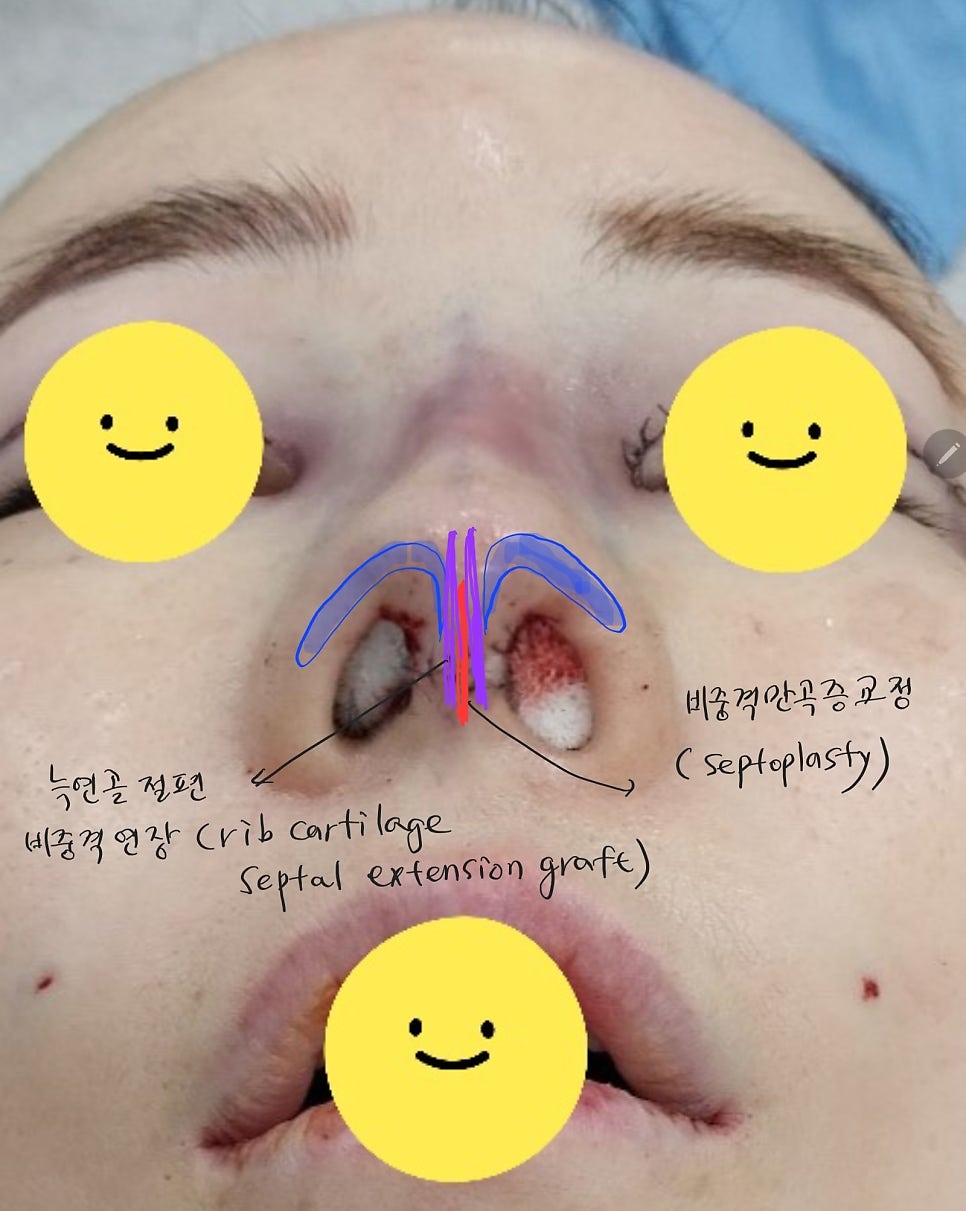
Correction of septal deviation, septal lengthening using rib cartilage
Because the septal deviation had not been corrected, the first priority is to straighten the bent septum.
Even if the septal deviation does not look severe, it is common for septal deviation to worsen after rhinoplasty due to the tension of the stretched skin. Therefore, if septal deviation is present during rhinoplasty, it is advisable to correct it actively.
'Harvesting and processing rib cartilage segments'
Harvesting autologous rib cartilage may involve the burden of an incision in the chest area, but we reduce that burden by harvesting rib cartilage through a minimal incision.
Usually, rib cartilage is harvested through a small incision at the inframammary line. This area can be covered by underwear, and the incision site is chosen so that the scar is less noticeable along the natural inframammary fold.
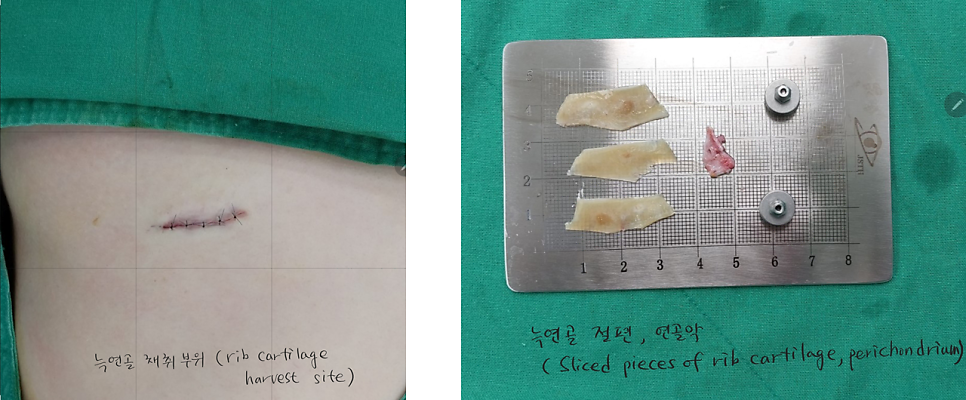
Rib cartilage harvest site, rib cartilage segment, perichondrium
Usually, skin closure at the rib cartilage harvest site involves about five stitches, and if the muscle layer is dissected along the direction of the muscle fibers for cartilage harvest, pain can also be significantly reduced.
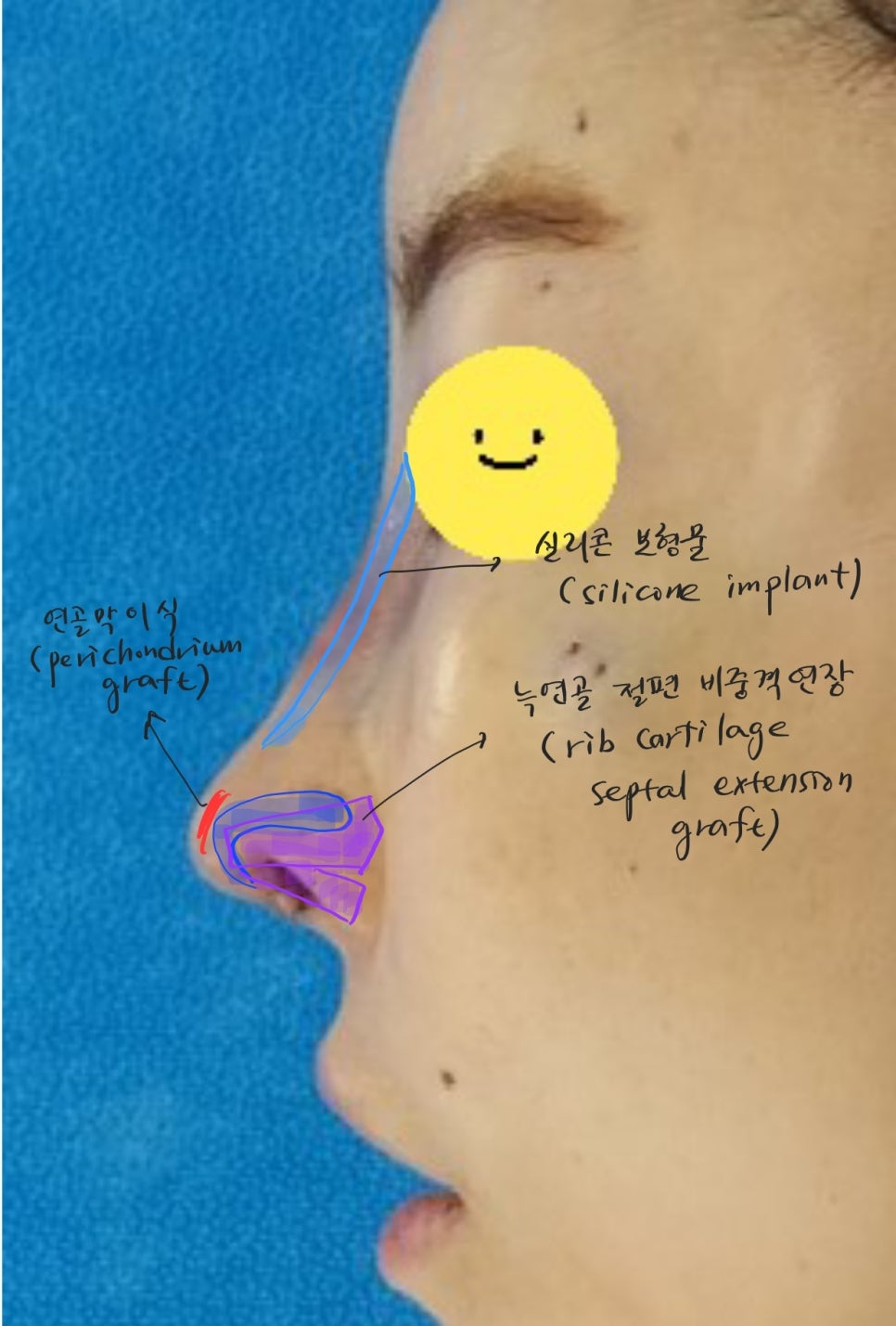
Nose revision surgery using rib cartilage segments
And if rhinoplasty was previously performed using septal cartilage and nasal tip drooping occurs, it is better to create a stronger cartilage support structure for the nasal tip.
After nose surgery, various types of forces act on the nasal tip, so force in the direction of drooping is unavoidable. To prevent this as much as possible, it is better to build a support structure using sturdy rib cartilage segments.
'Before-and-after comparison of nasal tip drooping rib cartilage revision surgery'
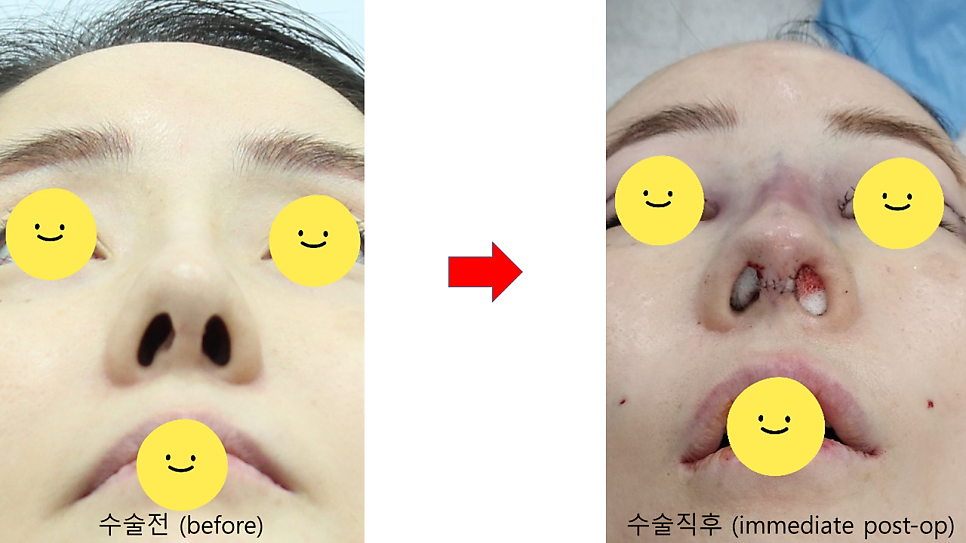
Immediately after surgery to correct nasal tip drooping, septal deviation, and columellar bending
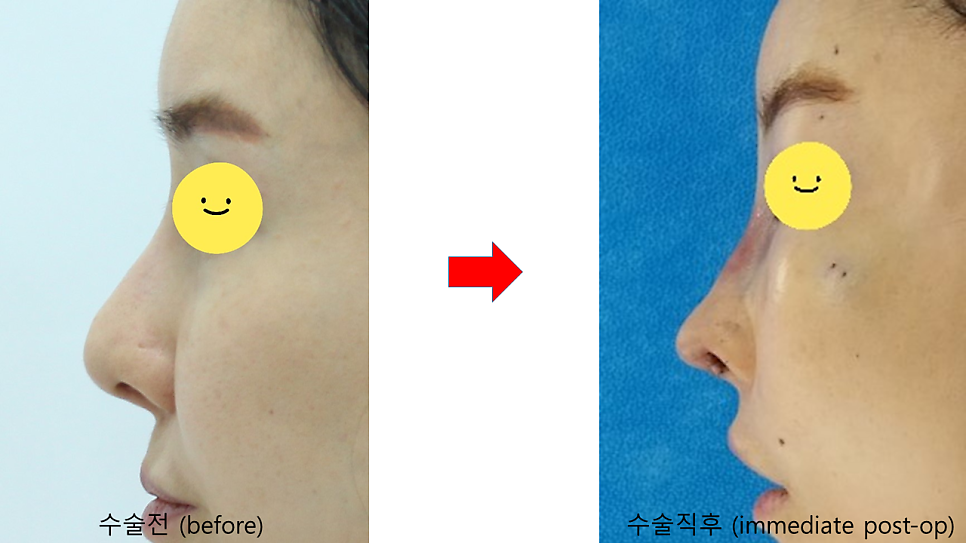
Drooping nasal tip rib cartilage revision surgery
Nasal tip drooping after nose surgery is a common occurrence after rhinoplasty.
The elevated nasal tip after rhinoplasty is subjected to several forces that try to lower it again.
Various forces act on it, such as the tension of the stretched nasal tip skin, the force of the facial expression muscles, and gravity, and these forces cause the nasal tip to become slightly lower after surgery.
In this situation, if septal deviation remains, nasal tip drooping may become more severe, and the nasal tip or columella may also become bent.
And if the cartilage used in the first surgery lacks strength, it is important to create a support structure for the nasal tip with stronger cartilage.
Nasal tip drooping can also be considered a normal postoperative course after nose surgery, but if revision surgery is being considered due to aesthetic dissatisfaction, it is better to remove the remaining aggravating factors and reinforce the support of the nasal tip using autologous rib cartilage.

Drooping nasal tip rib cartilage revision surgery. This is a real model who consented to disclosure.