Rhinoplasty most commonly uses autologous cartilage for the nasal tip and silicone for the nasal bridge.
However, there are also situations in which surgery must be performed without placing an implant in the nasal bridge.
'When Silicone Implants Cannot Be Used in the Nasal Bridge'
When discussing rhinoplasty consultations, although it is not a common case, there are situations in which it is difficult to use an implant in the nasal bridge. These situations can be broadly divided into three categories.
The first is when implant-related complications such as inflammation or contracture occurred in a previous rhinoplasty.
In cases where inflammation occurred after a prior surgery, the chance of not developing inflammation again during revision surgery is higher, but statistically, the risk of inflammation recurring is still increased. So, if there has been inflammation after a previous rhinoplasty, it may be worth considering a rhinoplasty that does not use a silicone implant in order to avoid inflammation happening again.
The second is when inflammation develops after filler or thread has been inserted into the nose and the inflammation does not subside.
Not only silicone implants, but also threads and fillers, which are known as minimally invasive cosmetic procedures, can sometimes cause inflammation in the nose, and in rare cases, the inflammation does not resolve.
In such cases, if rhinoplasty is performed while removing the filler or thread and a silicone implant is inserted, the inflammation may persist. Therefore, it is safer to perform rhinoplasty using autologous tissue grafts in the nasal bridge.
The third is when a person is afraid of silicone-related complications or does not want an implant placed inside the body.
In this case, it is not absolutely necessary to avoid silicone implants, so a surgical plan may still be made toward inserting a silicone implant during the consultation process. However, if there is a strong aversion to silicone-related complications, rhinoplasty using autologous tissue may also be performed.
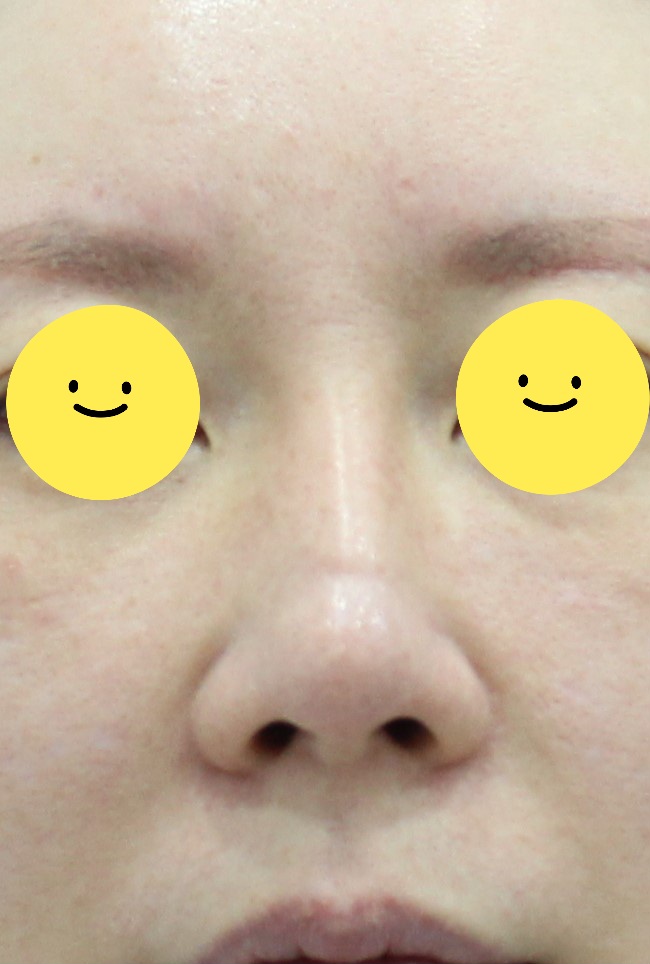
When silicone becomes visible in the nasal bridge, creating a step-off
This is a case in which rhinoplasty had previously been performed using a silicone implant.
The patient said there was significant swelling at the time of the rhinoplasty, and that the nasal bridge swelled when tired or when their overall condition was not good.
There was concern about subtle but chronic inflammation related to the silicone implant, and as the symptoms continued, it seemed that the step-off between the nasal bridge and the nasal tip was becoming more pronounced.
People who have struggled with silicone implant complications in rhinoplasty often say they really do not want to use silicone again.
So for those who decide to use costal cartilage in the nasal bridge, many hope it will be the last rhinoplasty of their life.
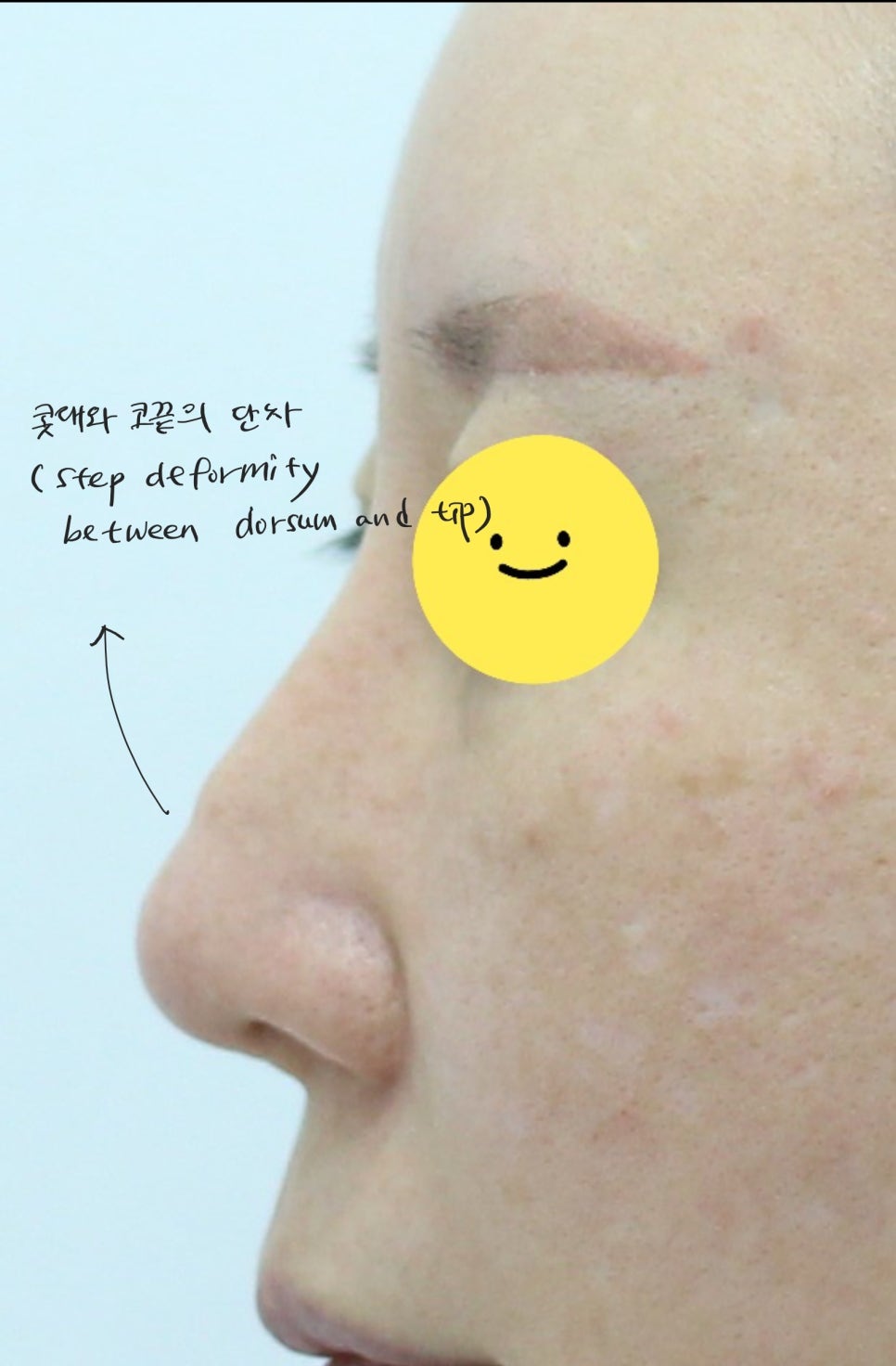
Step-off between the nasal bridge and the nasal tip
After rhinoplasty, a step-off between the nasal bridge and the nasal tip sometimes occurs. Usually, this happens when the nasal tip lacks support or when the height or shape of the silicone implant placed in the nasal bridge is not appropriate.
'Preoperative CT When There Is a Step-Off Between the Nasal Bridge and Nasal Tip'
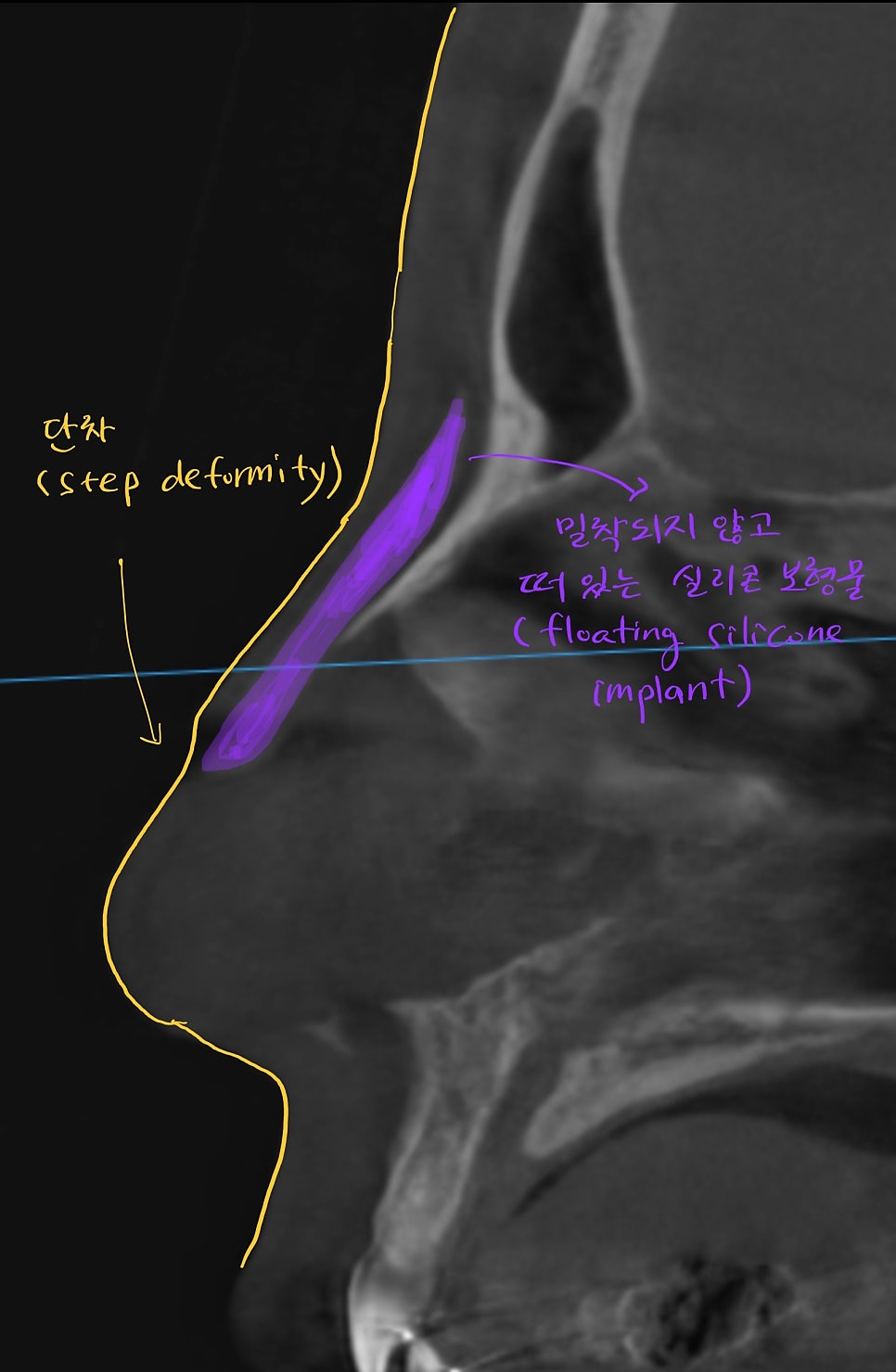
CT showing that the silicone implant in the nasal bridge is not fitting properly
CT scanning is one of the essential tests in revision rhinoplasty.
This is because it allows us to check the height and shape of the implant used in the previous rhinoplasty, identify structural problems inside the nose before surgery, and establish a surgical plan.
'Processing Costal Cartilage in Revision Rhinoplasty'
When costal cartilage is harvested and used in rhinoplasty, it is made into thin slices for use.
First, cartilage slices are carved to create a support structure for raising the nasal tip, and the remaining pieces are used separately to make cartilage slices for the nasal bridge.
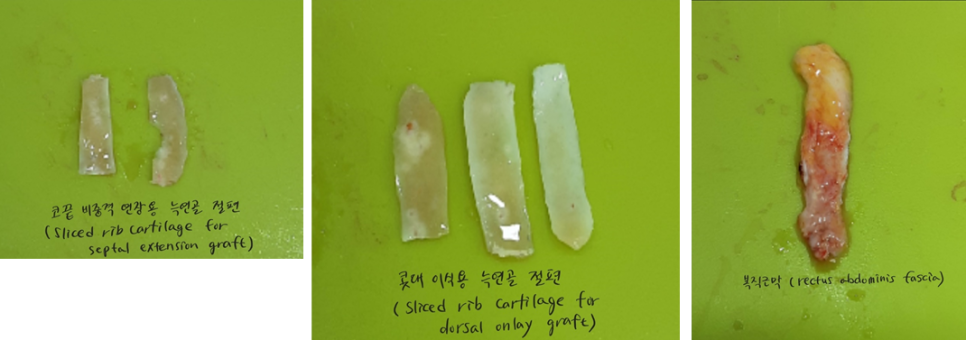
When harvesting costal cartilage, the fascia around the cartilage is also taken together. By covering the cartilage graft with this fascia, the costal cartilage does not become visible through the nasal bridge.
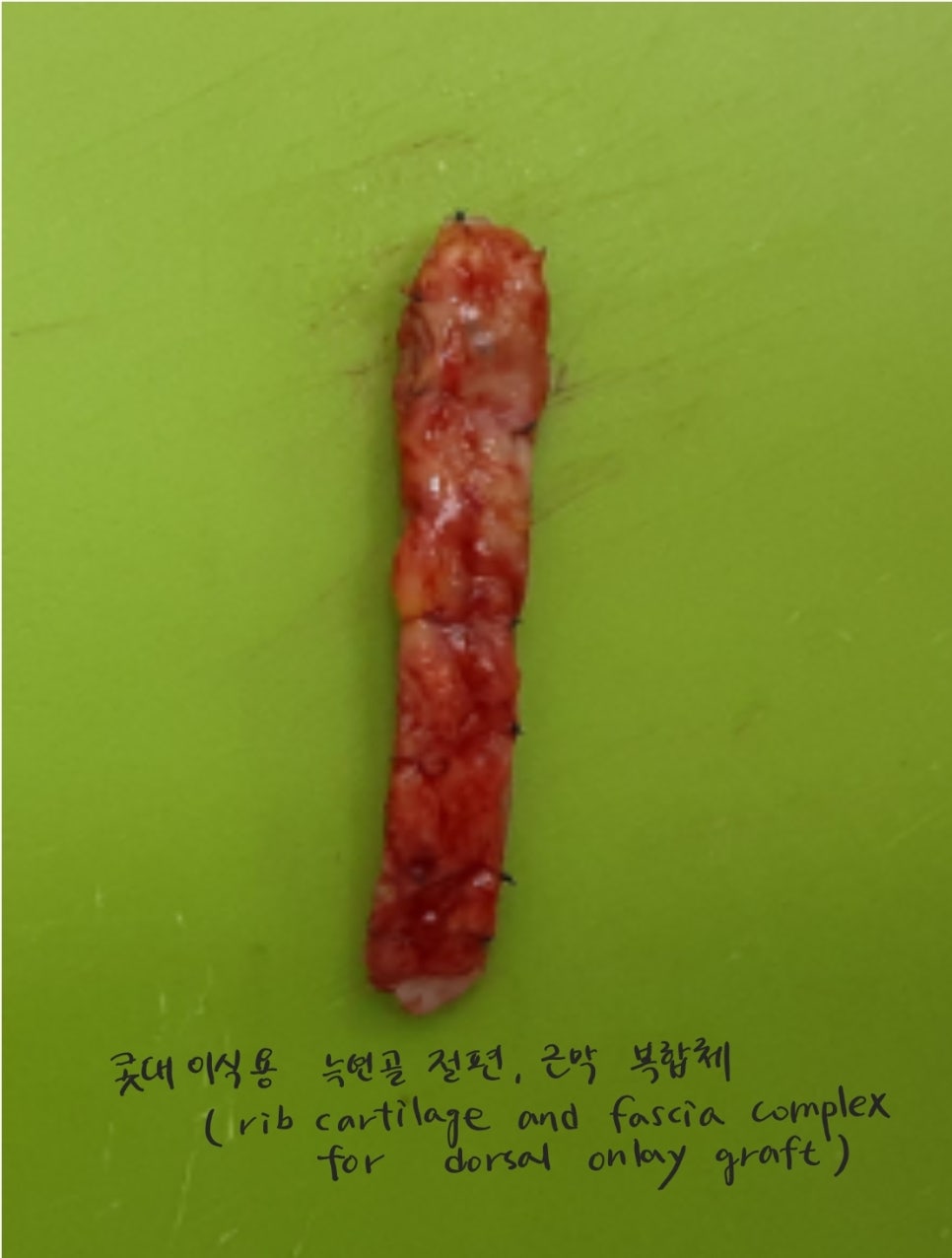
Costal cartilage slices and fascia complex for the nasal bridge
Costal cartilage slices naturally have a tendency to bend (warping), so the slices must be carefully fixed together while accounting for the forces that cause them to bend. That way, the implant in the nasal bridge does not bend after surgery.
Also, unlike silicone implants, costal cartilage slices are not carved down and used in the same way, so they must be carefully shaped to fit the patient’s nasal bridge well.
And unlike silicone implants, costal cartilage slices can become visible through the nasal bridge, so it is important to wrap them with the fascia harvested together with the cartilage.
'The Method of Nasal Bridge and Nasal Tip Surgery Using Costal Cartilage Slices'
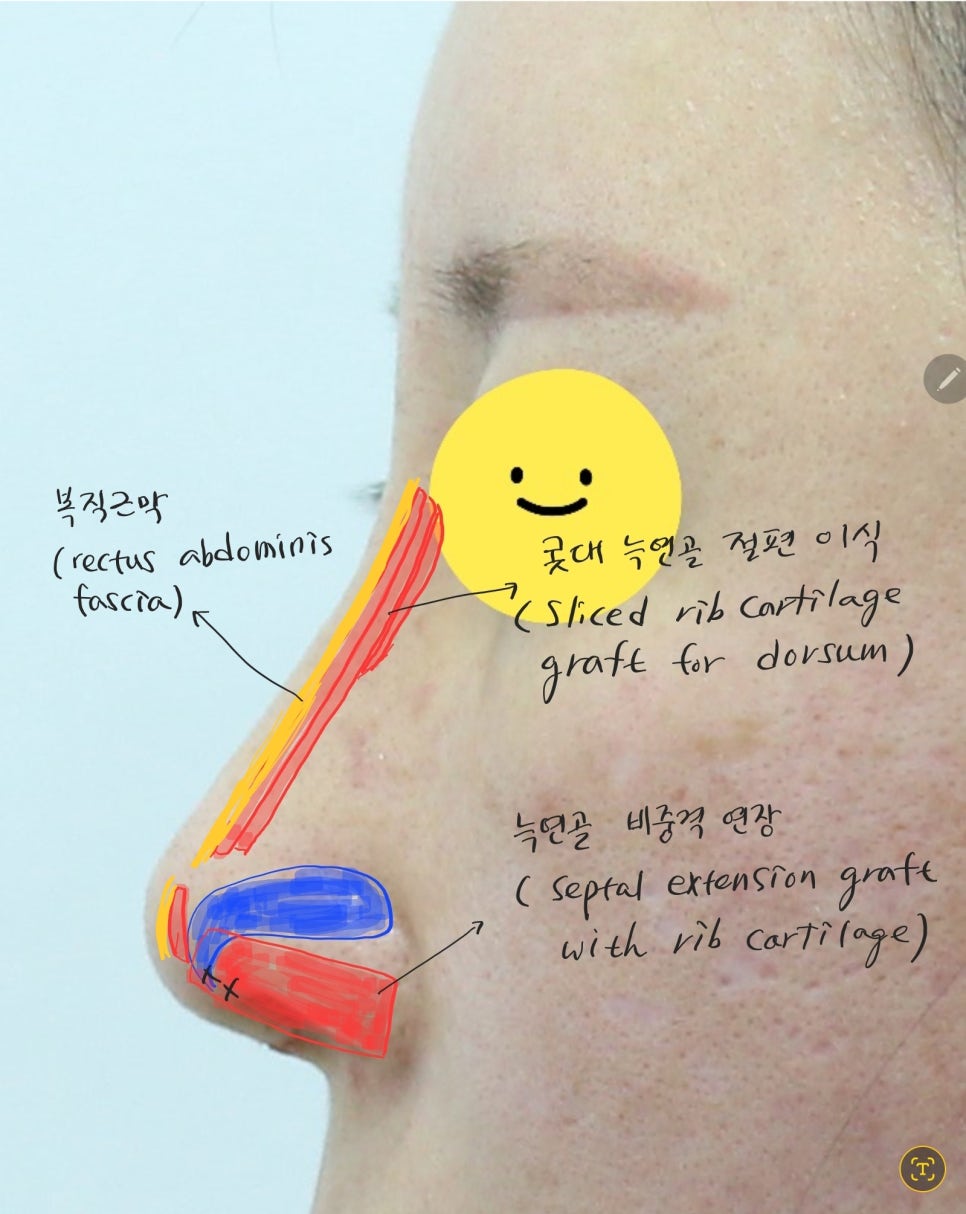
Surgical method for the nasal bridge and nasal tip using costal cartilage
For the nasal tip, costal cartilage slices are used to extend the septum and create support for the nasal tip, and any 부족한 부분 is built up to an appropriate height through layered grafting.
Then, the cartilage-fascia composite prepared using costal cartilage slices and rectus fascia is grafted to the nasal bridge to replace the silicone implant.
'Before and After Costal Cartilage Surgery for the Nasal Bridge and Nasal Tip'
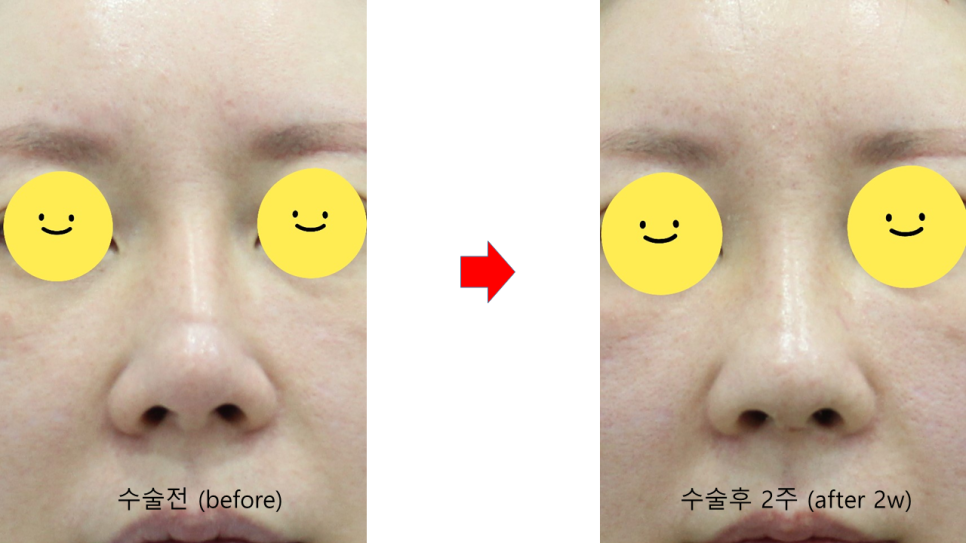
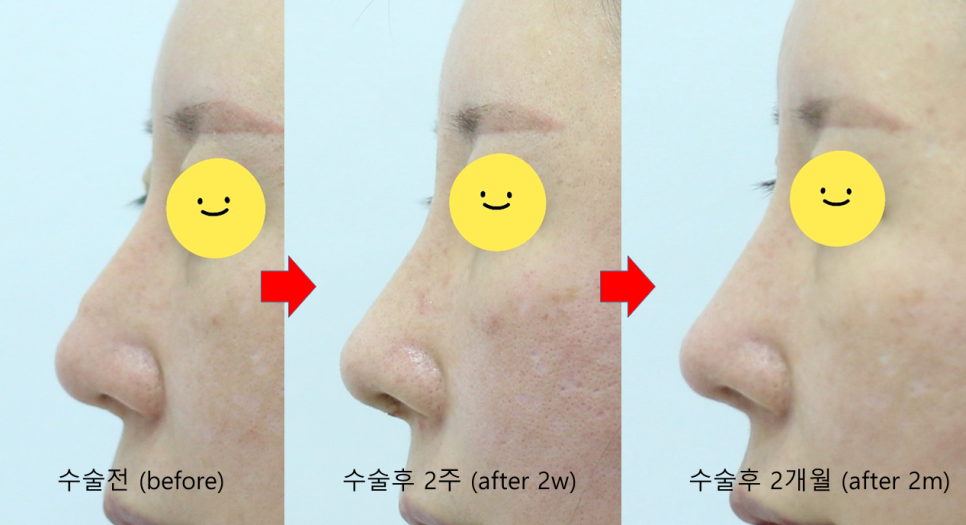
2-week after photo review of costal cartilage surgery for the nasal tip and nasal bridge
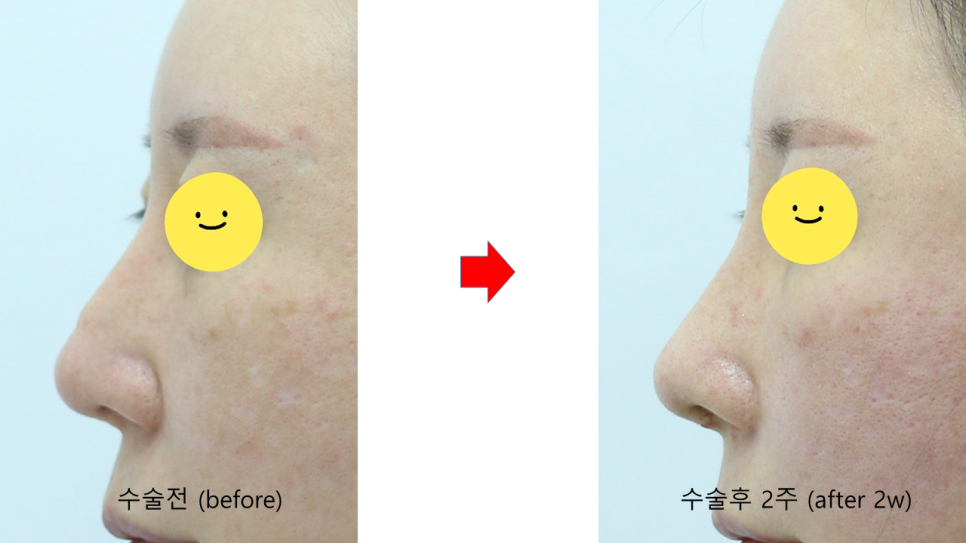
2-week after photo review of costal cartilage surgery for the nasal tip and nasal bridge
The visibility caused by the silicone implant and the subtle crooked appearance were greatly improved.
The most important step-off between the nasal bridge and nasal tip was also well corrected by securing support for the nasal tip through costal cartilage septal extension.
Many people worry whether costal cartilage, when used instead of a silicone implant in the nasal bridge, will be reabsorbed and disappear.
Usually, when evaluating absorption in rhinoplasty using autologous tissue, the assessment is made after about two months. In the case of costal cartilage slices, the absorption rate is very low, so you can think of the height as being well maintained.
Engraftment rate and absorption rate when costal cartilage is used in the nasal bridge
There are several methods for inserting costal cartilage into the nasal bridge, and among them, the method using costal cartilage slices is one of the methods with less warping and a lower absorption rate.
Even in the 2-week postoperative photo, where swelling and height changes have largely settled, and in the 2-month postoperative photo, when absorption is thought to have largely been completed, the height of the nasal bridge is well maintained.
When silicone implant complications, inflammation, contracture, or similar problems occur, or when silicone implants can no longer be used, rhinoplasty using a graft composite made from costal cartilage and rectus fascia in the nasal bridge is one good way to replace silicone implants.