Consultation for revision nose surgery tends to involve a more specialized discussion than the first rhinoplasty.
�
In many cases, it is performed to correct what felt lacking in the first surgery, and patients often have more specific requests than they did with their first procedure.
�
'CT scanning before surgery during revision nose surgery consultation'
�
If the rhinoplasty was done a long time ago, many people do not know what kind of implant is inside the nose, and in many cases they also do not remember the preoperative height of the nose.
�
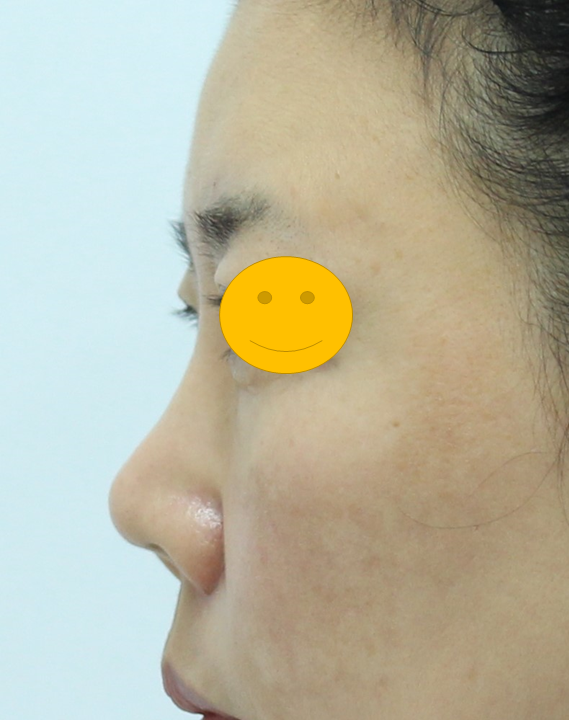
Revision nose surgery review. This is a real model who consented to disclosure.
That is why, during a consultation for revision nose surgery, various pieces of information are obtained through a CT scan.
�
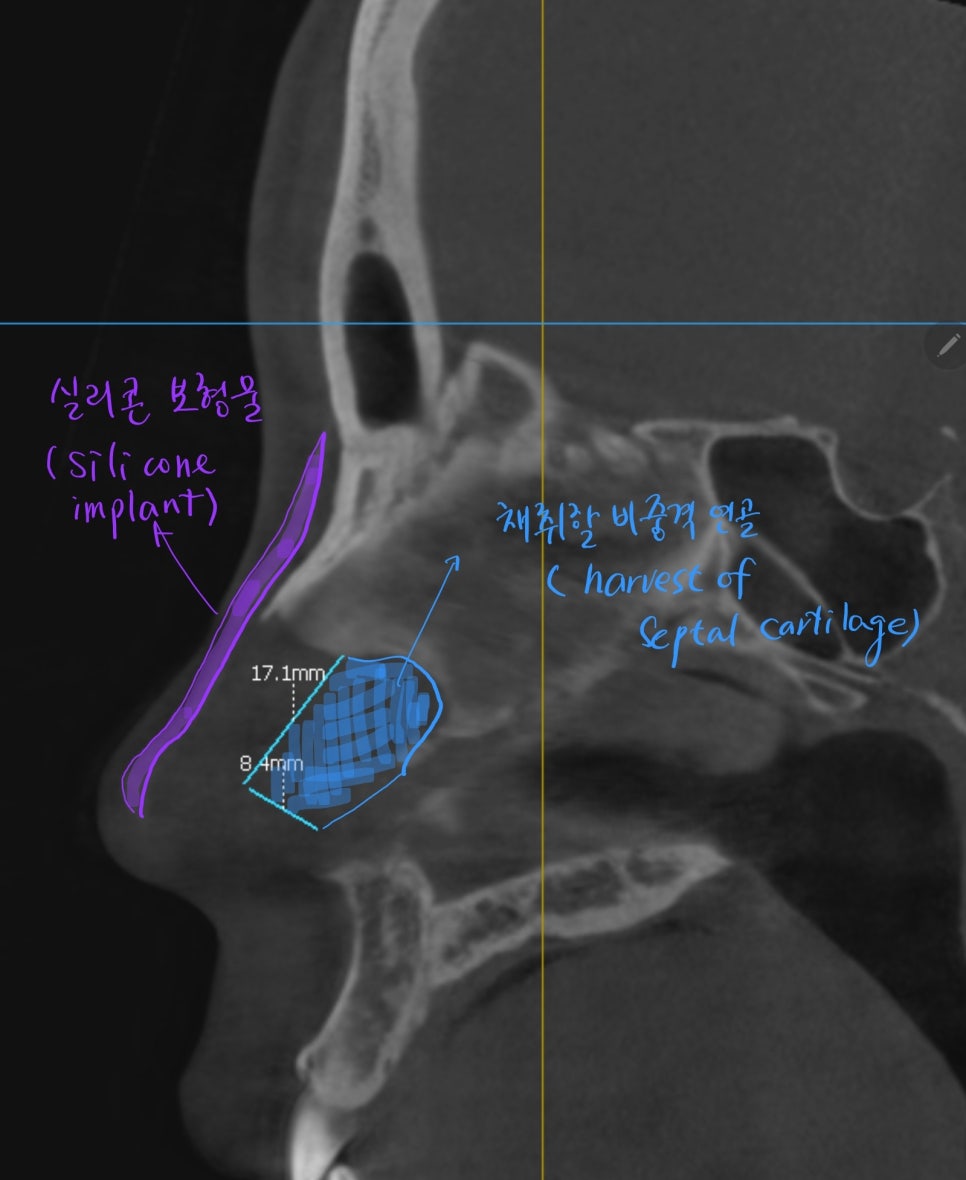
CT taken during a revision nose surgery consultation
Through the CT, it was possible to confirm a silicone implant that extended all the way to the tip of the nose. In the past, surgeries were not performed by separating the bridge and the tip of the nose, so in many cases the silicone implant extended all the way to the tip.
�
It was determined to be a silicone implant with a height of about 3 mm, and if the bridge of the nose is to be raised slightly higher than it is now, it can be predicted that an implant of 4 mm or more would be needed.
�
And it is possible to estimate the size of the septal cartilage inside the nose that is needed for tip surgery.
�
The septal cartilage is a flat, thin cartilage, like a thin book cover, that is surrounded by mucosa inside the nostrils and separates the two sides of the nostrils.
�
Septal cartilage is a good cartilage material for creating the support structure of the nasal tip in rhinoplasty, but in the case of East Asians, the septal cartilage is often small, so the amount that can be harvested is often limited.
�
In this case as well, when estimating the septal cartilage that could be harvested on CT, it was found to be a small size of about 1.7 cm x 0.9 cm.
�
'Revision nose surgery when there is insufficient septal cartilage'
�
When the amount of septal cartilage that can be harvested on CT is small, additional ear cartilage or rib cartilage must be harvested.
�
In the case of ear cartilage, because it is soft and not very large, it is often insufficient for raising the nasal tip significantly, so rib cartilage often needs to be harvested.
�
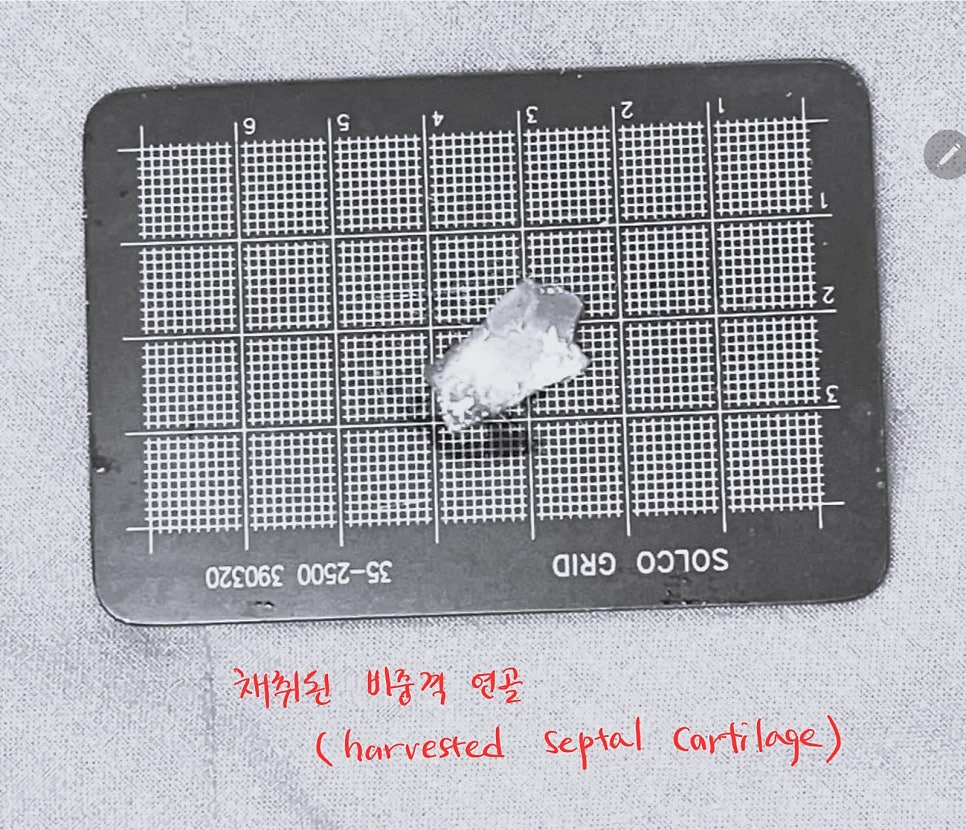
Amount of septal cartilage harvested
When the septal cartilage was actually harvested, it was confirmed that the amount harvested was similar to the size predicted on the CT scan.
�
Based on the CT results, we explained in advance that revision nose surgery using rib cartilage would be necessary, planned the rhinoplasty by harvesting rib cartilage, and then harvested the rib cartilage.
�
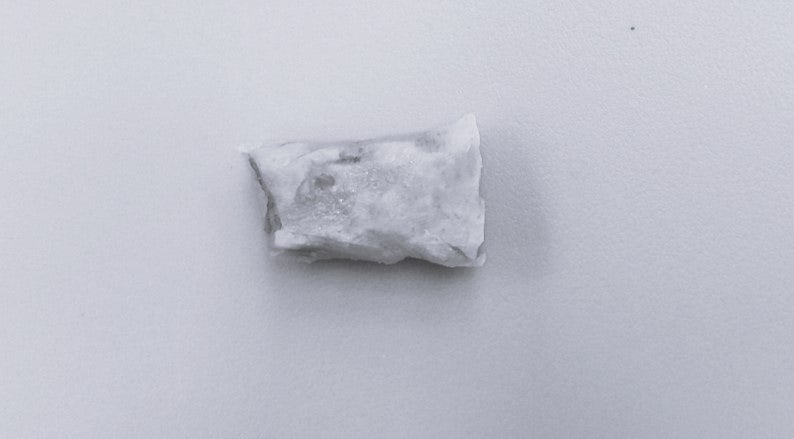
Rib cartilage harvested for revision nose surgery
Rib cartilage is often harvested from the 6th or 7th cartilage near the lower breast line. The older the patient is, the more calcified portions there are in the cartilage, so the rib cartilage is harvested while avoiding calcified areas as much as possible, and fragments are made and used while avoiding the calcified parts.
�
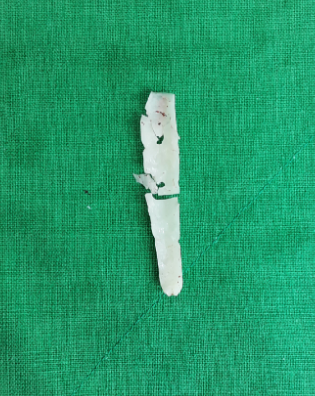
Removed silicone implant
The existing silicone implant had extended down to the nasal tip, and because the height of the nasal bridge needed to be increased further, it had to be removed and replaced with a new implant.
�
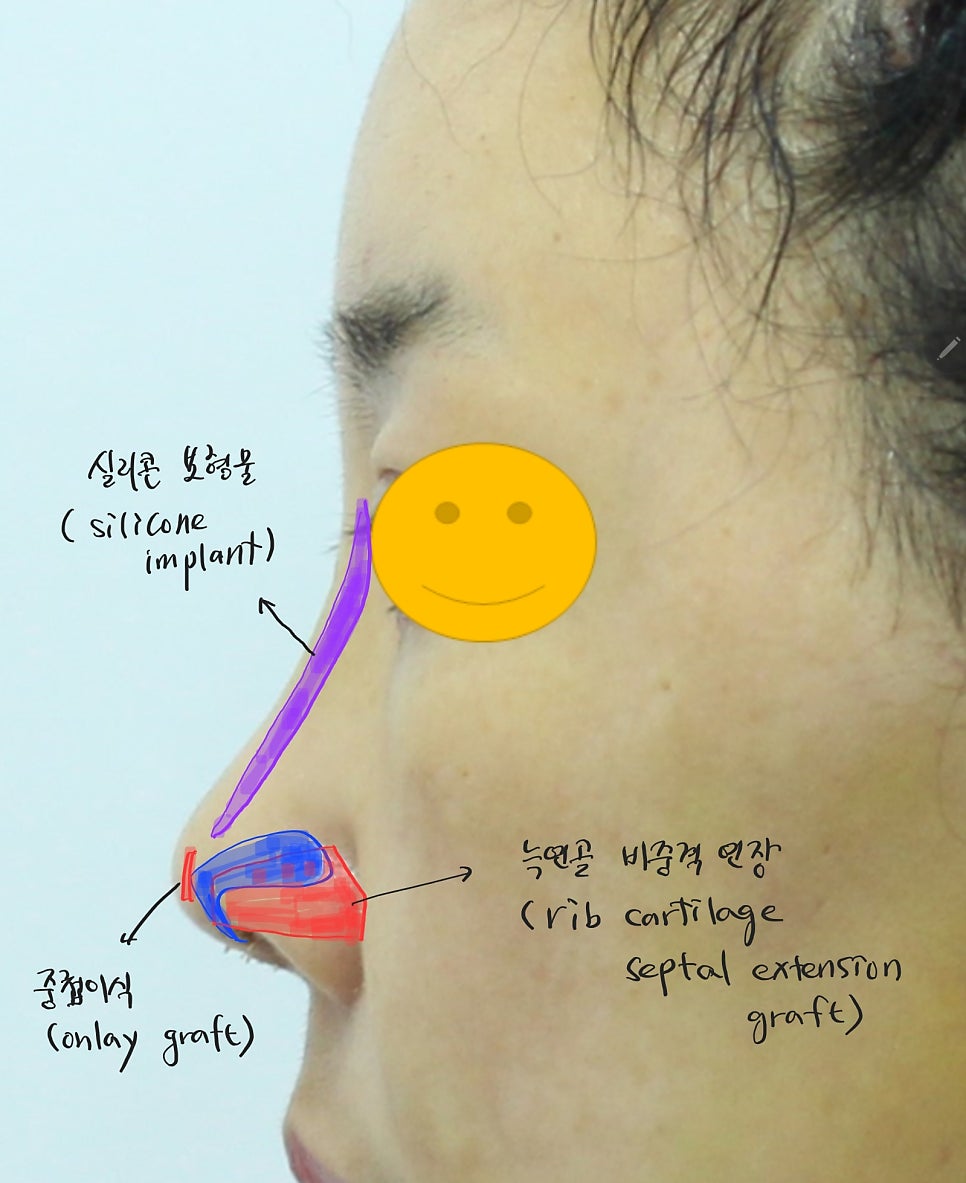
Revision nose surgery using rib cartilage septal extension graft
Then the harvested rib cartilage is carved into fragments and used to perform a septal extension graft for support of the nasal tip.
�
When performing a septal extension graft using rib cartilage, it is important to carefully consider the bending tendency of the rib cartilage and attach fragments to both sides to balance the bending force well.
�
And because the harvested septal cartilage is small, it is used as an auxiliary material for raising the nasal tip, and some of it is used as an onlay graft placed on the nasal tip.
�
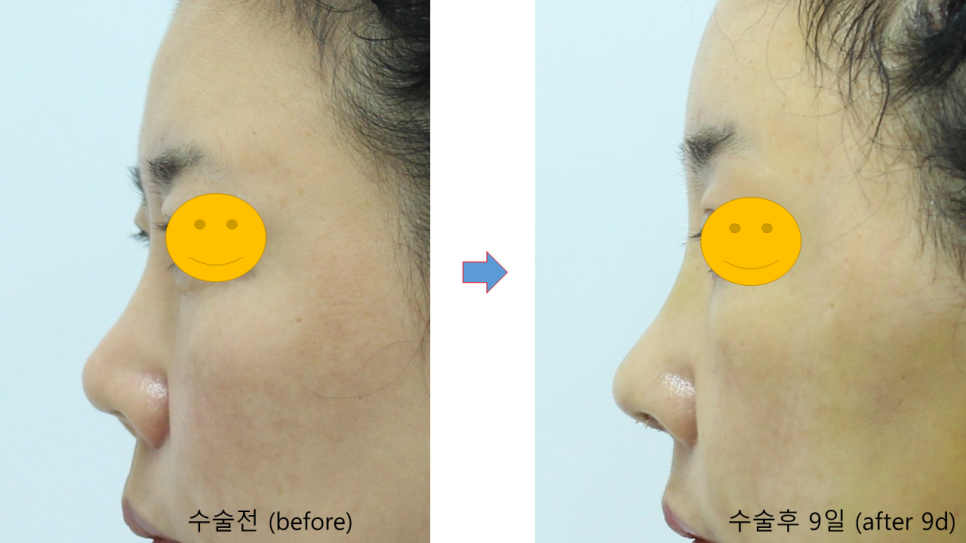
Middle-aged nose surgery review. Before and after middle-aged nose surgery using rib cartilage
�
For rhinoplasty performed a long time ago, CT scanning is needed not only to check the shape and form of the implant, but also to find out how much septal cartilage can be harvested.
�
If the amount of septal cartilage that can be harvested on CT is small, harvesting additional rib cartilage and using it for nasal tip surgery can lead to a more aesthetically satisfying result.