The most representative sign of aging in the face is, of course, sagging skin.
So most cosmetic surgery consultations after middle age are about sagging skin, and midlife eye surgeries such as upper blepharoplasty and lower blepharoplasty can be said to be the main examples of midlife cosmetic surgery.
However, there is another important factor in facial aging besides sagging skin: changes in the facial fat layer.
'The Face’s Superficial and Deep Fat Layers'
The facial fat layer can largely be divided into the superficial fat layer and the deep fat layer.
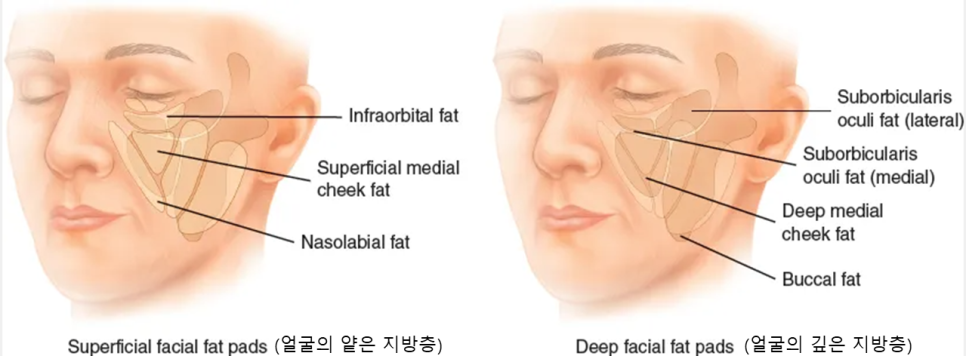 The superficial and deep fat layers of the face
In the facial aging process, these two fat layers change differently: the fat in the superficial layer gradually decreases, while the deep fat layer shows a pattern of sagging downward and shifting due to reduced elasticity.
A well-known example of a deep fat layer is the buccal fat pad, and one of the causes of sagging around the mouth with age is decreased elasticity in the buccal fat pad.
'The Changes in the Face’s Superficial Fat Layer'
The superficial fat layer of the face gradually decreases, and the fat layers that diminish by age group are as follows.
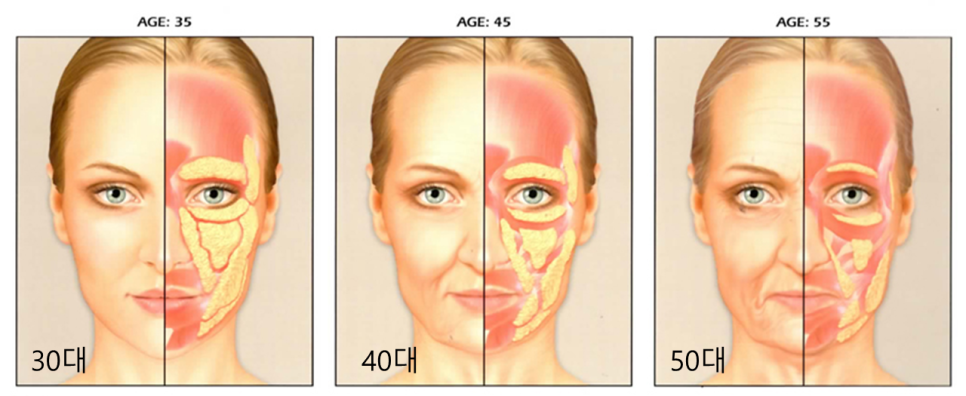 Changes in the face’s superficial fat layer in people in their 30s, 40s, and 50s
When we are young, the superficial fat compartments of the face are attached to one another, but as time passes they gradually separate, shrink, and begin to sag.
That is why, as we age, hollows and depressions appear in the face, facial volume becomes insufficient, and sagging also tends to accelerate.
'The Need for Fat Grafting in Midlife Cosmetic Surgery'
As we get older, facial fat decreases and hollows become more visible. At the same time, because facial volume decreases, skin sagging worsens as well. For this reason, 'fat grafting,' which replenishes fat in the face, is one of the important procedures in midlife cosmetic surgery.
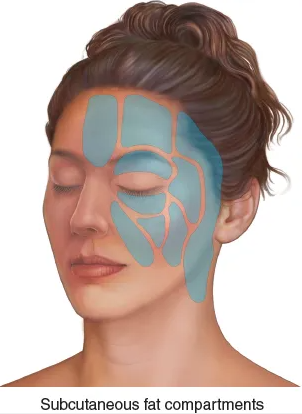 The superficial fat layer of the face (subcutaneous fat layer)
Especially by replenishing fat cells in the superficial layer, where fat continues to decrease, and filling areas that are particularly prone to hollowness, it is possible to help slow the aging of the face.
'The Surgical Method of Fat Grafting'
Facial fat grafting refers to a surgical method in which autologous fat is harvested from the thighs or abdomen, separated and purified, and then grafted into the desired areas of the face.
 Source: Garnet Plastic Surgery YouTube, Fat Grafting segment
When harvesting fat, it is collected through a small cannula, and only the amount needed is taken, so there is almost no pain at the donor site.
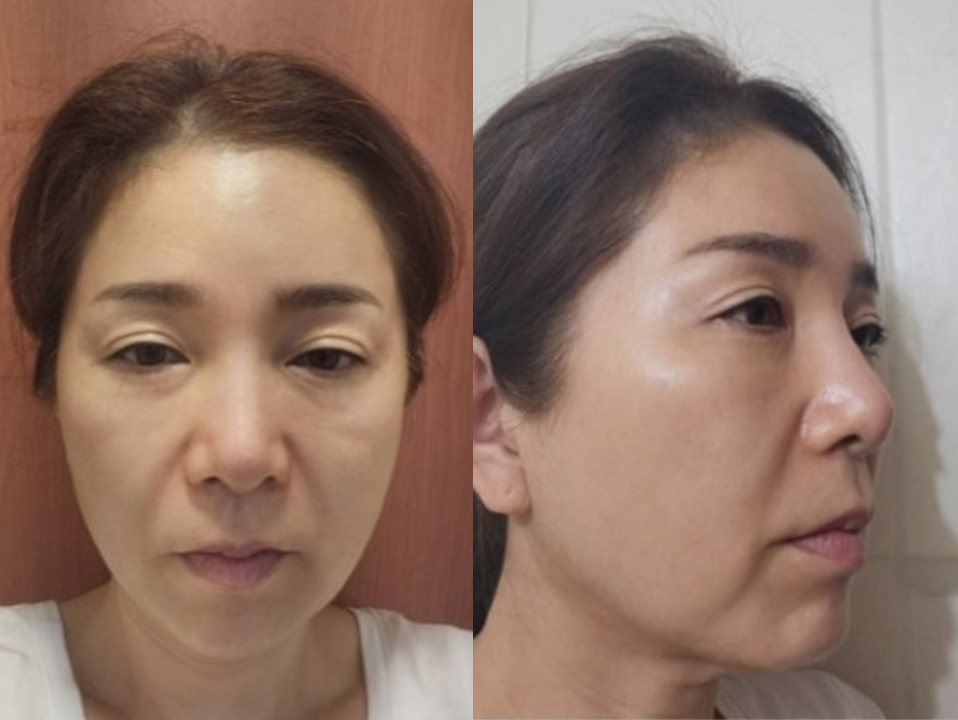 Midlife fat grafting review. This is a real model with consent for release.
Along with facial sagging, hollows in the front cheeks and nasolabial areas create visible contours, and the reduction of the superficial fat layer in the forehead and temple areas gives a slightly sunken appearance.
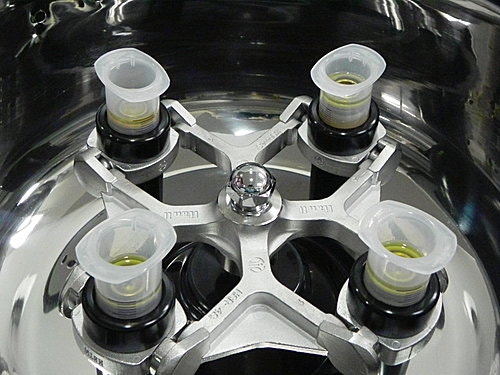 Centrifugation process after fat harvesting
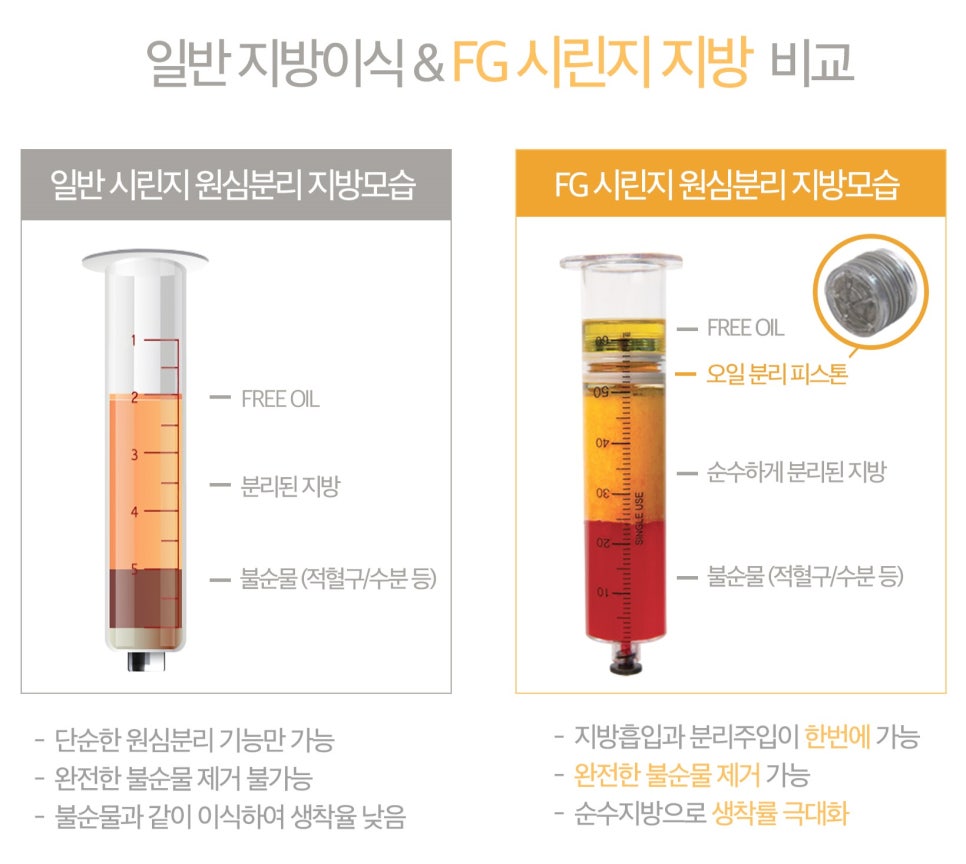 Separation of pure fat cells using an FG syringe.
The harvested fat is centrifuged using a special FG syringe, and this special syringe allows the fat cells to be separated more purely.
When fat is centrifuged using a regular syringe, the fat layer and the oil layer (free oil) are not separated accurately, but the special FG syringe is equipped with an oil-separating piston, allowing the fat layer and oil layer to be cleanly separated.
The pure fat cells separated this way contain no impurities, and when grafted into the face, they have the advantage of a higher survival rate.
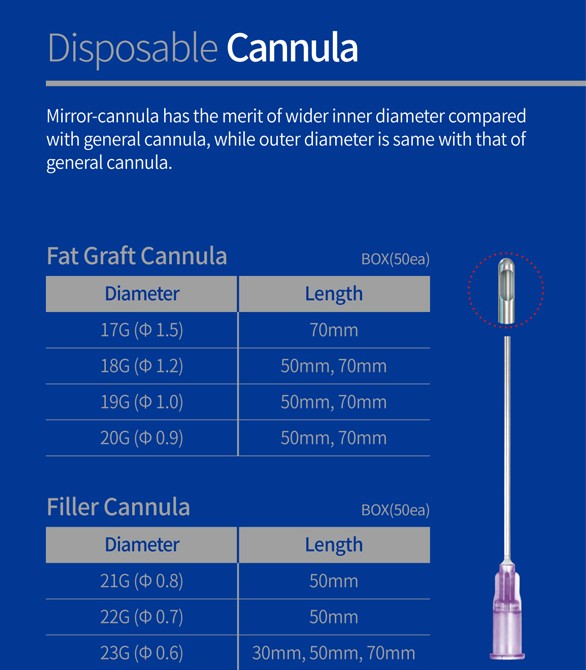 Various cannulas needed for fat grafting
In addition, fat grafting requires customized cannulas of various diameters and lengths.
By varying the cannula diameter and length according to the facial area and depth, fat cells can be evenly grafted into multiple layers of the face, which helps reduce side effects such as fat clumping and can increase the survival rate of the grafted fat cells.
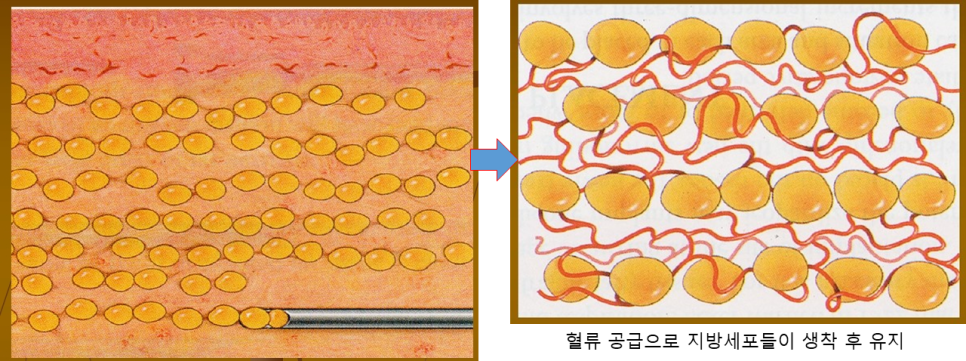 The fat grafting process and the grafted fat cells.
The grafted fat is not all absorbed over time. Some fat cells may be absorbed during the engraftment process, but many fat cells survive in the face and maintain volume for a semi-permanent effect that lasts.
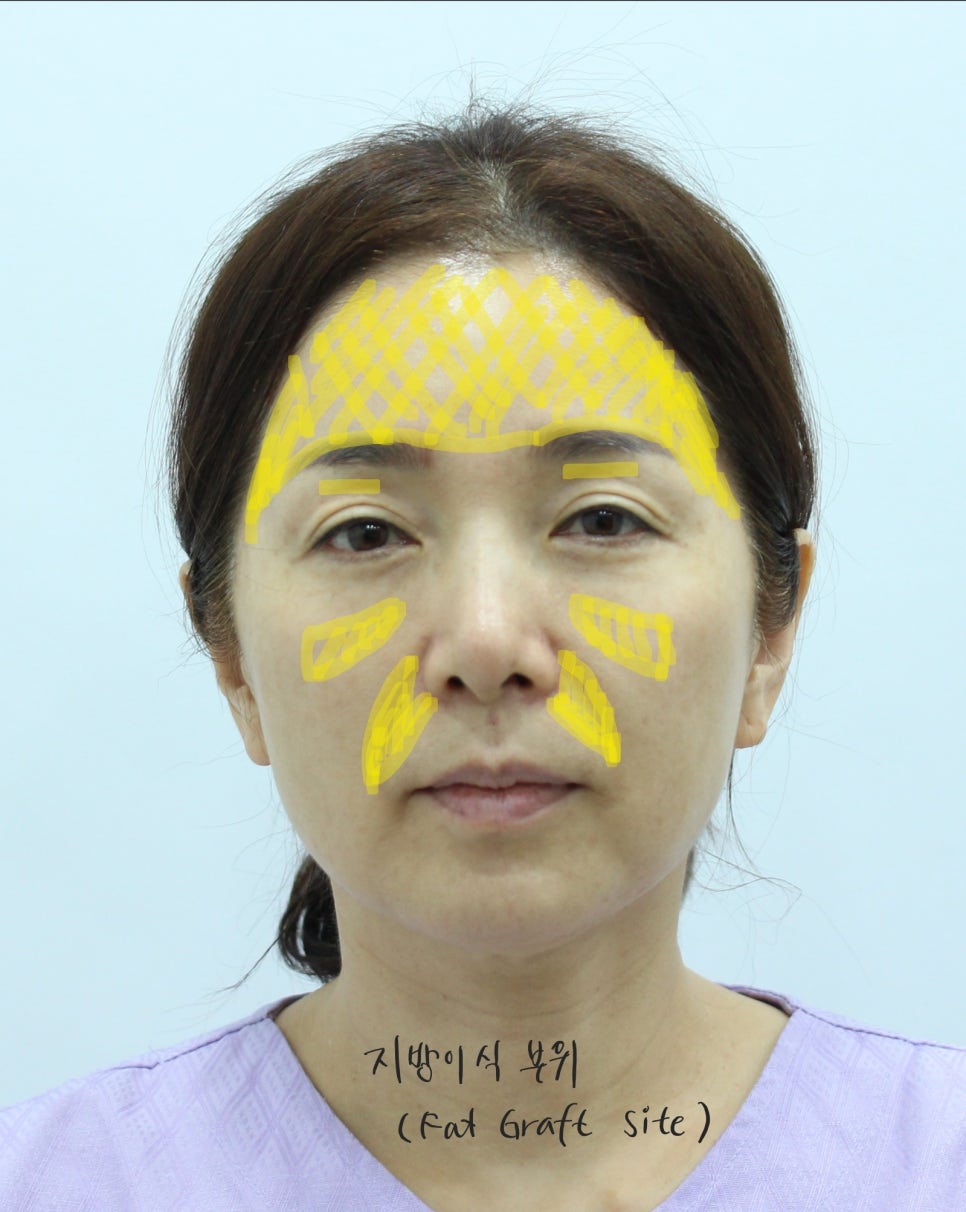 Areas of facial fat grafting. This is a real model with consent for release.
The main areas for facial fat grafting are the forehead, sunken temples, front cheeks (front cheekbones), Indian lines, and nasolabial folds.
Depending on the facial shape, fat grafting can also be performed on the chin tip and hollow areas of the side cheeks.
It is also possible in special areas around the eyes. A better effect can be achieved with micro fat grafting using smaller fat cells in the upper eyelids, under-eye area, and the aegyo-sal area.
 Midlife cosmetic surgery review. Midlife fat grafting review. This is a real model with consent for release.