There are various surgical methods for a facelift.
In the past, many procedures involved only subcutaneous dissection and simply tightening the skin, or, even when working on the SMAS (SMAS) layer, only straightforward methods such as tying the SMAS layer with sutures (SMAS plication) or lateral SMASectomy were commonly used.
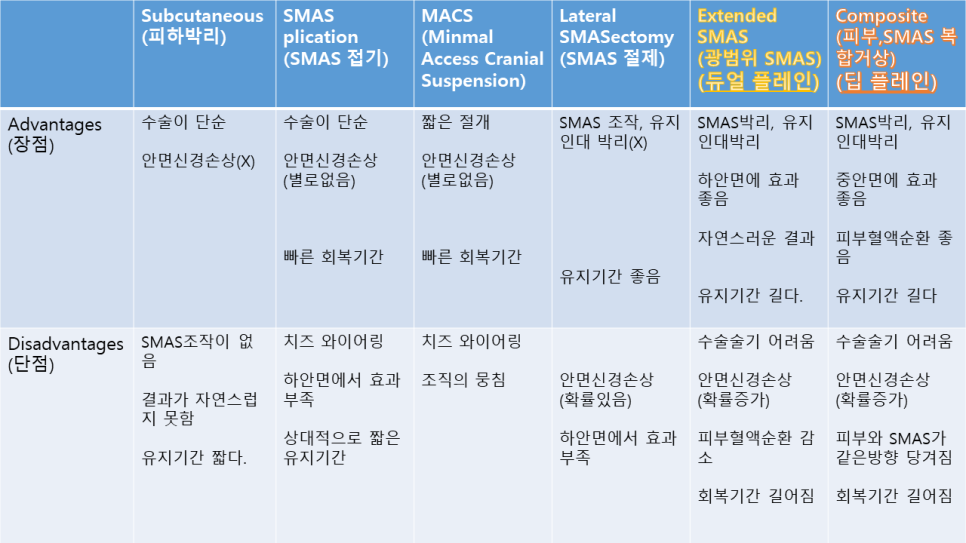
Surgical methods for facelift and the pros and cons of each
As shown in the table above, if only subcutaneous dissection is performed, or if the SMAS layer is not separately dissected and lifted, the effect of the facelift may be insufficient and the duration of the result may be shorter. Above all, it may look unnatural.
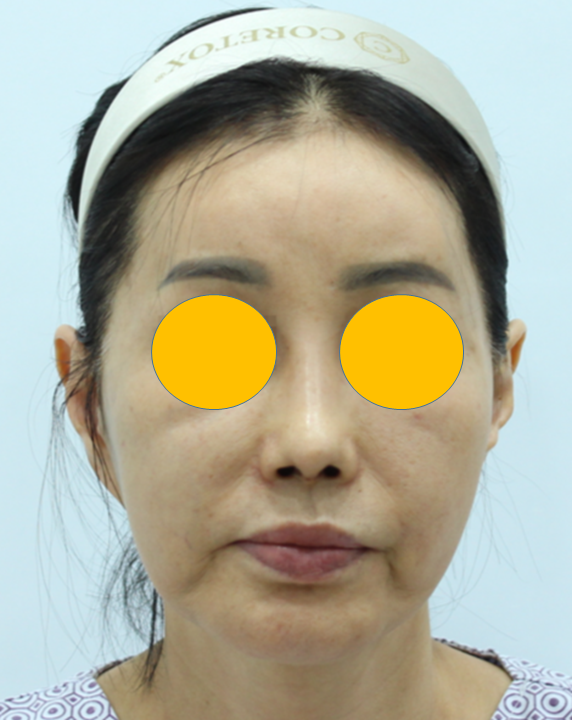
A facelift with insufficient SMAS layer manipulation. This is a real model with consent for disclosure.
This was a woman in her late 50s who had undergone a facelift in the past, but said that skin sagging had not been resolved well. She was most concerned about wrinkles around the mouth and wanted a more definite result through revision facelift surgery.
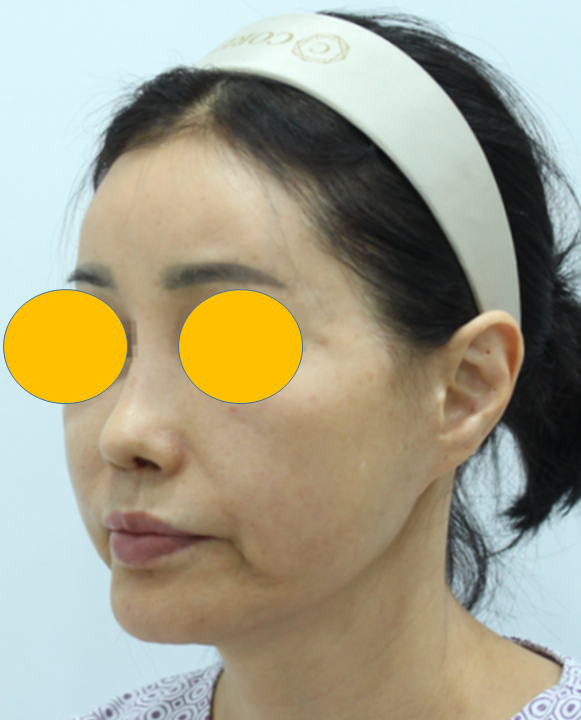
Earlobe deformity that occurred after a previous facelift
Also, in cases where a facelift was previously performed with insufficient SMAS (SMAS) layer dissection, the lifting result may be disappointing, but more importantly, the tension from the lift is applied to the skin layer, which can lead to ear shape deformities and an unnatural appearance.
Typical ear shape deformities include deformation of the tragus or a scalpel-ear deformity in which the earlobe is pulled.
'Choosing the Surgical Method in Revision Facelift Surgery'
Among facelift procedures, there are broadly two methods that are currently evaluated as having the best results.
One is the dual-plane facelift called an Extended SMAS facelift, and the other is the Deep plane facelift.
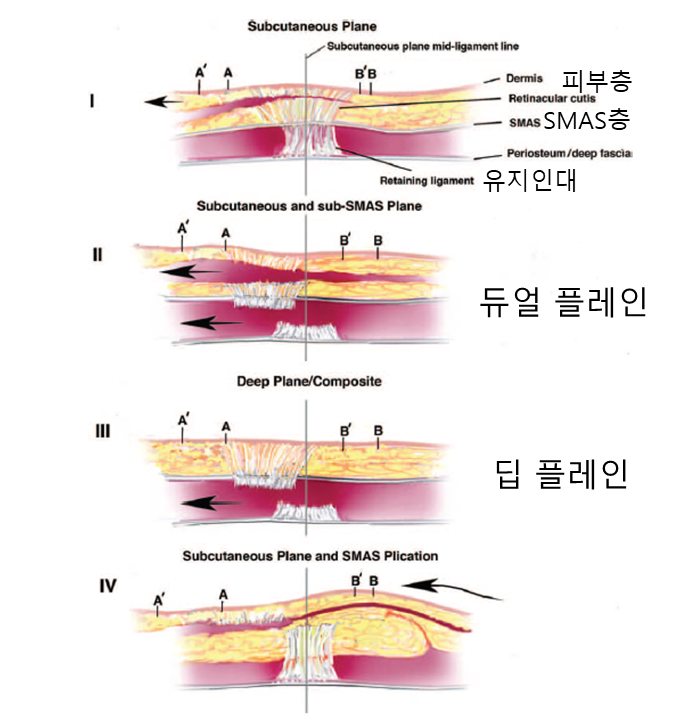
Differences between dual-plane facelift and deep-plane facelift
First, a dual-plane facelift is a method in which the skin layer and the SMAS (SMAS) layer are separately dissected and lifted, and it is a surgical method that produces a natural lifting result (Harmonized result) with excellent outcomes.
In the case of a deep-plane facelift, the skin layer and SMAS (SMAS) layer are not separately dissected; instead, the retaining ligaments are dissected beneath the SMAS layer, and then the skin and SMAS are lifted as one unit.
Both surgical methods produce excellent results, but in revision facelift surgery, the deep-plane method is often more advantageous.
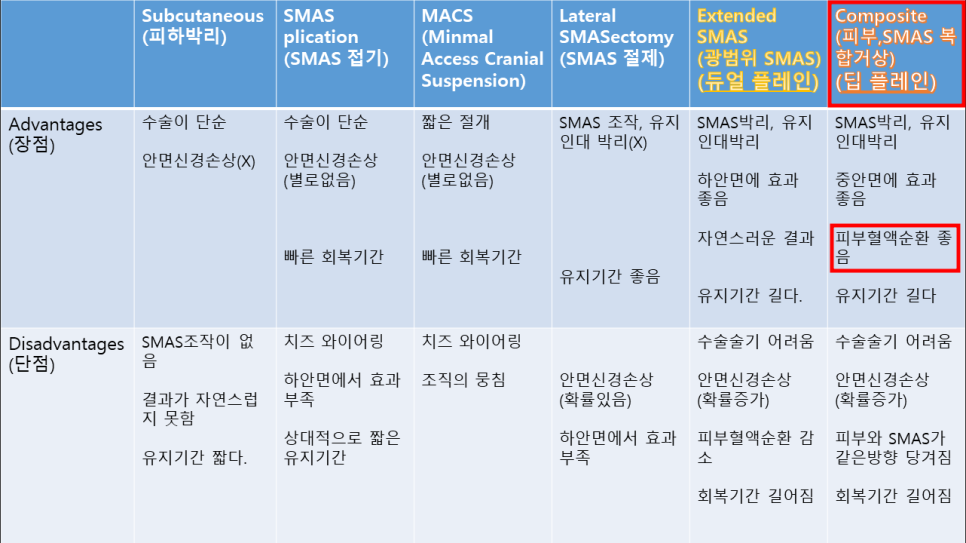
Advantages of the deep-plane facelift
The reason is that the deep-plane facelift does not separately dissect the skin and SMAS layers, which is better for blood circulation in the skin.
In revision facelift surgery, the subcutaneous layer may already be thinned due to dissection from the previous surgery, and skin blood circulation may be poor. In such cases, a deep-plane facelift can be chosen to select a safer surgical method.
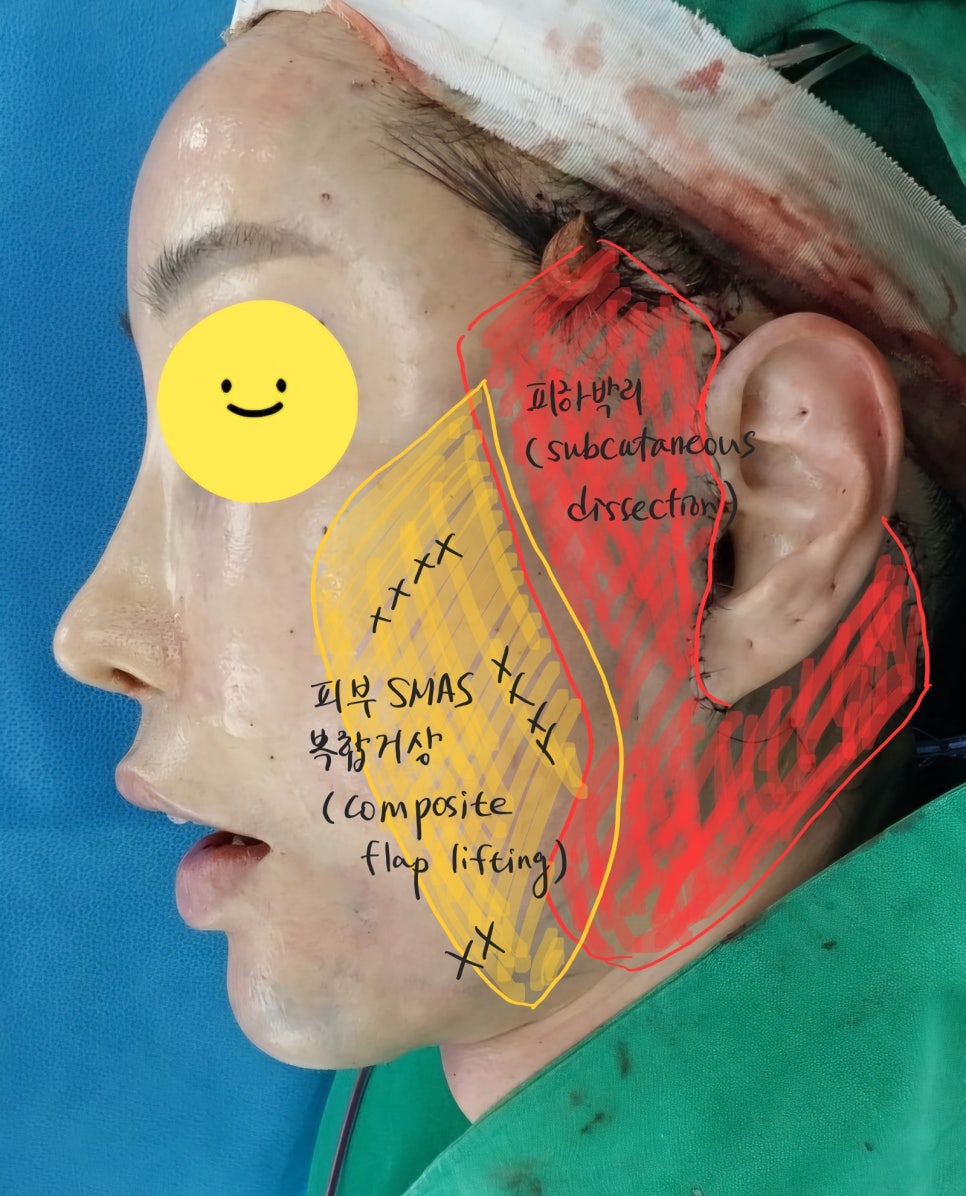
The surgical method of the deep-plane facelift. This is a real model with consent for disclosure.
Both the deep-plane facelift and the dual-plane facelift involve dissection beneath the SMAS (SMAS) layer and release of the retaining ligaments, so both methods produce excellent results, but the surgical method can be adjusted depending on the patient’s condition.
A deep-plane facelift can also dissect sufficiently toward the front of the face, and if necessary, deep cheek fat can also be dissected and removed.
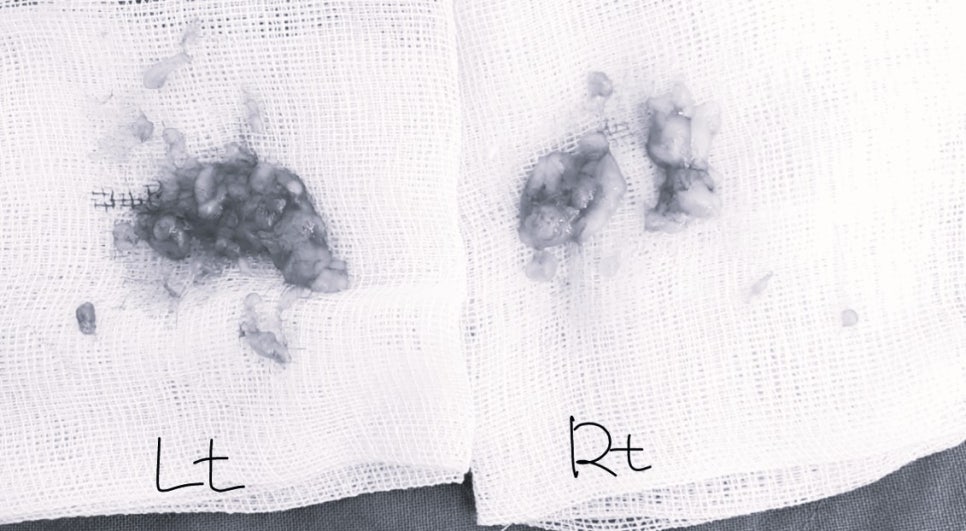
Removal of deep cheek fat during a facelift
'Before and After a Deep-Plane Facelift'
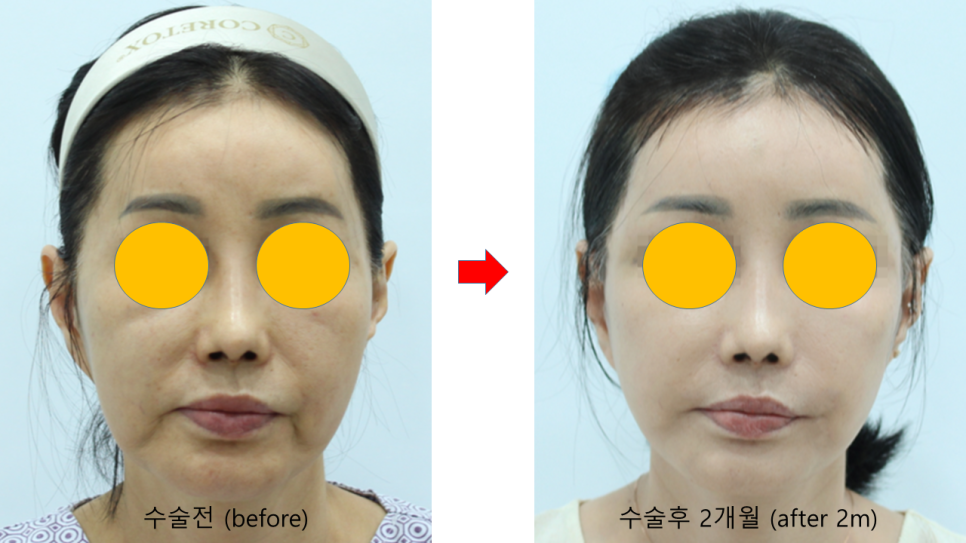
Deep-plane facelift review. Revision facelift review. This is a real model with consent for disclosure.
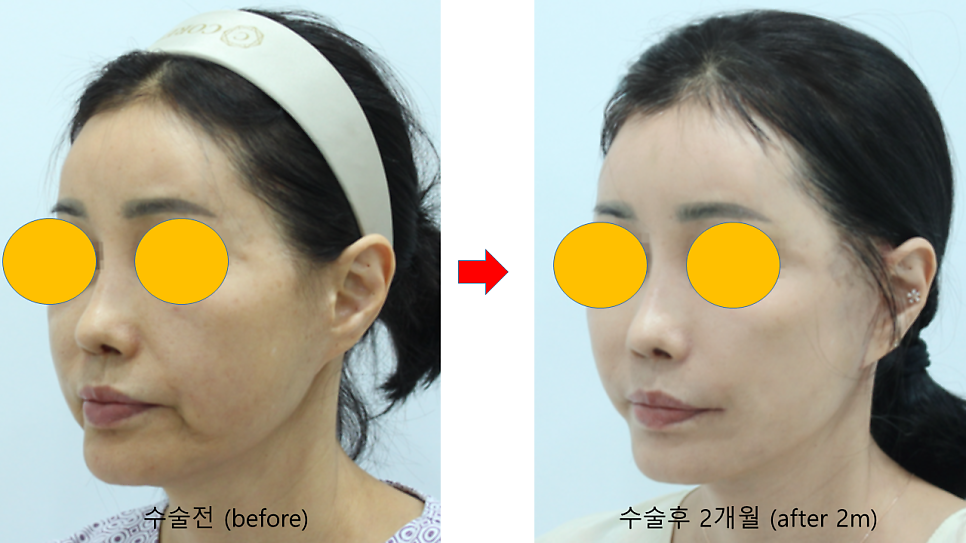
Deep-plane facelift review. Revision facelift review
The areas that were disappointing after the previous facelift were well improved, especially the nasolabial folds, wrinkles around the mouth, and marionette lines.
You can also see that the scalpel-ear deformity caused by the previous surgery has been somewhat alleviated.
In facelift surgery methods, it is good to sufficiently dissect the SMAS (SMAS) layer and release the retaining ligaments, but the skin layer and SMAS (SMAS) layer can be lifted separately or lifted all at once.
It is better to apply these surgical methods differently depending on the patient’s condition rather than always using just one method.