In the case of people who had rhinoplasty 20 to 30 years ago, many say they are not satisfied with the height of the bridge, but they also feel that the shape or height of the tip is lacking.
In the past, rhinoplasty was mainly performed to raise the bridge using silicone implants, and there had been only limited development in materials or techniques for tip surgery. As a result, in many cases an L-shaped silicone implant was used to extend the augmentation all the way to the tip.
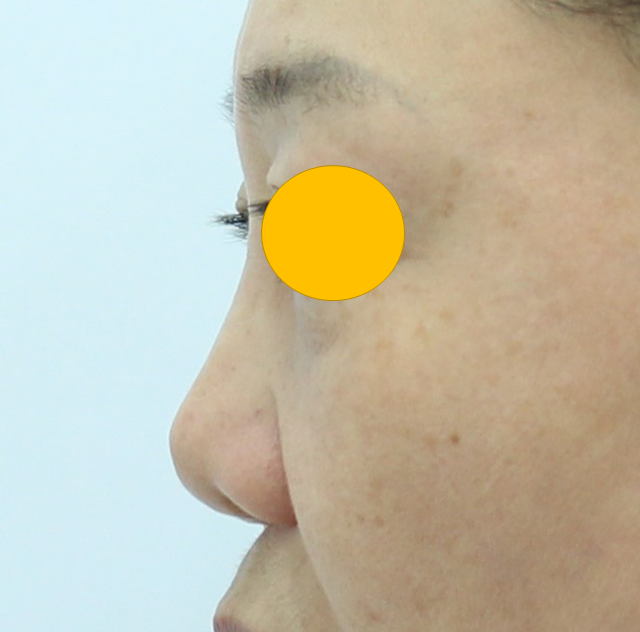
Revision rhinoplasty review for a person in their 50s. A real model with consent for disclosure.
In particular, in the past, ear cartilage was used more often than septal cartilage or rib cartilage in tip surgery, so the tip height or shape is often insufficient.
'CT scans in rhinoplasty consultation'
In the consultation process for revision rhinoplasty, checking the shape and height of the implant used in the previous surgery is an important part of the consultation. In particular, if the implant is visible at the bridge or tip, it is a good idea to check whether the nasal skin has become thin.
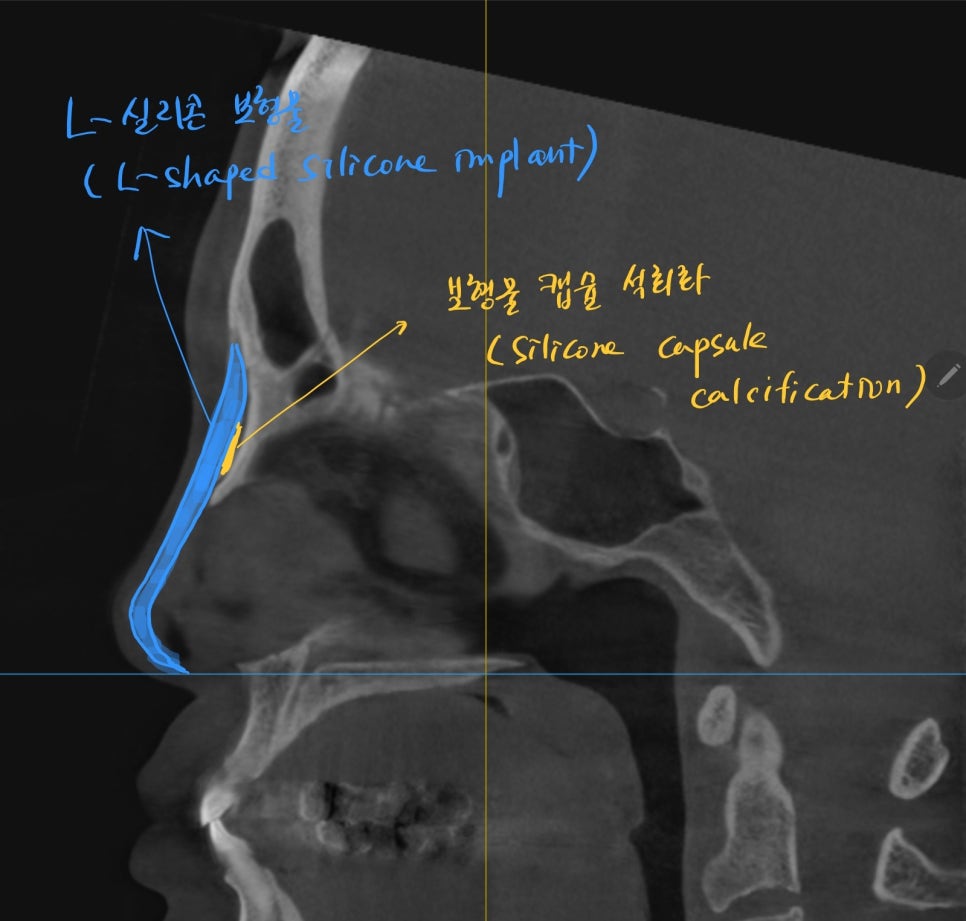
L-shaped silicone implant and calcification seen on CT
On CT scans, an L-shaped silicone implant with a height of about 4 to 5 mm could be identified. In the case of old L-shaped silicone implants, the surrounding area often does not adhere well to the nasal bone, so the capsule between the implant and the nasal bone is often thick, and in some cases calcified lesions are also seen.
'Use of rib cartilage in midlife rhinoplasty'
Unlike in the past, current rhinoplasty separates bridge surgery and tip surgery.
For the bridge, an I-shaped silicone implant is used, and the tip is raised using autologous cartilage. This is a much safer and better surgical method than using the old L-shaped silicone implant.
The cartilage used for tip surgery is most commonly ear cartilage or septal cartilage, but in some cases rib cartilage is also necessary.
In particular, when the tip height is significantly low or there is columellar depression, rib cartilage is essential.
Columellar depression is often accompanied by midface depression, so it is often something that must be corrected to improve the overall facial appearance.
The angle formed by the nose and the philtrum is called the nasolabial angle, and when this angle is acute, the mouth may appear protruded.
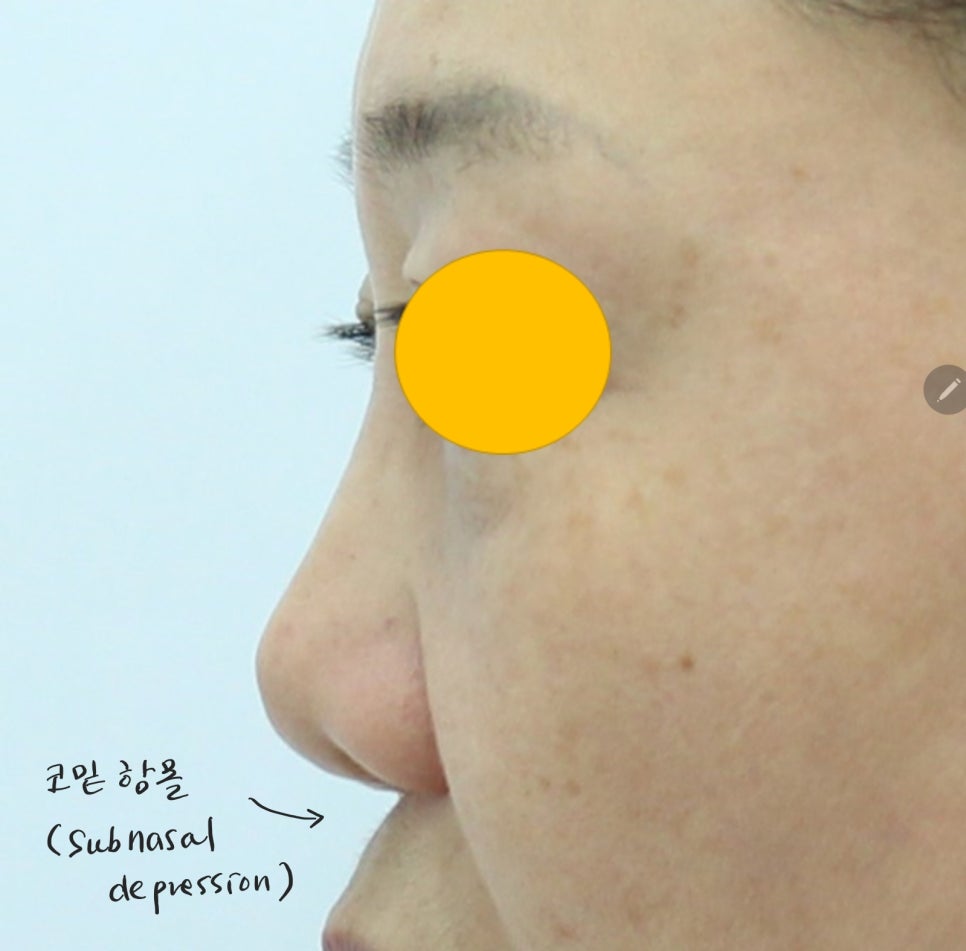
Subnasal depression. Columellar depression. Low nasal tip. Revision rhinoplasty review for a person in their 50s
Because rib cartilage is usually harvested from the lower chest line, it is taken through an incision of about 3 cm in an area covered by underwear.
In people in their 20s and 30s, calcification of the rib cartilage is almost nonexistent, so harvesting and processing the cartilage is relatively easy.
However, in people over 50, calcification of the rib cartilage may progress, reducing the amount of cartilage that can be harvested, and processing the rib cartilage may also be more difficult.
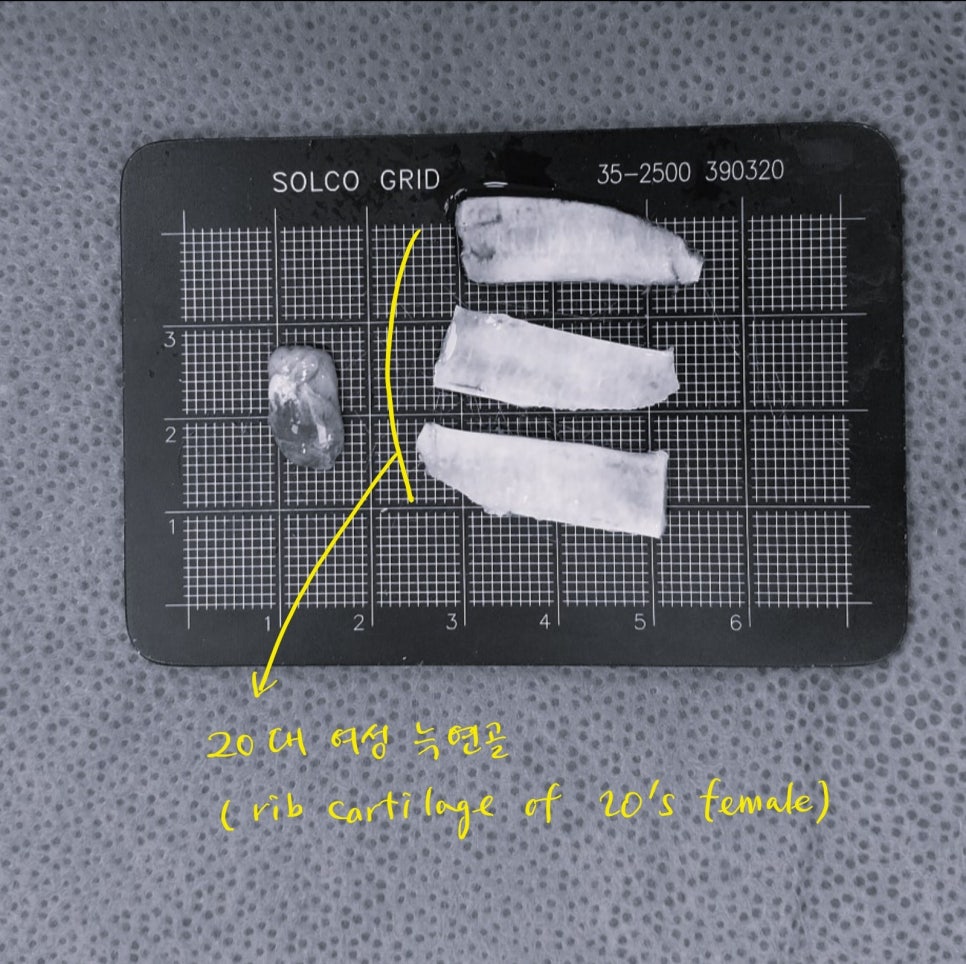
Rib cartilage from a woman in her 20s. Rib cartilage with almost no calcification.
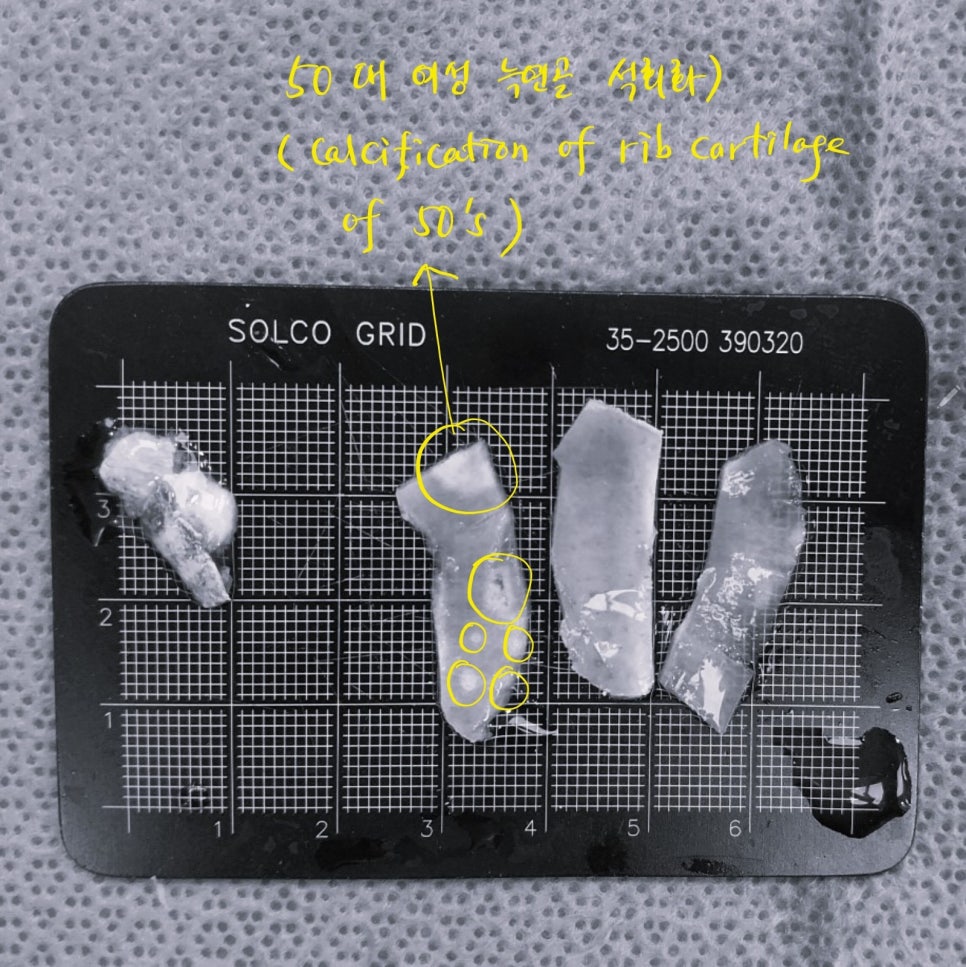
Processing a rib cartilage section from a woman in her 50s. Rib cartilage calcification.
Occasionally, calcified capsules are found around old silicone implants.
It is not necessary to remove all of the capsule formed by the implant, but if the nasal tip skin needs to be stretched, part of it can be removed and dissected to help the skin expand. In addition, if the capsule is calcified, it may be palpable on the bridge, so it must be removed.
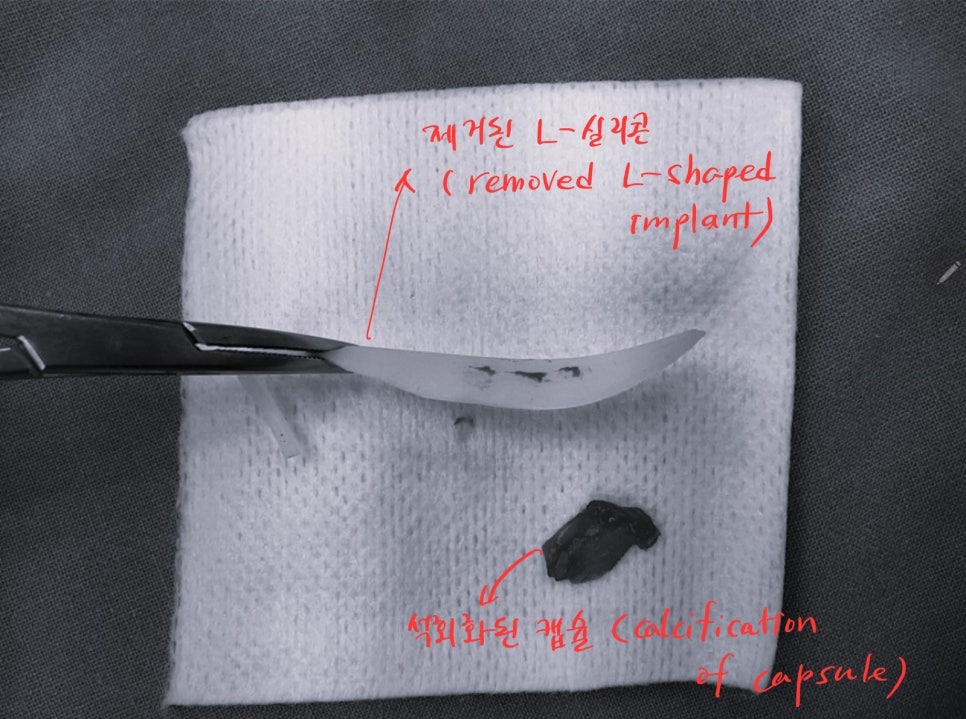
Removed L-shaped silicone implant. Implant calcification. Silicone calcification. Capsule calcification. Fibrous capsule calcification
When using processed rib cartilage sections to raise the tip, it is important to prevent the tip from becoming crooked. In particular, rib cartilage can develop warping, so it is important to understand the cartilage's tendency to bend and to find the right balance of forces when grafting it to the tip.
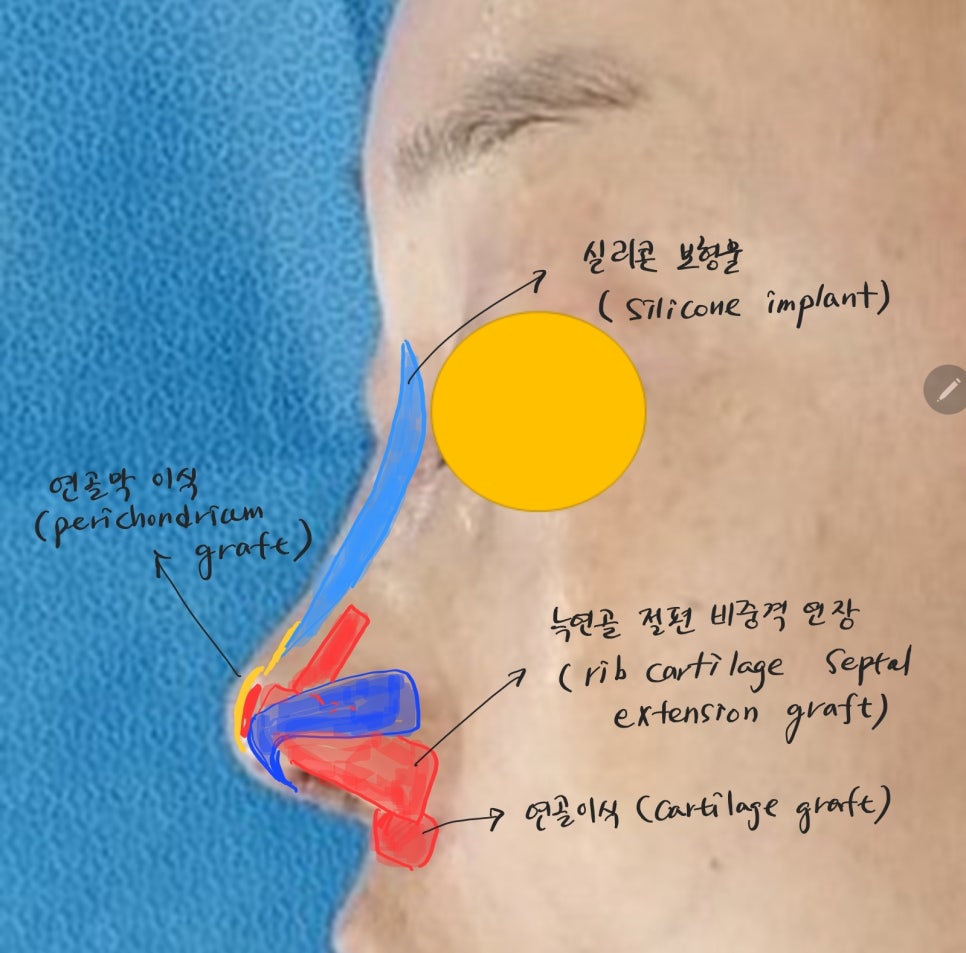
Method of revision rhinoplasty using rib cartilage in midlife. Rib cartilage graft. Correction of columellar depression. Correction of subnasal depression.
The bridge is augmented using an I-shaped implant, and the implant should be made so that it can adhere closely to the nasal bone. Only then can the implant remain stable and capsule formation be minimized.
In revision rhinoplasty, the skin of the nose may become thinner due to the removed capsule. To compensate for this, when rib cartilage is harvested, the perichondrium is also taken together to reinforce the thin skin of the tip or bridge.
'Before and after revision rhinoplasty in midlife'
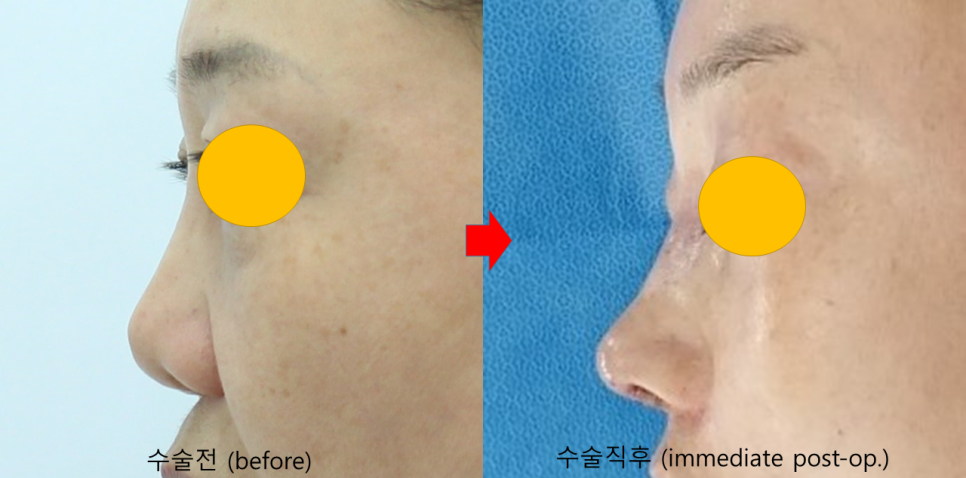
Revision rhinoplasty review for a person in their 50s. Correction of subnasal depression. Correction of columellar depression. Protrusion below the nose.
Rhinoplasty techniques have advanced greatly in recent years, and the preferred nasal shapes have also changed significantly with the times.
If you are unhappy with the shape of a nose that was operated on 20 to 30 years ago, revision surgery using advanced methods can produce good results.