A facelift is a surgery that lifts a sagging face, and while the results are effective and long-lasting, many people worry about scars because the incisions are long.
The incisions for a facelift can be broadly divided into four areas: the front hairline, in front of the ear, behind the ear, and the back hairline. The incision line may vary depending on the situation.
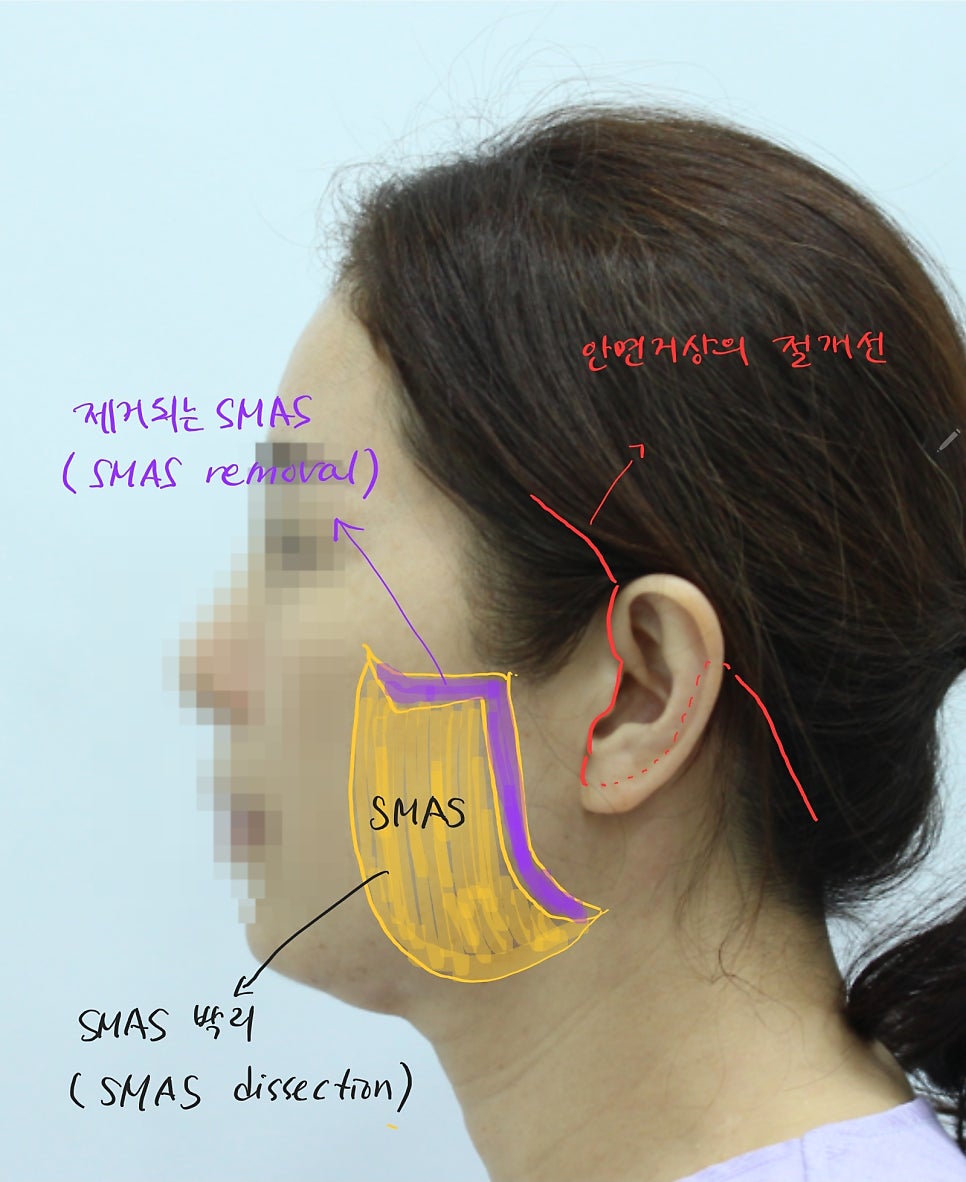
The location of facelift incisions. SMAS dissection.
The reason facelift incisions are long is that the sagging areas in each region need to be lifted and the excess skin needs to be removed.
Of course, an important point in a facelift is not simply pulling the skin, but carefully dissecting and lifting the SMAS layer beneath the skin.
However, because internal retaining ligament dissection and SMAS layer dissection cannot be seen from the outside, it is impossible to tell how the surgery was performed even if it is called the same facelift.
In general, in facelifts that only dissect the subcutaneous layer, the lifting effect may seem similar immediately after surgery, but over time the lifting effect often decreases and scars are often left severe.
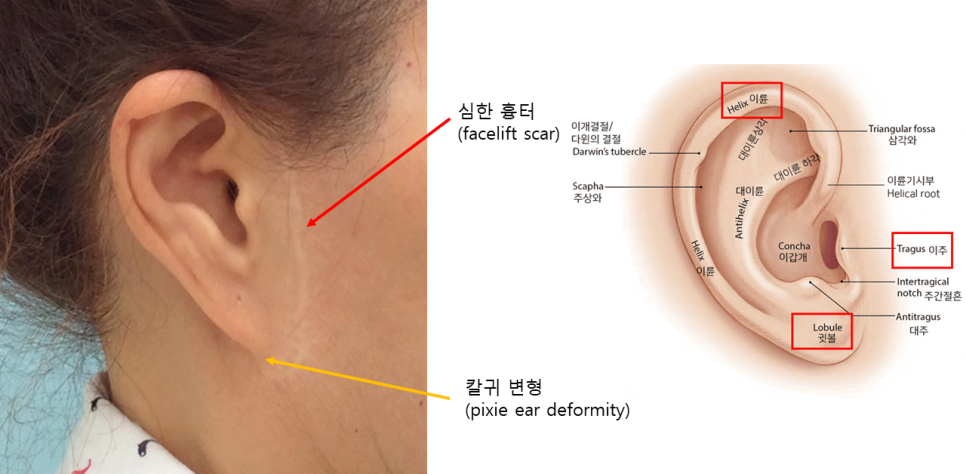
Severe scarring and pixie ear deformity that occurred after a facelift at another hospital
Because the ears on our face have a complex anatomical shape and a detailed three-dimensional structure, severe scars can remain if the facelift incision is not placed to match the ear shape well.
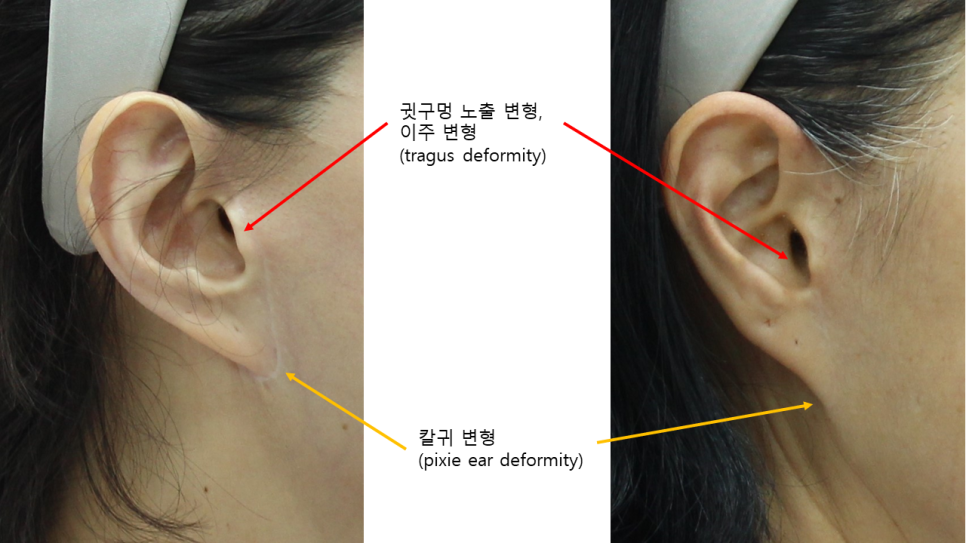
Ear deformity that occurred after a facelift at another hospital. Tragus deformity. Pixie ear deformity. Exposed ear canal deformity.
In addition, in a facelift that only pulls the skin, all of the lifted tension is applied to the skin layer, which can cause deformity of the ear shape.
Typical examples include tragus deformity, where the ear canal is visible from the side, and pixie ear deformity.
Severe scars or deformity of the ear shape after a facelift can be a major source of stress, and because the ears need to be covered after surgery, it may limit hairstyle choices.
In fact, if a facelift is performed using the proper method, the scars are barely visible and deformity of the ear shape does not occur.
At every clinic, SMAS layer dissection in facelift surgery is always emphasized. This is not only because it improves the result of the facelift, but also because it helps prevent scars at the incision site and prevents deformity of the ear shape.
'The Scar Maturation Process After Facelift Surgery'
Stitches at the facelift incision site are usually removed about 10 to 14 days after surgery, and once the incision wound heals, scar maturation begins.
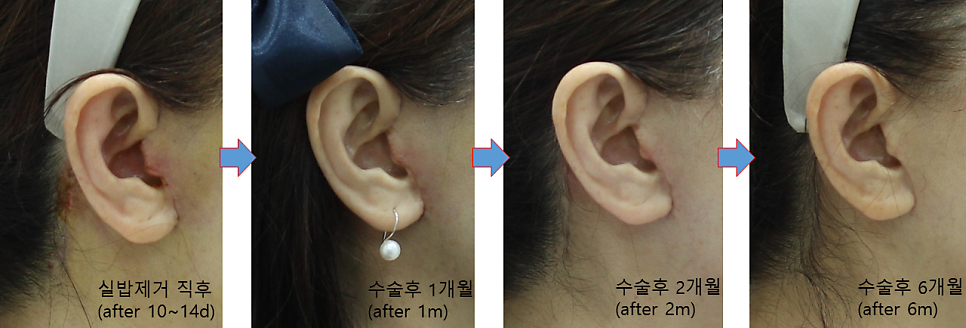
The scar maturation process at the facelift incision site.
In the early stage, the scar at the incision site has a slightly reddish color and may feel a little itchy.
After surgery, you can apply the regenerative ointment recommended by the clinic or buy a scar ointment from a pharmacy and use that, but even without special care, as time passes the incision line becomes almost invisible through the scar maturation process.
Also, because the hair follicles around the hairline remain alive, hair begins to grow back after 1 to 2 months and can be seen covering the scar.
The reason scars are almost invisible over time after a facelift is that the incision line was properly placed to match the three-dimensional ear shape.
In addition, because the SMAS layer was dissected appropriately and the necessary retaining ligaments were released at the correct layer, the lifting tension is not applied to the skin layer but to the SMAS layer beneath the skin, preventing hypertrophic scar formation.
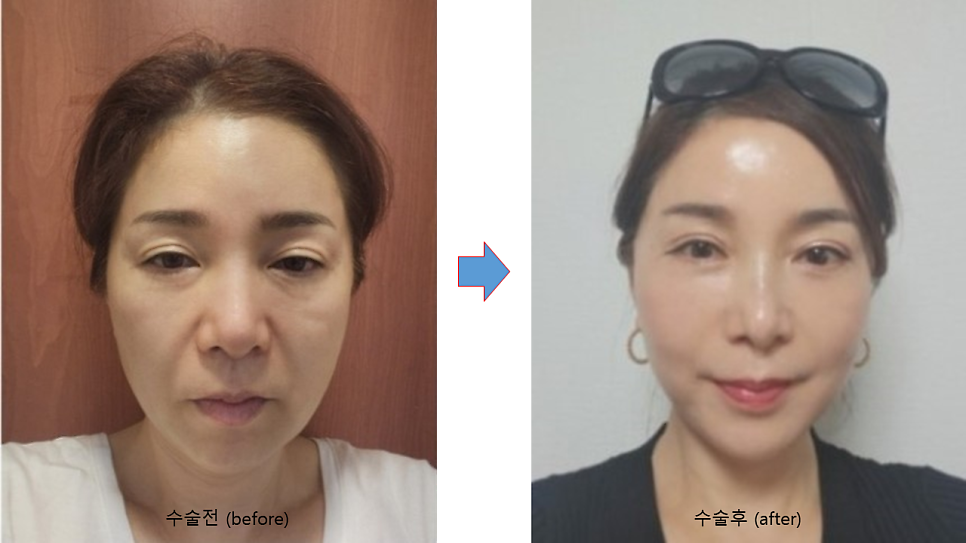
Facelift review. Before and after facelift. This is a real model who consented to disclosure.
To confidently show the lifted appearance after a facelift, it should be possible to style the hair in various ways, such as an updo or tied-back hairstyle.
For that to be possible, the incision-site scars must remain almost invisible, and the ear shape must remain almost the same as before surgery.
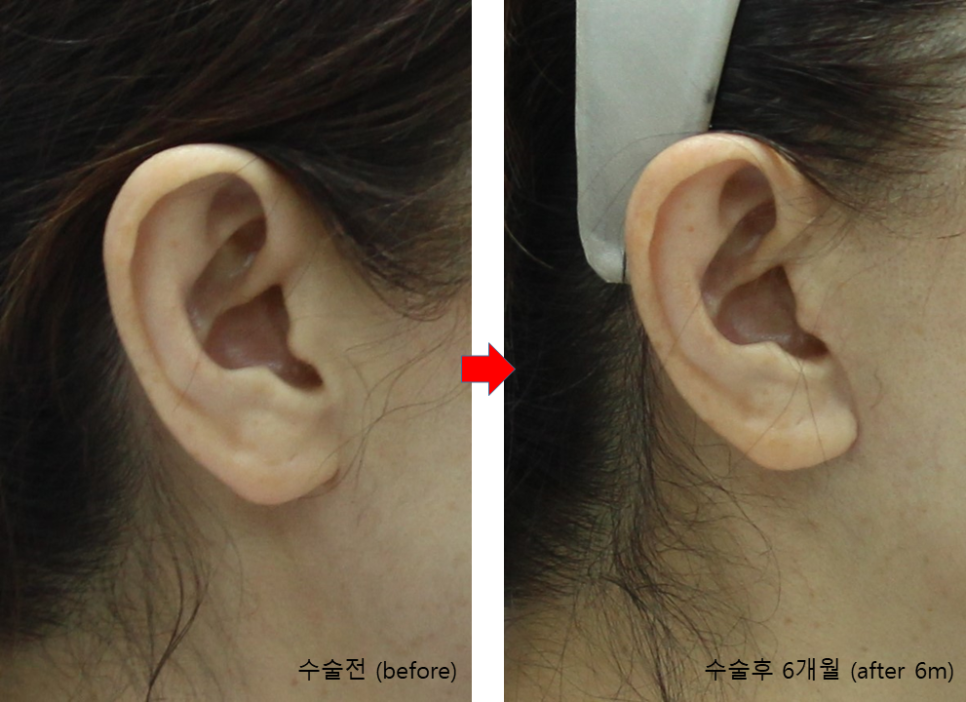
Facelift surgery scar maturation. A 6-month review after facelift surgery.
In particular, there should be no deformation of the tragus that covers the ear canal, and there should be no pixie ear deformity that makes the earlobe longer.
To make this possible, it is important to understand the anatomical structure of the three-dimensional ear shape well and remove only the appropriate amount of skin.
And the most important thing is to dissect the SMAS layer properly so that the lifting tension is not applied to the skin.

Facelift review in a person in their 50s. Facelift review in a person in their 60s. This is a real model who consented to disclosure.