One of the first areas people start paying attention to as they age is the area around the mouth.
In particular, marionette lines that run downward from the corners of the mouth are a 대표적인 age-related change that can make a person look sad and older.
The term marionette line comes from the “marionette doll.”
A marionette is a puppet controlled by strings in a puppet show. Because strings are attached around the mouth area and pull the mouth downward, the name was given because it resembles the lines around the human mouth.
In other words, it is called this because the lines running from the corners of the mouth toward the chin resemble the shape of a puppet’s mouth.
 Marionette. Marionette lines. Marionette puppet show.
- Why do marionette lines become deeper? -
Marionette lines do not form simply because skin elasticity decreases.
A combination of the following causes is involved.
-
Sagging of the skin and soft tissue
-
Redistribution and loss of fat
-
Tension and fixation of retaining ligaments
-
Aging of the lower facial structure
Especially in middle age and later, and in patients in their late 50s and 60s,
many people visit with expressions such as “the area around the mouth feels collapsed” or “jowls are forming.”
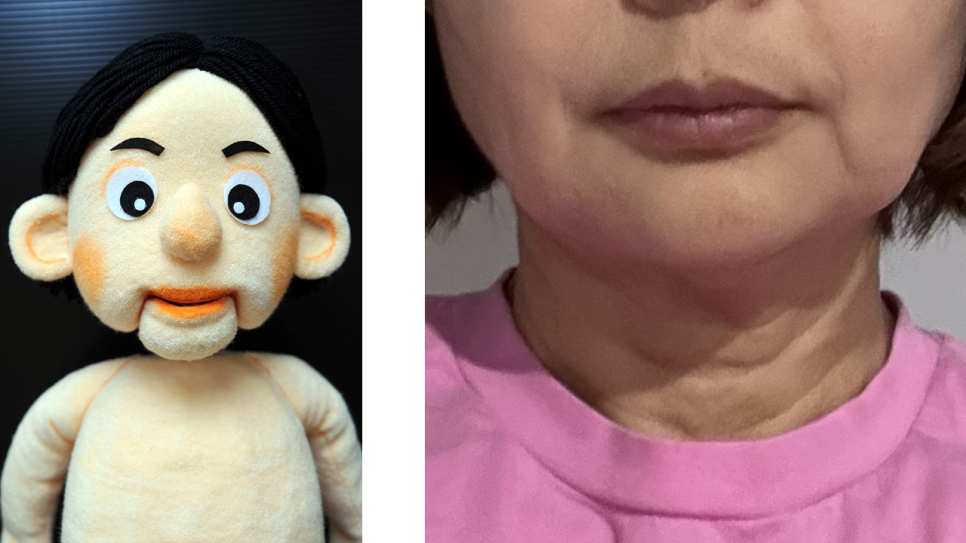 Marionette lines. Perioral wrinkles. Facelift in the 50s. Facelift in the 60s. This is a partial model with consent for disclosure.
- Key point in lifting: releasing the retaining ligament -
One of the most important concepts in facelift surgery is the retaining ligament.
Simply pulling the skin and SMAS layer is not enough to fundamentally improve marionette lines.
In particular, to effectively improve marionette lines, sufficient release of the mandibular retaining ligament located in the lower face is very important.
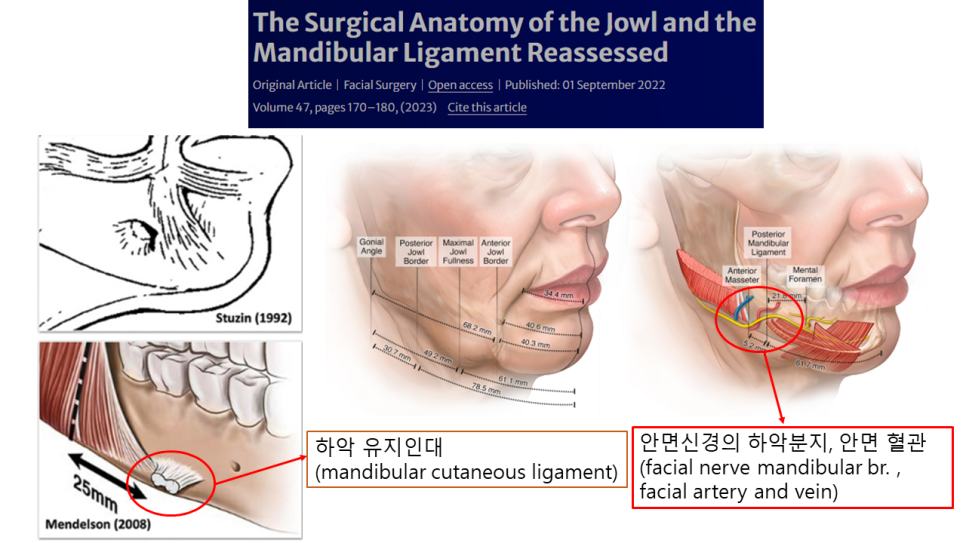 Mandibular retaining ligament. Retaining ligament release. Facial nerve. Source: Facial Surgery
The mandibular retaining ligament fixes the following areas.
-
Tissue around the mouth
-
Jowl
-
Lower facial soft tissue
Because this ligament is firmly fixed, simply pulling upward does not move the area sufficiently, so without releasing this ligament, improvement in wrinkles may be limited.
Therefore, to properly smooth marionette lines, it is essential to safely release this retaining ligament and secure tissue mobility.
- Why releasing the mandibular retaining ligament is difficult -
The area around the mandibular retaining ligament is where very important anatomical structures pass.
For this reason, excessive dissection or an inaccurate approach can lead to a risk of nerve injury or bleeding.
In the end, this area can be said to require precise anatomical understanding and skilled technique.
- Facelift case in a woman in her late 50s -
In the case of a female patient in her late 50s, before surgery she had deep marionette lines descending below the corners of the mouth and jowls, which made her expression look somewhat heavy and tired.
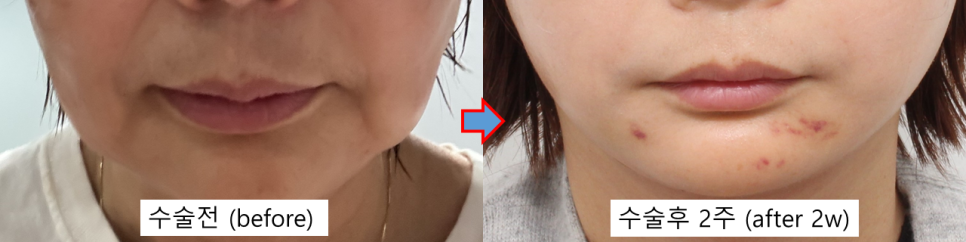 Marionette line. Marionette lines. Before and after facelift in the 50s. Before and after facelift in the 60s. This is a partial model with consent for disclosure.
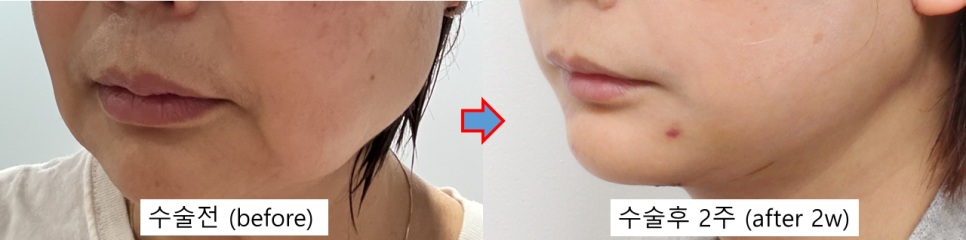 Jowl surgery. Jowl contouring. Facelift review in the 50s. Facelift review in the 60s. This is a partial model with consent for disclosure.
After a facelift, the mandibular retaining ligament was sufficiently released and the lower facial tissues were repositioned.
As a result,
-
the marionette lines were softened naturally
-
the corners of the mouth lifted gently
-
the overall impression improved to look brighter and more relaxed
Marionette lines are not simply skin wrinkles.
They are the result of changes in the lower facial structure.
Therefore, a structural approach including release of the retaining ligament is often necessary.
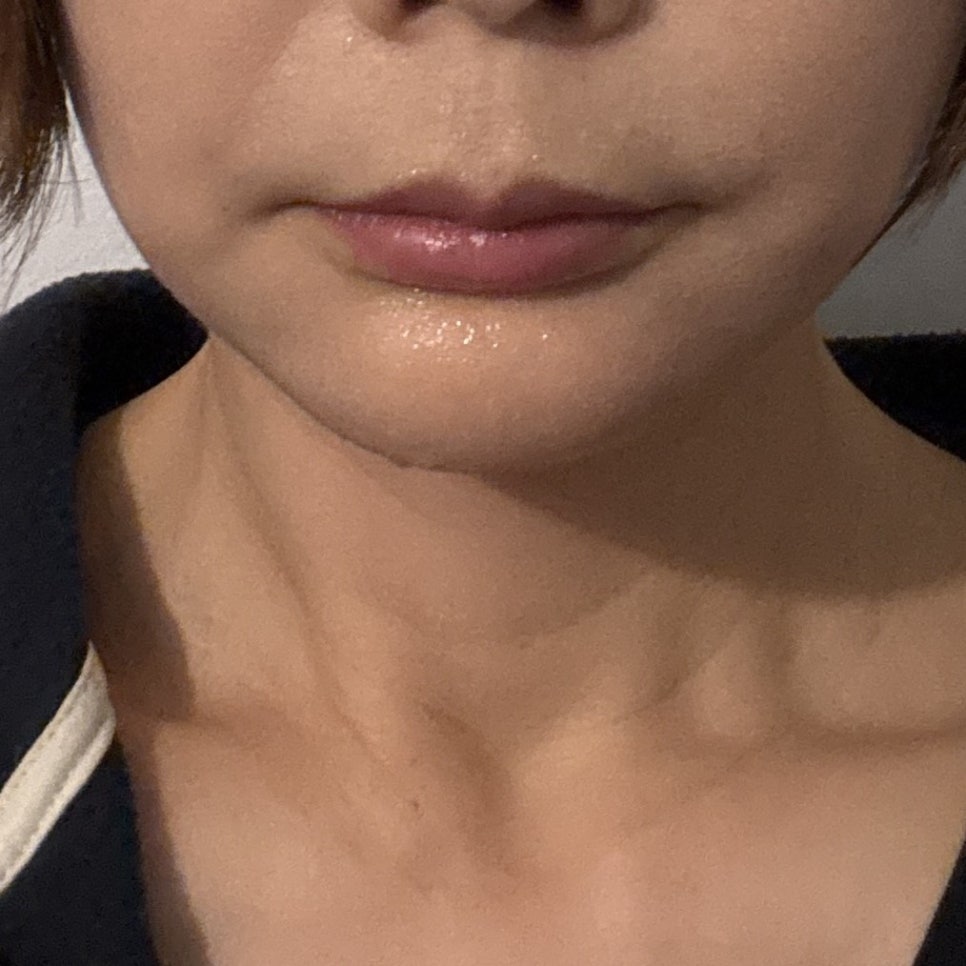 Facelift and neck lift in the 50s. Facelift and neck lift in the 60s. This is a partial model with consent for disclosure. One month after facelift. Facelift recovery.