When the area under the eyes begins to bulge and the skin starts to sag, it can make you look more tired and older than your actual age.
Lower eyelid surgery is one of the most common procedures for improving this type of under-eye aging.
Lower eyelid surgery involves making an incision just beneath the eyelashes of the lower eyelid to remove excess skin and muscle, while also improving bulging under-eye fat and the tear trough.
Because it can effectively correct signs of aging under the eyes, it is known as a procedure with high satisfaction among middle-aged patients.
However, some people who underwent lower eyelid surgery in the past felt that their under-eye area became flatter, their pretarsal roll disappeared, and their facial expressions looked unnatural afterward.
As a result, many people mistakenly believe that lower eyelid surgery causes the pretarsal roll to disappear.
- What structure forms the pretarsal roll? -
The pretarsal roll is formed when part of the orbicularis oculi muscle naturally protrudes.
The reason it becomes more prominent when you smile or make facial expressions is also due to the movement of the orbicularis oculi muscle.
Therefore, minimizing damage to the orbicularis oculi muscle is important for naturally preserving the pretarsal roll.
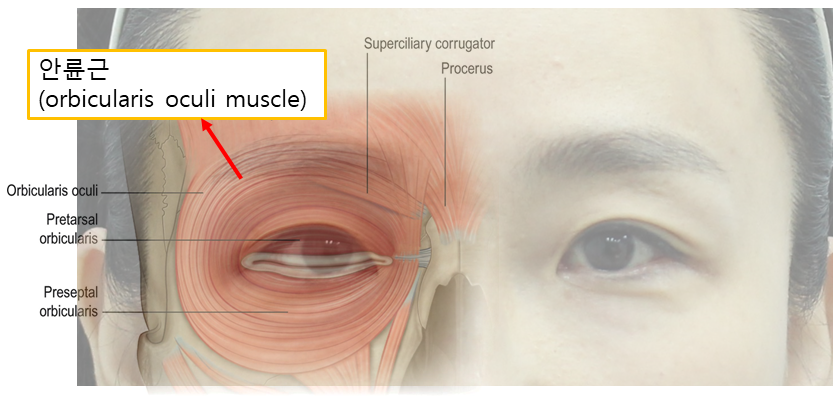
Orbicularis oculi muscle. Pretarsal roll preservation. Lower eyelid surgery with orbicularis oculi preservation. Distinguishing the orbicularis oculi muscle. The model has consented to disclosure of the relevant images.
- Why preserving the orbicularis oculi muscle is important during lower eyelid surgery -
To access the under-eye fat and the tear trough ligament during lower eyelid surgery, the orbicularis oculi muscle must be passed through.
If excessive incisions or unnecessary dissection are performed during this process, damage to the orbicularis oculi muscle may occur,
which can affect the recovery process or changes in facial expressions after surgery.
In addition, very fine motor nerve branches sent by the zygomatic branch of the facial nerve are distributed within the orbicularis oculi muscle.
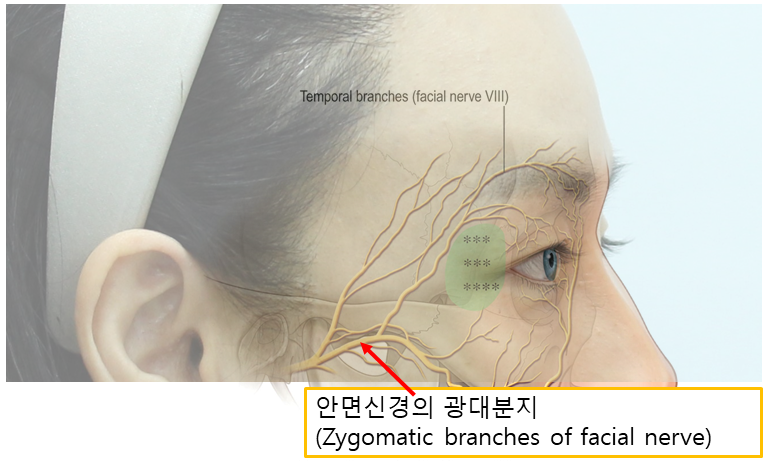
Facial nerve branches. Zygomatic branch of the facial nerve. The model has consented to disclosure of the relevant images.
Because these nerves control movement of the orbicularis oculi muscle, it is important to minimize unnecessary damage during surgery.
Even minor injury or a small hematoma during lower eyelid surgery can delay recovery of the orbicularis oculi muscle.
For this reason, the procedure is performed by dissecting only as much as necessary and handling the tissue delicately to minimize damage to the muscle and nerves.
- The key to lower eyelid surgery that preserves the pretarsal roll -
The goal of lower eyelid surgery is not simply to flatten the area under the eyes.
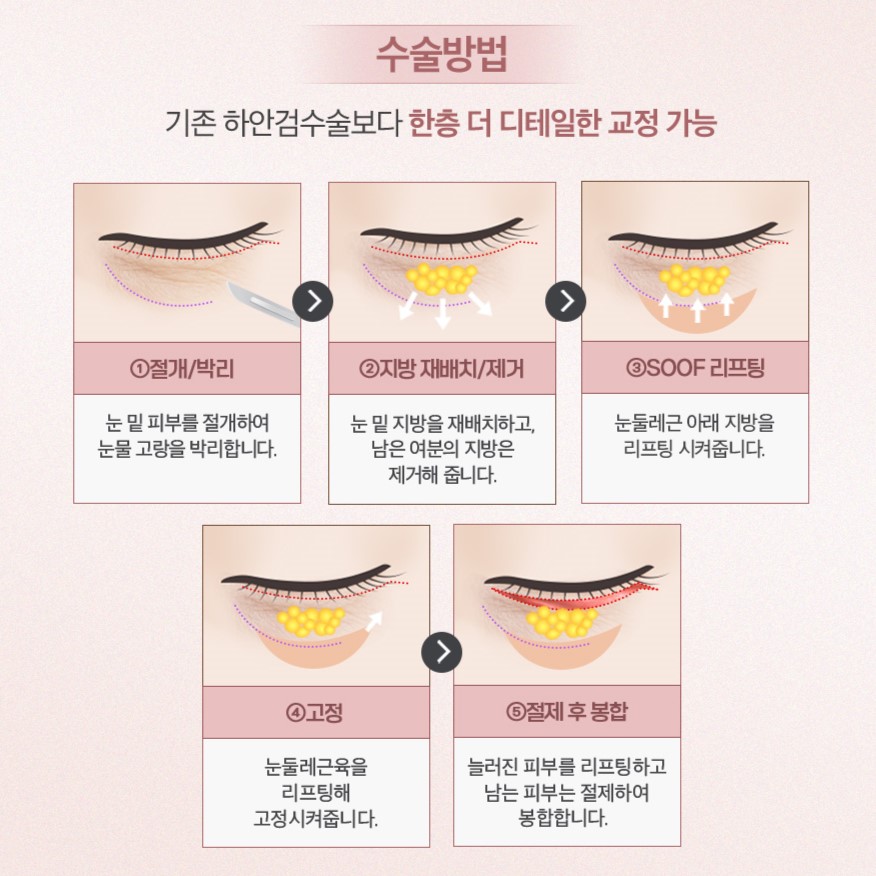
Lower eyelid surgery methods. Techniques for lower eyelid surgery. How lower eyelid surgery is performed. Source: 가넷성형외과 website.
While improving signs of aging under the eyes, it is also necessary to preserve the natural facial expressions and three-dimensional appearance you originally had.
To achieve this,
-
Dissection that minimizes damage to the orbicularis oculi muscle
-
Delicate surgery that reduces microscopic nerve damage
-
A design that avoids excessive fat removal
-
Maintaining natural volume under the eyes
are important.
Ultimately, good lower eyelid surgery is not simply about making someone look younger; it is a process of creating a natural result that does not look visibly operated on.
- A case of lower eyelid surgery in a woman in her 50s -
This is the case of a woman in her 50s.
Before surgery, bulging under-eye fat and sagging skin gave her a tired and aged appearance.
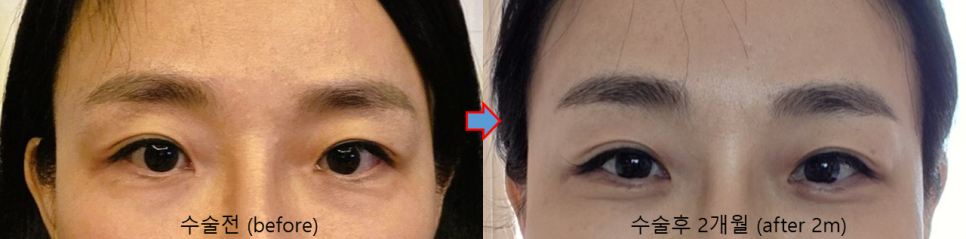
Before and after lower eyelid surgery. Lower eyelid surgery before and after. Lower eyelid surgery review. Review of lower eyelid surgery. The model has consented to disclosure of the relevant images.
At two months after lower eyelid surgery, the area under the eyes appears smoother, creating a brighter impression.
In particular, the pretarsal roll was naturally preserved, maintaining the expression when smiling and the three-dimensional appearance of the eyes.
This was possible because the surgery was performed while preserving the orbicularis oculi muscle as much as possible and dissecting the surrounding tissue as delicately as possible.
Lower eyelid surgery is a highly effective procedure for improving signs of aging under the eyes,
but just as important as making the under-eye area look younger is preserving the natural facial expressions you originally had.
The pretarsal roll is an important feature that makes the eyes look softer and more lively.
Therefore, if you are considering lower eyelid surgery, it is advisable to check whether the procedure can be performed while carefully preserving the orbicularis oculi muscle and fine nerves.
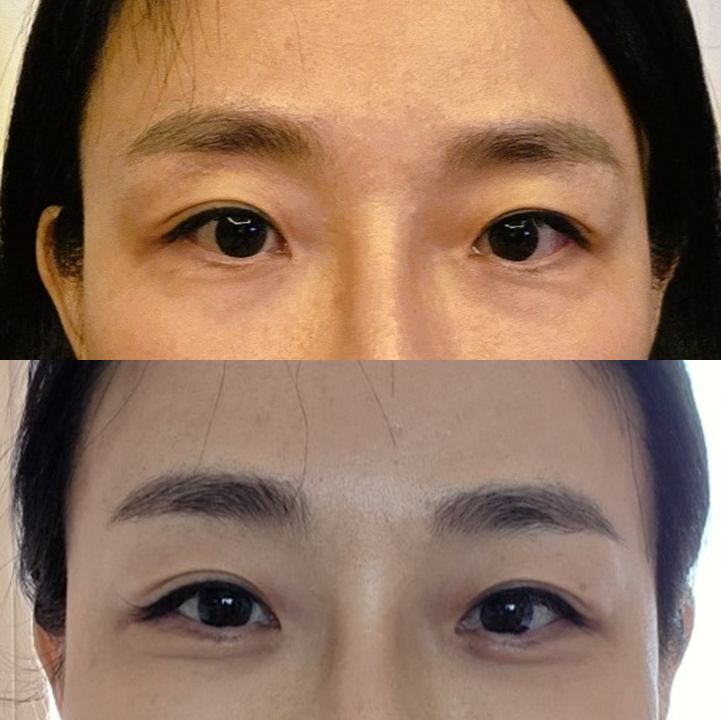
Lower eyelid surgery review. Lower eyelid surgery in the 50s. Review of lower eyelid surgery in the 50s. Before and after lower eyelid surgery in the 50s. The model has consented to disclosure of the relevant images.
If you are wondering whether to choose under-eye fat repositioning or lower eyelid surgery in your 40s or 50s, see the blog post below.