When people hear the term facelift, they often think of a surgery designed to improve sagging facial features in people in their 50s and 60s.
By contrast, a mini facelift is known as a facelift that reduces the burden of surgery by minimizing the incision,
but many people still believe that “a mini facelift is a procedure with limited results.”
However, today’s mini facelift is significantly different from those of the past.
With the application of the Deep Plane concept developed through facelift surgery,
it has become possible to expect more effective lifting while keeping the incision to a minimum.
Today, we will look at how the mini facelift has evolved and how the recent
deep mini facelift differs from the conventional mini facelift.
- The Representative Mini Facelift: MACS Lift -
When discussing the mini facelift, one technique that cannot be left out is
the MACS (Minimal Access Cranial Suspension) Lift introduced by Tonnard.
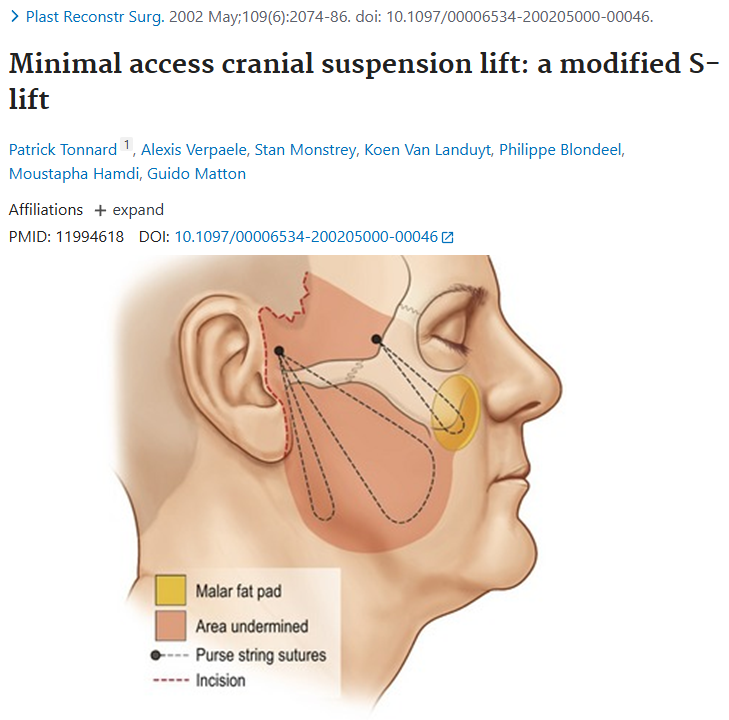
Mini facelift. MACS lifting. MACS Lift. Source: Plastic and Reconstructive Surgery.
The MACS Lift reduced the incision while introducing the concept of folding and suspending the SMAS with sutures (Suture Technique),
rather than simply pulling the skin.
At the time, it was a technique that represented an advancement over conventional skin lifting,
and it is still introduced in textbooks and academic papers as a representative mini facelift technique.
However, its surgical principles also have structural limitations.
The MACS Lift does not enter the layer beneath the SMAS (Deep Plane),
and it does not release the retaining ligaments that support the face.
Therefore, the range within which the skin and SMAS can be moved freely is limited,
which may limit the strength of the lift or its long-term durability.
- The Evolution of the Mini Facelift: Applying the Deep Plane Approach -
The most significant change in the development of facelift surgery was the emergence of the Deep Plane facelift.
A Deep Plane facelift involves dissection beneath the SMAS
and releasing the retaining ligaments so that the skin and SMAS can be moved naturally as a single layer.
The technique that applies this concept to a mini facelift is the Deep Plane mini facelift.
The representative technique introduced in academic papers is the
MADE (Minimal Access Deep-plane Extended) Vertical Facelift presented by Andrew Jacono.
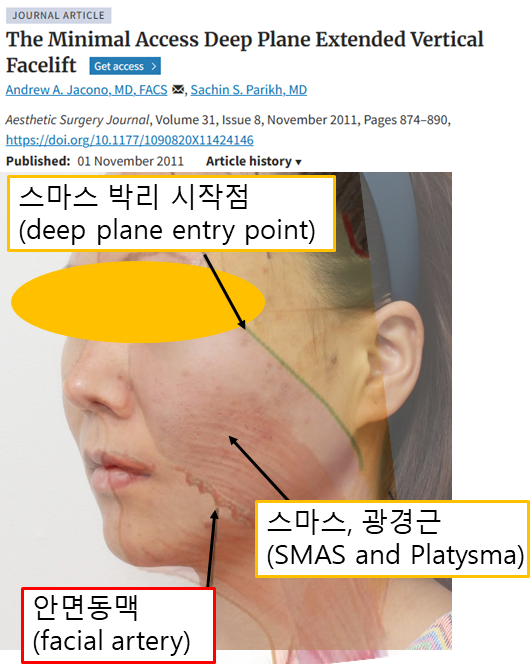
Deep mini facelift. Deep Plane mini facelift. MADE lifting. Source: Aesthetic Surgery Journal.
Although the visible incision is not significantly different from that of the conventional MACS Lift,
the surgery performed internally is completely different.
A deep mini facelift
-
involves sufficient dissection down to the layer beneath the SMAS;
-
appropriately releases the retaining ligaments; and
-
moves and secures the tissue according to the Deep Plane principles used in facelift surgery.
In other words, the incision is that of a mini facelift, but the core of the procedure is closer to a Deep Plane facelift.
In this way, today’s mini facelift is evolving beyond a procedure that simply reduces the incision,
becoming a procedure that incorporates advanced facelift concepts through a smaller incision.
- Post-Facial Contouring Sagging and the Deep Mini Facelift -
A lifting procedure is determined not by age but by the structure of the face and the cause of the sagging.
A representative example is cheek sagging after facial contouring surgery.
Facial contouring procedures, such as cheekbone reduction or square-jaw surgery, make the facial bones smaller to create a slimmer-looking face.
However, when the bones become smaller, the soft tissue that covered them remains,
which may cause the cheeks or the area around the jawline to sag downward.
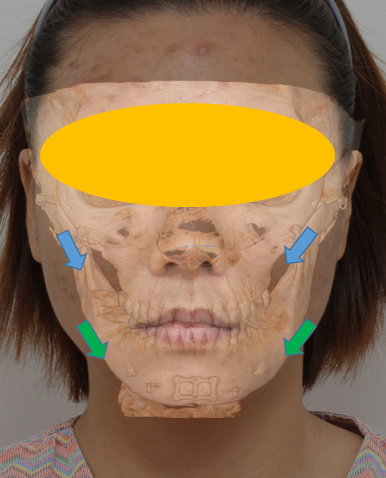
Cheek sagging after facial contouring surgery. Soft-tissue sagging after facial contouring surgery. Cheek sagging after cheekbone reduction. Sagging around the jaw after square-jaw surgery. Overseas partial model whose consent for publication was obtained.
For this reason, even relatively young patients in their 30s may require lifting after facial contouring surgery.
This patient was a woman in her early 30s who had previously undergone facial contouring surgery, including cheekbone reduction and square-jaw surgery.
Over time, cheek sagging developed, and her main concern was that her face looked heavy as the jawline became less defined.
Because it was difficult to expect sufficient improvement from thread lifting or an approach that only pulls the skin,
a Deep Plane mini facelift was performed.
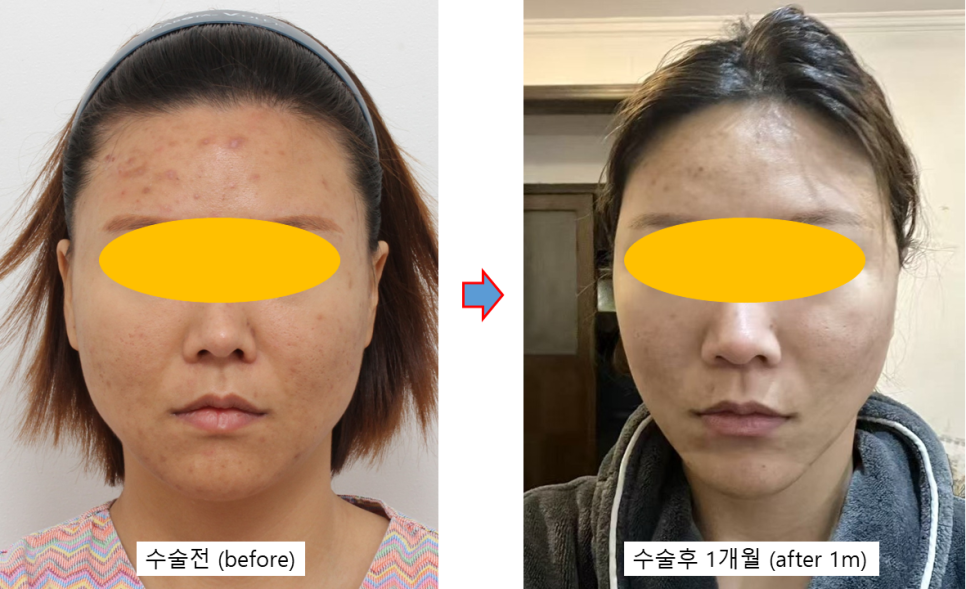
Surgery for soft-tissue sagging after facial contouring. Surgery for cheek sagging after facial contouring. Before and after the Deep Plane mini facelift. Before and after the mini facelift. Mini facelift review. Overseas partial model whose consent for publication was obtained.
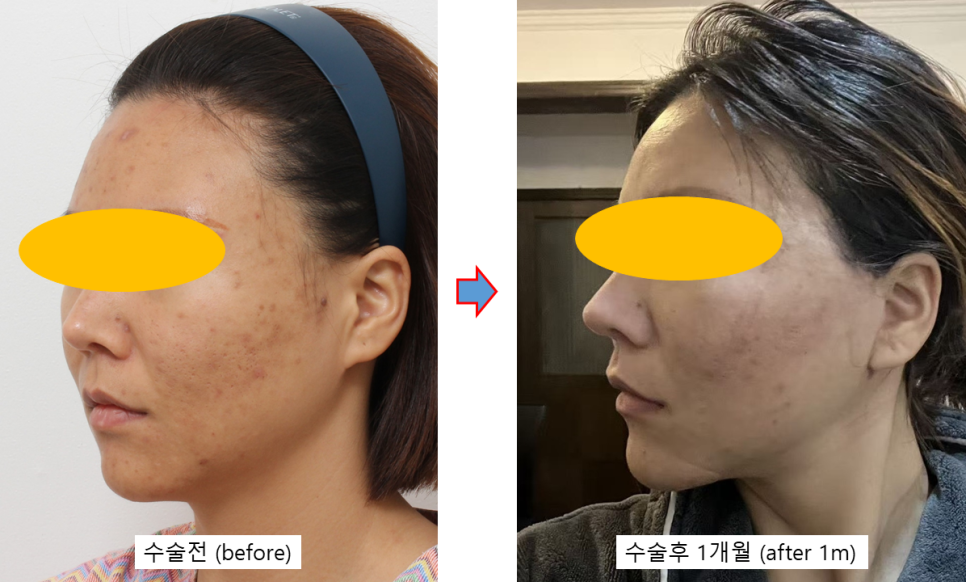
Surgery for soft-tissue sagging after facial contouring. Surgery for cheek sagging after facial contouring. Before and after the Deep Plane mini facelift. Before and after the mini facelift. Mini facelift review. Overseas partial model whose consent for publication was obtained.
Looking at the one-month postoperative photos,
-
the cheek sagging visible before surgery was naturally improved;
-
the sagging soft tissue that had covered the jawline was lifted; and
-
a sharper, more refined facial contour was created.
In particular, rather than producing an artificial appearance caused by excessive skin tension,
the facial tissues themselves were repositioned upward, creating a natural and three-dimensional facial contour.
Cheek sagging after facial contouring surgery is often not simply a skin issue;
it frequently involves changes in the position of deeper-layer tissues as well.
Therefore, in such cases, a Deep Plane mini facelift applying the principles of Deep Plane facelift surgery may be an option to consider.
-
A Deep Mini Facelift May Be Considered for the Following People -
-
Those who have developed cheek sagging after facial contouring surgery
-
Those whose jawline has become less defined and whose lower cheek area has descended
-
Those concerned about deep nasolabial folds and early marionette lines
-
Those who find a large incision burdensome but want a more substantial lift
-
Those who want a lift with a longer-lasting period than the results of ultrasound lifting, radiofrequency lifting, or thread lifting
The mini facelift has continued to evolve over many years.
The early mini facelift, the MACS Lift, presented the concept of reducing the incision while utilizing the SMAS,
but there were many cases in which the duration of the results was short and the outcome was less satisfactory.
More recent Deep Plane mini facelifts, based on the MADE concept, have added Deep Plane dissection and retaining-ligament release,
and are evolving into procedures that incorporate the principles of facelift surgery through a small incision.
In particular, for localized sagging in younger patients, such as cheek sagging that occurs after facial contouring surgery,
a Deep Plane mini facelift may be a more effective option than a facelift involving a large incision across the entire face.
What is important is understanding the anatomical structure of the face and the principles used to lift the tissues.
This is because even mini facelifts can produce different results depending on the depth and principles of the surgery.
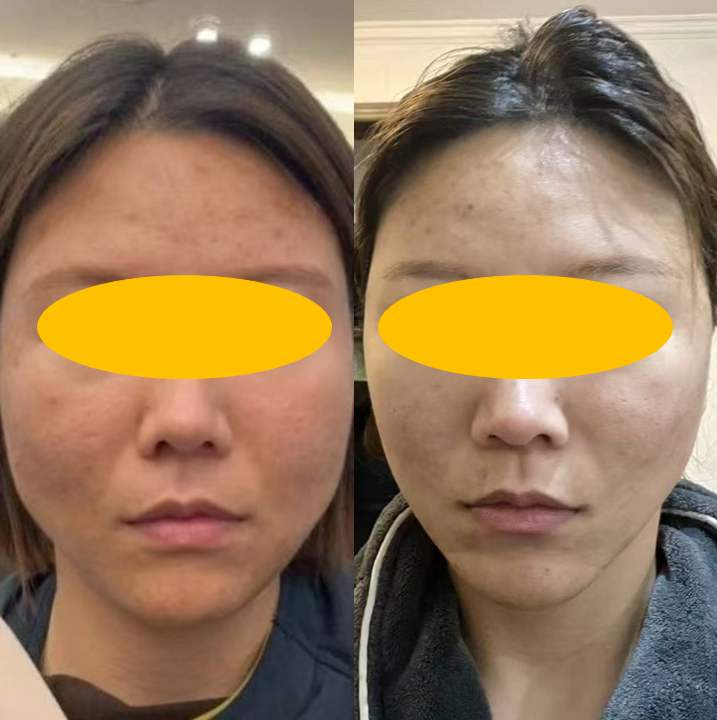
Before and after the mini facelift. Mini facelift review. Vertical mini facelift. Cheek sagging after facial contouring. Soft-tissue sagging after facial contouring. Overseas partial model whose consent for publication was obtained.
For information about another overseas patient’s Deep Plane mini facelift case, please refer to the blog post below.