In the past, surgical procedures that required large incisions could be performed through only small incisions with the development of laparoscopy and surgical endoscopes, resulting in much faster recovery.
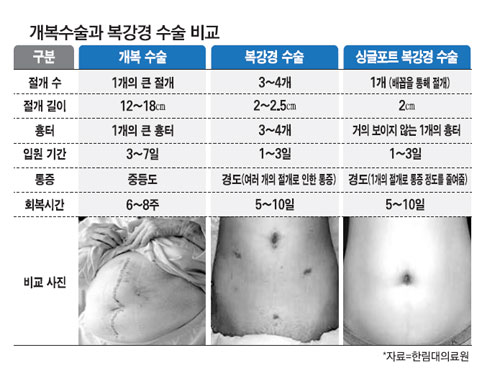
Comparison of open surgery and laparoscopic surgery. Recovery after laparoscopic surgery. Source: Hallym University Medical Center.
The same applies to forehead lifts.
With an endoscope, the procedure can be performed through small incisions in the scalp while directly checking the nerves and blood vessels, allowing for a more precise and safer operation.
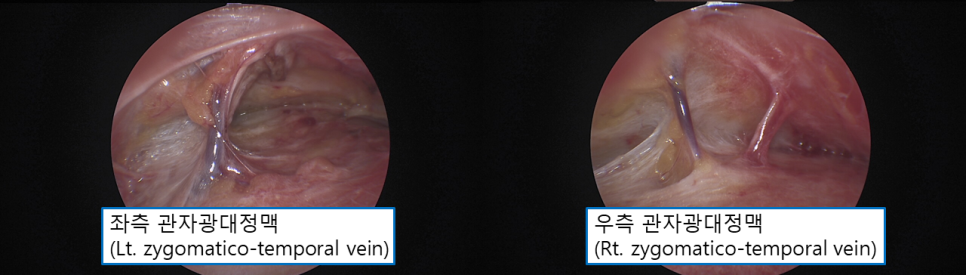
Sentinel vein. Temporozygomatic vein. Endoscopic forehead lift surgical method. Endoscopic forehead lift technique. Endoscopic forehead lift procedure.
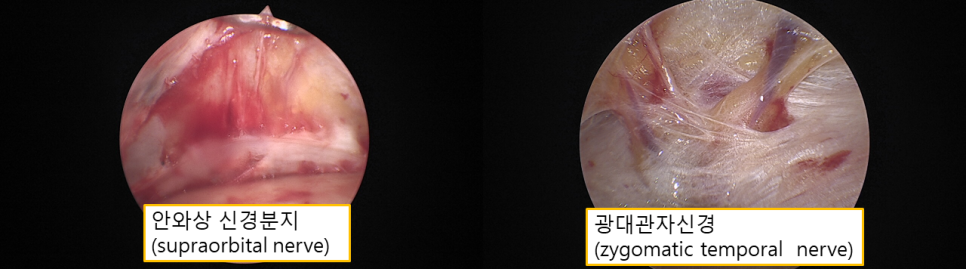
Supraorbital nerve. Nerve symptoms after a forehead lift. Numbness after a forehead lift. Forehead lift recovery. Endoscopic forehead lift recovery.
In particular, nerve-related symptoms are one of the factors that can make patients uncomfortable during recovery after a forehead lift.
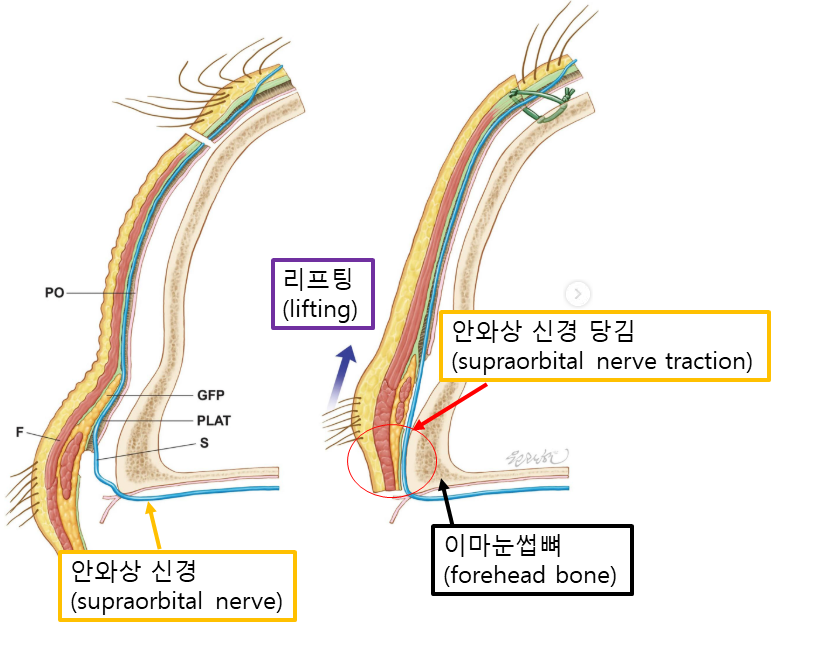
The supraorbital nerve passes through the forehead.
If this nerve is pulled upward during surgery and becomes caught on or compressed against the frontal bone, numbness, tingling, or abnormal sensations may occur.
In severe cases, headaches or nausea may also develop during the recovery period after surgery.
Nerve-related symptoms can be easily understood as being similar to the tingling sensation felt when you hit your elbow.
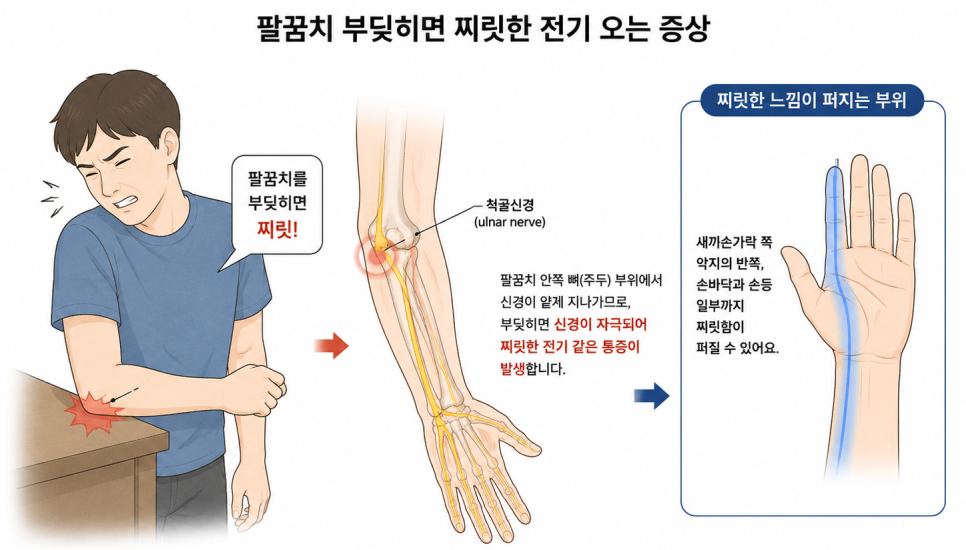
Nerve symptoms in the elbow. Ulnar nerve.
The nerve runs close to the skin on the inner side of the elbow.
Even a minor impact can compress the ulnar nerve against the bone, creating a sensation like an electric shock traveling to the fingers.
Similarly, during a forehead lift, uncomfortable nerve-related symptoms may occur if a sensory nerve becomes caught on or pulled against the frontal bone.
- The surgical method is more important than age. -
A patient in their 70s may worry, “Since I am older, will recovery be slower and more difficult?”
However, the actual recovery process is not necessarily proportional to age.
In this case, a woman in her mid-70s underwent an endoscopic forehead lift.
Dissection was performed using the plane-shifting technique to prevent unnecessary tension on the nerves during surgery, and the nerves and blood vessels were preserved while being checked with an endoscope.
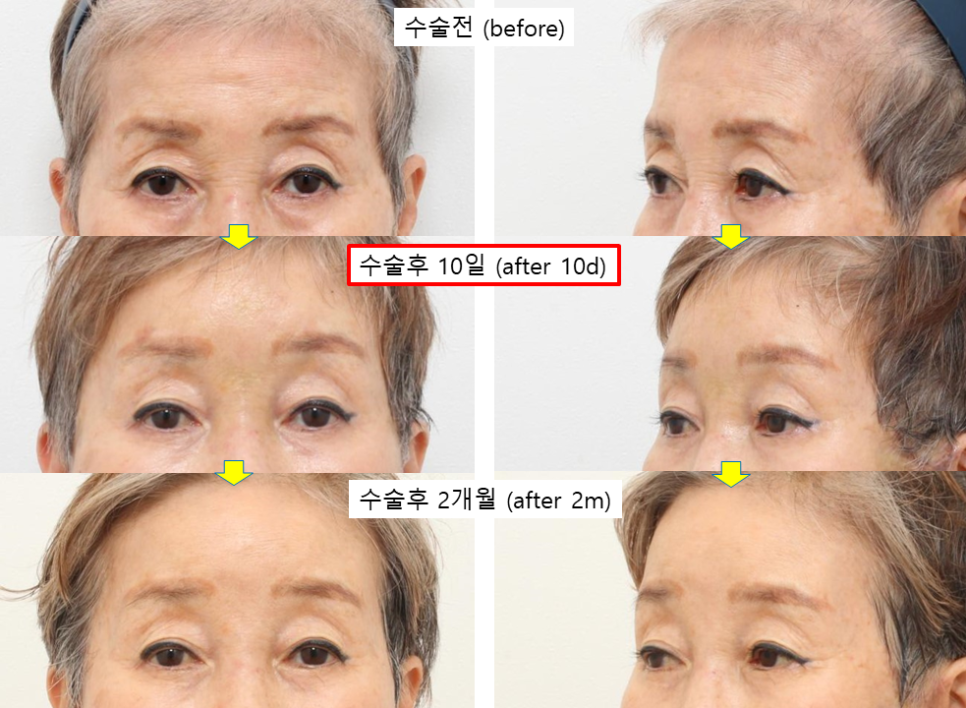
Forehead lift recovery process. Swelling after a forehead lift. Forehead lift recovery. Endoscopic forehead lift recovery process. Swelling after an endoscopic forehead lift. The model has consented to the disclosed images.
On the 10th day after surgery, there was not much bruising or swelling, and the patient was recovering relatively comfortably without discomfort caused by any notable nerve-related symptoms.
Ultimately, what is important in an endoscopic forehead lift is not simply making the incisions smaller.
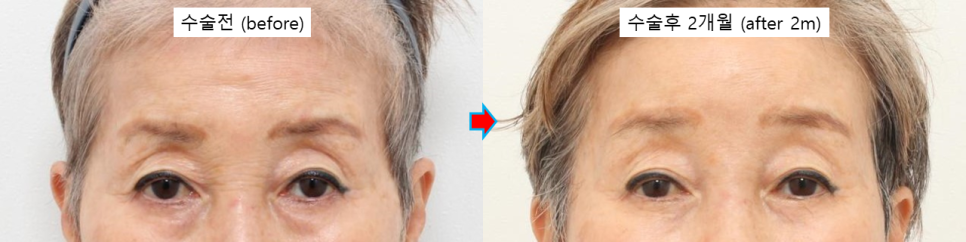
Before and after a forehead lift. Before and after an endoscopic forehead lift. Forehead lift in a patient in their 70s. The model has consented to the disclosed images.
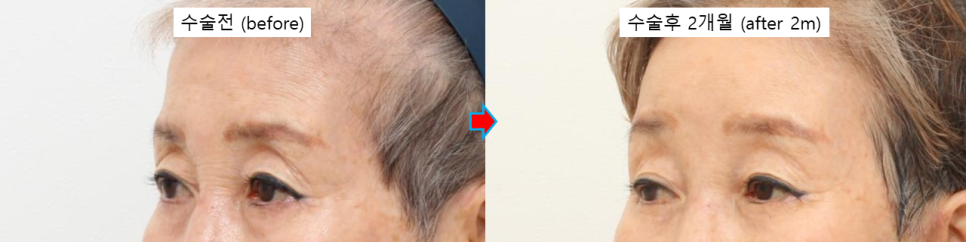
Before and after a forehead lift. Forehead lift review. Forehead lift in a patient in their 70s. Endoscopic forehead lift in a patient in their 70s. The model has consented to the disclosed images.
The layer in which dissection is performed, how the nerves are protected, and how nerve tension generated during surgery is reduced can also have an important impact on the recovery process.
Recovery from a forehead lift is not necessarily difficult simply because a patient is in their 70s.
If a surgical plan suited to the patient’s condition, delicate dissection, and a surgical method that protects the nerves are applied, relatively comfortable recovery may be expected even in older patients.
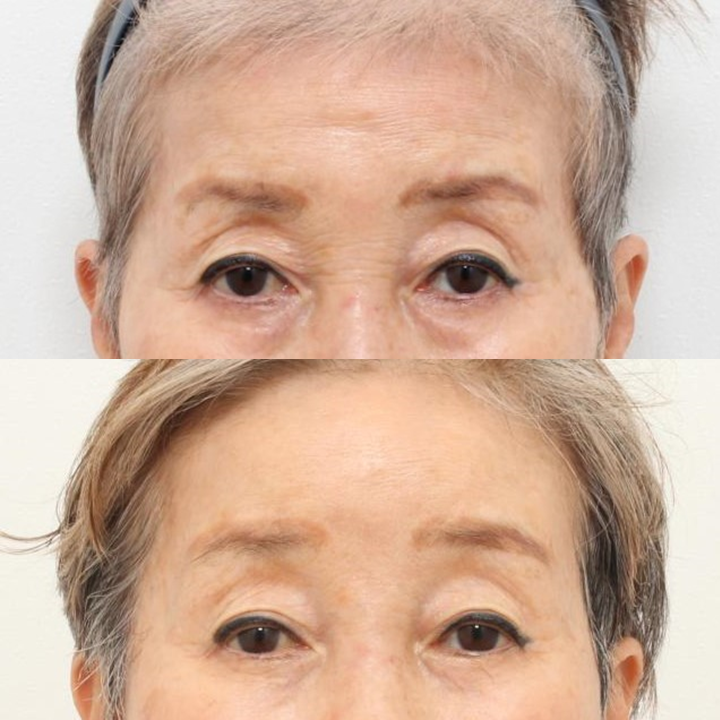
Lifting surgery in a patient in their 70s. Facelift in a patient in their 70s. Forehead lift in a patient in their 70s. Lifting in a patient in their 70s. The model has consented to the disclosed images.