
Hello, this is Dana Plastic Surgery.
In this post, we will look at follicle damage rate and follicle survival rate.
It is often easy to think that if the follicle damage rate is low, the follicle survival rate will be high as well.
At first glance, it may seem natural to think that if there is less follicle damage, the follicle survival rate will also be higher.
However, follicle damage rate and survival rate do not show a very close correlation.
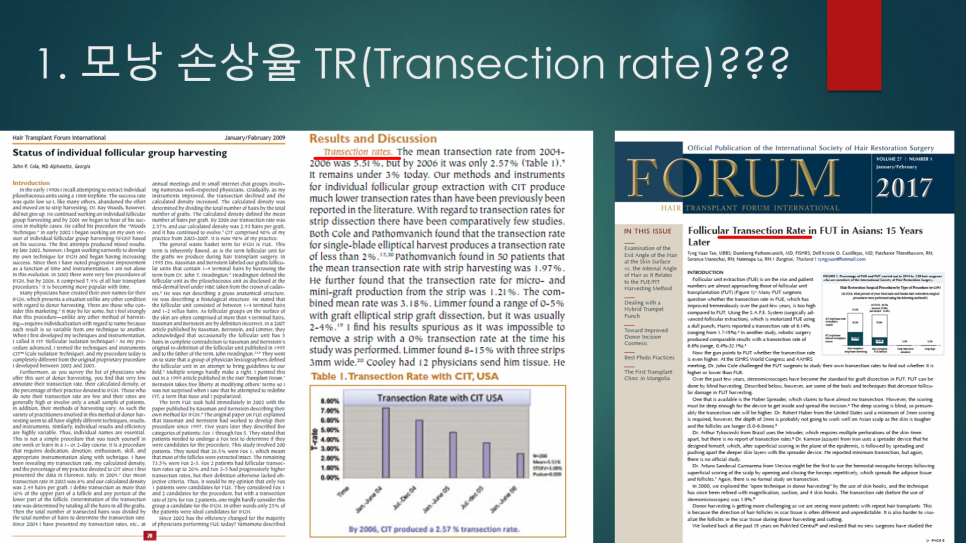
Before looking at the relationship between follicle damage rate and survival rate, let me explain what damage rate and survival rate mean.
First, follicle damage rate is a number that indicates what percentage of the harvested hairs are damaged.
Because preserving follicles as much as possible depends on the doctor’s skill and technique, even recently, doctors around the world have continued to discuss follicle damage rate in the journal of the International Society of Hair Restoration Surgery.
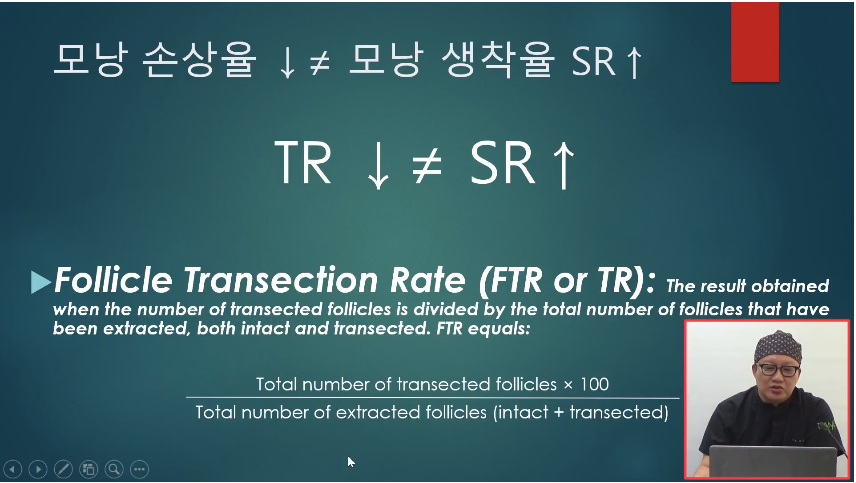
On the other hand, follicle survival rate is a number that indicates how many hairs grow again when the remaining hairs, excluding the damaged ones (already discarded), are transplanted, so it can be said to have nothing to do with follicle damage rate.
Rather, follicle survival rate is more closely related to the condition and status of the follicles.
If you are considering hair transplant surgery, you will likely be very interested in survival rate as well as density.
I hope you choose a good clinic with plenty of experience and achieve good results.