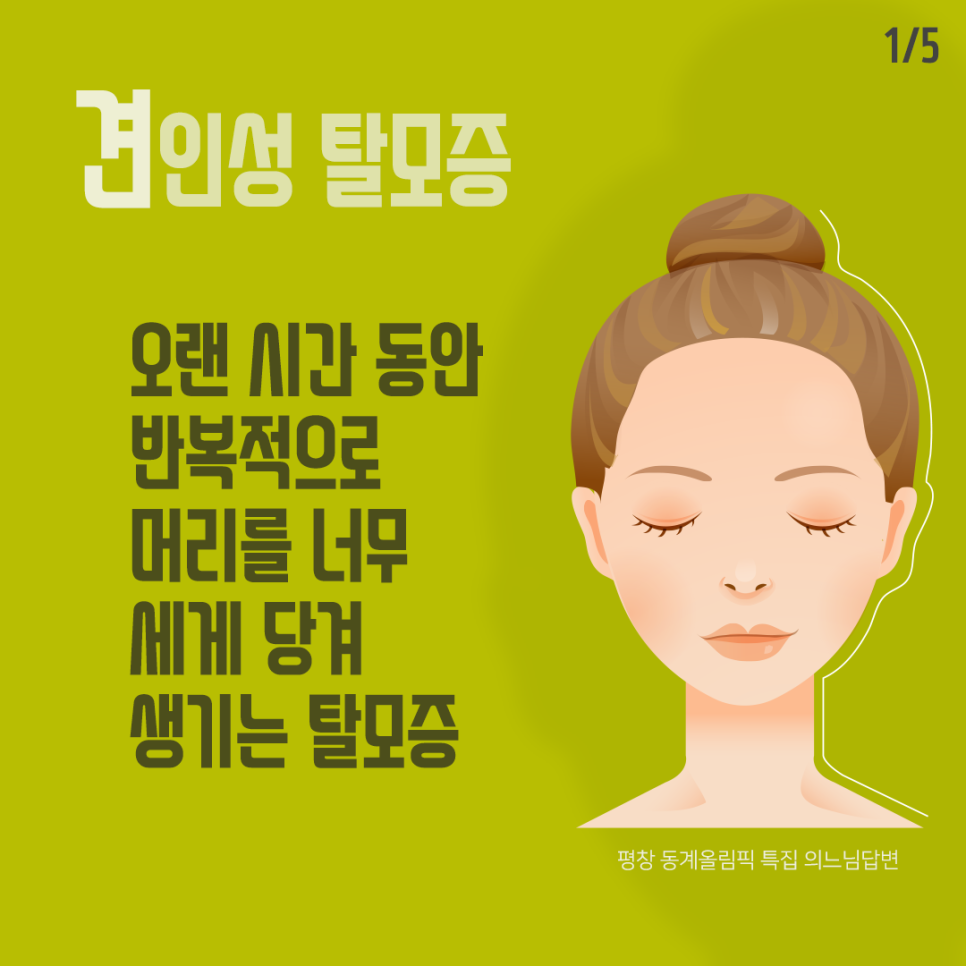
It is said that you should also be careful about hair loss when tying your hair. If you tie your hair tightly for a long time, the hair roots can weaken and the hair may be pulled out, leading to “traction alopecia.”
If you tie your hair too tightly, it puts stress on the scalp and weakens the hair roots. You should be careful because hair will not grow back in weakened hair roots.
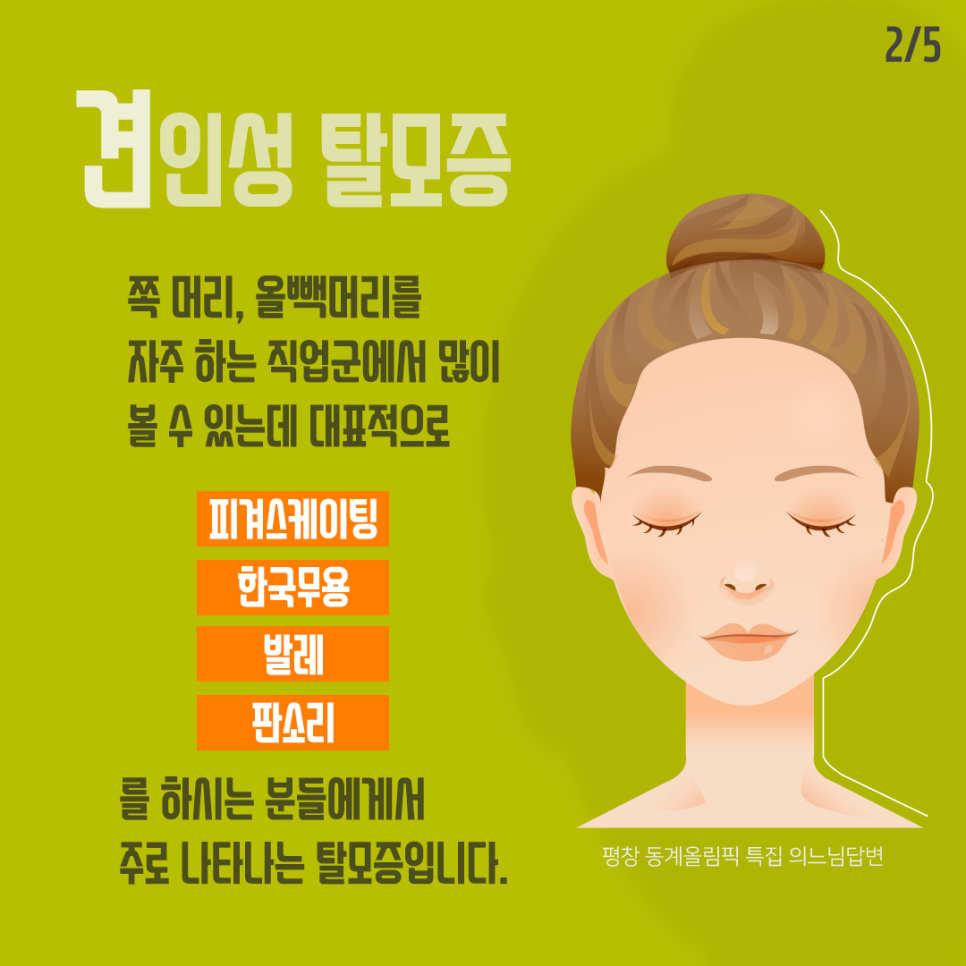
In general, people rarely tie their hair tightly for long periods of time, so this is not commonly seen in the general public. However, it is often seen in people who, for occupational reasons, have to keep their hair tightly tied for long periods.
Typical occupations include figure skating, Korean dance, classical dance, ballet, pansori, and other professions in which styles such as a bun or slicked-back hair must be maintained for long periods.
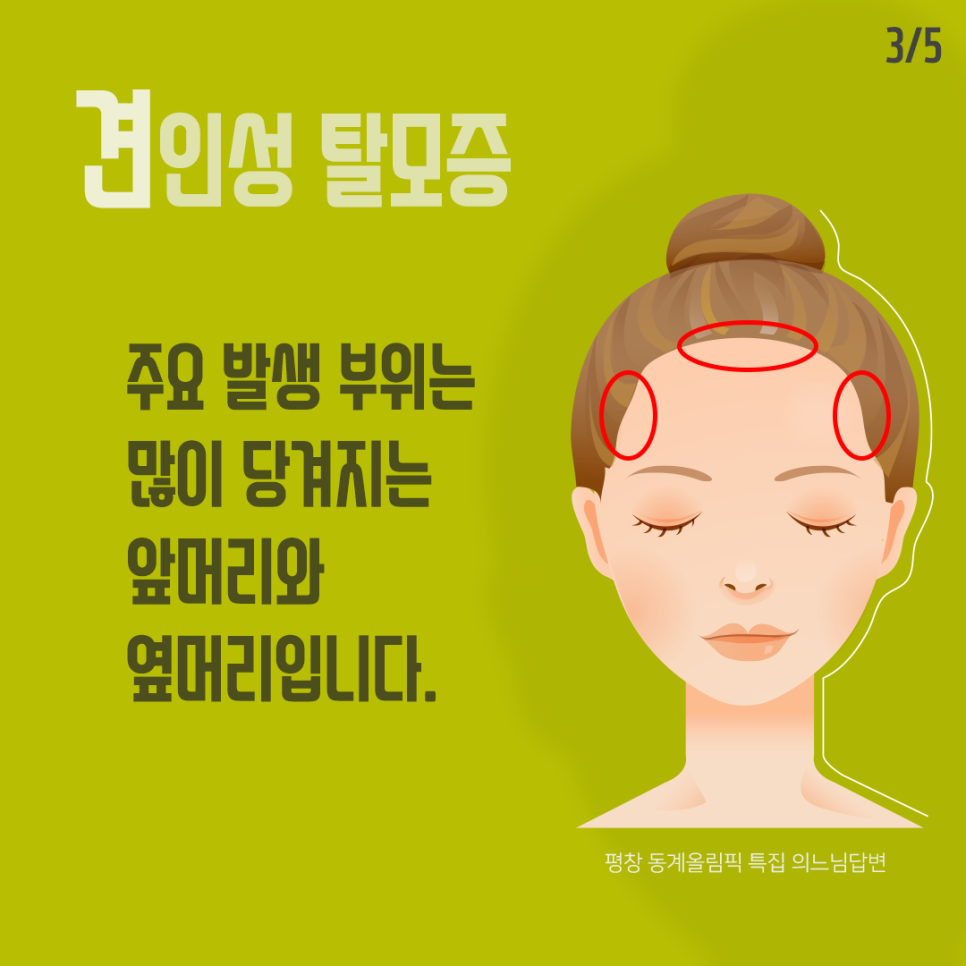
The main areas affected by traction alopecia are the bangs and side hairline. As mentioned earlier, if physical force is continuously applied to the scalp and hair in the bangs and side hair, nutrient supply to the hair roots becomes insufficient, causing the hair to thin, which soon leads to hair loss.
It is best to prevent traction alopecia, but if it is already progressing, it can be treated with hair transplant surgery, and it is one of the types of hair loss that can produce good surgical results.
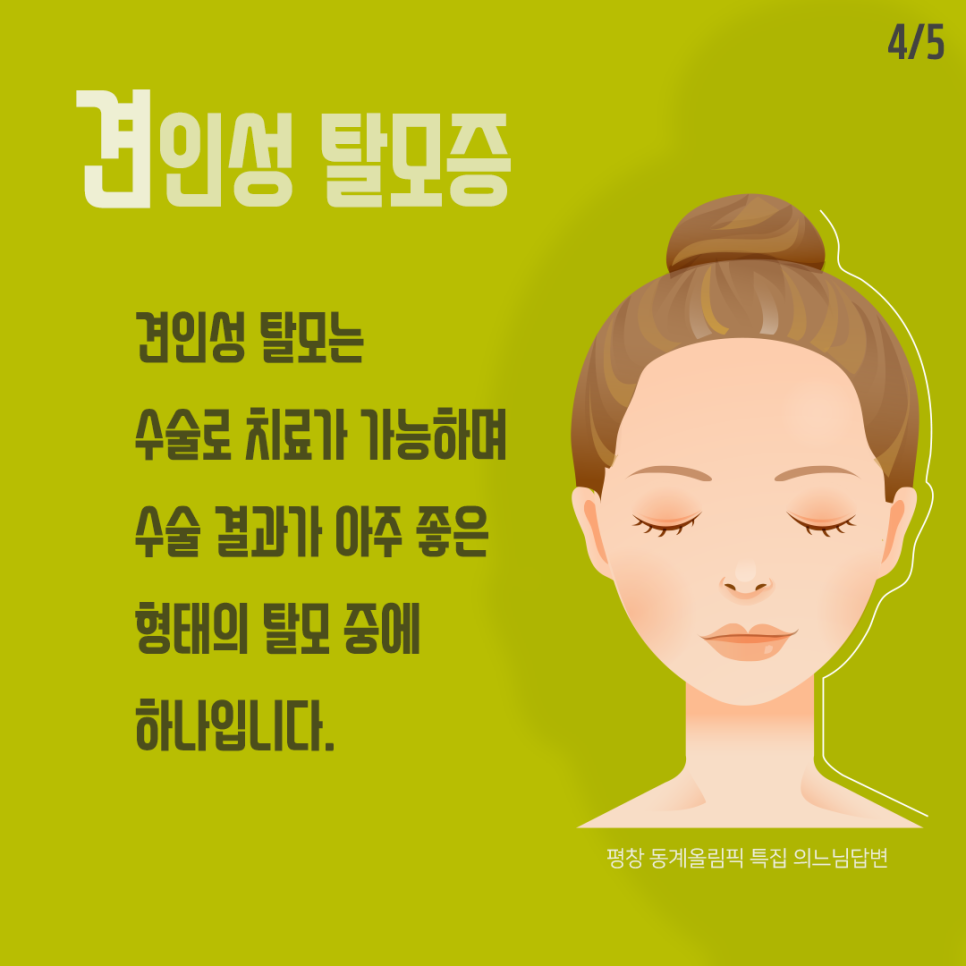
Even after surgery, thorough management is necessary, such as eating foods containing black foods and mineral ingredients, and keeping the hair down at all times except when it must be tied up, to prevent recurrence.
Traction alopecia caused by tying hair too tightly — watch on YouTube
Video
Pyeongchang Winter Olympics Special: Doctor’s Answer - Traction alopecia commonly seen in figure skaters
Pyeongchang Winter Olympics Special: Doctor’s Answer. Hair loss commonly seen in figure skaters, can traction alopecia also be treated with surgery? Track1 Ceremonial, Olympic, Arena Song Björn Skogsberg https://youtu.be/sDwhVdNuiMw ---------...
youtu.be