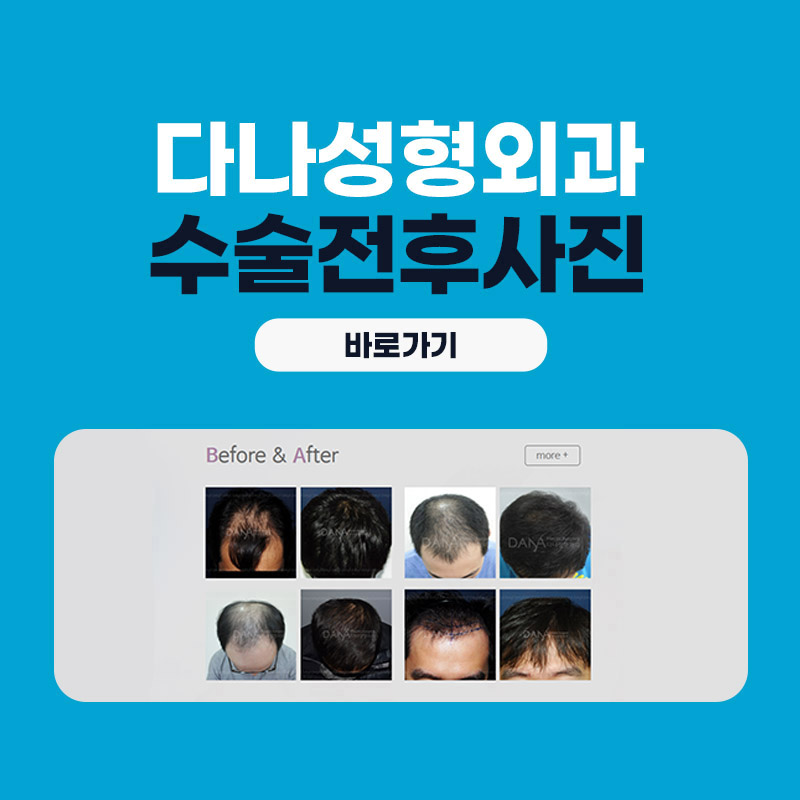
Hello, this is Dana Plastic Surgery 😊
Today is the third installment in our series on common misconceptions about hair transplantation.

Q. Is only the first hair transplant surgery necessary?
It would be best if everything could be finished with just one surgery. However,
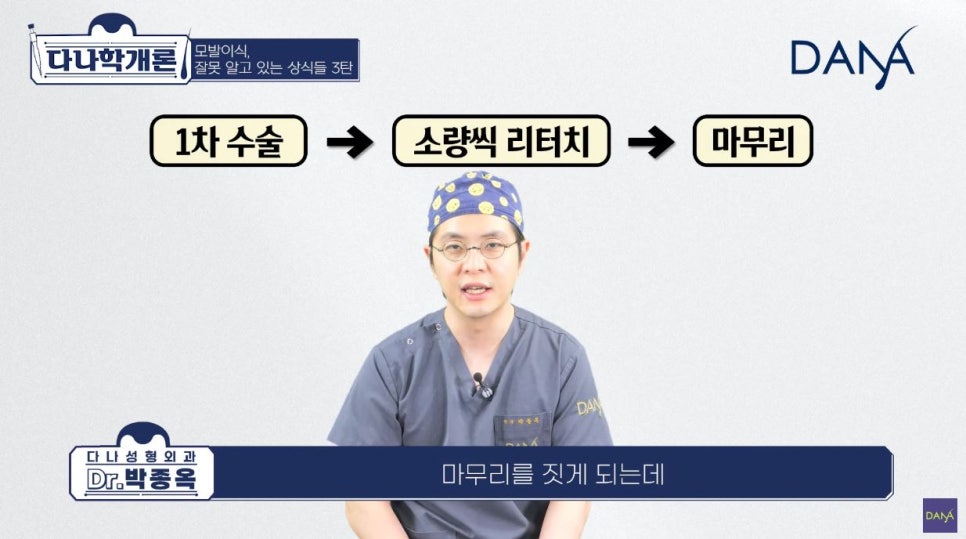
in most cases, the first surgery is performed, and then a very small amount of retouching is done in areas where the density gradually decreases,
before finishing up.
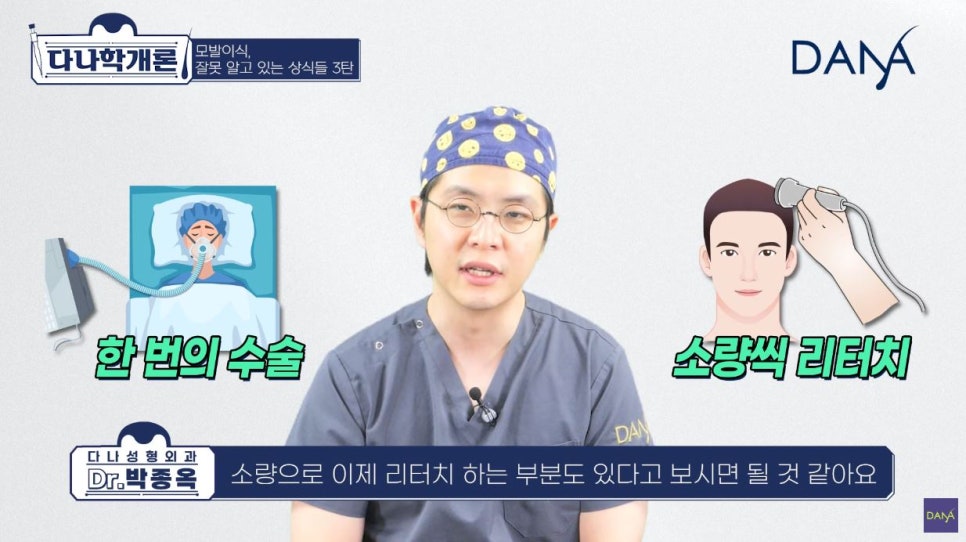
Among many patients, some complete the procedure with just one surgery,
while others do small touch-ups in areas that still feel a bit unsatisfactory.
However, setting aside those cases, for people whose hair loss has already progressed a lot,
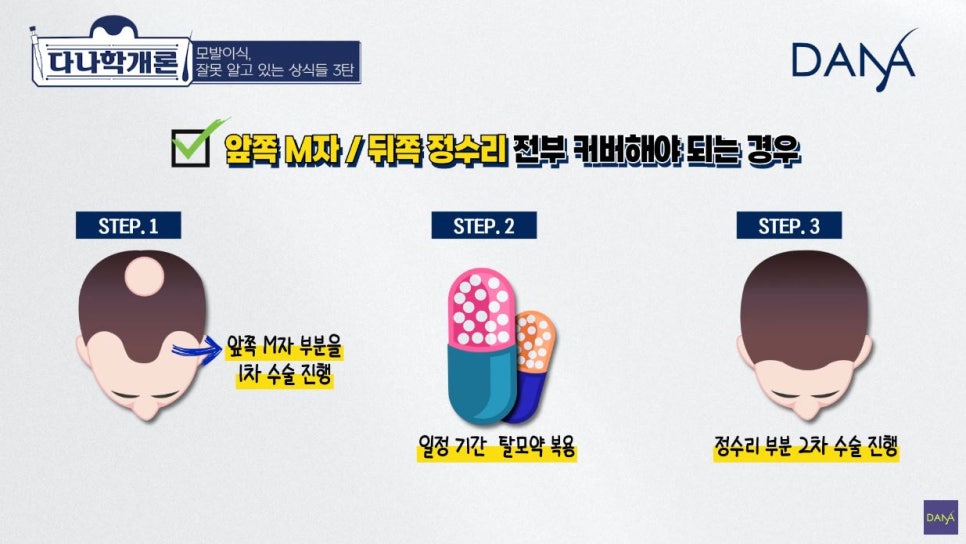
for example, if a large amount of grafting is needed all at once from the front to the back,
the frontal M-shaped area is treated first. Then the patient takes hair loss medication for a certain period of time.
While taking the medication, we monitor how the crown area changes, and then proceed with a second surgery.
Because there are many different possible cases like this, rather than thinking, “It ends with just the first surgery,”
it is better to assess and plan according to each individual’s condition.

Q. Is hair transplantation semi-permanent?
The transplanted hair and follicles seem to grow well without falling out.
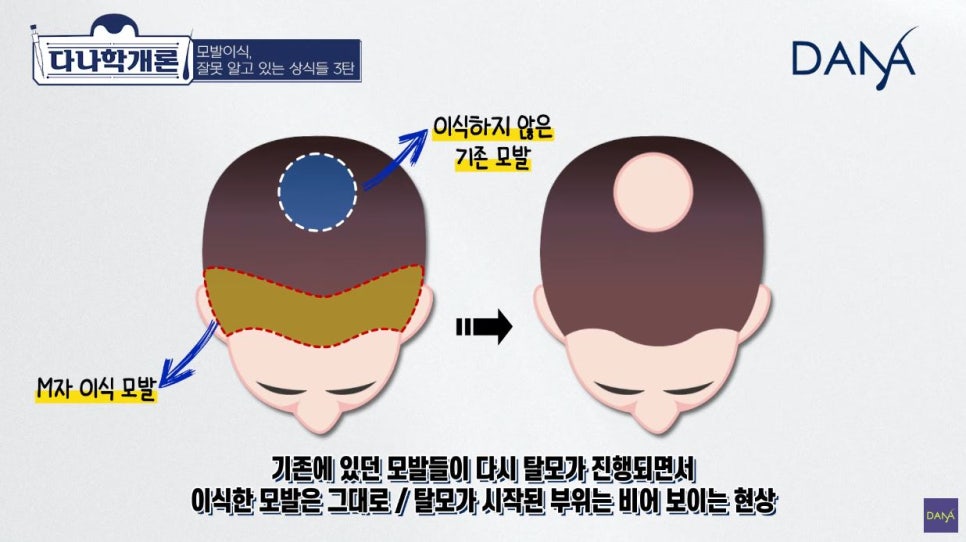
The transplanted hair continues to grow well, but hair that was already there can still continue to thin and fall out.
You should not stop taking care of your hair just because you have had a hair transplant,
and for people who are actually predisposed to hair loss, even after transplantation, they must continue to manage their existing hair so as to prevent further hair loss.

To summarize:
Transplanted hair can be considered almost semi-permanent,
but existing hair can continue to be lost over time,
so you still need to take care of it after a hair transplant.
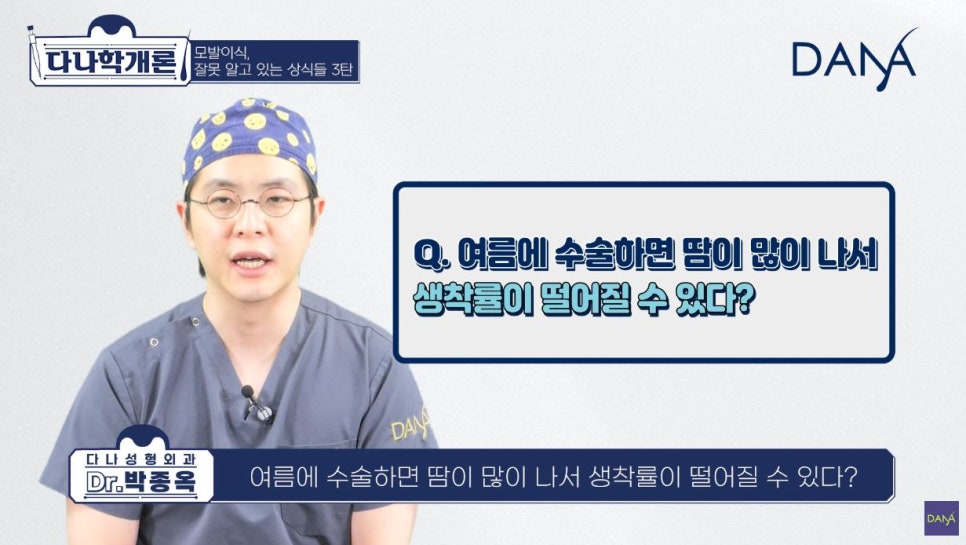
Q. If you have surgery in the summer, will excessive sweating lower the survival rate?
This question can also be said to be based on a misconception.
In practical terms, sweating does not lower the survival rate.
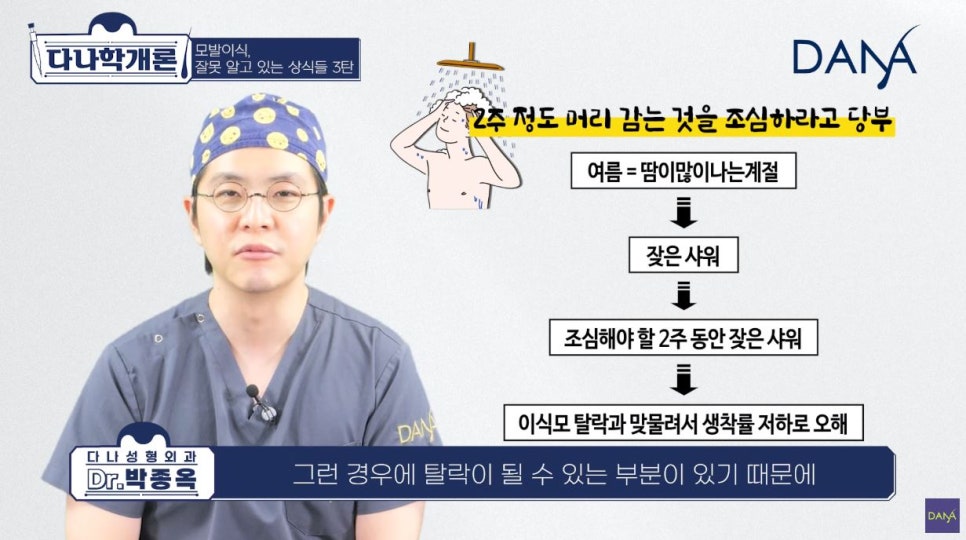
After a hair transplant, the hospital advises patients to be careful when washing their hair for about two weeks.
Naturally, if you sweat a lot in the summer, you will shower more often,
and during those two weeks, frequent showering or washing your hair without being careful
can cause some grafts to fall out.
Because of these factors, some people seem to misunderstand that having surgery in the summer lowers the survival rate,
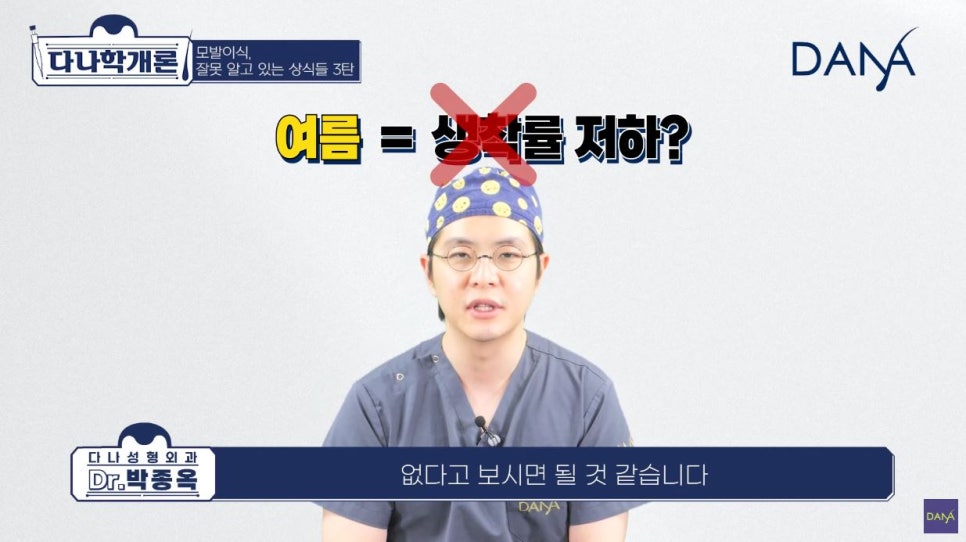
but in practical terms, there is no correlation between summer and the survival rate.
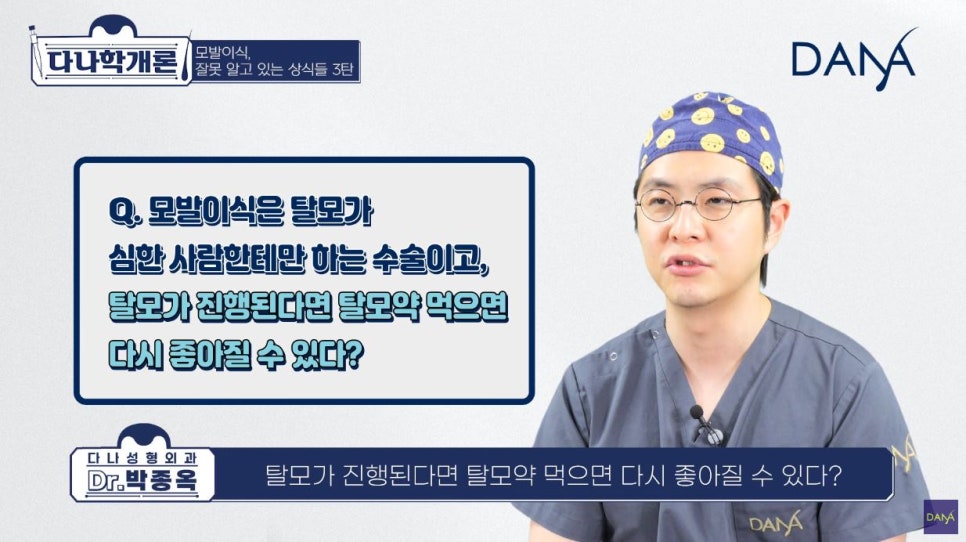
Q. Is hair transplantation a procedure only for people with severe hair loss,
and if hair loss progresses, can taking hair loss medication make it better again?
This question can be said to be partly correct and partly incorrect.
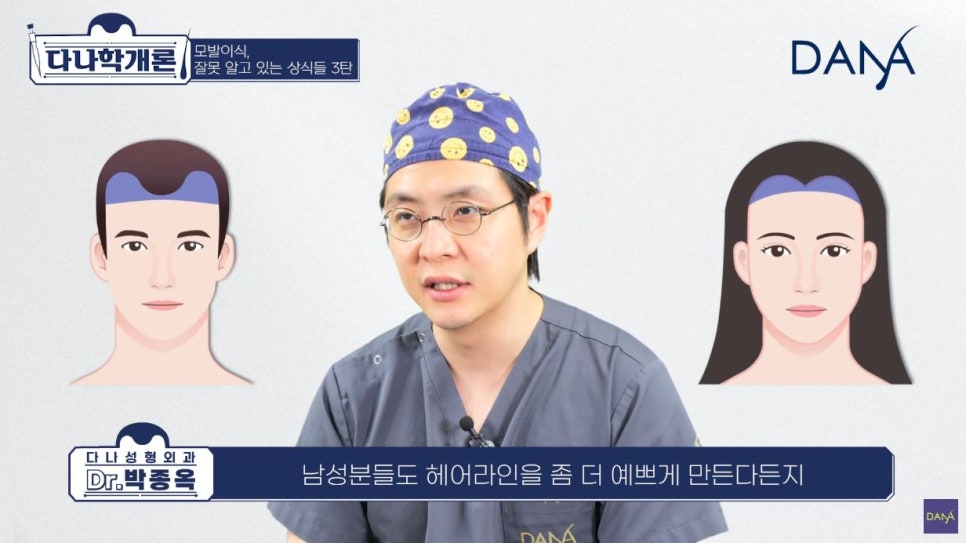
If hair transplantation used to be limited to a procedure that simply covered hair loss,
these days, it can actually be seen as a procedure that is to some extent also suited to cosmetic purposes.
So for men, it is often used to make the hairline more attractive,
and for women as well, cosmetic procedures such as correcting the hairline
are being performed quite often, so it would be difficult to say that only people with severe hair loss undergo hair transplantation.
In fact, hair loss medication can be thought of as a way to temporarily STOP
the process of ongoing hair loss.
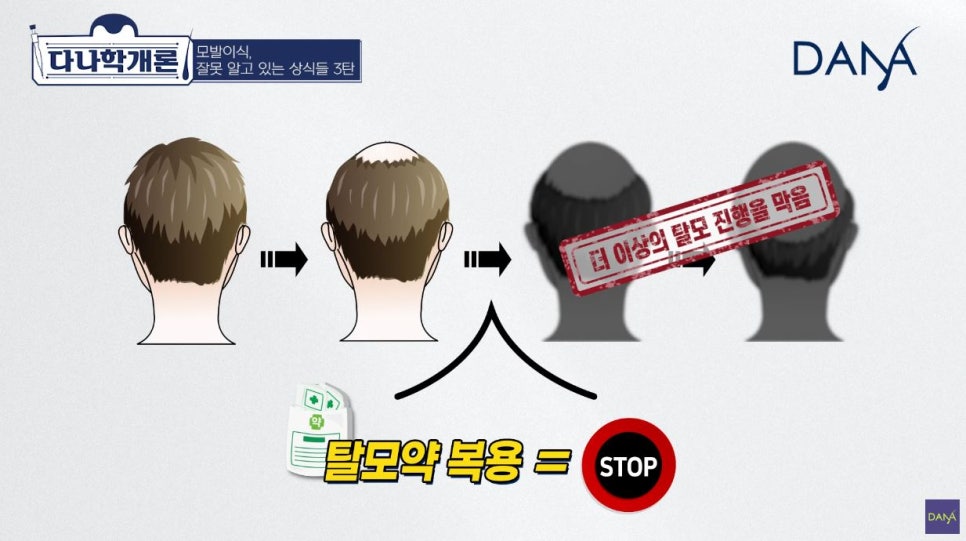
So for those who expect that taking hair loss medication will make things much better or make more hair grow, it may be disappointing.
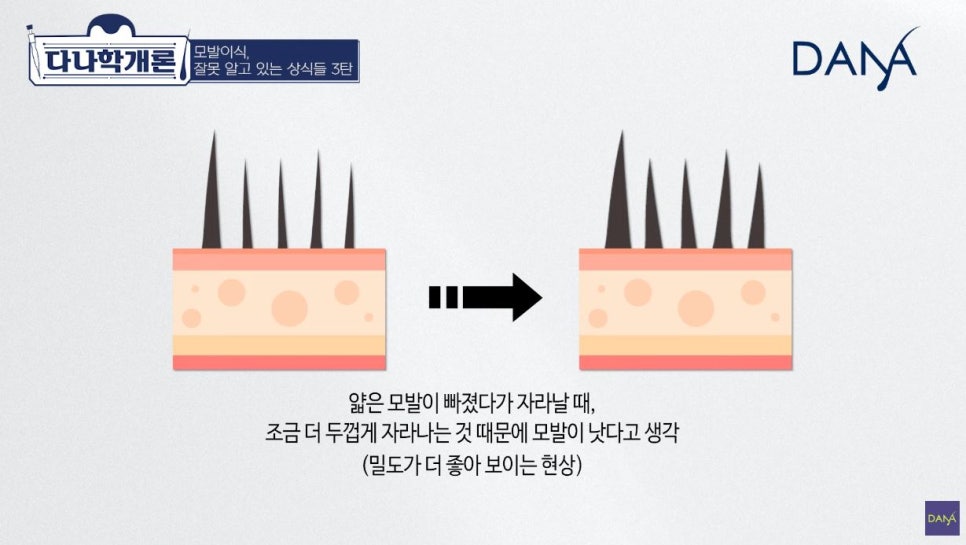
When thin hair falls out and grows back,
during the period of taking hair loss medication, it seems to grow back a bit thicker, making the density look better,
which may lead people to think that much more hair has grown.
However, even if you take hair loss medication,
if the M-shaped recession has already progressed significantly or the crown area has already thinned a lot,
there are cases where the condition does not improve further even with medication,
and for those people, hair transplantation may be the only way to cover it.
It would be good if you could pay attention to the fact that hair transplantation is also developing for cosmetic purposes :)
If you want more information, please refer to Dana Plastic Surgery’s YouTube channel 💙
https://www.youtube.com/watch?v=QtaHPuwdRWQ