Hello!
This is Dana Plastic Surgery, a hospital specializing in hair transplant surgery!
One of the biggest concerns for people considering a hair transplant
is the “shedding phase immediately after surgery” and
the problem of the procedure being noticeable.
Typically, after a hair transplant, the transplanted hair falls out about a month after surgery before growing back, creating a shedding phase. For people who need to return to work right away or have frequent public exposure,
this period can inevitably be a significant burden.
Today, we will take a look at the benefits of a
“long-hair, non-incisional hair transplant,”
which helps reduce the burden of this shedding phase and create natural-looking results.
3 Key Benefits of a Long-Hair, Non-Incisional Hair Transplant
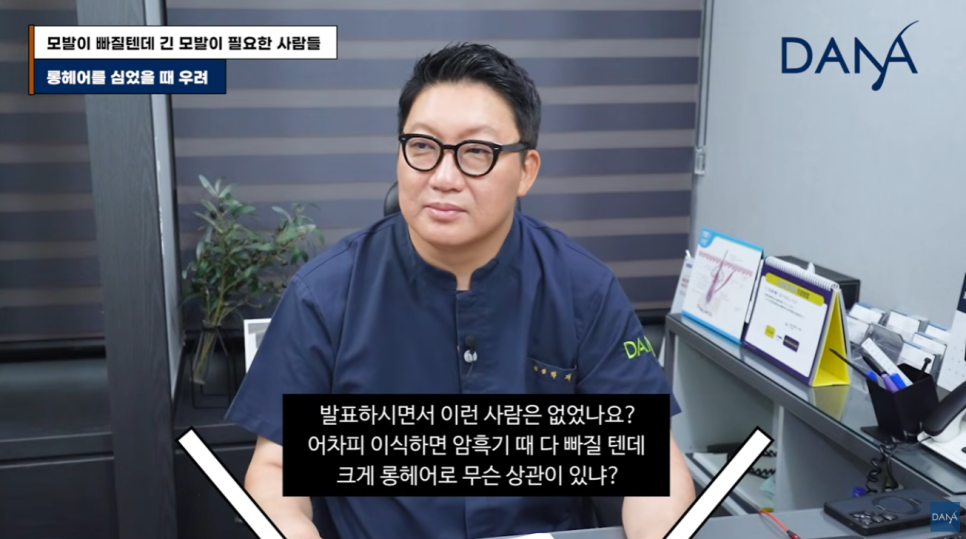
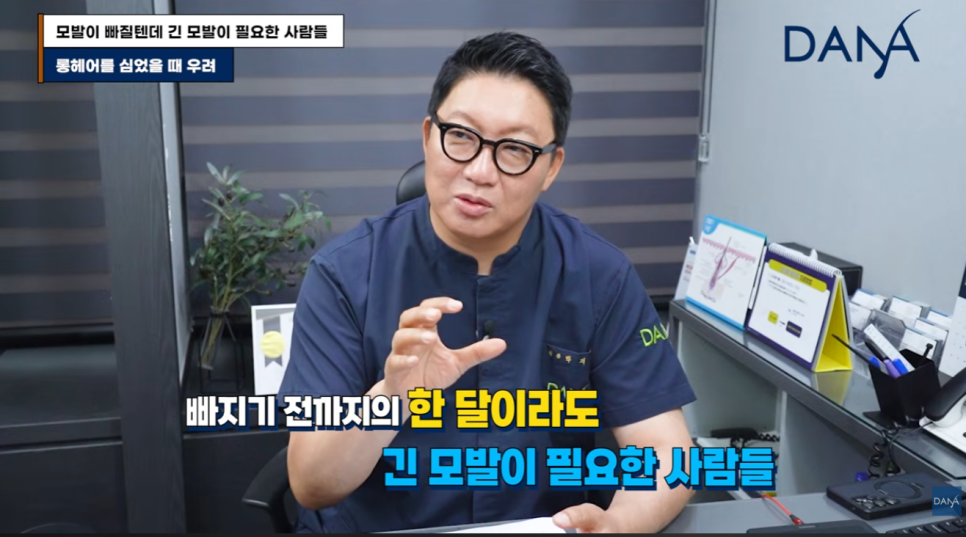
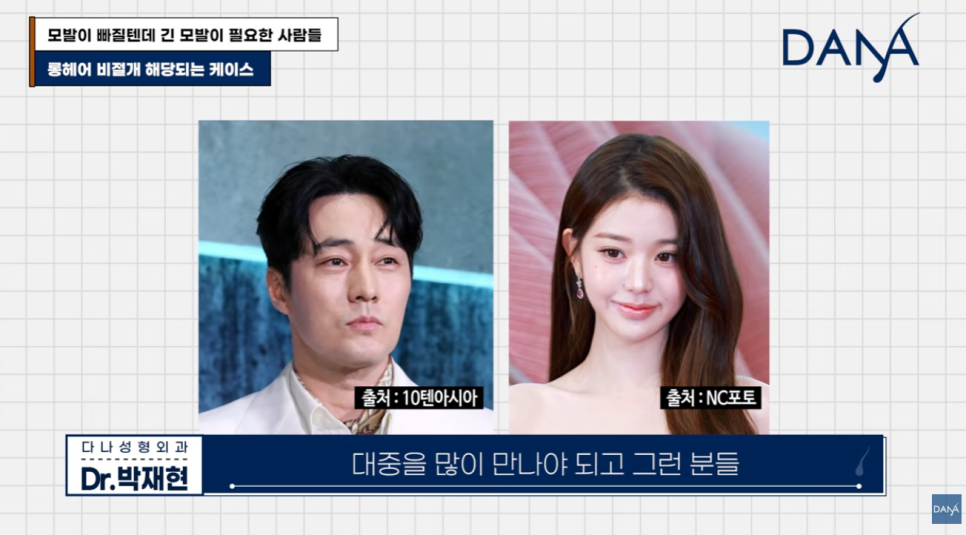


A long-hair, non-incisional hair transplant is a method of transplanting hair while it is still long.
Even though the shedding phase arrives about a month later,
the biggest appeal is that the hair can remain long for one month from immediately after surgery until the shedding phase begins.
Recommended for: celebrities, CEOs of large corporations, office workers who frequently give presentations or attend meetings, instructors, and others
It is suitable for people who need to continue their daily activities or broadcasting work immediately without making the procedure noticeable.
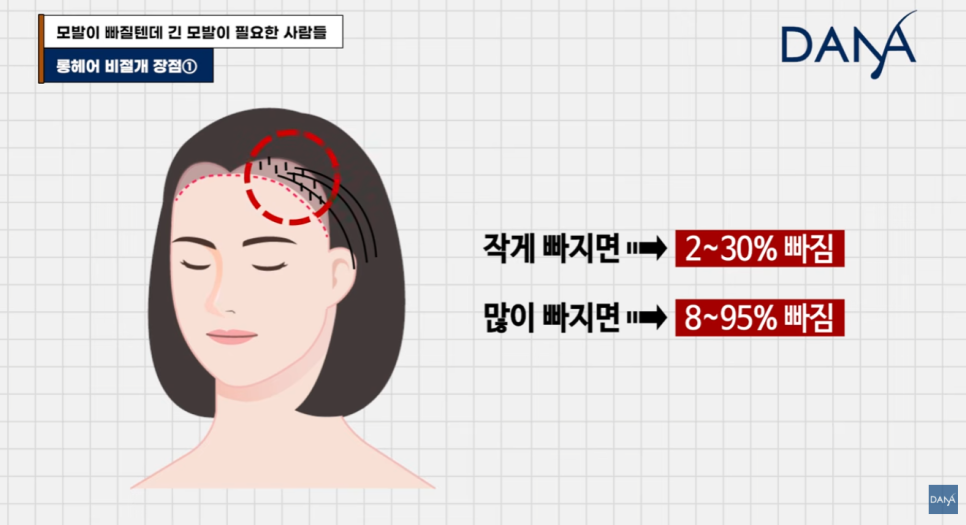
The arrival of the shedding phase after a hair transplant does not mean that 100% of the transplanted hair will fall out.
Some hair may remain, depending on the individual.
With a conventional hair transplant, short hairs remain in a stubbly pattern, making traces of the procedure easy to notice.
In contrast, with a long-hair, non-incisional hair transplant, the remaining long hairs naturally cover the transplanted area,
allowing the appearance to remain much more natural visually even during the shedding phase.
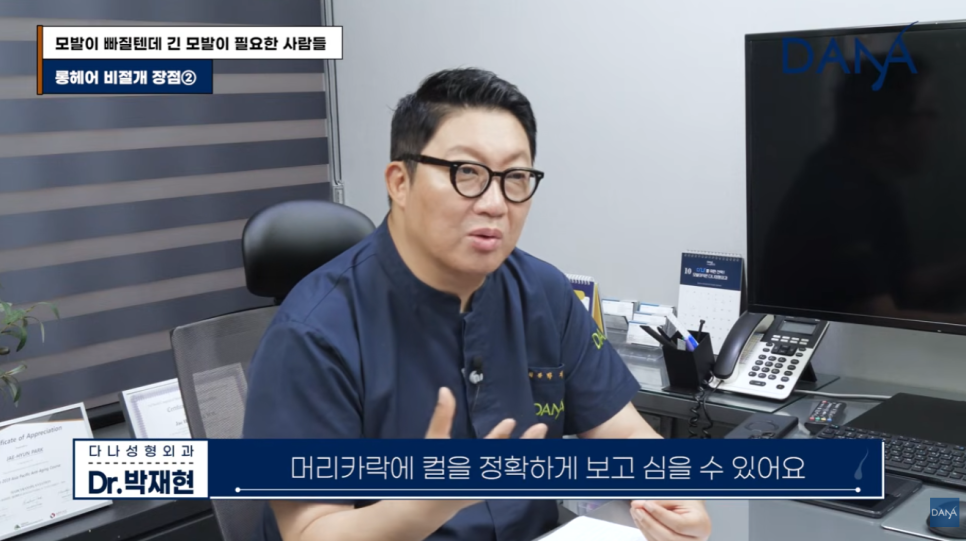
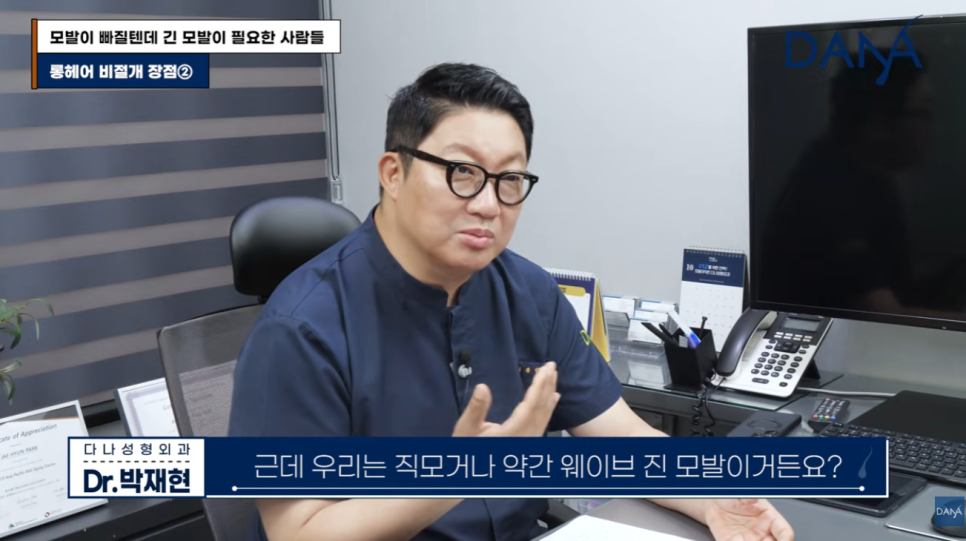
Another benefit of a long-hair transplant is
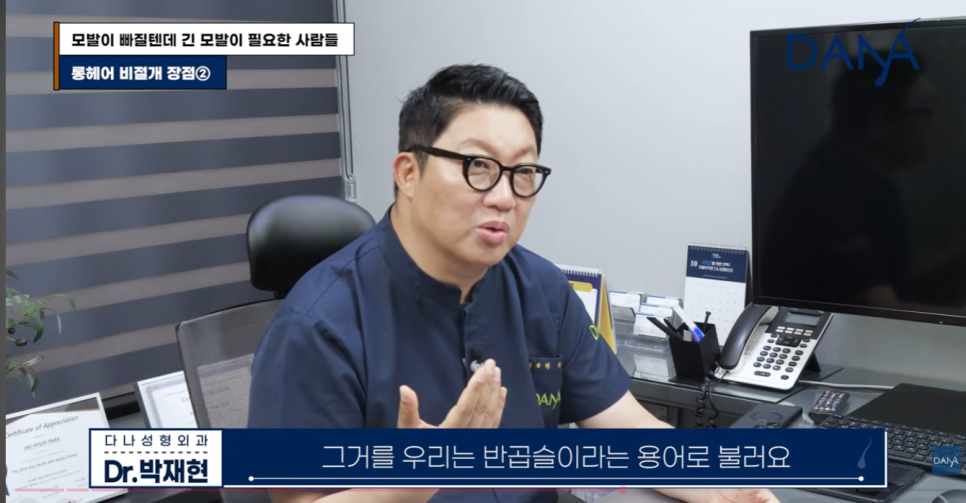
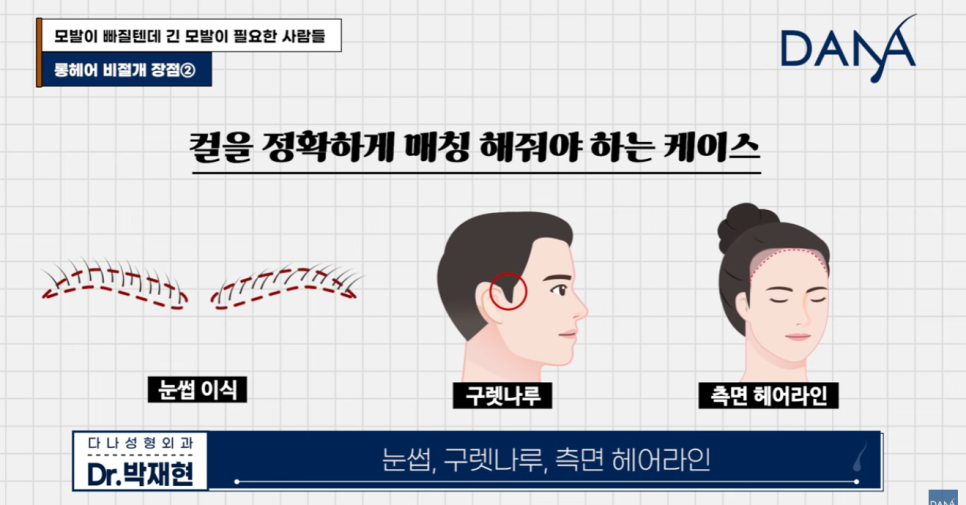
that the curl and texture of the hair can be accurately observed before implantation.
Asian hair is often straight or slightly wavy,
so it is very important to implant it while accurately matching the direction in which the hair grows and its curl—the way it bends.
Because a long-hair transplant is performed while the hair is long,
the curl and direction of the hair can be checked directly by eye and matched with precision.
A long-hair, non-incisional hair transplant is particularly useful for the eyebrows, sideburns, and lateral hairline areas,
where even a slight mismatch in the direction of the hair can easily look unnatural.
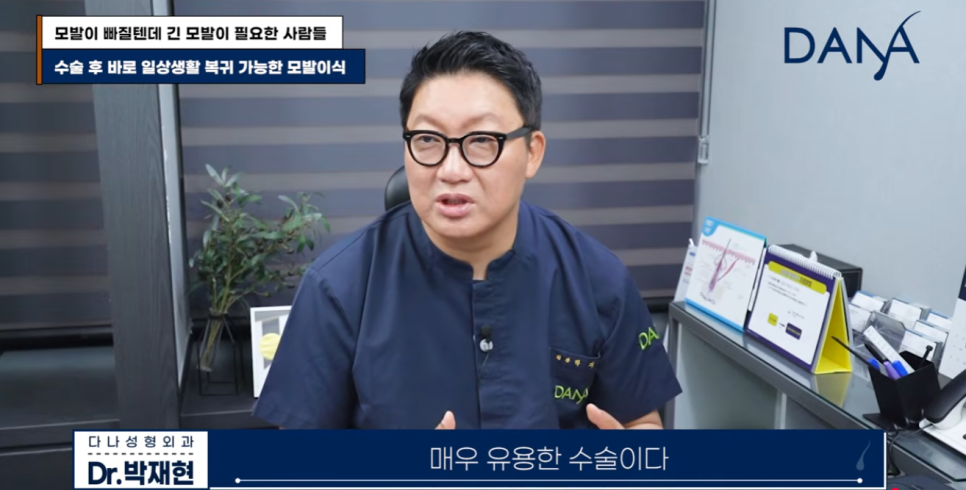
A long-hair, non-incisional hair transplant does not completely eliminate the shedding phase itself,
but it is optimized for people who need to maintain their daily lives naturally without making the procedure noticeable immediately after surgery.
If you have been putting off a hair transplant because you are worried about returning to your daily routine after surgery,
we recommend considering a long-hair, non-incisional hair transplant!
https://www.youtube.com/watch?v=TP-0oJgruv0&t=10s