Hello, this is Lipton Dermatology.
Today, we’d like to take a look at Ultanium lifting (Ulthera + Titanium), which many people have been looking into lately to improve both the skin’s inner elasticity and outer elasticity.
It seems like we should start with an explanation of each one first.
Ulthera
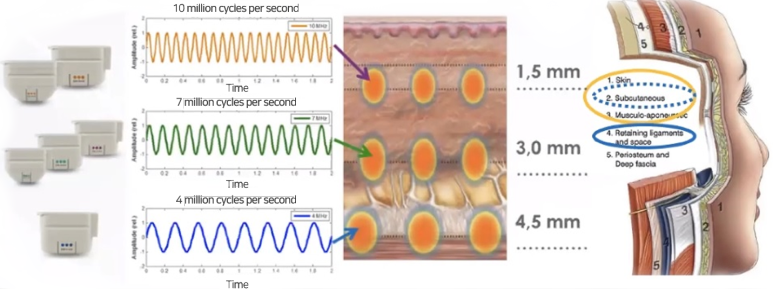
In the case of Ulthera, three different types of tips are used (1.5 mm, 3 mm, and 4.5 mm).
The 1.5 mm tip targets the shallow skin layer, the 3 mm tip targets the upper fat layer beneath the epidermis, and the 4.5 mm tip targets the SMAS (fascia) layer. By concentrating ultrasound energy on the skin’s SMAS (fascia) layer, this device induces contraction and regeneration of the fascia layer, which plays an important role in skin sagging. At the same time, it shrinks unnecessary subcutaneous fat and promotes collagen regeneration in the dermis, helping to firm tissue that has become loose due to aging and lift sagging areas.
(+See the Ulthera blog post)
Titanium
Titanium is the world’s first laser to simultaneously deliver three types of laser light, allowing for immediate results. Because it delivers energy throughout the full layers of the skin through a principle different from existing ultrasound and radiofrequency treatments, it can produce effects not felt with conventional lifting devices. It is also absorbed by melanin pigment, helping to improve skin tone as well.
(+See the Titanium blog post)
The technical differences between these two lifting procedures are clear. Even though both are methods for lifting sagging facial tissue,
the effects you can expect are clearly different.
Why they work well together
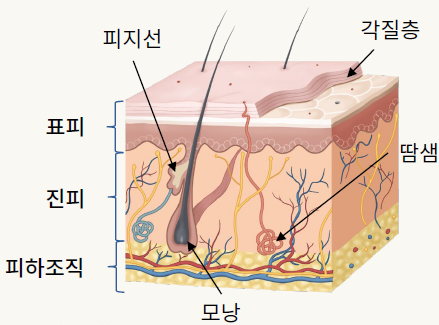
First, Ulthera strengthens lifting and elasticity from the deeper layers of the skin.
This helps stimulate collagen production and improve the skin’s structure.
Then, as the laser from Titanium reaches the dermis, it promotes surface elasticity and a brighter tone.
Those who have felt a warm sensation, a tighter feel, and a brighter look after the Titanium procedure may understand what this means.
In other words, Ultanium compensates for what each treatment alone cannot cover by stimulating the deep layers with Ulthera first and then managing the epidermis and dermis with Titanium. It can deliver both Ulthera’s deep lifting effect and Titanium’s surface care effects at the same time—such as tightening, collagen regeneration, and immediate lifting effects like skin-brightening—and seems to create a synergistic effect by enhancing the force that each alone could not fully provide.
Ultanium: if you’re going to do it once, do it properly.
Even for the same lifting procedure, facial shape, degree of sagging, sagging points, and skin thickness differ from person to person.
Therefore, a tailored design and treatment plan should be established through careful and detailed skin diagnosis.
After setting the goal first, appropriate energy settings must be determined according to the treatment area and skin depth, depending on which concerns need to be addressed, in order to reduce side effects and expect satisfying results.
If this is overlooked and a uniform treatment is applied indiscriminately based only on the advantages, side effects such as hollowed cheeks, burns, or results that fall short of expectations may occur. Therefore, it is helpful to receive a thorough consultation with an experienced practitioner and a long-term plan.
Thank you.