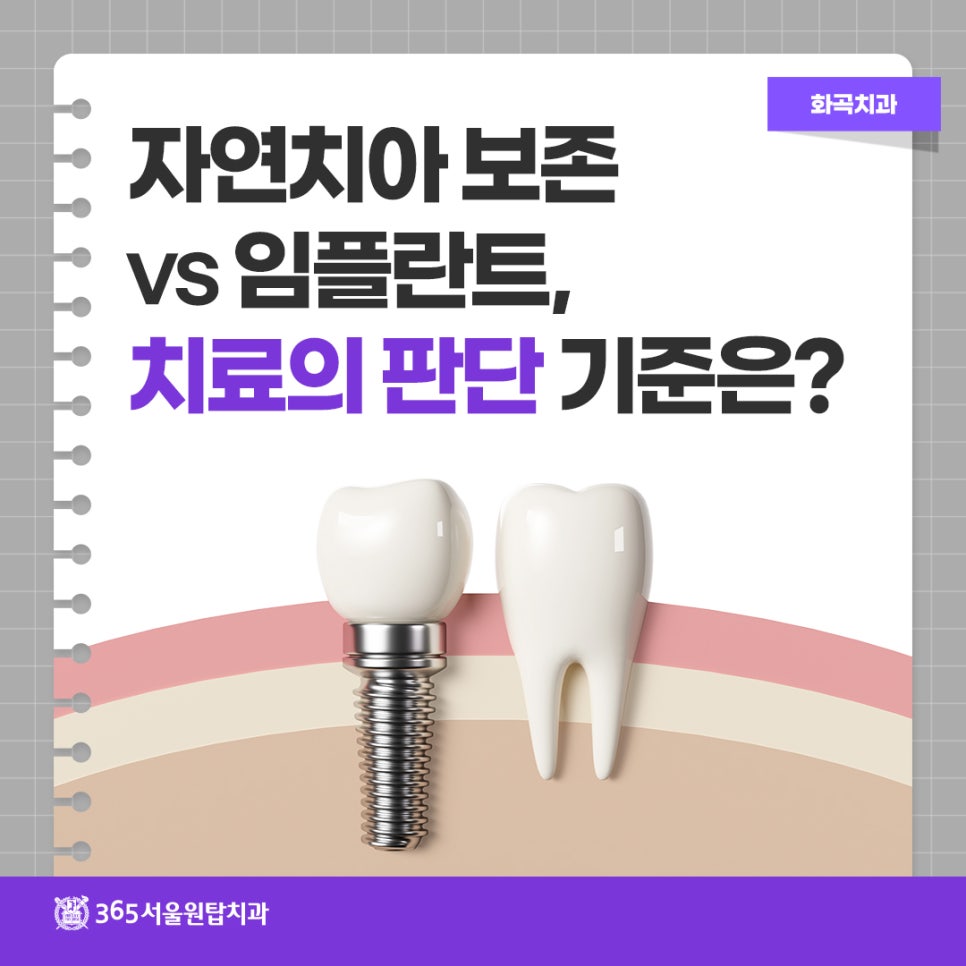
Hwagok Dental Clinic: Preserving Natural Teeth vs. Implants,
What Are the Treatment Decision Criteria?
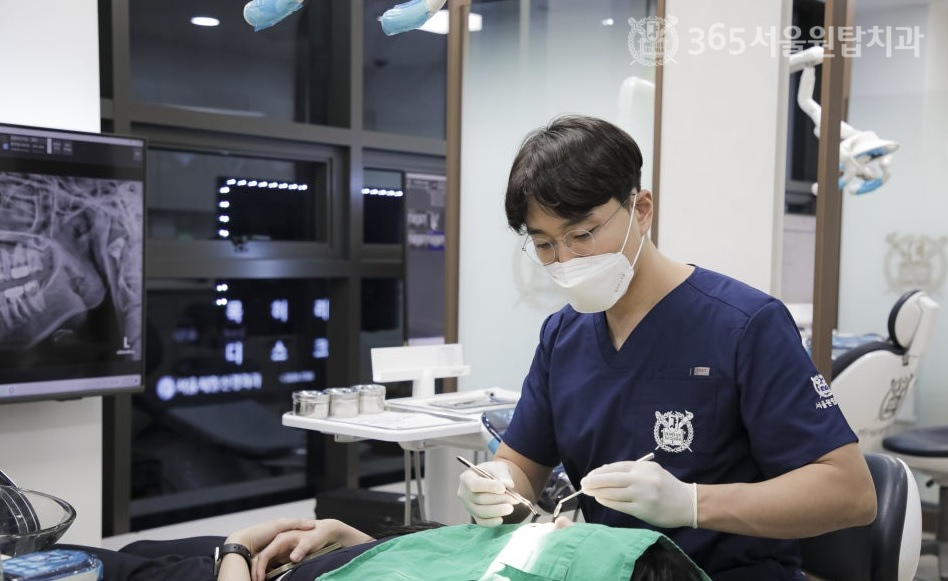
365 Seoul One Top Dental Clinic, Director Kim Geun-il
Hello.
I am Kim Geun-il, director of 365 Seoul One Top Dental Clinic.
When I meet patients in the treatment room,
there are occasionally people who visit our clinic feeling discouraged
after being told at another dental clinic:
“This tooth will be difficult to use any longer,
so it needs to be extracted and replaced with an implant.”
Whenever that happens, I look closely at the X-rays
and sometimes think with regret,
“It seems like we might be able to save it with just a little more effort…”
No matter how much implant technology advances and improves,
there is one belief I always hold as a dentist:
“I believe that no matter how outstanding an implant is,
it can never replace 100% of the delicacy
of the natural teeth we were born with.”
Then, what criteria do dentists use to say,
“Let’s do everything we can to save this tooth,”
and in what situations do they decide,
“It is time to extract it and proceed with an implant”?
Today, I would like to explain the treatment decision criteria
that I actually consider and apply in the treatment room.
Why Natural Teeth Are Important
The reason dentists insist on saving natural teeth first whenever possible
is simple.
Natural teeth have unique functions
that implants do not.
The Presence of the Periodontal Ligament
You may be familiar with the term “periodontal ligament,”
as I have mentioned it several times before.
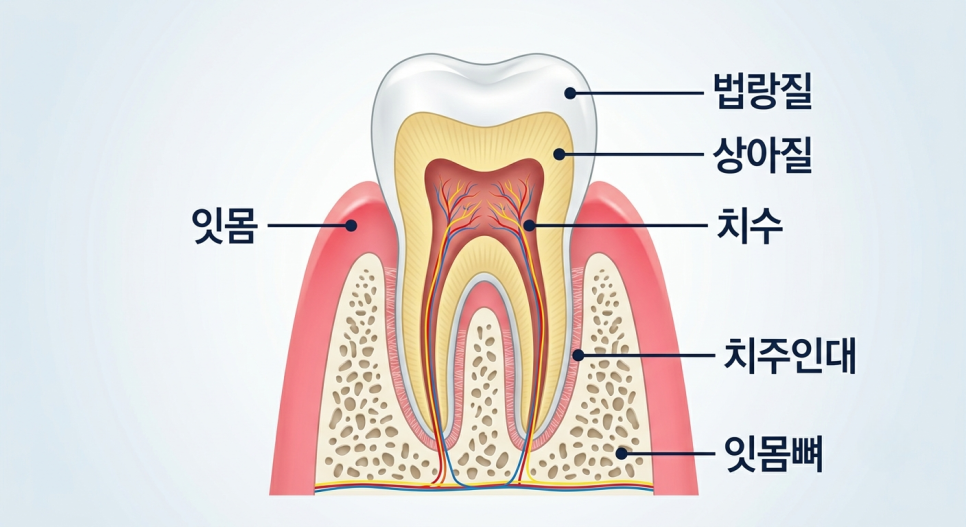
Around the tooth root, or the root of the tooth,
there is a thin cushion-like tissue called the periodontal ligament.
The periodontal ligament absorbs the strong impact generated when chewing
and allows us to sense the texture of food delicately.
By contrast, implants are directly attached to the bone,
so the impact generated during chewing is not absorbed in the same way.
A Barrier Against Bacteria
Natural teeth are closely joined to the gums,
which effectively helps prevent bacterial invasion.
Implants have a relatively weaker protective barrier,
so without proper care they are much more vulnerable to gum disease
called peri-implantitis.
The Tooth’s Unique Sensory Sensors
Only natural teeth have delicate nerve sensors
that detect how hard food is
and whether it is hot or cold.
There is a nerve called the dental pulp inside a tooth,
but implants do not contain nerves.
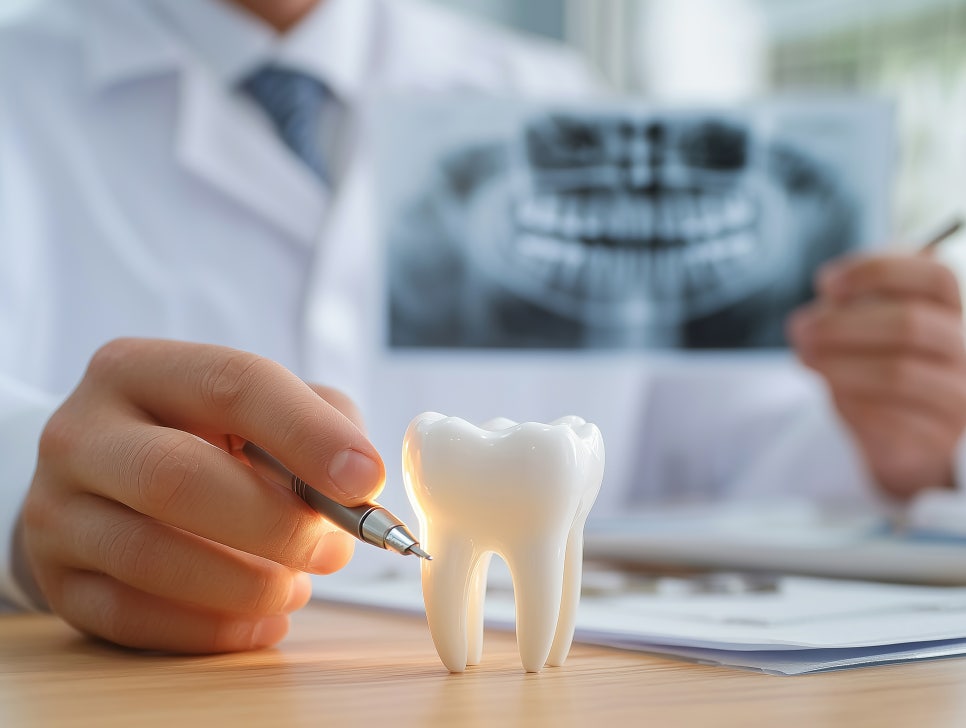
Three Decision Criteria for Saving a Natural Tooth
Even when a tooth is severely damaged,
if it meets the following conditions,
I first try treatment to save the natural tooth instead of an implant
(such as root canal treatment, root canal retreatment, or periodontal treatment).
When the remaining jawbone supports at least half of the tooth root
Even if bone has been lost due to periodontitis (gum disease),
if the bone supporting the root remains at least above a certain level,
periodontal treatment may stabilize the tooth
and allow it to be used for longer.
When there is no crack in the root
Even if much of the crown has broken,
if the root is intact,
the tooth can be treated by rebuilding the crown
and covering it with a restoration.
When inflammation at the root tip can be treated with root canal retreatment or apical surgery
Even if a previous root canal treatment failed
and inflammation developed at the root tip,
there are cases that can still be treated.
Rather than extracting the tooth unconditionally,
the inflammation can be removed and the tooth restored,
depending on the situation, through root canal retreatment
or an apicoectomy, which involves removing only a small portion of the root tip.
Nevertheless, When We Recommend “An Implant After Extraction”
Then why would a dentist diagnose a tooth as needing extraction?
It is to prevent the situation from worsening
by trying too hard to save a natural tooth
until all the surrounding jawbone is destroyed,
making it impossible to place an implant later.
In the following situations,
we may recommend extraction decisively
for the patient’s long-term oral health.
When the tooth root is completely split lengthwise (vertical root fracture)
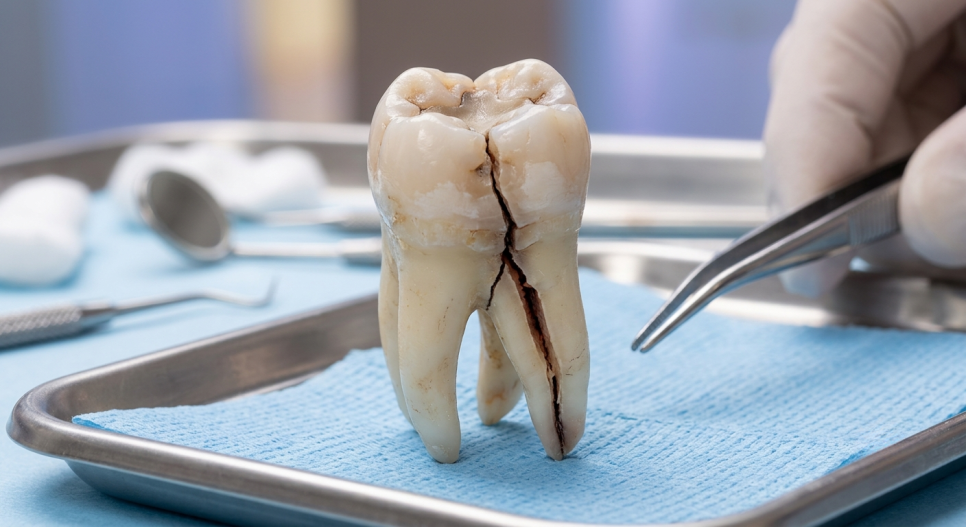
This is because bacteria continuously enter through the gap
and rapidly destroy the jawbone.
When the jawbone has been completely resorbed and the tooth is so loose it can be removed by hand
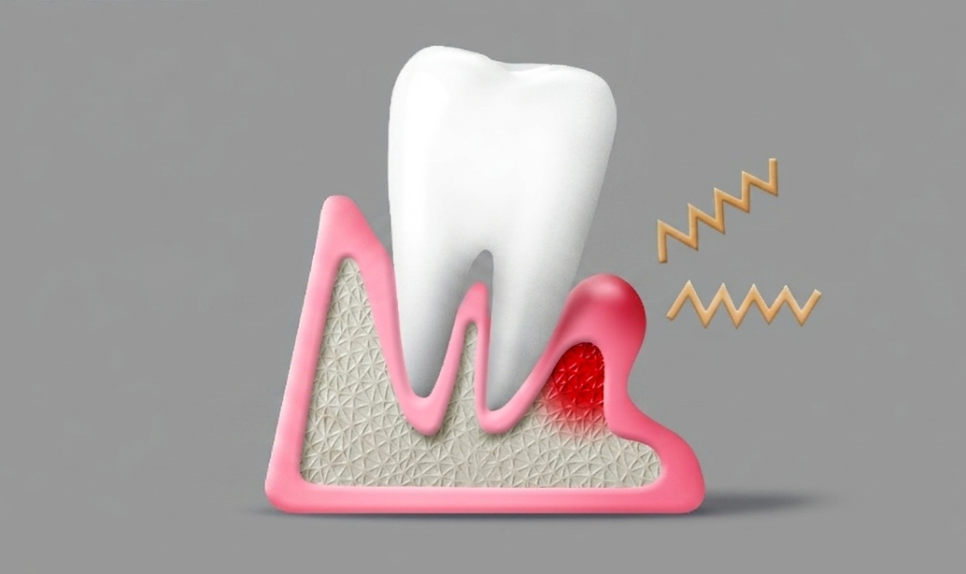
When too much jawbone has been resorbed,
the difficulty of implant treatment also increases.
During a subsequent implant procedure, a larger amount of bone grafting may be required,
and it may also take longer for the bone to stabilize.
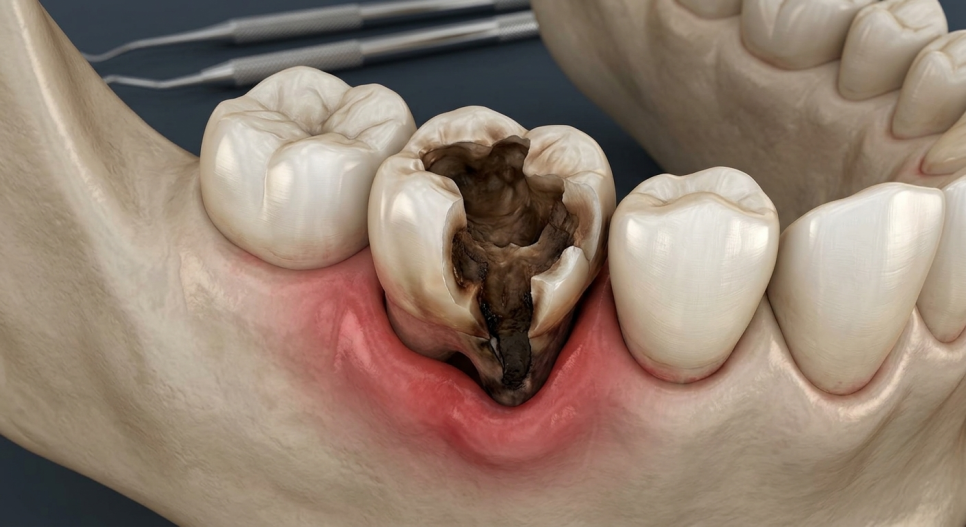
When decay has progressed below the jawbone and restorative treatment is not possible
The key to the longevity of a restoration
is a precise fit at the margins.
If decay progresses deep below the jawbone,
it is impossible to completely block saliva, gingival crevicular fluid, and bleeding.
Because exposure to moisture significantly reduces the bonding strength of fillings or adhesives,
it creates an environment where recurrent decay can develop very easily.
Extraction is not simply “giving up on a tooth.”
It is a process of protecting the surrounding jawbone from further destruction
and safely preparing for the next treatment, such as an implant.
How Would I Decide If It Were My Family Member’s Tooth?
As a dentist, the two things I am most cautious about are
“hasty extraction” and “meaningless prolongation of a tooth’s lifespan.”
It is a problem to remove a tooth too easily when it can be saved,
but forcibly holding on to a tooth that has already reached the end of its lifespan
and is damaging the surrounding bone
can also cause the patient greater pain and financial burden.
As a dentist, I always ask myself,
“If this were a tooth belonging to my family, what choice would I make now?”
[Step 1]
If there is even a 1% possibility,
I first consider treatment to save the natural tooth.
[Step 2]
If I determine that saving it will be difficult,
I carefully explain to the patient why extraction is necessary
while reviewing the X-rays and intraoral photographs.
[Step 3]
If extraction is unavoidable,
I make a plan to place an artificial tooth
safely and with minimal discomfort.
If you are currently worried about tooth pain
or feel anxious after being told that extraction is necessary,
please do not worry alone.
Visit us comfortably and have the condition of your natural tooth
thoroughly evaluated once again.
I will always do my very best
to protect even one more of our patients’ precious teeth.
This was dentist Kim Geun-il.
Thank you.
📍 365 Seoul One Top Dental Clinic
179 Gangseo-ro, 4th Floor, Dongmyeong M Building,
Gangseo-gu, Seoul
Gangseo-gu Dental Clinic / Hwagok-dong Dental Clinic
A 1-minute walk from Exit 8 of Hwagok Station