🦷 How Is Gum Disease Treated?
- A dentist explains step by step. -
"I thought removing tartar would make my gums better, but the bleeding keeps coming back."
"Even after treatment, my gums keep swelling and my teeth feel sensitive."
These are things patients often say in the clinic.
Many people think gum disease is a minor problem that can be solved with simple tartar removal, but in fact, gum disease is a complex condition that can affect even the bone supporting the teeth.
Treatment goes beyond simply removing inflammation; it also includes steady care to restore damaged tissue and prevent recurrence.
In today's post, I will explain step by step what treatment is done according to the stage of gum disease, based on the standards actually used in the clinic.
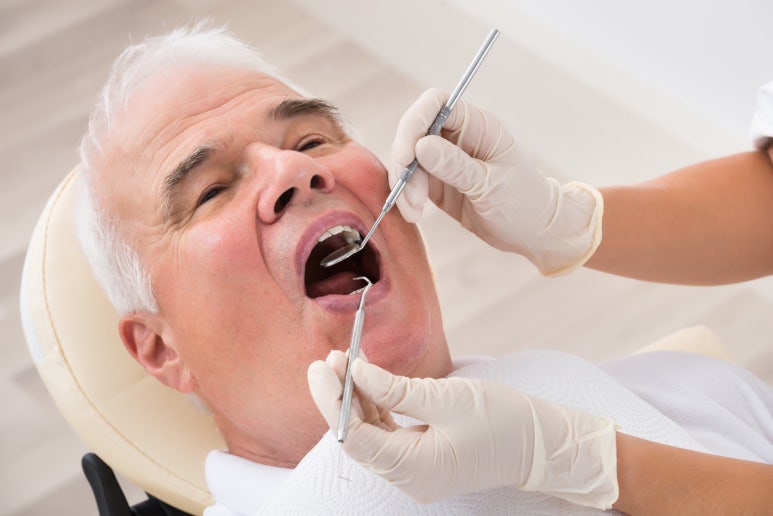
Gum disease is not just a problem of "swelling."
Gum disease is medically called periodontal disease. It can be broadly divided into two stages.
Gingivitis
This is a state in which inflammation is limited to the gums only. There is still no bone damage, and recovery is possible with relatively simple treatment.
Periodontitis
This is a state in which inflammation has progressed below the gums, that is, to the alveolar bone (the bone that holds the teeth in place). In this case, simple scaling alone is no longer enough.
The problem is that even in periodontitis, there is often little or no pain in the early stages, or only mild bleeding. So many people miss it and only visit the clinic after the disease has progressed significantly.

This is how treatment proceeds. - A step-by-step approach
Treatment for periodontal disease is not a single method; it must be approached differently depending on the patient's condition and how far the disease has progressed.
For example, the treatment stages actually carried out in the clinic are as follows.
Stage 1. Scaling - It always starts with the basics
The main culprits that cause inflammation in the gums are "plaque" and "tartar." Scaling is the first basic treatment to remove these, reduce inflammation, and restore the gums to a healthy state.
However, scaling is only a surface treatment. If inflammation has spread inside the gums, especially deep around the tooth roots, the next step is needed.
Stage 2. Root Planing - Cleaning down to the roots. From this stage, treatment becomes a little more precise.
It is the process of removing the thin bacterial film and toxins attached around the tooth roots and smoothing the root surface.
Through this, the inflamed gum tissue is encouraged to reattach to the tooth.
This treatment is usually performed after local anesthesia of the gums, and depending on the severity of the symptoms, it is divided into 2 to 4 sessions.
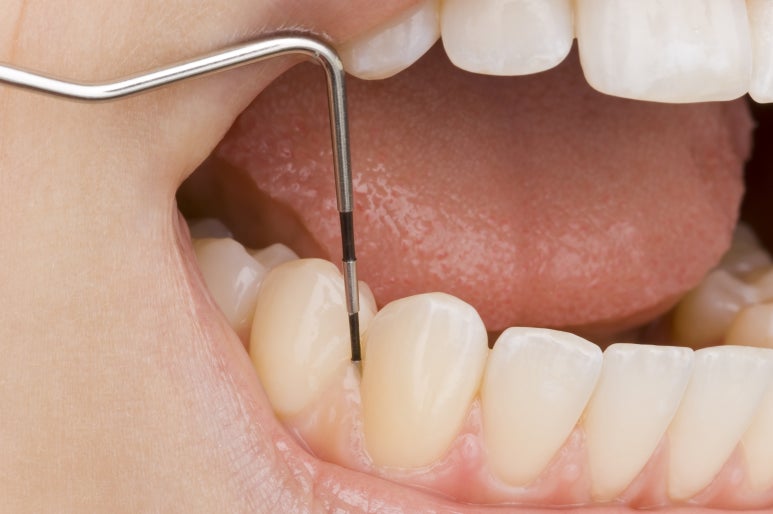
Stage 3. Periodontal Curettage - Direct removal of inflamed tissue
If gum inflammation does not subside with scaling and root planing alone, or if the depth of the gum pocket (periodontal pocket) remains 4 mm or deeper, more active treatment is needed.
At this point, periodontal curettage is performed. It is a treatment that uses instruments to directly scrape away inflamed tissue inside the gums and clean the environment around the teeth. It is performed without surgery, but because it approaches relatively deep areas, experience and careful technique are required.
Stage 4. Periodontal Surgery - A surgical approach for tissue recovery
If gum tissue or bone has been severely destroyed, non-surgical treatment alone is no longer sufficient.
In such cases, the gums are incised to directly expose the tooth roots and bone structure, and periodontal surgery is performed to remove infected tissue and, if necessary, combine bone grafting and tissue regeneration treatment (GTR).
Even when the gums have receded or the teeth have become loose, these procedures can help restore function to a certain extent.
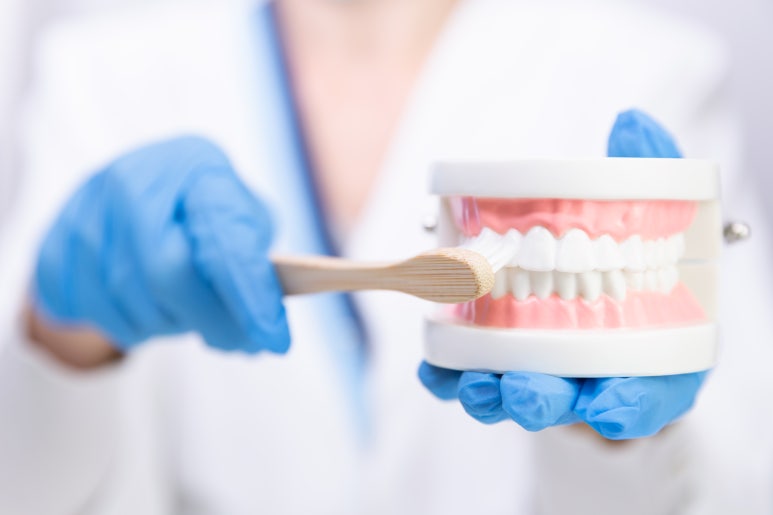
What is just as important as treatment is "management."
One of the important characteristics of periodontal treatment is that treatment is not the end. No matter how thoroughly treatment is done in the clinic, if you do not brush well in daily life or neglect gum care, inflammation will return to the same area.
That is why, at S Leader Dental Hospital, we provide separate personalized regular follow-up care after periodontal treatment.
Because the gums change over time, continuously observing their condition and detecting early signs of inflammation is the key to preventing recurrence.
At S Leader Dental Hospital, we do not simply provide treatment; we place the greatest importance on helping each patient maintain gum health in the long term after treatment, based on their lifestyle habits and oral hygiene condition.
If you are still noticing bleeding when brushing, tooth sensitivity, or bad breath, we strongly recommend that you receive a diagnosis from a medical professional at least once.