Hello, this is Gwangjin-gu Dental Clinic, S Leader Dental Hospital.
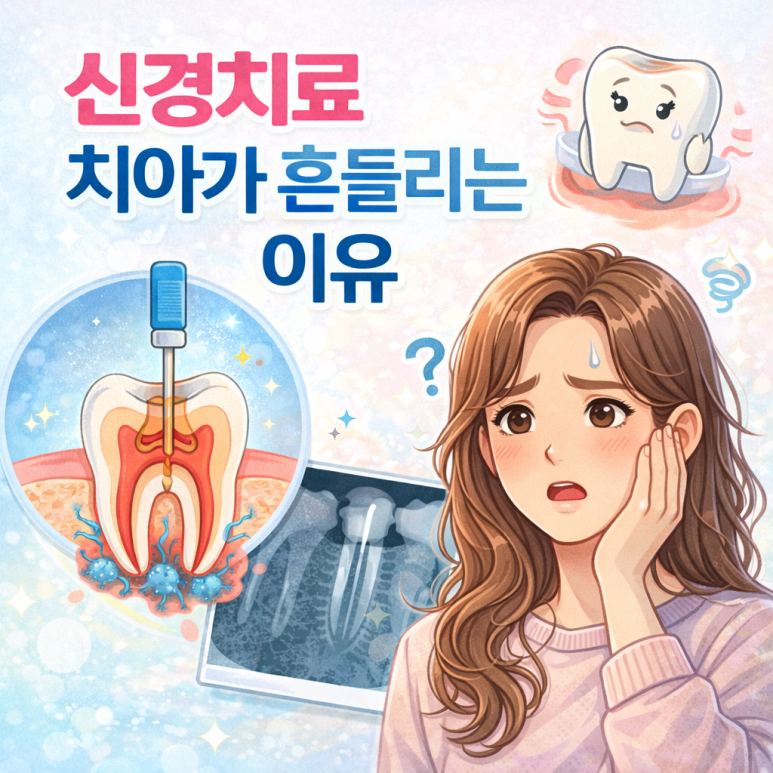
“Back in middle school, I had a root canal on my front tooth after injuring it, and lately it keeps feeling sensitive.”
“The molar I had a root canal on a long time ago now feels loose every time I chew.”
“It was fine back then, so why does it suddenly hurt now?”
Many people visit the dental clinic saying things like this.
In most cases, they had root canal treatment in their teens or early 20s because of tooth decay or trauma, and they used the tooth for a long time without any special symptoms. It is fairly common for discomfort or looseness to suddenly appear in their 30s or 40s.
Because the treatment was done when they were young, they may think, “It’s old, but I’ve been using it well, so it should be fine.” However, a tooth that has undergone root canal treatment gradually becomes structurally weaker over time, and because the internal changes are not visible from the outside, by the time a problem appears, the condition is often already quite advanced.
Today, S Leader Dental Hospital, a Gwangjin-gu dental clinic, will explain in an easy and practical way why root-canal-treated teeth develop problems over time, what stage of treatment is needed if looseness occurs, and how to keep a tooth usable for as long as possible.
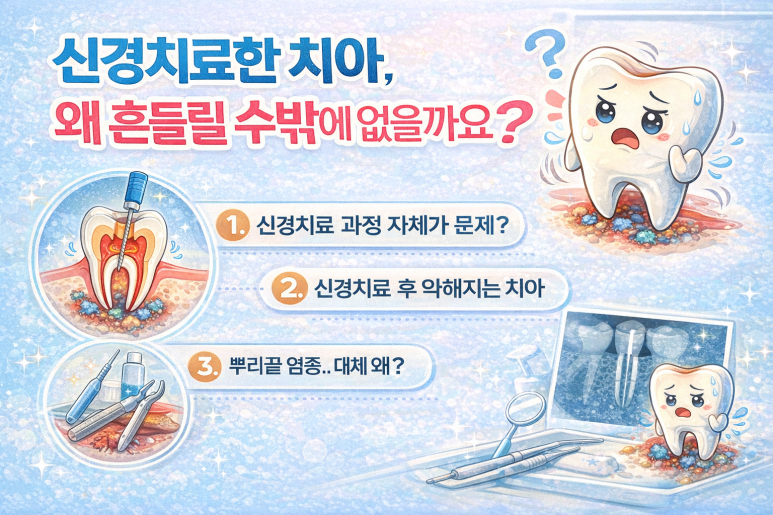
Why can a root-canal-treated tooth become loose?
- After root canal treatment, the tooth is no longer a “living tooth.”
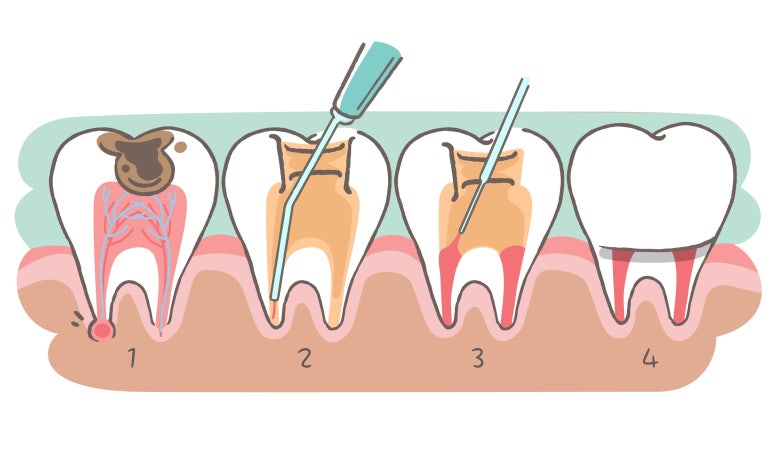
Root canal treatment removes the tooth nerve (pulp) damaged by inflammation or trauma, disinfects the inside, and fills it with artificial material.
But a tooth with its nerves and blood vessels removed:
✔️ loses its blood supply
✔️ dries out internally
✔️ gradually loses moisture
and becomes weaker over time.
Simply put, a root-canal-treated tooth is hollow inside, and even if it looks fine on the outside, its structure can be as brittle as glass.
That is why root-canal-treated teeth are vulnerable to impact, and repeated chewing forces can cause tiny cracks to begin forming. Years later, the tooth may break from the root area, or the surrounding jawbone may be resorbed, causing looseness.
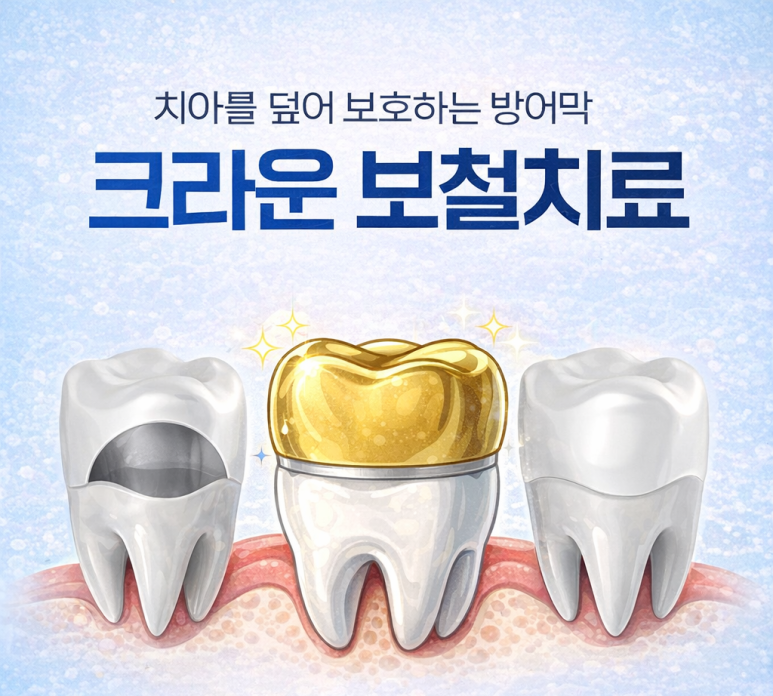
- Using it for a long time without a crown restoration increases the risk.
After root canal treatment, it is generally recommended to place a crown (restoration) to protect the entire tooth. However, many people use the tooth without a restoration for a long time simply because there is no pain right after treatment and think, “It should be fine.”
The problem is that if such a tooth receives impact, repeatedly chews hard foods, or has an improper bite that concentrates force on one area, the tooth walls may split or a vertical crack may extend all the way to the root.
Once this happens, it is no longer a stage where repeat root canal treatment or surgical repair can restore the tooth. It becomes the final point where extraction must be considered.
In particular, people who were treated when they were young and have gone decades without a crown often experience these tiny injuries accumulating gradually, only to suddenly feel, “Chewing feels strange,” or “It seems like the tooth is loose.”
- Inflammation at the root tip progresses quietly and then suddenly collapses.
Because root-canal-treated teeth have no nerve, pain often appears late even when bacteria are multiplying.
A bacterial infection starts at the tip of the tooth root, and the body’s immune system responds, forming chronic inflammation. This process progresses very slowly, so the patient may not notice anything at all.
But at some point, the gums may swell, a pus pocket (periapical abscess) may form, and the alveolar bone may be resorbed, leading to symptoms such as tooth looseness.
In such cases, even if the tooth looks fine on the outside, the tissue around the root may already be damaged and its support weakened. An accurate evaluation of the extent of inflammation through X-rays or 3D CT imaging is needed to determine the treatment plan.
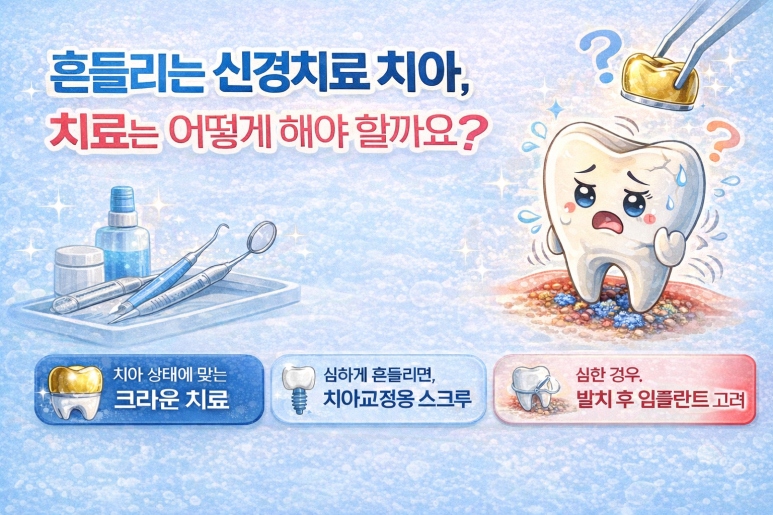
How should a loose root-canal-treated tooth be treated?
- Retreatment (RCT retreatment)
If the inflammation is due to internal infection, the first option is retreatment, which removes the existing filling material and disinfects and refills the canal again.
However, if a long time has passed since the original treatment or if there is a tiny crack extending to the root, retreatment alone may not fully resolve the symptoms.
- Apicoectomy — a microsurgical procedure to remove inflammation at the root tip
If the inflammation is limited to the root tip, the affected area can be removed through a surgical procedure called an apicoectomy.
This is especially effective for front teeth, where the roots are long and the surrounding structure is simple, and it can be completed with a relatively straightforward surgical procedure without major pain or bleeding.
- If the crack is deep, extraction and replacement with an implant
The most unfortunate situation is when the crack extends deep into the tooth root.
In this case, repeated treatment cannot fully cure the tooth, and using it as a temporary measure may eventually allow inflammation to spread to a wider area. Extraction must then be considered, followed by implant or bridge treatment.
However, if the diagnosis is made before it is too late, you can choose:
✔️ a way to keep the tooth longer
✔️ or, after extraction, the most aesthetic and functional replacement option possible
A tooth that has undergone root canal treatment and time has passed
Gwangjin-gu Dental Clinic, S Leader Dental Hospital’s diagnostic criteria
A precise diagnosis at S Leader Dental Hospital: root canal treatment is only an “emergency treatment” that resolves the pain at the time; it does not guarantee that the tooth will remain problem-free for life.
In particular, if the tooth has been neglected without care for a long time after treatment, used without a restoration, or has recently become sensitive or loose, there is a high possibility that a structural problem has already begun inside.
At Gwangjin-gu Dental Clinic, S Leader Dental Hospital, we provide the best treatment direction suited to the patient’s current condition based on precise diagnosis through X-rays and 3D CT, evaluation of the extent of inflammation and bone loss, and analysis of tooth preservation possibilities versus alternative treatment options.
“If it was treated a long time ago, why is it loose now?”
S Leader Dental Hospital is the place that can give you an accurate answer to that concern and worry.
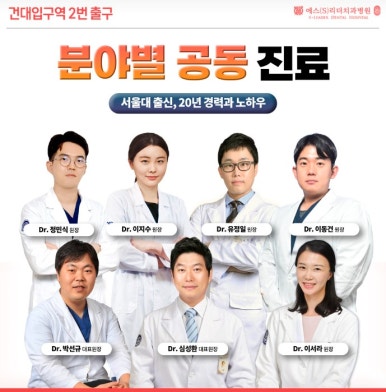
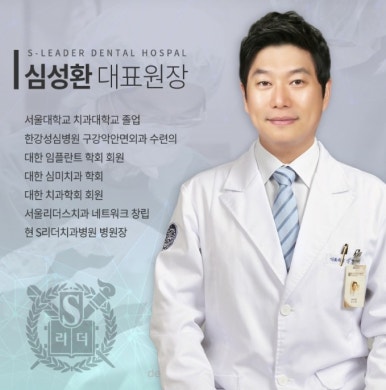


Gwangjin-gu Dental Clinic :: S Leader Dental Hospital