Hello, this is S Leader Dental Hospital, a Gangbyeon Station dental clinic celebrating its 22nd anniversary since establishment this year.
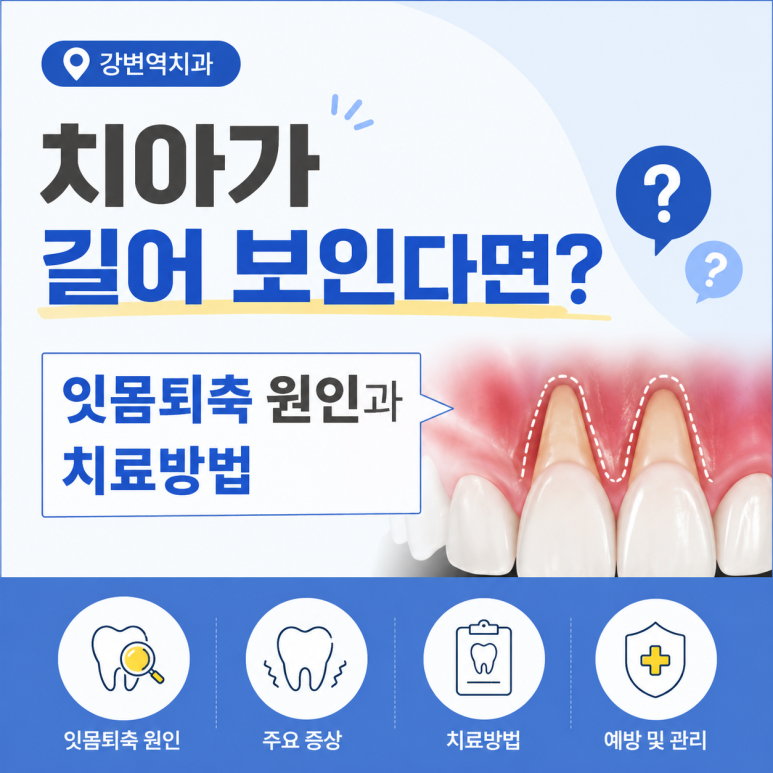
Have you ever looked in the mirror one day and suddenly thought, “Were my teeth always this long?”
If you compare yourself with older photos and notice that your gums seem to have receded slightly, or if you feel sensitivity in a specific area when drinking cold water, gum recession may be a possibility.
Among patients who visit the dental clinic, quite a few say things such as, “My teeth seem to have gotten longer,” “My sensitivity has become worse than before,” or “My gums seem to be receding little by little—is that okay?”
Many people think this is a natural phenomenon caused by aging, but gum recession is not simply a cosmetic issue. As the tooth roots become exposed, sensitivity may occur, and in severe cases, it can also affect dental health.
Today, S Leader Dental Hospital, a Gangbyeon Station dental clinic, will explain in detail what gum recession is, why it occurs, what symptoms it causes,
and how it is treated.
What Is Gum Recession?
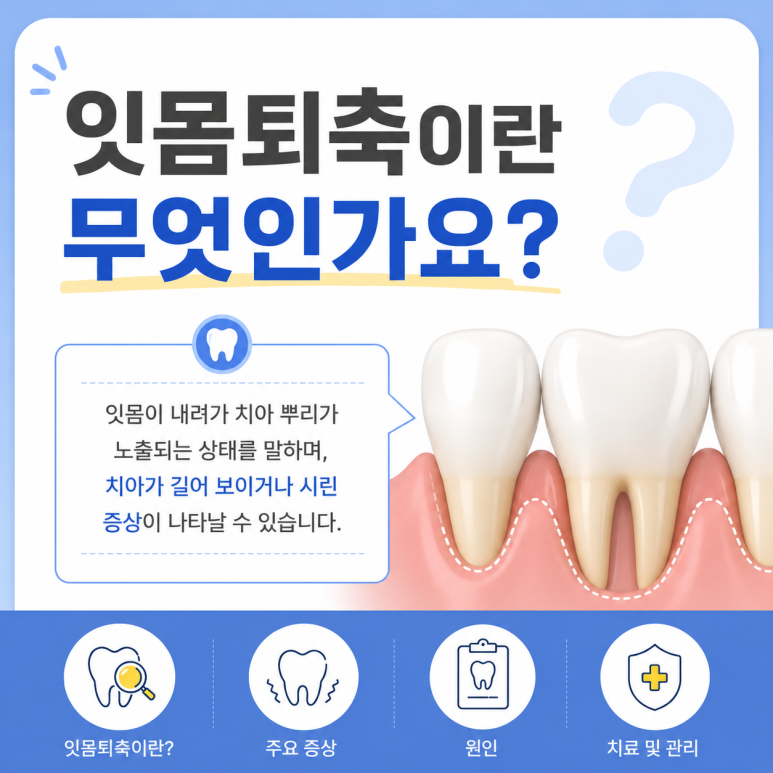
Gum recession refers to a condition in which the gums move downward from their normal position, exposing part of the tooth root.
Healthy gums adequately surround and protect the tooth roots. However, when gum tissue gradually becomes thinner or moves downward for various reasons, the tooth roots that should normally remain covered by the gums become exposed.
Unlike the crown of the tooth, which is protected by enamel, the tooth root is sensitive to stimulation. Therefore, when gum recession occurs, sensitivity may appear when consuming cold foods or drinks, and the teeth may also appear longer, creating a cosmetic change.
Once gum recession progresses, it rarely returns to its original state naturally, so identifying the cause and receiving appropriate treatment and care are important.
Why Does Gum Recession Occur?
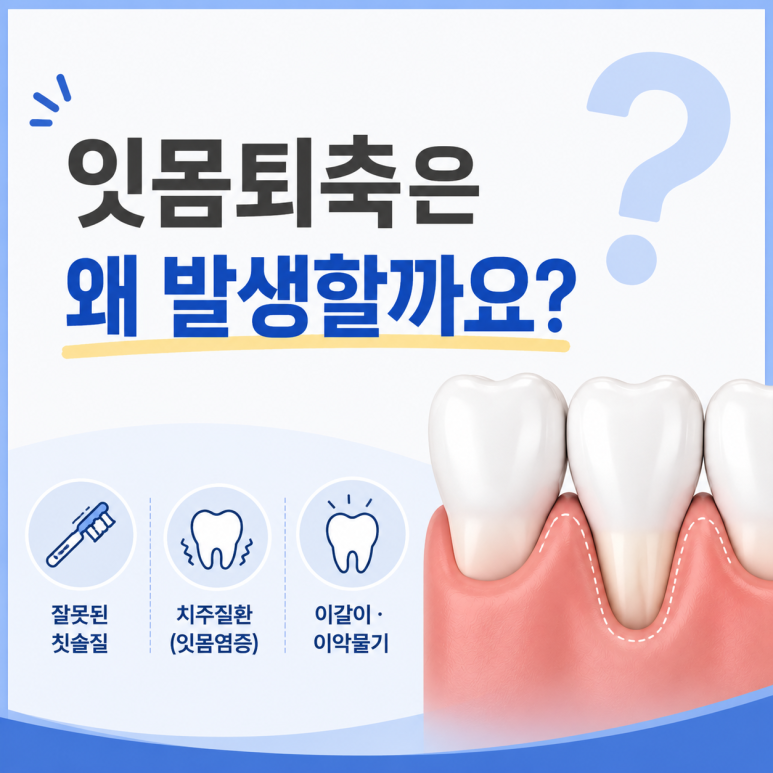
- Periodontal disease
This is one of the most common causes.
When plaque and bacteria accumulate over a long period, inflammation develops in the gums. It may begin as gingivitis, but if it is not properly managed, it can progress to periodontitis. As periodontitis progresses, it can damage not only the gums but also the alveolar bone that supports the teeth, causing the gums to gradually recede.
- Brushing too aggressively
Some people brush with excessive force because they want to keep their teeth clean. In particular, using a hard-bristled toothbrush or vigorously scrubbing from side to side repeatedly irritates the gums. If this habit continues for a long time, the gums may become damaged and recession may occur.
- Teeth grinding and clenching
Grinding your teeth while sleeping or unconsciously clenching them during the day can also place stress on the gums. Continuous strong forces transmitted to the teeth and gums may damage the gum tissue.
- Improper bite
Gum recession may also occur when the teeth do not come together properly or excessive force is concentrated on specific teeth.
- Naturally thin gums
Gum thickness varies from person to person. If your gums are naturally thin, recession may occur more easily even with minor irritation.
Where Is Gum Recession Most Likely to Occur?
Gum recession does not occur equally around every tooth. It tends to develop more often in areas where the alveolar bone is thin or where the gums receive substantial irritation from brushing.
It is commonly observed around the upper and lower canines, the lower front teeth, and the outer gums around the molars. The canines often project outward from the dental arch, making them more likely to be repeatedly brushed with excessive force. The lower front teeth are also structurally more prone to recession because the gums and alveolar bone in this area are naturally relatively thin.
In addition, the risk of gum recession in specific areas may increase when the gum bone becomes thinner as the teeth move after orthodontic treatment, or when the teeth are tilted outward. If you usually brush your teeth forcefully, you may notice the gums receding primarily along the outer surfaces of the teeth.
Gum recession often progresses without pain in its early stages, so it is important to check your gum condition regularly even when there are no noticeable symptoms. If a particular tooth looks unusually long in the mirror or the area around the tooth root appears to be exposed, gum recession should be considered. Identifying the cause and managing it appropriately at an early stage may help prevent further progression.
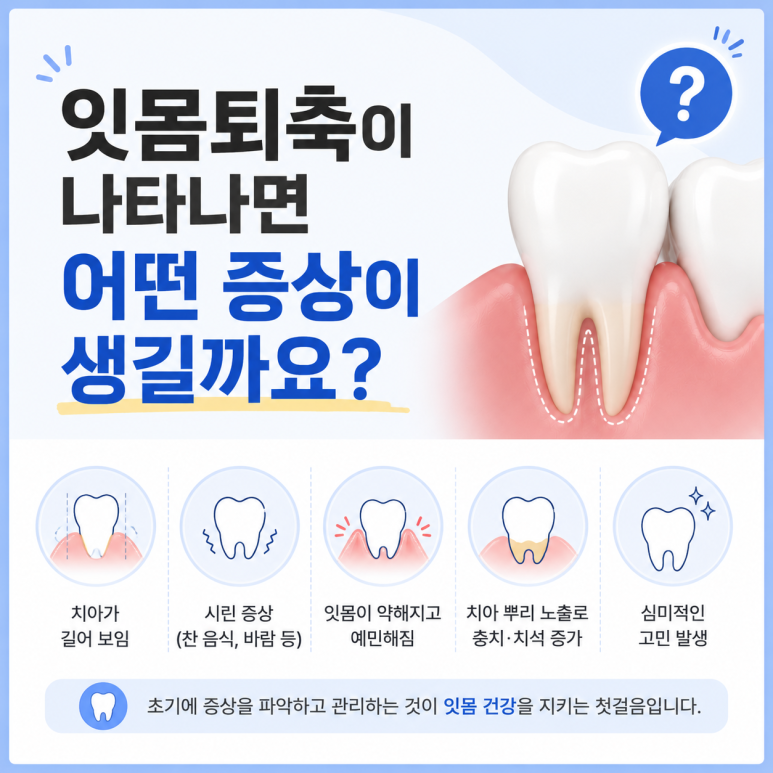
What Symptoms Can Occur When Gum Recession Develops?
Your teeth may look longer
This is the most representative symptom. The teeth have not actually become longer; they appear longer because the gums have receded and part of the tooth root has become visible.
Sensitivity may occur
A specific area may feel sharp or react sensitively when you drink cold water or eat ice cream. At first, this may occur only briefly, but the discomfort can increase as the condition progresses.
Food may become trapped more easily
As the gums recede, the spaces between the teeth may widen, causing food to become trapped more often.
Brushing may feel uncomfortable
Because exposed tooth roots are sensitive to stimulation, brushing may cause discomfort.
Cosmetic stress
Gum recession around the front teeth, in particular, can make the gum line look asymmetrical when smiling or cause the teeth to appear longer.
What Happens If Gum Recession Is Left Untreated?
In the early stages, the only symptom may be sensitivity.
However, if gum recession is left untreated, the tooth roots may remain exposed, increasing the risk of root decay.
If periodontal disease is the cause, damage to the alveolar bone may progress, weakening the support that holds the teeth in place.
In severe cases, the teeth may become loose or the situation may progress to the point where extraction is necessary, making early diagnosis and treatment important.
Are Gum Recession and Periodontitis the Same Condition?
This is an area that many people find confusing.
Periodontitis refers to a condition in which the gums and alveolar bone become inflamed due to bacteria and plaque.
Gum recession, on the other hand, refers to the result of the gums moving downward.
In other words, periodontitis can cause gum recession, but not all gum recession is caused by periodontitis.
A dental examination is necessary to determine the exact cause.
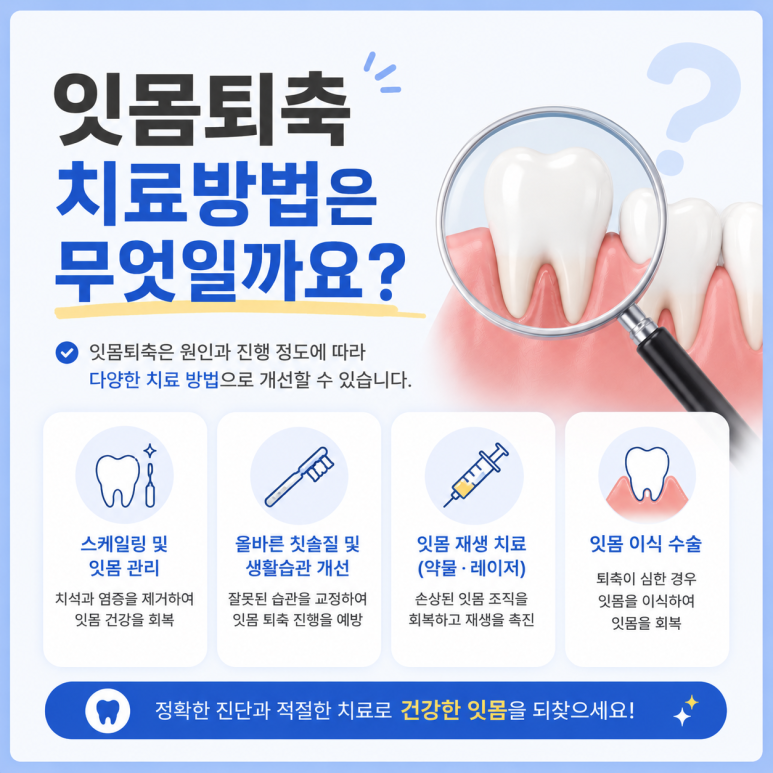
What Treatments Are Available for Gum Recession?
Periodontal treatment
If periodontal disease is the cause, treatment to reduce inflammation is needed first. The priority is to remove plaque and bacteria through scaling or periodontal treatment and restore gum health.
Resin treatment
If the tooth root is exposed and sensitivity is severe, the area may be covered with resin.
This can help reduce external irritation and relieve sensitivity.
Gum grafting
This treatment may be performed when the area of gum recession is extensive or cosmetic improvement is needed. It uses healthy gum tissue to cover the exposed tooth root and may help reinforce gum thickness.
Bite adjustment and lifestyle changes
If you grind or clench your teeth, it may be necessary to use an appropriate device or improve related habits.
Protect Your Gum Health
with S Leader Dental Hospital, a Gangbyeon Station Dental Clinic
Teeth appearing longer is one of the representative symptoms of gum recession. Sensitivity or cosmetic discomfort may also accompany it, and leaving it untreated can affect the health of the teeth and gums. Therefore, it is important to identify the cause early and receive appropriate treatment and care.
In particular, if your teeth look longer than before or you repeatedly experience sensitivity to cold water, we recommend receiving an accurate examination rather than assuming it is simply a sign of aging.
S Leader Dental Hospital, a Gangbyeon Station dental clinic, carefully examines each patient’s gum condition and develops a treatment plan suited to the cause to help maintain a healthy oral environment. If you are concerned about your gum health, please receive an accurate consultation and examination at S Leader Dental Hospital.


Gangbyeon Station Dental Clinic :: S Leader Dental Hospital