Hello, this is S Leader Dental Hospital, a dental clinic near Konkuk University Station, celebrating its 22nd anniversary this year.
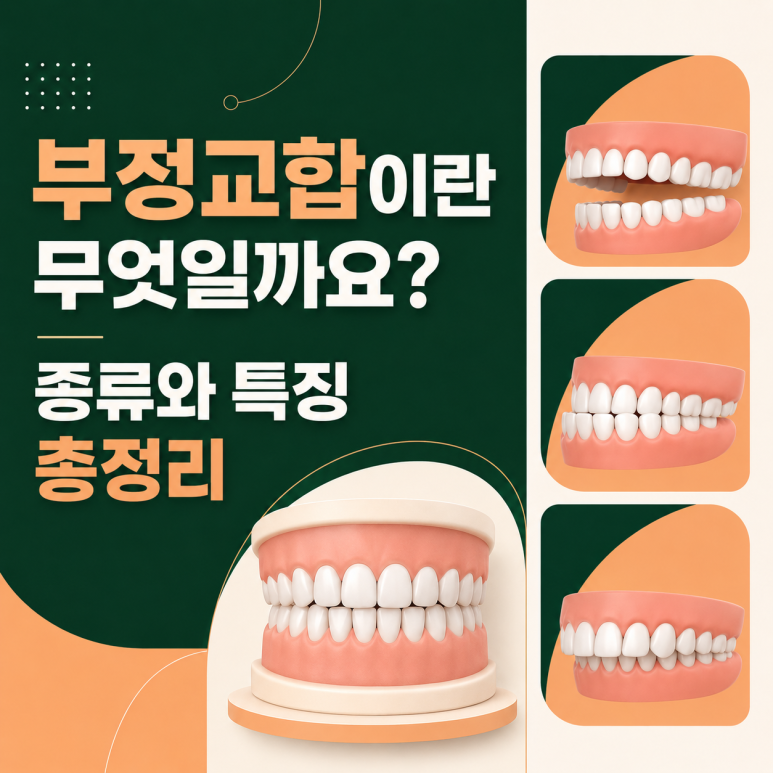
When teeth are crooked or the front teeth appear prominent, it is easy to think that the teeth are simply misaligned. However, if not only the alignment of the teeth but also the way the upper and lower teeth come together or the balance of the jaws is misaligned, it may be considered malocclusion.
Malocclusion can affect not only appearance but also chewing function, pronunciation, and oral hygiene management. Typical examples include cases in which the front teeth do not touch even when the mouth is closed, the lower teeth are positioned farther forward than the upper teeth, or the upper teeth excessively cover the lower teeth.
Even if the teeth appear straight on the outside, the molars may not meet properly, so it is difficult to determine malocclusion based on appearance alone. In addition, the timing and method of treatment may vary depending on the cause and type of malocclusion and whether growth is still occurring. Therefore, it is important to assess the condition of the teeth, gums, and jaws comprehensively.
Today, together with S Leader Dental Hospital near Konkuk University Station, we will take a detailed look at what malocclusion is, why it occurs, and the main types and characteristics of each.
What Is Malocclusion?
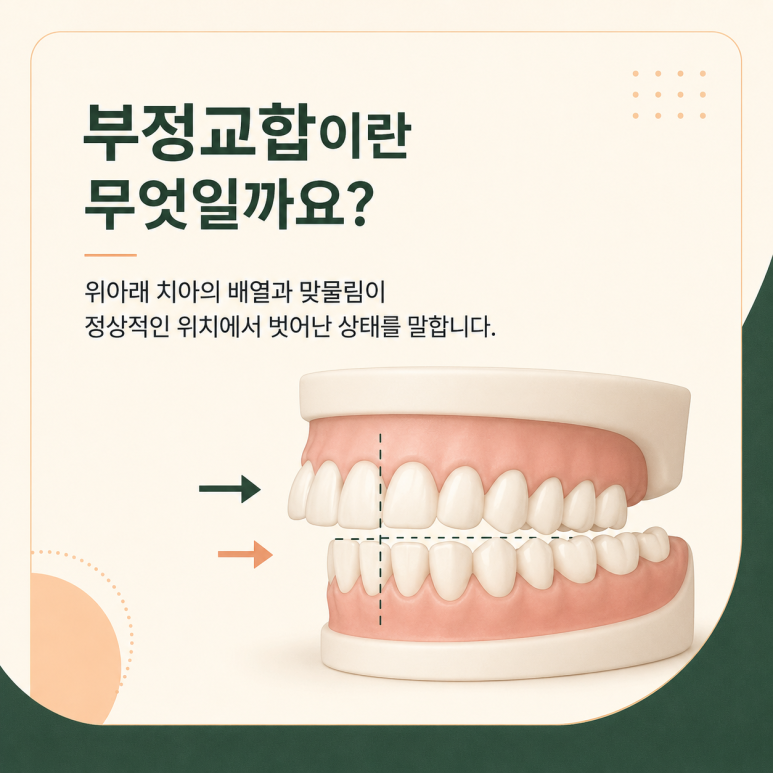
Occlusion refers to the condition in which the upper and lower teeth come into contact when the mouth is closed.
In normal occlusion, the upper and lower teeth come together harmoniously, allowing the front teeth to bite off food and the molars to grind it properly. The forces placed on the teeth and jaw joints are also distributed relatively evenly.
Malocclusion, on the other hand, refers to a condition in which the teeth do not meet in their normal positions because of differences in the position or alignment of the teeth or in the size or position of the upper and lower jaws.
Malocclusion does not simply mean that the teeth are crooked.
The teeth may be straight while the positions of the upper and lower jaws do not align. Conversely, the jaw positions may be relatively normal while the teeth overlap because there is not enough room for them to erupt. It is also fairly common for both problems to occur together.
Therefore, when checking for malocclusion, the following areas should be examined along with the alignment of the teeth.
-
The degree to which the upper and lower front teeth overlap
-
The position where the molars meet
-
The available space for the teeth to align
-
The size and position of the upper and lower jaws
-
Whether the lips close naturally
-
Jaw joint movement and discomfort
-
Left-right facial balance and the side profile
Even malocclusions that look similar on the outside may have different causes, so it is important to distinguish the current condition through an accurate examination.
Why Does Malocclusion Occur?
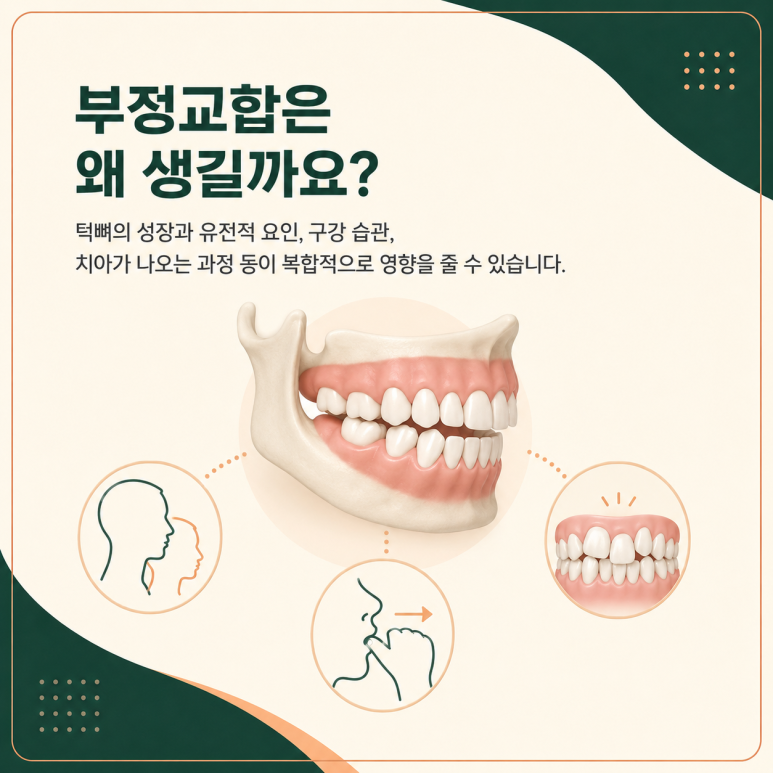
Malocclusion is often caused by a combination of congenital factors, the growth process, and lifestyle habits rather than by a single cause.
- Genetic Jaw and Tooth Size
Malocclusion may occur when the size of the jawbone and the size of the teeth inherited from the parents are not in harmony with each other.
For example, if the jaw is small in relation to the size of the teeth, there may not be enough room for the teeth to align, resulting in overlapping teeth or a crowded appearance. Conversely, if the teeth are small in relation to the jaw, spaces may appear between the teeth.
If the upper or lower jaw grows relatively more than the other, this may lead to skeletal malocclusion such as protruding mouth or an underbite with a prominent lower jaw.
- Insufficient Space for Teeth to Erupt
If there is not enough space for permanent teeth to emerge, they may not erupt in their normal positions and may come in crooked or overlap with one another.
If baby teeth fall out too early or are lost prematurely because of cavities, neighboring teeth may move into the empty space, reducing the room available for the permanent teeth to erupt.
Conversely, if baby teeth remain for too long because they do not fall out on time, the permanent teeth may erupt in a different direction.
- Oral Habits During Growth
During the growth period, even small habits can affect tooth alignment and jaw development.
Common examples include thumb-sucking, pushing the tongue between the front teeth, biting the lower lip, and chewing only on one side.
If these habits continue for a long time, they may result in an open bite in which the front teeth do not meet or cause the front teeth to tilt forward.
- Mouth Breathing and Improper Tongue Position
If mouth breathing, or breathing through the mouth instead of the nose, continues, the balance of the forces with which the lips and tongue support the teeth may change.
The tongue generally rests naturally against the inside of the upper jaw. However, if it rests lower in the mouth or continuously pushes against the front teeth, it may affect the alignment of the teeth and jaw growth.
However, mouth breathing and tongue position may also be related to rhinitis, nasal congestion, or tonsil problems, so the underlying cause should be examined as well.
- Tooth Loss and Gum Disease
Malocclusion may newly develop or worsen even after adulthood.
If a tooth lost because of cavities or gum disease is left untreated for a long time, neighboring teeth may tilt into the empty space.
The opposing tooth may also move downward or upward, changing the overall way the teeth meet.
When the tissues supporting the teeth have weakened due to gum disease, the teeth may also spread apart or move forward.
Common Types and Characteristics of Malocclusion
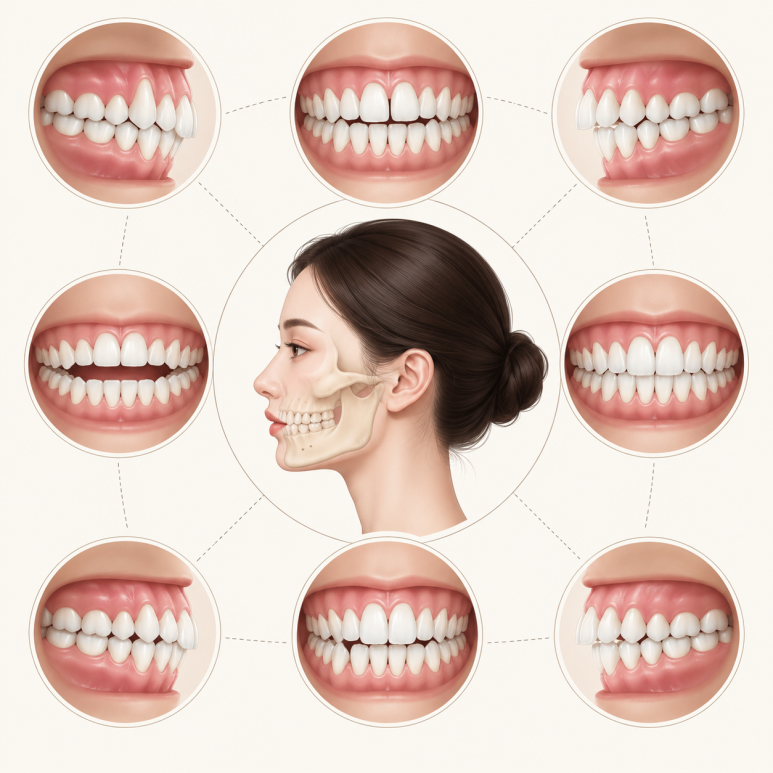
Malocclusion can be classified into various forms according to the direction in which the teeth are misaligned and the relationship between the upper and lower jaws.
A person does not necessarily have only one type. Multiple problems may occur together, such as crowded teeth and a protruding mouth or an overbite and a crossbite.
- Crowded Teeth and Dental Crowding
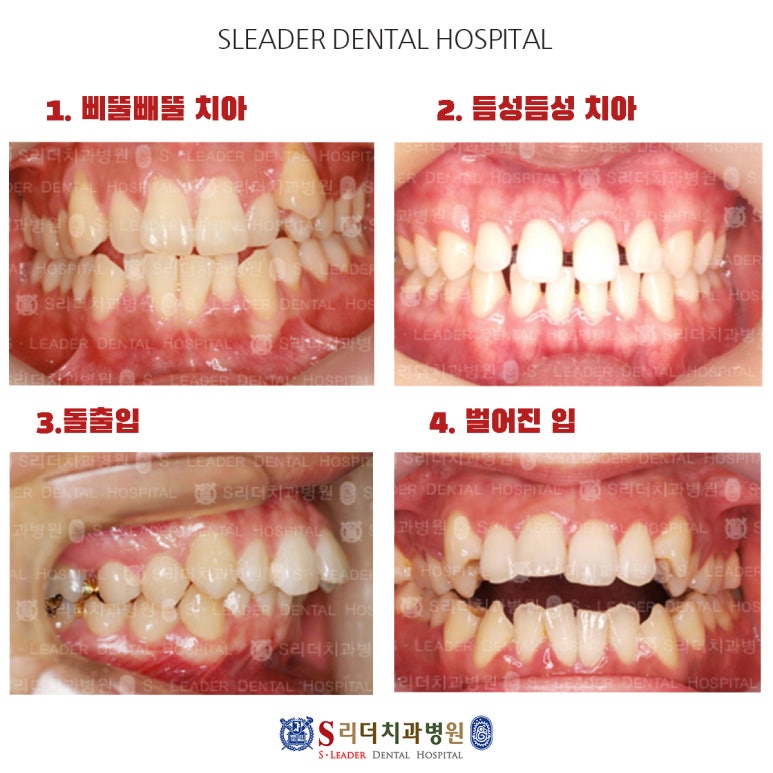
Dental crowding refers to a condition in which the teeth overlap or erupt crookedly because there is not enough room for them to align. What is commonly called a snaggletooth is also a form of dental crowding.
It most often occurs around the front teeth or canines, but the molars may also erupt tilted inward or outward.
Key characteristics
-
The teeth may appear to overlap one another.
-
The canines may erupt outside the dental arch.
-
Areas that are difficult for a toothbrush to reach may develop.
-
Plaque and tartar may accumulate easily.
-
Managing cavities and gum disease may be difficult.
Even if the degree of crowding is not severe, difficulty keeping the spaces between the teeth clean may affect long-term oral health.
- Protruding Mouth and Maxillary Prognathism
A protruding mouth is a general term for a condition in which the teeth or the bone supporting the gums protrude forward, making the mouth appear prominent.
The causes vary and may include upper front teeth that tilt forward, a relatively developed upper jaw, or both the upper and lower teeth positioned forward.
Key characteristics
-
The mouth may appear prominent in the side profile.
-
It may be difficult to close the lips comfortably.
-
The chin may become tense when closing the mouth.
-
The front teeth may be more exposed to external impacts.
-
The lips may remain parted, which can cause oral dryness.
A protruding mouth cannot always be resolved simply by moving the front teeth inward. The position of the jawbone, lip thickness, tooth angles, and overall facial balance should all be considered.
- Underbite and Prominent Lower Jaw
In normal occlusion, the upper front teeth are positioned slightly in front of the lower front teeth.
An underbite refers to the opposite condition, in which the lower teeth are positioned in front of the upper teeth. It may occur only in some of the front teeth or may appear as a prominent lower jaw in which the entire lower jaw protrudes forward.
Key characteristics
-
The lower teeth may appear to project farther forward than the upper teeth.
-
It may be difficult to bite off food with the front teeth.
-
Certain sounds may be difficult to pronounce.
-
The lower jaw or chin may appear more prominent.
-
Differences in jaw growth may occur at the same time.
In growing patients with an underbite, the direction of lower-jaw growth and the development of the upper jaw should be observed together. The treatment plan may differ depending on whether only the tooth angles are reversed or whether there is a difference in the jawbones themselves.
- Deep Overbite
A deep overbite is a condition in which the upper front teeth cover the lower front teeth more than the normal range when the mouth is closed.
When severe, the lower front teeth may be barely visible or may touch the upper gums.
Key characteristics
-
The lower front teeth may be largely hidden by the upper teeth.
-
The edges of the front teeth may wear down easily.
-
The lower front teeth may irritate the upper gums.
-
Discomfort may be felt when moving the jaw.
-
The lower part of the face may appear short.
A deep overbite is not only a problem involving the front teeth; it may also be associated with the height of the molars, the angles of the front teeth, and the direction in which the jaw rotates.
- Open Bite
An open bite is a condition in which some teeth do not touch and a space remains when the molars are brought together.
An anterior open bite, in which the front teeth do not touch, is common, but a posterior open bite, in which the molars do not touch, can also occur.
Key characteristics
-
It may be difficult to bite off fabric or food with the front teeth.
-
The tongue may be visible between the front teeth.
-
Speech may sound breathy or inaccurate.
-
A space remains between the front teeth even when the mouth is closed.
-
Tongue-thrusting or mouth breathing may occur at the same time.
An open bite may be affected not only by the position of the teeth but also by tongue movement and the direction of jaw growth. If an improper tongue habit continues even after orthodontic treatment, the teeth may separate again, making habit management important as well.
What Problems Can Malocclusion Cause?
Not everyone with malocclusion experiences symptoms immediately. In mild cases, people may go about their daily lives without any particular discomfort.
However, if the imbalance in the way the teeth meet is significant or force is concentrated on certain teeth, the following problems may occur.
It may be difficult to chew food properly
If the front teeth do not meet, it may be difficult to bite off food. If the molars do not make proper contact, it may be difficult to grind food sufficiently.
This may lead to a habit of chewing only on one side or repeatedly using only certain teeth.
Cavities and gum disease may be difficult to manage
When teeth overlap or tilt, areas that are difficult for a toothbrush and dental floss to reach may develop.
If plaque and food repeatedly remain in these areas, the risk of cavities, gum inflammation, and bad breath may increase.
Certain teeth may wear down quickly
When the teeth do not meet evenly, chewing forces become concentrated on some teeth.
As a result, the edges of the teeth may wear down or break, and the gums and tissues supporting the teeth may also be placed under stress.
Jaw fatigue may occur
Having malocclusion does not necessarily mean that a temporomandibular joint disorder will develop.
However, if an imbalance in the bite occurs together with habits such as teeth grinding, clenching, or chewing on one side, the muscles around the jaw may become tired easily or discomfort may develop.
It may affect appearance and pronunciation
The position of the teeth and jaws may affect the degree to which the lips protrude, the side profile, and left-right facial balance.
When the front teeth do not meet properly, as in an open bite or underbite, air may escape when pronouncing certain sounds or the tongue may assume an unnatural position.
Does Everyone with Malocclusion Need Orthodontic Treatment?
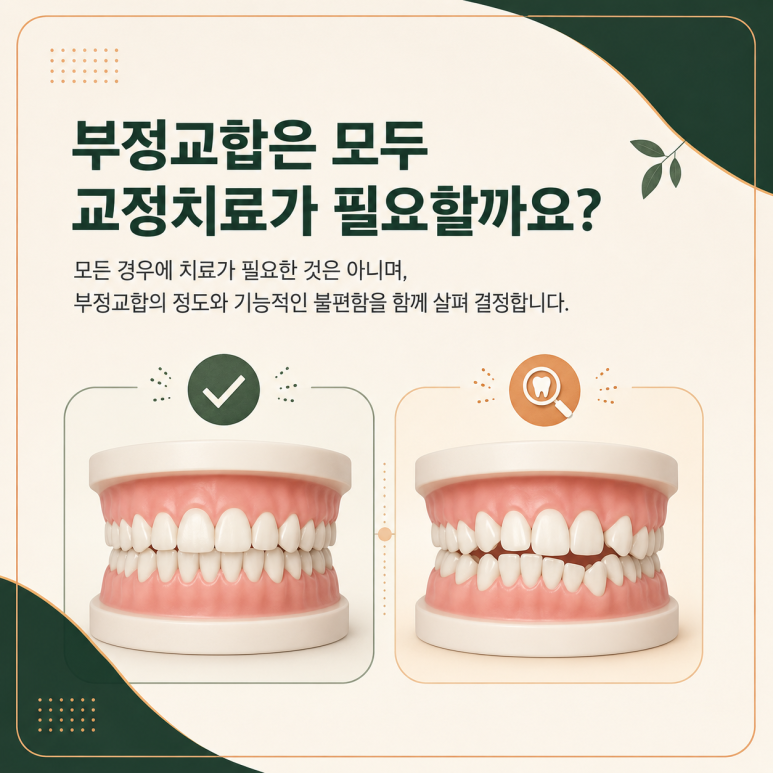
Not every case of malocclusion necessarily requires orthodontic treatment.
If the difference in the bite is mild and there are no significant problems with chewing function or oral care, the condition may be monitored through regular examinations.
On the other hand, orthodontic consultation may be considered in the following cases.
-
The teeth overlap, making brushing and flossing difficult
-
The front teeth or molars do not meet properly
-
It is difficult to chew food or bite it off with the front teeth
-
Certain teeth repeatedly wear down or break
-
It is difficult to close the mouth or there is significant tension around the mouth
-
The jaw appears to be shifted to one side
-
There is significant concern about the alignment of the teeth or facial appearance
-
A difference in jaw growth is noticeable in a child who is still growing
Even when people have the same protruding mouth or crowded teeth, the available space for tooth movement, gum health, jawbone position, and facial balance vary from person to person, so an individual diagnosis is necessary.
How Is Malocclusion Examined?
To accurately assess malocclusion, simply looking at the teeth with the naked eye may not be enough.
In general, the following areas are examined comprehensively.
-
The alignment and bite of the teeth inside the mouth
-
The degree of tooth overlap or spacing
-
The position and size of the upper and lower jaws
-
The front and side views of the face
-
The degree to which the lips close
-
The condition of the gums and tooth roots
-
Jaw joint movement
-
Oral habits and the usual direction of chewing
As needed, oral photographs, radiographs, dental models, or oral scans may be used to analyze the relationship between the teeth and jaws in detail.
Through this diagnostic process, it is determined whether only the teeth need to be moved, whether control of jaw growth is necessary, and whether an extraction or non-extraction approach is appropriate.

S Leader Dental Hospital near Konkuk University Station
Accurate diagnosis is important for malocclusion.
Malocclusion goes beyond simply having uneven teeth and may affect the way the upper and lower teeth meet, jaw balance, and oral function.
Even malocclusions that look similar on the outside may have different causes, such as tooth alignment, jawbone position, or lifestyle habits, so it is important to distinguish the current condition through an accurate examination.
If your teeth overlap, your front teeth do not meet properly, you feel discomfort when chewing, or you feel that certain teeth are wearing down quickly, it is best not to dismiss these signs.
At S Leader Dental Hospital near Konkuk University Station, we comprehensively examine tooth alignment and occlusion, jaw position, and gum health to guide patients toward care suited to their individual conditions.
If you would like to know more about your current malocclusion, please confirm your condition through an accurate examination and consultation.






Konkuk University Station Dental Clinic :: S Leader Dental Hospital.