Hello, this is S Leader Dental Hospital, a Konkuk orthodontic dental clinic celebrating its 22nd anniversary this year.
When you begin orthodontic treatment, it can be exciting to see your teeth gradually becoming straighter. However, many people also worry about cavities because brushing becomes more difficult than before and food tends to get stuck more often after orthodontic appliances are attached.
Orthodontic appliances themselves do not cause cavities. However, when brackets and wires are attached to the tooth surfaces, there are more areas that are difficult for a toothbrush to reach, making it easier for food particles and plaque to remain around them. If this insufficient cleaning is repeated, the tooth surface may become white or the condition may progress to a cavity.
To keep your teeth healthy and straight after orthodontic treatment, oral care during treatment is especially important.
Today, S Leader Dental Hospital, a Konkuk orthodontic dental clinic, will take a detailed look at why cavities are more likely to develop around orthodontic appliances and how to prevent them.
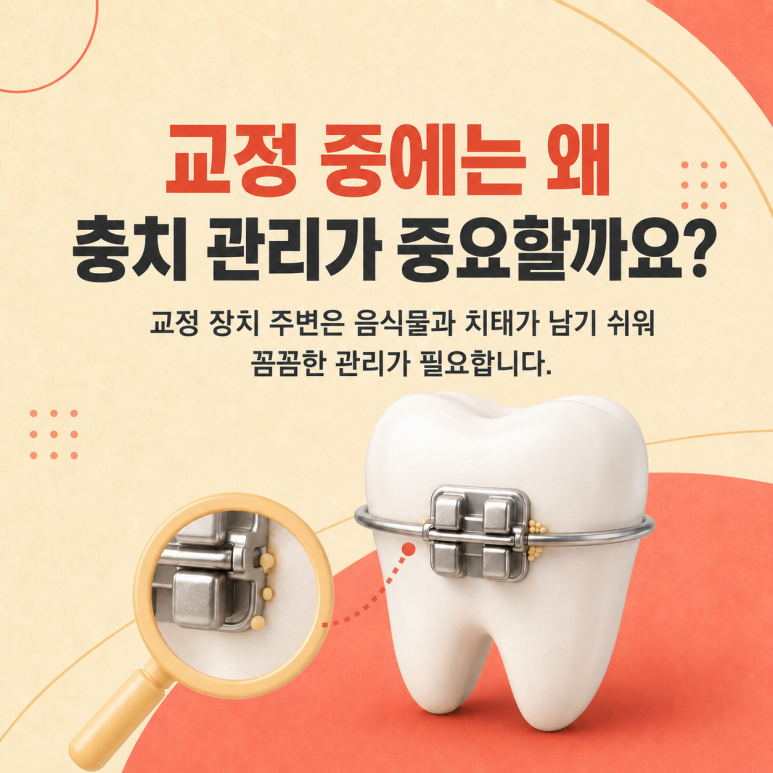
Why is cavity prevention important during orthodontic treatment?
In general, tooth surfaces are relatively smooth, so brushing makes it fairly easy to remove food particles and plaque. However, when fixed orthodontic appliances are attached, each tooth has a bracket, with wires and elastic bands running over them.
This creates various curves and narrow spaces on the tooth surfaces, making it easier for food to remain in areas such as the following:
-
Above and below the brackets
-
The boundaries where the brackets meet the teeth
-
Beneath the wires
-
Between the teeth
-
Around the orthodontic bands on the molars
-
The boundaries where the gums meet the teeth
Even when the area around a bracket appears clean, a thin layer of plaque may remain along the edges. If this condition continues, bacteria in the mouth can break down sugars in food and produce acids. These acids may cause minerals to leach from the tooth surface.
Therefore, during orthodontic treatment, it is necessary not only to remove food particles but also to carefully remove plaque attached to the tooth surfaces.
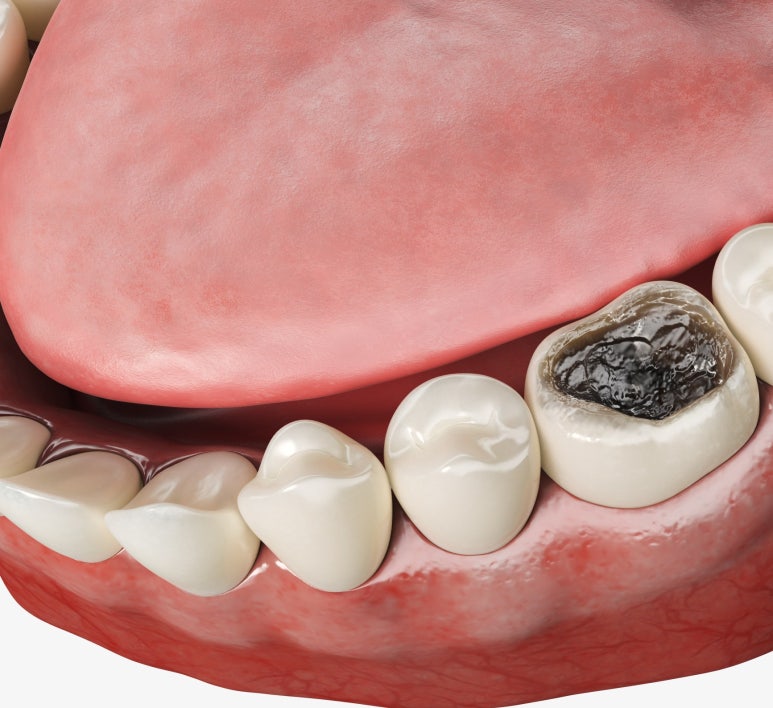
Why are cavities more likely to develop around orthodontic appliances?
1. There are more areas that are difficult for a toothbrush to reach
Before orthodontic treatment, you can brush a relatively wide area of the front of each tooth. However, once brackets are attached, the movement of the toothbrush bristles becomes limited.
If you only brush the outer surfaces of the brackets, plaque may remain along the upper and lower edges and beneath the wires.
In particular, if you brush only horizontally against the tooth surface, the areas around the brackets and along the gumline may not be cleaned properly.
2. Food becomes easily trapped in the appliances
Foods that tend to stick, such as meat or vegetable fibers, bread, snacks, and rice cakes, may remain between the wires or brackets. Leaving food trapped in the appliances for a long time can create an environment where bacteria multiply easily.
Even when food particles are not visible, plaque may still be present. Therefore, rather than relying only on rinsing with water, it is better to brush your teeth after meals.
3. Sugary foods and beverages are consumed frequently
Cavity development can be affected not only by the amount consumed but also by how often it is consumed. Frequently sipping small amounts of candy, chocolate, snacks, soft drinks, sweet coffee, or juice repeatedly exposes the teeth to an acidic environment.
In particular, the habit of slowly drinking sugary beverages over an extended period may increase the risk of cavities around orthodontic appliances, so caution is needed.
4. Brushing is delayed after meals
It is often difficult to brush immediately after eating because of being out, attending school, or working. However, food can easily become trapped in orthodontic appliances, and leaving it there for a long time may cause bad breath or plaque buildup.
If you cannot brush right away, rinse your mouth thoroughly with water first, then brush and clean between your teeth when possible.
5. Swollen or bleeding gums may lead you to avoid brushing
Plaque buildup during orthodontic treatment can cause the gums to swell or bleed during brushing. If you avoid brushing the area because it is bleeding, more plaque can accumulate and worsen the gum condition, creating a vicious cycle.
Unless there is severe pain or bleeding, use a soft toothbrush to carefully clean the boundaries between the gums and teeth. If bleeding or swelling continues or becomes worse, it is advisable to have the cause checked by a dentist.
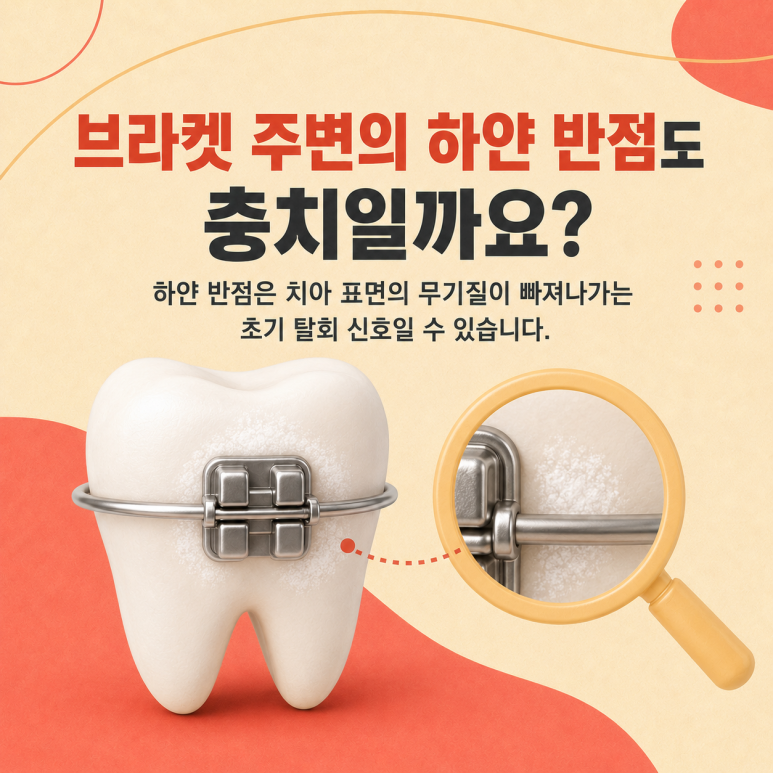
Are white spots around the brackets also cavities?
Opaque white spots may sometimes appear around orthodontic appliances. These are commonly called “white spots” and may indicate early demineralization, in which minerals have been lost from the tooth surface.
Unlike ordinary staining, white spots may not disappear easily through brushing alone. If left unmanaged, the tooth surface may weaken and could potentially progress to a cavity, so early evaluation is important.
If you notice any of the following changes, tell your dental professional during your orthodontic appointment:
-
The area around a bracket has become white and opaque
-
The tooth surface feels rough
-
Some areas have turned brown or black
-
Your teeth feel sensitive when eating cold or sweet foods
-
Food repeatedly becomes trapped in a particular area
Not every white spot indicates a cavity, so rather than judging by appearance alone, it is advisable to receive an accurate examination.
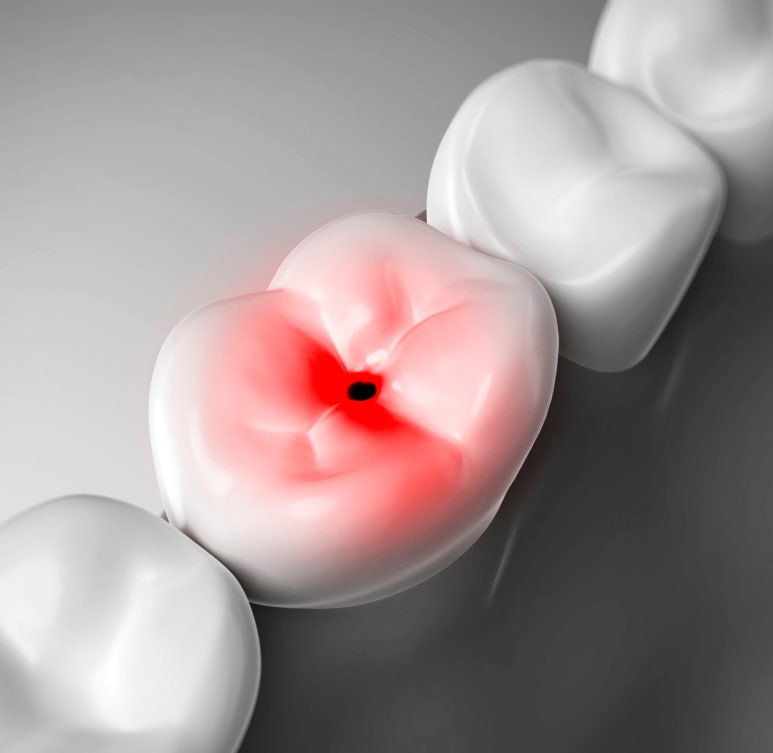
The proper way to brush to prevent cavities during orthodontic treatment
1. Brush above and below the brackets separately
During orthodontic treatment, it is important not only to brush the front of the brackets but also to clean the areas above and below them separately.
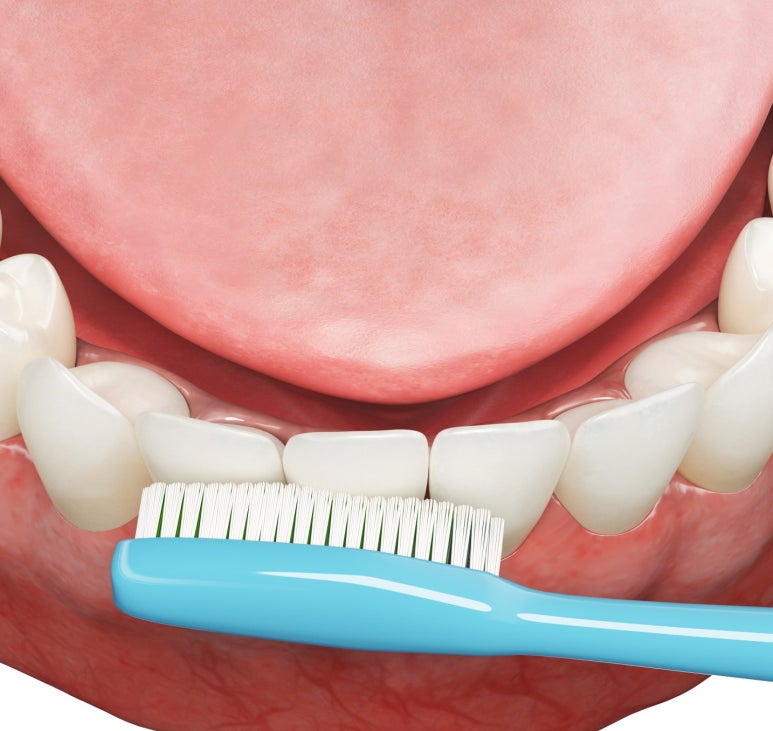
First, angle the toothbrush bristles toward the area above the brackets and move them in small motions. Then tilt the bristles in the opposite direction to brush below the brackets. Finally, brush the outer surfaces of the brackets, the chewing surfaces, and the inner surfaces of the teeth without missing any areas.
Rather than scrubbing forcefully, brush gently and thoroughly while checking that the bristles are properly reaching around the appliances and along the gumline.
2. Do not overlook the areas where the gums meet the teeth
When focusing only on the orthodontic appliances, it is easy to miss the gumline. However, plaque can easily accumulate where the teeth and gums meet, potentially causing not only cavities but also swollen and bleeding gums.
Angle the toothbrush bristles approximately 45 degrees toward the gumline and brush using short, gentle movements. The American Dental Association also recommends brushing twice a day for two minutes with fluoride toothpaste as a basic oral care method. It is advisable to follow the frequency and technique recommended by your dental professional based on your individual appliances and oral condition.
3. Use an orthodontic toothbrush and an interdental brush together
It may be difficult to clean completely beneath the wires and along the sides of the brackets with a regular toothbrush alone. In such cases, using an orthodontic toothbrush or a small interdental brush can be helpful.
An interdental brush is gently inserted between the wire and the teeth to remove food particles and plaque. Using a product that is too large or forcing it into place and moving it vigorously may damage the gums or place stress on the appliances, so it is advisable to receive guidance on the appropriate size and technique for you.
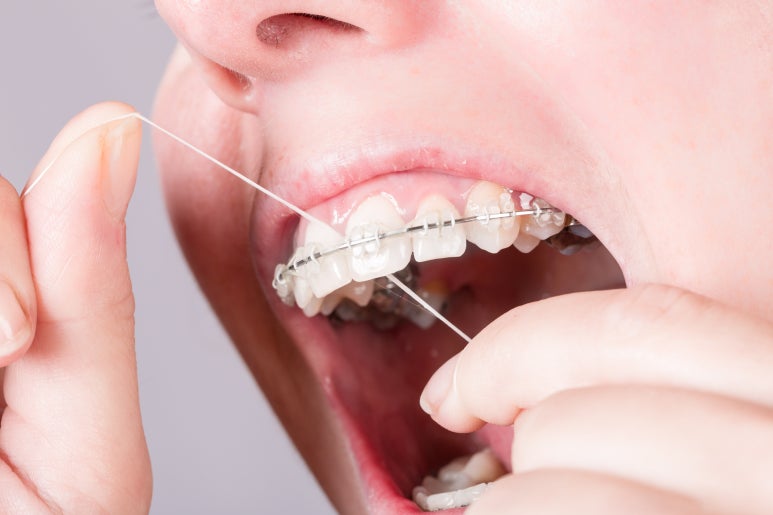
4. Try using dental floss or orthodontic floss as well
Toothbrush bristles may not be able to reach completely into the narrow spaces between the teeth. Using dental floss, orthodontic floss, or a floss threader can therefore help remove plaque between the teeth.
If flossing is difficult, an interdental brush or oral irrigator may be used as an aid. However, although an oral irrigator may help remove food particles, it does not completely replace brushing, so it is best used together with brushing.
5. Use fluoride toothpaste
Fluoride helps support remineralization of the tooth surface and may help prevent cavities. Because cleaning around appliances becomes more difficult during orthodontic treatment, it is advisable to use fluoride toothpaste.
However, whether additional products such as high-fluoride toothpaste or fluoride mouthwash are necessary may vary depending on age, cavity risk, and current oral condition. Rather than using several products on your own, it is safer to choose them with guidance from a dental professional.
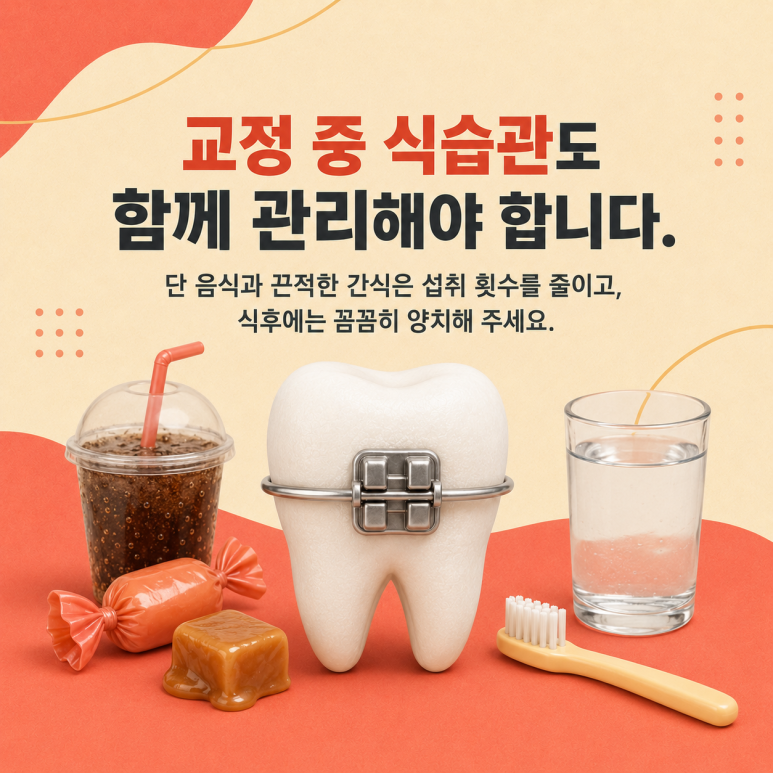
Your eating habits also need attention.
Even with thorough brushing, frequently consuming sugary foods throughout the day may increase the risk of cavities. During orthodontic treatment, what you eat and how you eat it are both important.
-
Foods and habits that are best reduced
-
Holding candy or gummy candy in your mouth for a long time
-
Foods that stick to appliances, such as caramel or taffy
-
Frequently sipping small amounts of soft drinks or sweet coffee
-
Eating snacks and bread in several separate portions
-
Going to sleep without brushing after having a late-night snack
-
Biting into ice or hard foods
Sticky and sugary foods tend to remain around the brackets for a long time, while hard foods may dislodge the appliances or bend the wires. This does not necessarily mean you must never eat them; it is important to reduce how often you consume them and clean your mouth afterward.
When possible, choose water as your beverage, and if you drink a sugary beverage, avoid holding it in your mouth for a long time. Because the tooth surface may temporarily weaken immediately after drinking an acidic beverage, a dental professional can advise you to rinse with water first and brush after an appropriate interval.
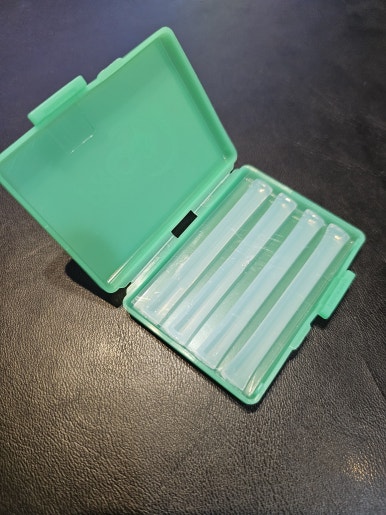
Prepare orthodontic care supplies when going out
It may be difficult to brush as thoroughly at school or work as you can at home. Preparing the following items in a small pouch can make it easier to care for your teeth while you are out:
If it is difficult to brush immediately after a meal, rinse your mouth several times with water to remove larger food particles first. Then, when you are in an environment where you can brush, clean carefully around the brackets and wires again.
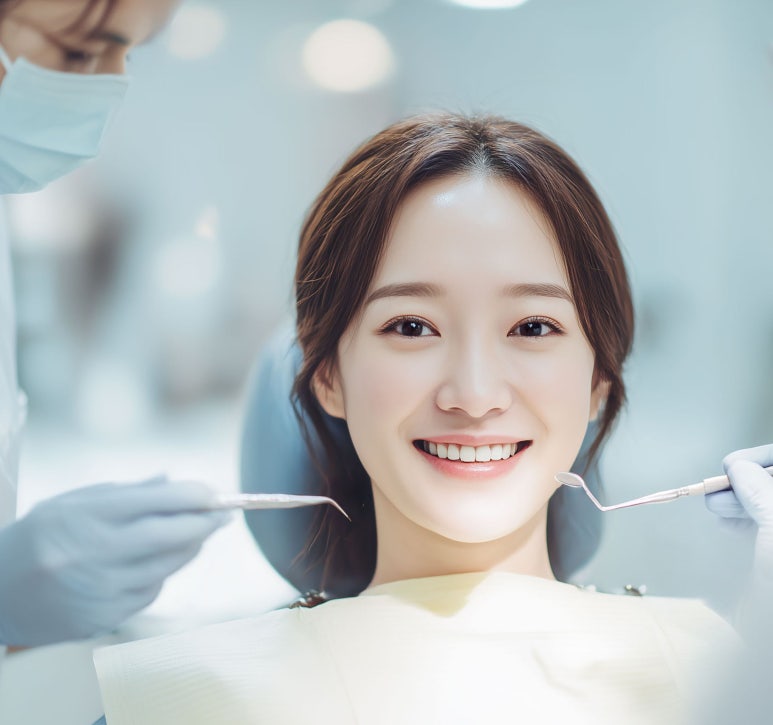
Regular examinations and professional cleaning are also important.
During orthodontic treatment, it is important to check not only the adjustment of the appliances but also the condition of the teeth and gums. Early cavities may cause little to no pain, making them difficult to detect on your own.
Regular examinations can check the following:
-
Areas with significant plaque buildup around the brackets
-
Areas suspected of early demineralization or cavities
-
Swelling and bleeding of the gums
-
Areas where tartar has accumulated
-
Whether an appliance has come loose or a gap has developed at an attachment site
-
Areas that are not being cleaned well with your current brushing method
When necessary, preventive care such as professional cleaning or fluoride application may be provided. The interval between examinations and care is not the same for every patient and may vary depending on cavity risk, gum condition, and the level of hygiene management.
Key habits for preventing cavities during orthodontic treatment
To prevent cavities around orthodontic appliances, it is important to consistently practice basic care rather than relying on particularly complicated methods.
-
Brush carefully with fluoride toothpaste
-
Brush above and below the brackets and along the gumline separately
-
Clean beneath the wires and between the teeth with an interdental brush or dental floss
-
Avoid frequent consumption of sugary foods and beverages
-
If it is difficult to brush immediately after eating, rinse thoroughly with water
-
Check for early changes through regular examinations
-
Receive guidance on areas that are difficult for you to clean and on proper brushing techniques
-
Thorough oral care for healthy orthodontic results
Konkuk Orthodontic Dental Clinic, S Leader Dental Hospital
Thorough oral care for healthy orthodontic results
Having orthodontic appliances attached does not necessarily mean that cavities will develop. However, because plaque and food particles can remain around the appliances more easily, more careful management is needed than before orthodontic treatment.
Thoroughly cleaning around the brackets and wires every day and using interdental care products as well may help reduce the risk of cavities and gum disease. In addition, if you notice changes such as discoloration of the tooth surface, sensitivity, pain, or gum bleeding, it is advisable not to leave them unattended based on your own judgment.
At S Leader Dental Hospital, a Konkuk orthodontic dental clinic, we carefully check not only orthodontic appliance adjustments but also oral hygiene problems, cavities, and gum conditions that may arise during treatment. If brushing is difficult during orthodontic treatment or you cannot clean well around the appliances, consider receiving guidance on care methods suited to your current oral condition.
Small care habits can play an important role in protecting the health of your teeth and achieving satisfying results after orthodontic treatment is complete.

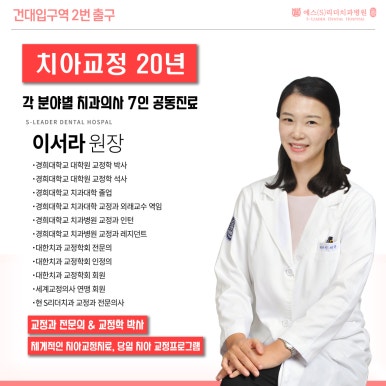



Konkuk Orthodontic Dental Clinic :: S Leader Dental Hospital