Hello, this is S-Leader Dental Hospital, a Guui-dong dental implant clinic celebrating its 22nd anniversary since establishment this year.
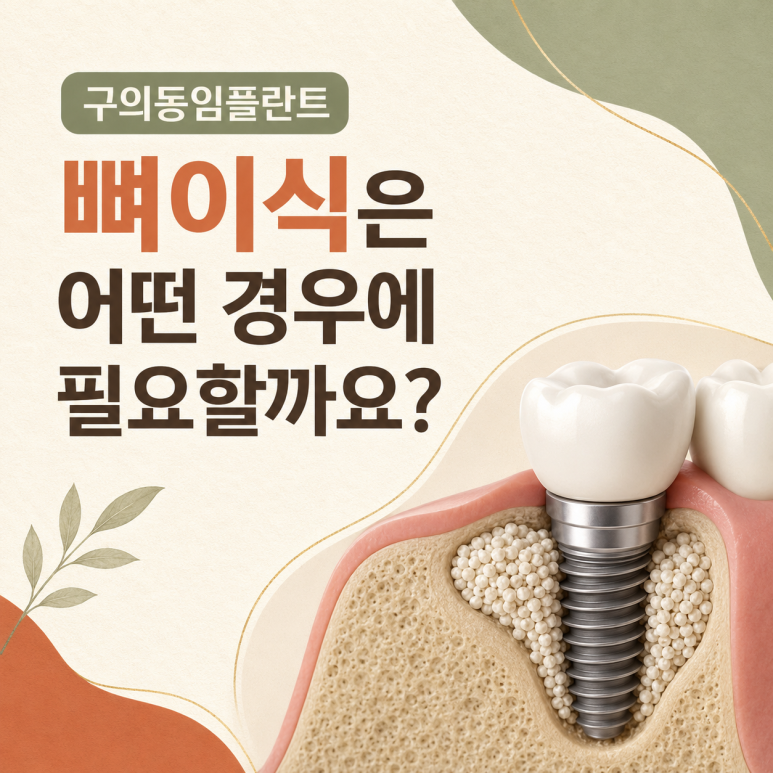
When receiving a dental implant consultation, some people are told, “Your jawbone is insufficient, so bone grafting is necessary.” You may have thought that an implant could simply be placed where the missing tooth was, so hearing about bone grafting can make you worry that the treatment has become more complicated.
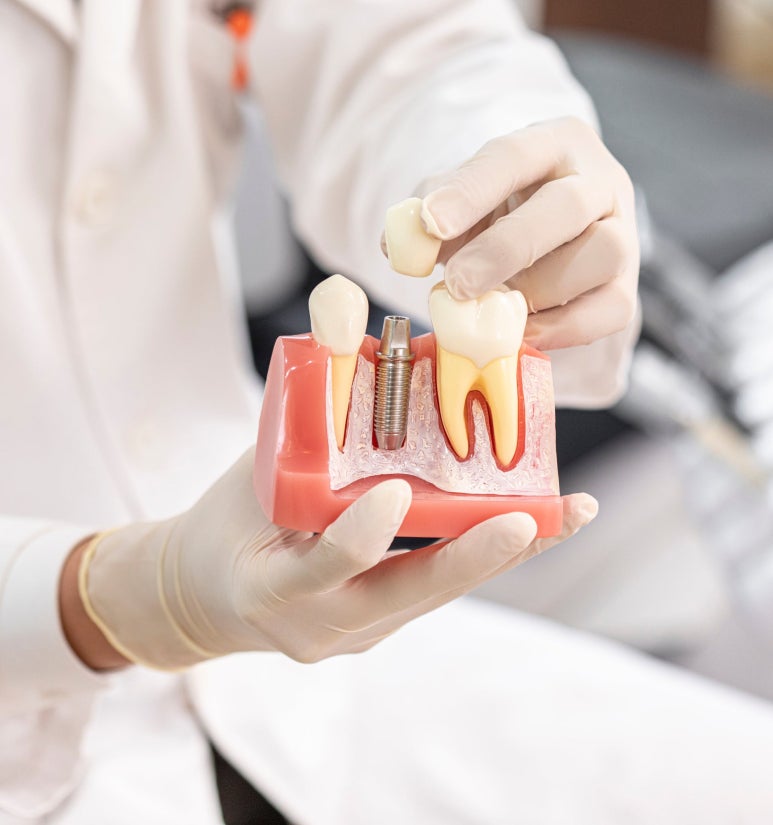
Dental implants are not fixed only to the gums; they are placed in the alveolar bone, or jawbone, beneath the gums. Therefore, an appropriate height and width of bone are needed at the implant site for the implant to become stably positioned.
However, the jawbone may be insufficient depending on how long the tooth has been missing, gum disease, existing inflammation, and anatomical structures.
In such cases, implant bone grafting is the treatment used to supplement the deficient area so that the implant can be placed in a stable position and direction.
So, in what specific situations is bone grafting needed?
Today, S-Leader Dental Hospital, a Guui-dong dental implant clinic, will explain in detail the main situations in which bone grafting is needed, the examination methods, and the treatment process.
What Is Implant Bone Grafting?
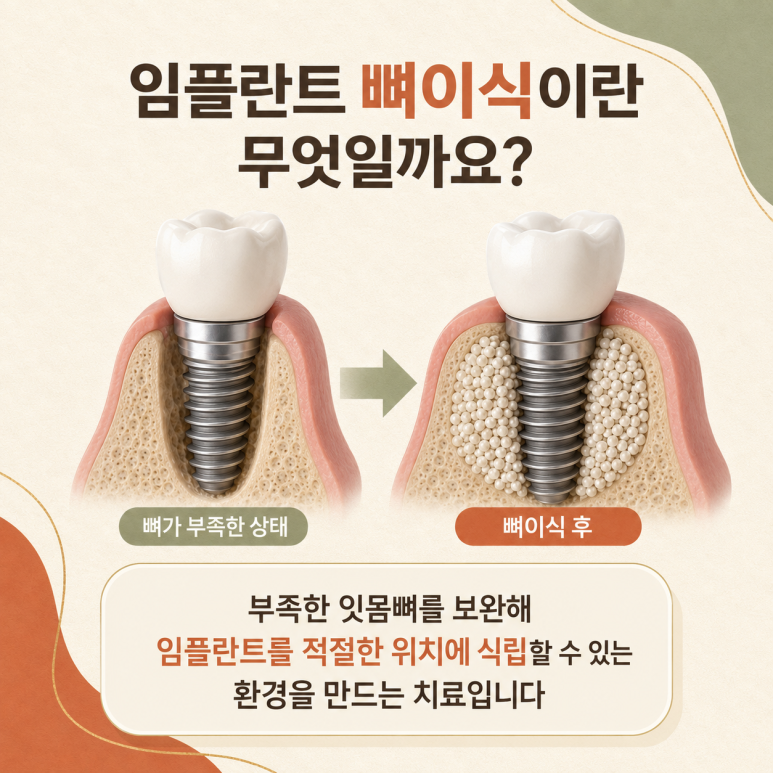
Implant bone grafting is a treatment that fills the area with bone graft material when there is insufficient jawbone at the site where the implant will be placed, supplementing the bone’s width or height.
If an implant is placed forcefully when there is not enough bone, part of the implant may become exposed outside the bone, or it may be difficult to secure an appropriate position and angle. In areas where appearance is important, such as the front teeth, this may also affect the gum line or the shape of the prosthesis.
Therefore, it is necessary to consider the following factors comprehensively rather than simply determining whether an implant can be placed:
-
Whether there is enough jawbone to surround the implant
-
Whether the implant can be placed in a position capable of withstanding chewing forces
-
The locations of the surrounding teeth, nerves, and maxillary sinus
-
Whether sufficient space and direction can be secured for the prosthesis to be placed naturally
Bone grafting is not simply a treatment to increase the amount of bone. It is a process that provides the foundation for placing the implant in an appropriate functional and aesthetic position.
When Is Implant Bone Grafting Needed?
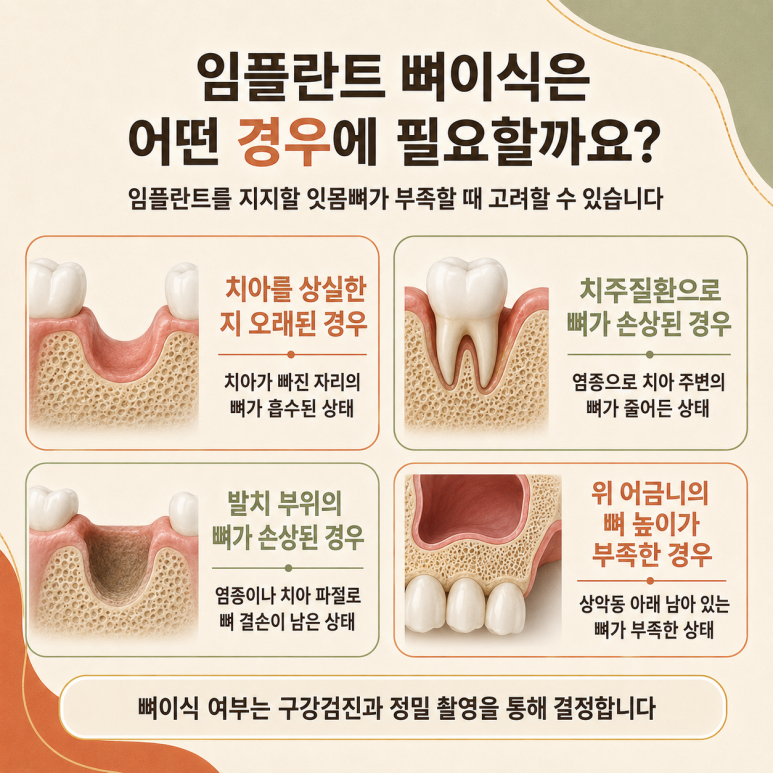
1. When the Tooth Has Been Missing for a Long Time
When a tooth is lost, the jawbone in that area no longer receives stimulation from the tooth root. Over time, the unused bone may gradually be resorbed, causing the height and width of the jawbone to decrease.
In particular, if a tooth has been missing for a long time, the bone inside may have become considerably thinner even if the gums appear to have healed well from the outside.
In these cases, there may appear to be enough space for an implant, but there may not be enough bone to adequately surround it, so bone grafting may also need to be considered.
A long period since tooth loss does not necessarily mean that a large amount of bone grafting is required. Since the degree of bone resorption varies from person to person, the remaining bone’s width and height must be checked with a CT scan.
2. When the Jawbone Has Been Damaged by Periodontal Disease
Periodontal disease is a condition in which inflammation develops in the gums and jawbone around the teeth. If inflammation continues for a long time, the jawbone that supports the teeth may be damaged, and the teeth may become loose and eventually require extraction.
When a tooth is extracted because of severe periodontal disease, the jawbone at the extraction site may already have significantly decreased, or its shape may be irregular. In this condition, the inflamed tissue can first be thoroughly removed, followed by bone grafting according to the extent of the bone defect.
However, it is not advisable to rush into bone grafting or implant placement while inflammation remains.
The periodontal condition and presence of infection should first be checked, and the timing and method of surgery should be determined after any necessary periodontal treatment.
3. When the Bone at the Extraction Site Has Been Severely Damaged
When decay is severe, inflammation develops at the tooth root, or the tooth is fractured, the jawbone surrounding the tooth may also be damaged.
In particular, if there was extensive inflammation at the root tip or repeated pus formation around the tooth, an empty space or defect may remain in the bone after extraction. Thin bone may also be damaged during the extraction process.
In such cases, after removing inflamed tissue from the extraction site, the following methods may be considered depending on the condition:
-
Performing bone grafting at the same time as extraction
-
Allowing the extraction site to heal sufficiently before performing bone grafting
-
Performing extraction, implant placement, and bone grafting at the same time
4. When the Natural Jawbone Is Narrow or Thin
Even when the tooth has not been missing for a long time, some people naturally have thin jawbone. The outer bone in the front-tooth area is relatively thin in particular, so it may be rapidly resorbed after tooth extraction.
It is important to place an implant where the prosthesis can be positioned naturally. However, when the bone is thin, it may be difficult to place the implant in the desired position, so horizontal ridge augmentation to supplement the outer bone may be necessary.
In the front-tooth area, not only the implant’s stability but also the shape of the gums and the appearance of the prosthesis must be considered. Therefore, the condition of the bone and gums needs to be examined more carefully.
5. When There Is Insufficient Bone Height in the Upper Molar Area
There is an empty space called the maxillary sinus above the upper molars. After an upper molar is extracted, the jawbone may be resorbed over time, or the maxillary sinus may expand downward, leaving insufficient bone height for implant placement.
In such cases, a sinus lift may be considered. This involves carefully lifting the thin membrane of the maxillary sinus and filling the area beneath it with bone graft material.
The approach varies depending on the amount of remaining bone and the shape of the maxillary sinus. In some cases, the implant may be placed at the same time, while in others, placement is performed after waiting for bone to form. The American Academy of Periodontology also explains that, depending on the patient’s condition, maxillary sinus bone grafting and implant placement may be performed simultaneously or after a certain healing period.
6. When the Jawbone Has Been Damaged by an Accident or Trauma
When a tooth is lost in an accident, such as a fall or impact, not only the tooth but also the jawbone surrounding it may be damaged.
If the bone has fractured or collapsed because of trauma, it may be difficult to restore the proper position and shape through standard implant placement alone. In such cases, bone grafting or staged reconstructive treatment may be planned after examining the extent of the bone damage and the condition of the surrounding tissues.
Can Bone Grafting Be Performed at the Same Time as Implant Placement?
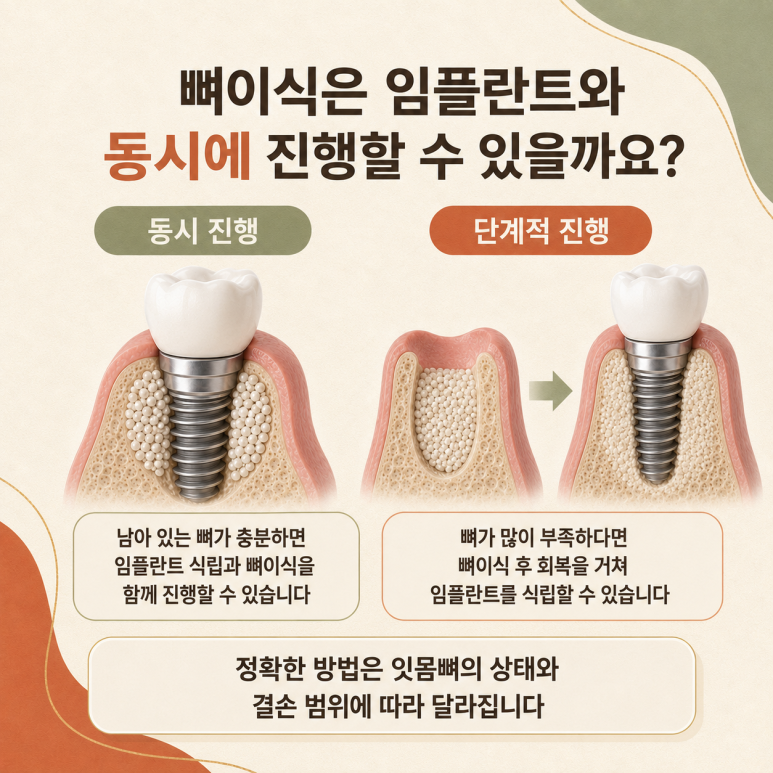
If the remaining bone is sufficient to provide initial fixation for the implant and the defect is not extensive, implant placement and bone grafting can be performed at the same time.
On the other hand, in the following cases, staged treatment may be necessary: bone grafting is performed first, and the implant is placed after bone has formed.
-
When the width or height of the jawbone is significantly insufficient
-
When it is difficult to stabilize the implant securely
-
When the extent of inflammation or infection is extensive
-
When there is a large bone defect after removal of an existing implant
-
When there is insufficient remaining bone in the maxillary sinus area
-
When there is a complex bone defect in both the vertical and horizontal directions
In general, vertical bone augmentation tends to have a higher level of treatment difficulty and a greater risk of complications than horizontal bone augmentation. Therefore, careful treatment planning suited to the shape of the defect is important.

What Types of Bone Graft Materials Are Used for Dental Implants?
Bone grafting may use various materials, including autogenous bone taken from the patient, allografts, xenografts, and synthetic bone.
Each material differs in how bone forms, the rate at which it is resorbed, and the volume it maintains. When necessary, two or more materials may be mixed, or a barrier membrane may be used to prevent the bone graft material from moving.
It is difficult to say that one material is always the best. The appropriate material and method should be selected by considering the size and location of the bone defect, the condition of the surrounding bone, the surgical method, and any systemic diseases.
How Can It Be Determined Whether Bone Grafting Is Needed?
It is difficult to accurately determine the condition of the internal bone based only on the outward appearance of the gums. Therefore, an oral examination and radiographic imaging are performed, along with three-dimensional CT imaging when necessary.
The following factors are assessed comprehensively during the examination:
-
The height and width of the jawbone
-
The location and shape of the bone deficiency
-
The presence of gum inflammation and infection
-
The location and shape of the maxillary sinus
-
The location of the nerve canal in the lower jaw
-
The condition of the surrounding teeth and tooth roots
-
The position and angle for implant placement
-
The position where the final prosthesis will be placed
-
Systemic diseases such as diabetes and osteoporosis, as well as medications being taken
-
Smoking status and oral hygiene
In particular, if you are taking certain medications, such as osteoporosis treatments or anticancer drugs, do not stop taking them on your own. Be sure to tell the medical team the type of medication and how long you have been taking it.
How Should You Care for the Area After Bone Grafting?
Follow the postoperative instructions so that the bone graft site can heal stably.
-
Take prescribed medications as directed by the medical team.
-
Do not frequently touch the surgical site with your hands or tongue.
-
Immediately after surgery, avoid hot, hard, and irritating foods.
-
Eat gently on the opposite side from the surgical site.
-
Do not rinse your mouth excessively or spit forcefully.
-
Avoid alcohol and smoking, as they may interfere with healing.
-
Continue maintaining the hygiene of the teeth away from the surgical site.
-
Visit the clinic on the scheduled date to have the wound and bone graft site checked.
If pain and swelling do not decrease after a certain period or instead become worse, if bleeding does not stop, or if pus or a strong odor develops, contact the dental clinic where you had surgery promptly.
Implant Treatment at S-Leader Dental Hospital, a Guui-dong Dental Implant Clinic, Beginning with Precise Diagnosis
Implant bone grafting is a treatment that supplements insufficient jawbone so that the implant can be placed in an appropriate position. It may be needed when a tooth has been missing for a long time, when bone has been damaged by periodontal disease or inflammation, or when there is insufficient bone in the upper molar area.
However, even when implants are placed in the same area, the amount of remaining bone, the shape of the defect, the locations of the maxillary sinus and nerves, and the patient’s overall health differ from person to person. Therefore, whether bone grafting is needed and whether it can be performed at the same time as implant placement must be determined individually after a precise examination.
At S-Leader Dental Hospital, a Guui-dong dental implant clinic, we carefully examine the jawbone and surrounding anatomical structures based on the necessary examinations, including oral examinations and three-dimensional CT scans, and provide an implant treatment plan suited to each patient’s oral condition.
If you are worried about implant treatment after being told that you have insufficient bone, or if you have questions about whether bone grafting is needed and how the treatment proceeds, do not worry about it alone. We recommend receiving a thorough examination and consultation at S-Leader Dental Hospital.



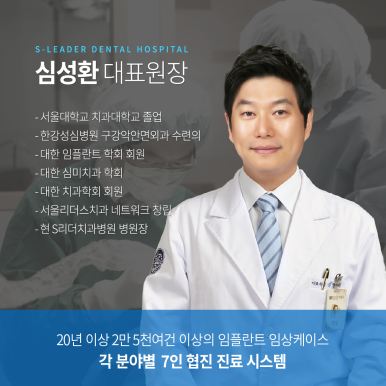
Guui-dong Dental Implants :: S-Leader Dental Hospital