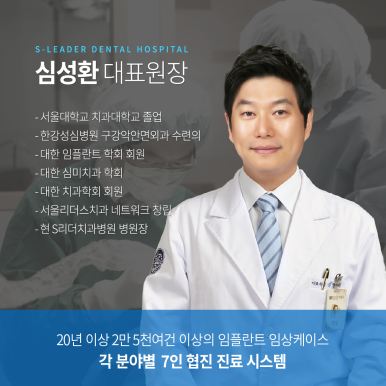
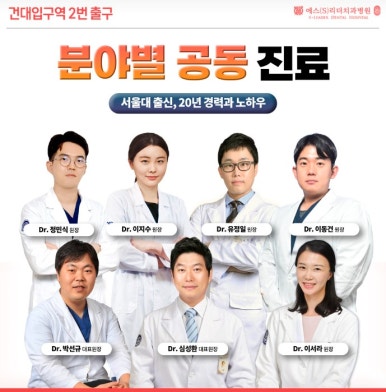
Hello, this is S-Leader Dental Hospital, a Hwanyang-dong dental clinic celebrating its 22nd anniversary this year.
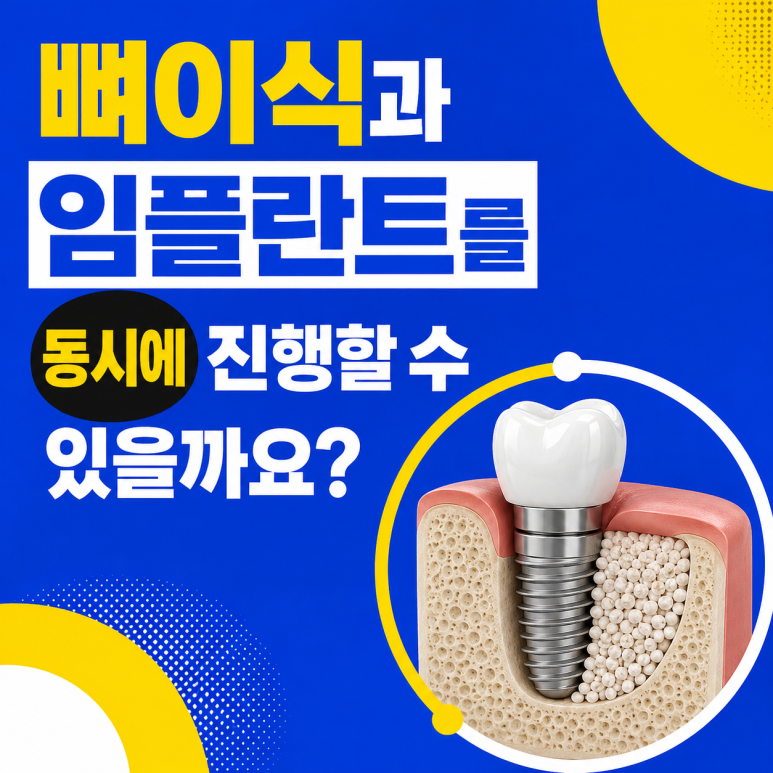
If you are told during an implant consultation that you do not have enough jawbone, you may become concerned about the length of treatment.
“Do I need to have bone grafting first and wait?”
“Can the implant and bone grafting be performed at the same time?”
“Could having them done simultaneously cause problems with the treatment outcome?”
To give you the conclusion first, bone grafting and implant placement may be performed simultaneously depending on the condition of the jawbone and the extent of the bone defect. However, this is not possible for every patient.
If enough remaining jawbone is present to stabilize the implant, simultaneous treatment may be considered. However, if the amount of bone loss is extensive or inflammation is severe, staged treatment may be necessary: bone grafting is performed first, followed by a healing period and then implant placement.
Today, S-Leader Dental Hospital, a Hwanyang-dong dental clinic, will explain in detail the conditions under which bone grafting and implant placement can be performed simultaneously, situations requiring bone grafting first, the treatment process, and precautions.
What Is Bone Grafting for Implants?
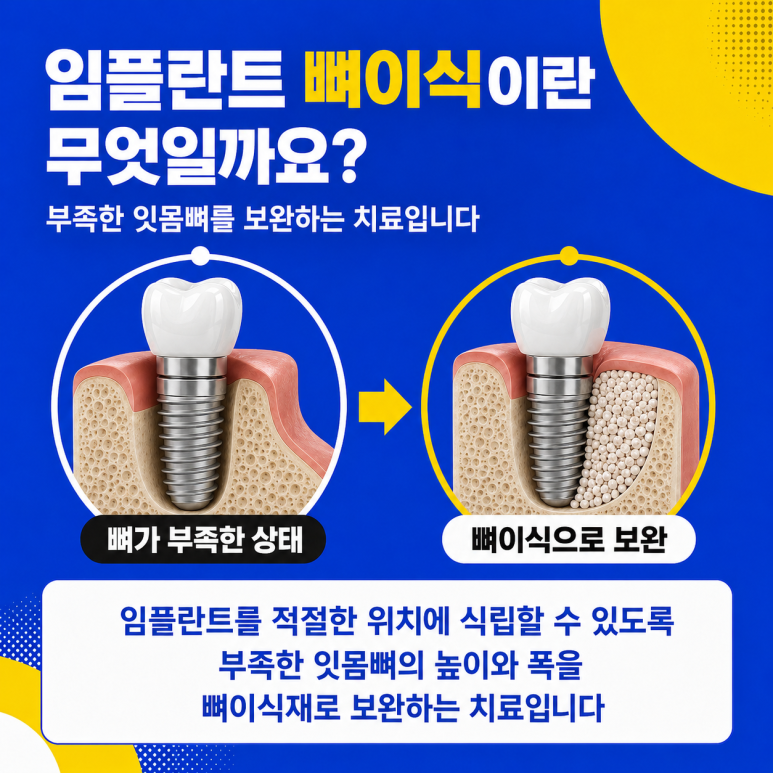
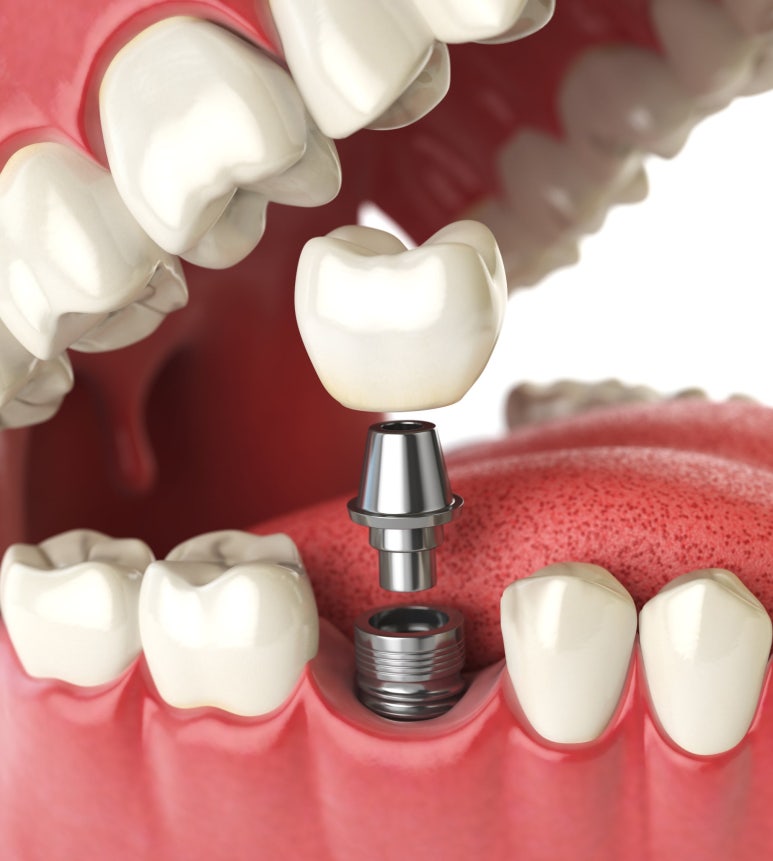
Implants are not fixed only in the gums; they are placed in the alveolar bone inside the gums, also called the jawbone.
Therefore, for an implant to be positioned properly, the jawbone surrounding it must have sufficient height and width.
However, the jawbone may become insufficient for the following reasons:
-
Having gone a long time after losing a tooth
-
Damage to the jawbone caused by periodontal disease
-
Inflammation around the root of a tooth
-
Damage to the surrounding bone caused by a fractured tooth
-
Damage to the jawbone caused by an accident or trauma
-
Bone loss occurring around an existing implant
-
Insufficient bone beneath the maxillary sinus in the molar area
-
A congenitally narrow or thin jawbone
Implant bone grafting is a treatment that fills these areas with bone graft material to supplement insufficient bone height or width.
The purpose of bone grafting is not simply to increase the amount of bone. It is a process that creates an environment in which the implant can be placed in an appropriate functional and aesthetic position and the surrounding tissues can remain stable.
What Does It Mean to Perform Bone Grafting and Implant Placement Simultaneously?
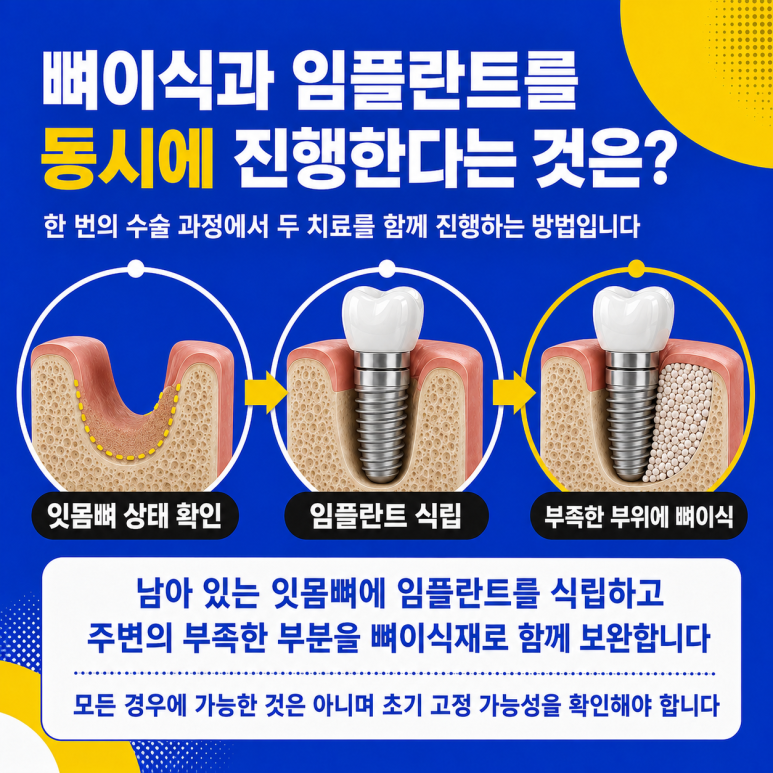
Simultaneous treatment involves placing the implant in the jawbone during a single surgical procedure and filling deficient areas around the implant with bone graft material.
When necessary, a membrane is placed over the area to prevent the graft material from moving, and the gums are sutured. The area is then allowed to heal while the implant integrates with the existing jawbone.
Information from the American Association of Oral and Maxillofacial Surgeons also describes situations in which tooth extraction and implant placement are performed together, with bone grafting carried out in the gap between the extraction site and the implant, or in which an implant is placed in already healed jawbone while the surrounding bone is reinforced.
However, the placement of bone graft material does not immediately create hard, mature jawbone. The graft material serves as a space and support structure necessary for new bone formation, and sufficient healing time is required.
The key factor in deciding whether to proceed simultaneously is “initial stability.”
One of the important criteria when determining whether bone grafting and implant placement can be performed simultaneously is the implant’s initial stability.
Initial stability refers to how securely the implant is fixed in the patient’s remaining natural jawbone immediately after placement.
Even if bone graft material is placed around the implant, the existing hard bone must hold the implant securely at the time of placement. If too little bone remains and the implant may become loose or move, bone grafting first may be more appropriate than simultaneous treatment.
Therefore, the decision should not be based solely on the fact that the jawbone is insufficient. The following factors must be assessed comprehensively:
-
How much existing jawbone remains to secure the implant
-
The location and extent of the bone deficiency
-
Whether only part of the implant will be exposed outside the bone
-
Whether the implant can be placed in the desired position and at the desired angle
-
Whether inflammation or infection remains
-
The condition of the surrounding gums and teeth
When Bone Grafting and Implant Placement Can Be Performed Simultaneously
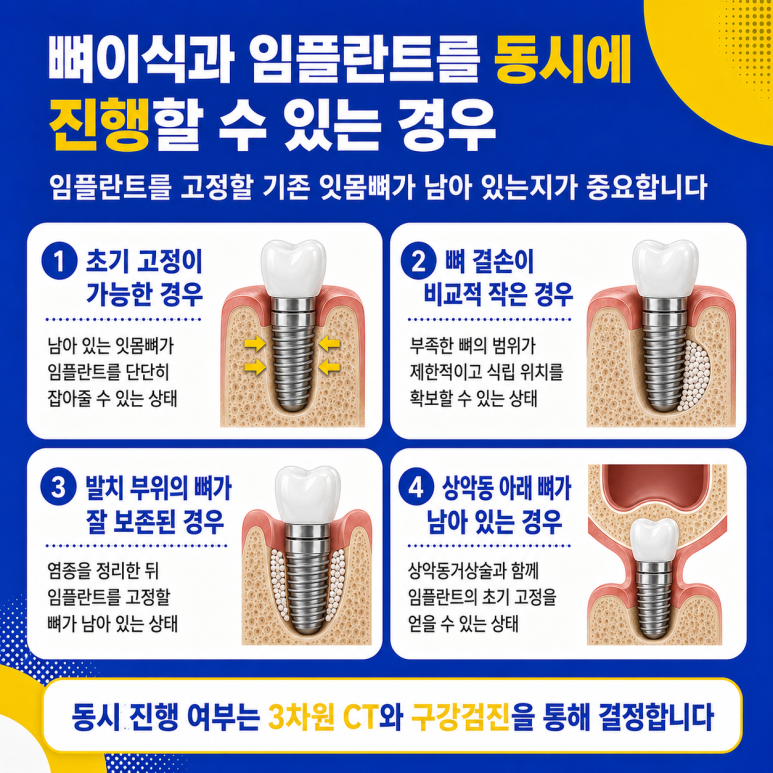
- When the remaining jawbone can secure the implant
Even if part of the jawbone is deficient, simultaneous treatment may be considered if enough height and width remain to firmly secure the implant.
For example, if most of the implant can be placed within the existing bone but some of the thin bone on the outer side is deficient, the area can be supplemented by filling it with bone graft material around the implant after placement.
- When the extent of the bone defect is relatively limited
If the area of bone deficiency is limited and an appropriate position for implant placement can be secured, the implant and bone grafting may be performed together in a single surgery.
On the other hand, if there is substantial bone loss in the horizontal or vertical direction, a staged approach may be necessary: first creating the required bone shape, allowing it to heal, and then placing the implant.
- When the implant can be placed immediately at the extraction site
Bone grafting may also be performed together with immediate implant placement, in which an implant is placed directly into the site where a tooth has been extracted.
If the implant is narrower than the tooth root, a gap may remain between the extraction site and the implant. Bone graft material is placed in this space to support the healing of the surrounding tissues.
However, the following conditions must be checked:
Whether the bone at the extraction site is relatively well preserved
Whether enough bone remains to secure the implant
Whether inflammation and infection can be sufficiently removed
Whether the shape and thickness of the gums are appropriate
Whether the implant can be placed in the planned position
Immediate implant placement is not possible at every extraction site, so a detailed examination is necessary.
- When a certain amount of bone height remains in the upper molar area
There is an empty space called the maxillary sinus above the upper molars. If the remaining jawbone is not high enough, a sinus lift may be necessary. This procedure raises the thin membrane of the maxillary sinus and fills the space with bone graft material.
If the remaining bone is sufficient to secure the implant, the sinus lift and implant placement may be performed simultaneously.
- When overall health and oral hygiene are well managed
The patient’s general health and oral hygiene are also important for the bone grafted area to heal.
Uncontrolled diabetes, heavy smoking, severe gum disease, or significant oral hygiene problems may affect wound healing. In such cases, the patient’s general health and oral environment may need to be improved first, after which the timing and method of surgery can be determined.

When Is Bone Grafting Needed First?
- When jawbone height and width are significantly insufficient
If there is not enough bone to secure the implant, bone grafting may be performed first.
If the bone is extremely narrow or has undergone substantial vertical resorption, it may be difficult to secure the proper position and angle if the implant is placed forcefully, and the implant may become exposed outside the bone.
It may be more appropriate to supplement the shape and volume of the bone first, allow it to heal, and then place the implant.
- When it is difficult to achieve initial implant stability
Even if an implant is placed, it may move slightly during healing if the existing jawbone cannot hold it securely enough.
If it is determined that initial stability will be difficult to achieve, bone grafting may be performed first, followed by implant placement after confirming that new bone has formed.
- When the area of inflammation or infection is extensive
If there is pus around a tooth scheduled for extraction or the bone has been severely damaged by inflammation at the root tip, the infected tissue must be thoroughly removed.
Depending on the condition, bone grafting may be performed while removing the inflammation. However, if the infection is extensive or the surrounding tissues are in poor condition, extraction and treatment of the inflammation may be performed first. Bone grafting or implant placement can then be planned after the healing status is evaluated.
- When a large bone defect remains after removal of an existing implant
If an existing implant is removed due to peri-implantitis or failure of osseointegration, a large bone defect may remain around it.
Whether a new implant can be placed immediately depends on the remaining bone and the condition of the inflammation. If there is not enough bone to secure the implant, the existing implant may be removed, bone grafting performed, and reimplantation carried out after a sufficient healing period.
- When there is very little bone beneath the maxillary sinus
If very little bone remains beneath the maxillary sinus in the upper molar area, it may be difficult to secure the implant stably.
In this situation, staged treatment may be considered: first performing a sinus lift and bone grafting, then placing the implant once the grafted area has healed and can support it.
What Is the Difference Between Simultaneous and Staged Treatment?
| Category | Simultaneous treatment | Staged treatment |
|---|
| Treatment sequence | Bone grafting and implant placement are performed together in one procedure | Implant placement is performed after bone grafting and a healing period |
| Applicable conditions | When enough existing bone remains to secure the implant | When insufficient existing bone makes initial stabilization difficult |
| Number of surgeries | May be relatively reduced | Treatment may be divided into several stages |
| Overall duration | May be shortened depending on the situation | May be longer because healing of the bone must be awaited |
| Main purpose | To place the implant and reinforce the surrounding bone at the same time | To secure the shape and volume of bone needed for the implant first |
Simultaneous treatment is not always the better option. Rather than placing the implant at the same time by force simply to shorten the treatment period, staged treatment may be necessary when the bone condition is poor.
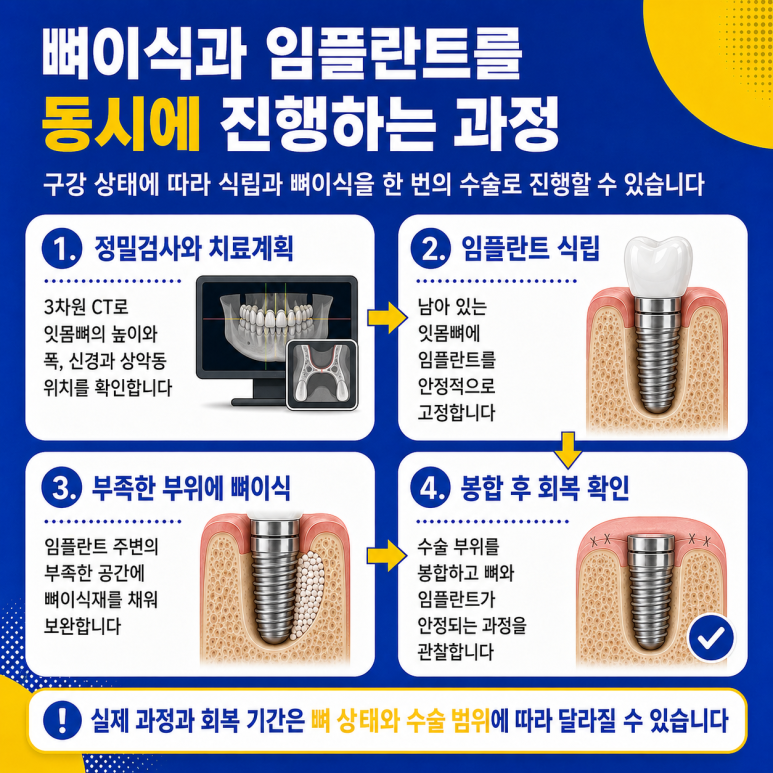
The Process of Performing Bone Grafting and Implant Placement Simultaneously
The process may vary depending on the patient’s condition and the surgical method, but it generally proceeds as follows.
- Oral examination and detailed imaging
An oral examination and X-rays are performed, along with three-dimensional CT imaging when necessary, to assess the height and width of the jawbone.
In the upper jaw, the maxillary sinus is examined, while in the lower jaw, the location of the nerve canal is assessed to plan the implant’s length and diameter, as well as its placement position and direction.
- Removal of inflamed tissue and preparation of the surgical site
If the procedure is performed together with an extraction, the tooth is removed and the inflamed tissue is cleaned out. If the area is already toothless, the gums are opened to directly examine the condition of the bone.
- Implant placement
The implant is placed according to the planned position and angle, and its initial stability is checked.
- Bone grafting in deficient areas
Bone graft material is placed in areas around the implant where bone is deficient or in the space between the extraction site and the implant.
When necessary, a membrane may be used to protect the graft material and maintain the space needed for new bone formation.
- Suturing the gums and healing
The surgical site is sutured and allowed to heal so that the implant and grafted area can stabilize. Regular examinations and radiographs are then used to assess healing before prosthetic treatment is performed.
Accurate treatment planning is more important than simply proceeding simultaneously.
Bone grafting and implant placement can be performed simultaneously if the remaining jawbone can secure the implant and the extent of the bone defect is relatively limited.
On the other hand, if the jawbone is significantly insufficient, initial implant stability is difficult to achieve, or inflammation and infection are extensive, staged treatment may be necessary, with bone grafting performed first and the implant placed later.
Simultaneous treatment may help reduce the number of surgeries and the overall treatment period, but proceeding all at once is not always the best option. More important than shortening the treatment period is placing the implant in an appropriate position and creating an environment in which it can heal stably.
Implant Treatment at S-Leader Dental Hospital,
A Hwanyang-dong Dental Clinic, Starting with a Detailed Diagnosis
Even in the same upper or lower molar area, the height and width of the remaining jawbone, bone density, presence of inflammation, and surrounding anatomical structures vary from patient to patient.
Therefore, whether bone grafting and implant placement can be performed simultaneously is difficult to determine based only on the visible condition of the gums.
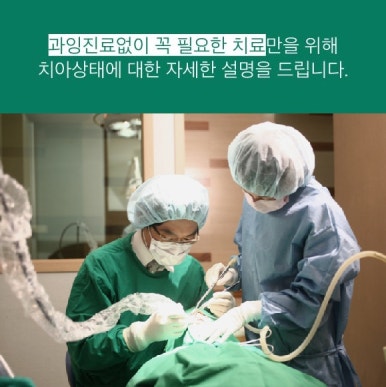
At S-Leader Dental Hospital, a Hwanyang-dong dental clinic, we carefully examine the condition of the jawbone and the locations of the maxillary sinus and nerve canal through necessary examinations, including oral examinations and three-dimensional CT scans. We then provide treatment guidance based on the possibility of achieving initial implant stability and the extent of bone grafting required.
If you are concerned about the treatment period after being told that bone grafting is necessary, or if you would like to know whether it can be performed at the same time as implant placement, please have your current oral condition accurately evaluated and receive a thorough consultation at S-Leader Dental Hospital.


Hwanyang-dong Dental Clinic :: S-Leader Dental Hospital