Hello, I am Sim Seong-hwan from S Leader Dental Hospital, a Sangbong-dong dental clinic celebrating its 22nd anniversary this year.
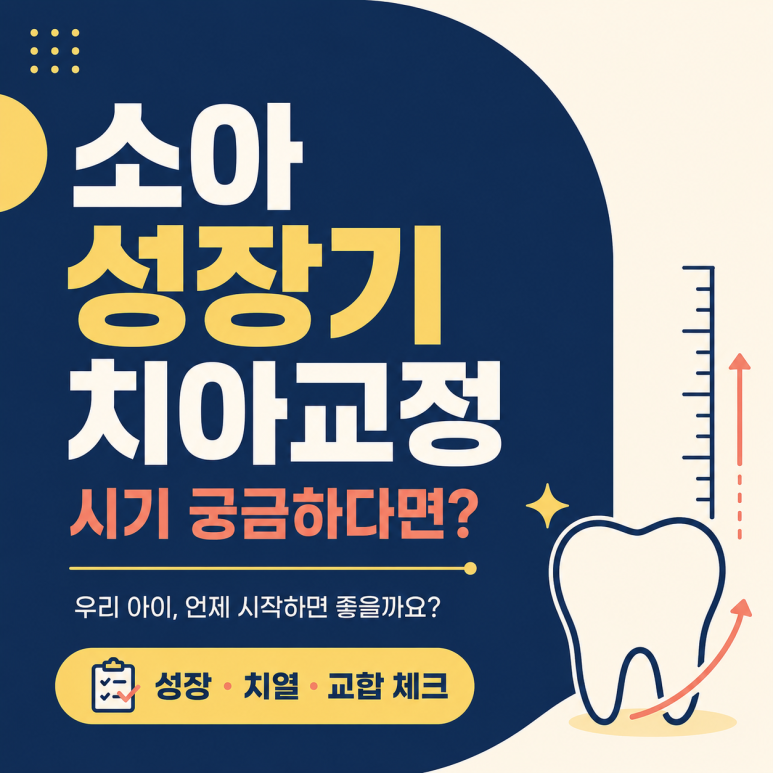
As your child’s front teeth begin to fall out one by one and permanent teeth start to emerge, parents often have more questions and concerns.
“Should we wait a little longer if the front teeth are coming in crooked?”
“There are still many baby teeth left. Is it okay to have an orthodontic examination already?”
“When is the best time to start orthodontic treatment during growth?”
In particular, hearing that other children started orthodontic treatment in elementary school may make you worry that your child could miss the right time for treatment.
However, the timing of pediatric orthodontic treatment is not determined by age alone. It is necessary to comprehensively examine how many permanent teeth have emerged, whether there is enough space for the teeth to come in, how the upper and lower jaws are growing, and whether there are any bite problems.
Therefore, the important point in orthodontic treatment during growth is not to start as early as possible, but to find the appropriate timing based on the child’s growth and dental development.
Today, we will take a detailed look at when it is helpful to begin assessing orthodontic treatment for children during growth and in which cases an earlier orthodontic examination may be needed at S Leader Dental Hospital, a Sangbong-dong dental clinic.
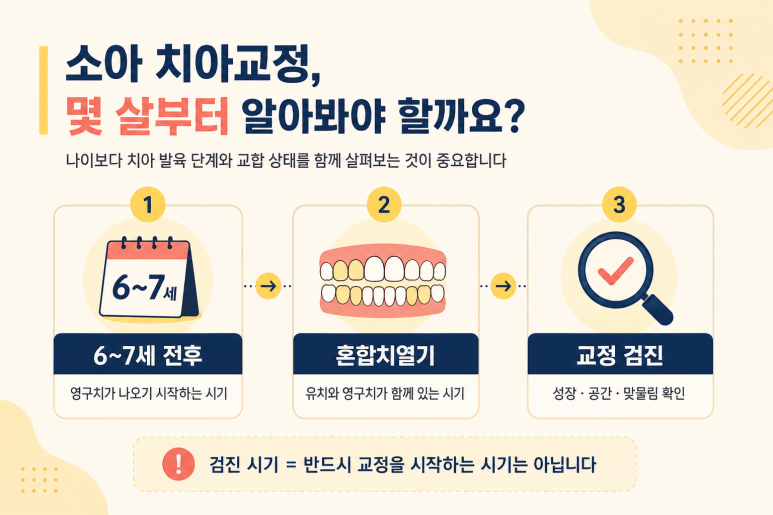
At what age should you start looking into pediatric orthodontic treatment?
It is easy to assume that orthodontic treatment should begin after all the permanent teeth have emerged.
Of course, many children begin comprehensive orthodontic treatment once most of their permanent teeth have come in. However, depending on the child’s bite and jaw growth, it may be helpful to check their condition earlier.
Around the age of 6–7, the permanent front teeth and first permanent molars usually begin to emerge, marking the start of the mixed dentition period, when baby teeth and permanent teeth are present together.
During this period, it is possible to examine not only whether the front teeth are aligned, but also whether there is enough space for the permanent teeth, how the upper and lower teeth come together, and whether jaw growth is balanced.
This does not mean that every child should begin wearing orthodontic appliances as soon as they turn 6 or 7.
If the examination finds no particular problems, the child’s growth and the eruption of the permanent teeth can be monitored, with a follow-up examination at an appropriate time. Conversely, if an issue requiring early attention is found during development, treatment can be considered when necessary.
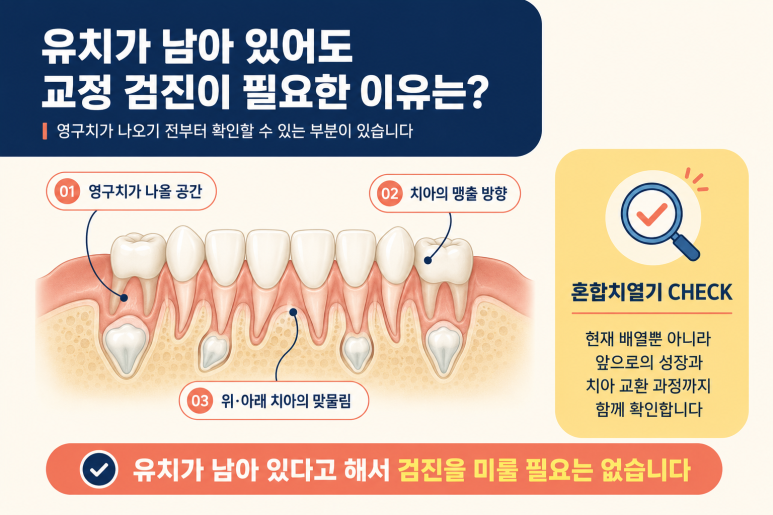
Why is an orthodontic examination needed even when baby teeth remain?
Some parents may think, “The baby teeth will fall out anyway, so wouldn’t it be better to wait until all the permanent teeth have come in?”
However, during growth-related orthodontic assessment, it is important to examine not only the current alignment of the visible teeth, but also the space available for the permanent teeth and the direction of jaw growth.
For example, if a baby tooth falls out too early, the neighboring teeth may move into the empty space, leaving insufficient room for the permanent tooth to emerge later.
Conversely, if a baby tooth remains for too long or a permanent tooth is emerging in a direction different from its normal position, this may affect the process of dental arch formation.
In addition, if there is a significant difference in the growth of the upper and lower jaws or a crossbite in which the front or back teeth bite in the opposite direction, it may be necessary to monitor the growth process rather than simply waiting until all the permanent teeth have emerged.
If you notice any of these signs, consider having your child examined a little earlier
Because each child’s teeth and jaws grow at a different rate, it is important to observe changes in your child’s teeth rather than waiting for a particular age.
If any of the following signs appear, an orthodontic examination can help assess the child’s current condition.
✔ The front teeth are severely overlapping or coming in crooked
✔ There appears to be very little space for the permanent teeth to emerge
✔ The lower front teeth bite in front of the upper front teeth
✔ Some of the upper and lower teeth bite against each other in the opposite direction
✔ The upper and lower front teeth do not touch and remain open
✔ The lower or upper jaw appears to be shifted to one side
✔ A baby tooth has fallen out too early or, conversely, has remained for too long
✔ Oral habits such as thumb-sucking or mouth breathing continue
✔ A permanent tooth is emerging somewhere other than its normal position
These symptoms do not necessarily mean that orthodontic treatment must begin immediately.
After assessing the current condition, the priority is to determine whether treatment should begin right away or whether it would be better to monitor growth and tooth eruption for a certain period.
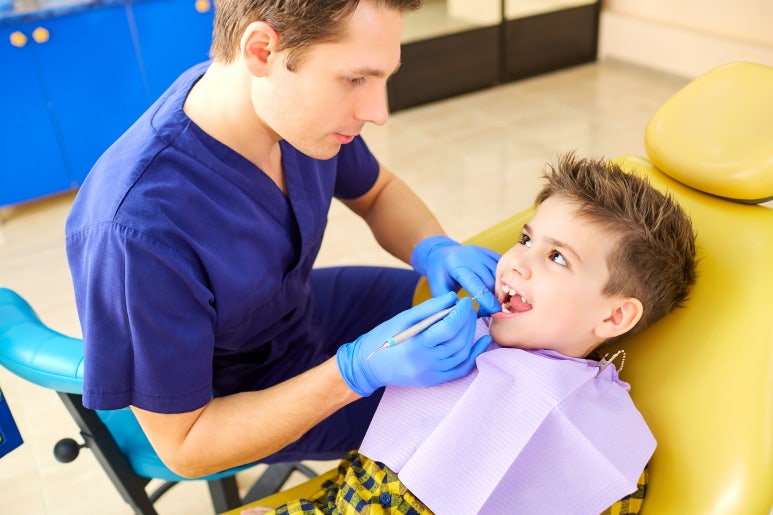
Orthodontic treatment during growth also involves monitoring jaw development
One important reason pediatric orthodontics differs from adult orthodontics is that a child’s jaws and face are still growing.
If there are differences in the size or growth direction of the upper and lower jaws in addition to tooth alignment issues, a treatment plan may be developed by taking advantage of the child’s growth period.
For example, in cases involving skeletal discrepancies or crossbite, treatment may be needed at an appropriate time depending on the child’s growth status and the cause of the problem.
However, not every jaw growth problem can be resolved through orthodontic treatment alone simply because the child is still growing. The possible scope and methods of treatment may vary depending on the child’s stage of growth and skeletal condition.
Therefore, rather than checking only the alignment of the visible front teeth, it is important to comprehensively examine the relationship between the upper and lower jaws, facial growth, and the bite.
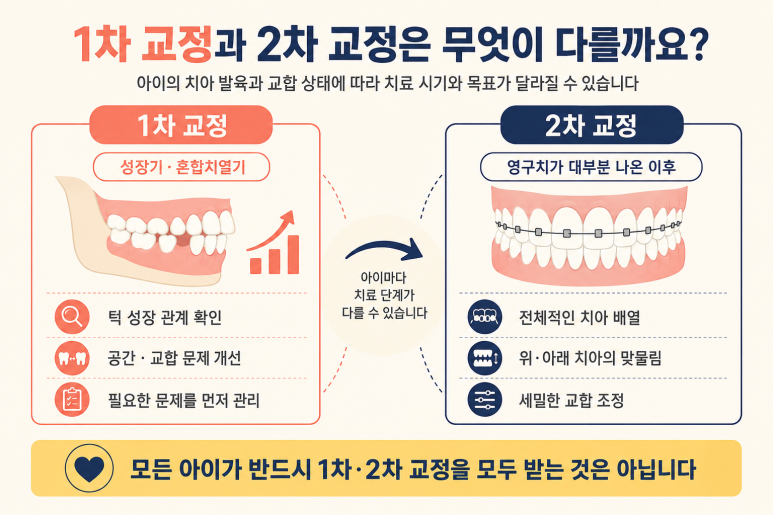
What is the difference between Phase 1 and Phase 2 orthodontic treatment?
When learning about orthodontic treatment during growth, many people wonder about the difference between “Phase 1 orthodontic treatment” and “Phase 2 orthodontic treatment.”
Phase 1 orthodontic treatment generally refers to treatment performed during the mixed dentition period, when baby teeth and permanent teeth are present together, to address problems that need to be improved first.
It may be carried out to create space for emerging teeth, improve specific bite problems, or manage issues related to jaw growth.
By contrast, Phase 2 orthodontic treatment is performed after most of the permanent teeth have emerged to fine-tune the overall alignment of the teeth and the bite.
Having Phase 1 orthodontic treatment does not mean that every child must undergo Phase 2 treatment in the same way. Conversely, some children may proceed directly to comprehensive orthodontic treatment at the appropriate time without Phase 1 treatment.
Why does the starting time for orthodontic treatment during growth differ from child to child?
Even children of the same age may differ: some children’s permanent teeth emerge quickly, while others’ teeth come in relatively late.
The rate of jaw growth and the form of malocclusion also vary from child to child.
In addition, although the front teeth may appear similarly crooked, one child may lack sufficient space for the permanent teeth to emerge, while another child’s teeth may simply look temporarily uneven during the eruption process.
Therefore, rather than searching online for a specific age and starting treatment accordingly, it is important to make decisions based on your child’s stage of dental development.
Especially during growth, the appearance of the dental alignment and jaws can continue to change over the course of several months or years. Therefore, even if you are told that treatment is not currently necessary, it is advisable to have your child’s condition checked again when needed.
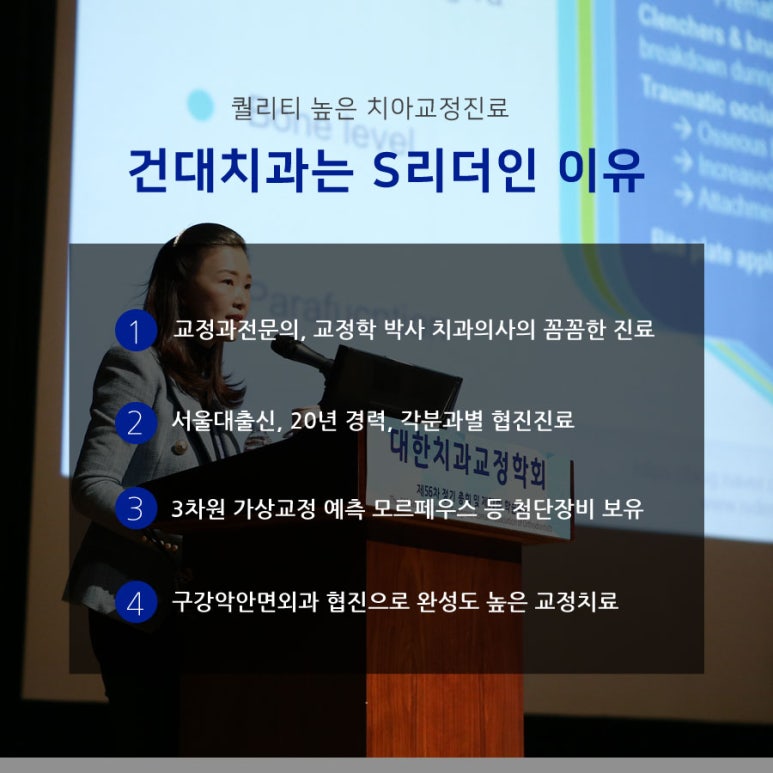
Sangbong-dong Dental Clinic: Orthodontic treatment during growth
Finding the right “time” for your child is important.
The key to pediatric orthodontic treatment during growth is neither to start unconditionally early nor to wait unconditionally until all the permanent teeth have emerged.
It is important to comprehensively assess the process of tooth replacement, the space available for permanent teeth, the way the upper and lower teeth come together, and the condition of jaw growth in order to find the appropriate time for treatment.
At S Leader Dental Hospital, a Sangbong-dong dental clinic, we examine not only the child’s current dental alignment, but also the eruption status and available space of the permanent teeth, the bite, and the relationship between jaw growth and dental development. We then determine whether treatment is currently needed or whether it is appropriate to monitor the growth process for a little longer.
If your child’s front teeth are emerging crooked or there appears to be insufficient space for the teeth to come in, this does not necessarily mean that orthodontic treatment must begin immediately.
Conversely, even if there appears to be no major problem, there may be bite-related issues that need to be monitored during growth.
Therefore, if you have been wondering, “At what age should my child begin orthodontic treatment?” rather than deciding based on age alone, first check how far your child’s teeth and jaws have developed.
Creating a treatment plan that provides what your child needs, in the amount needed and at the appropriate time, can be the first step toward developing healthy permanent dentition and a proper bite.




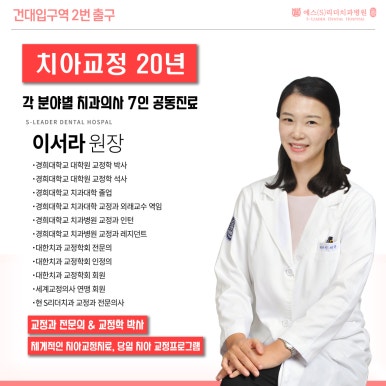
Sangbong-dong Dental Clinic :: S Leader Dental Hospital