Hello, I am Shim Seong-hwan of S Leader Dental Hospital, an orthodontic clinic near Konkuk Univ. Station that is celebrating its 22nd anniversary this year.
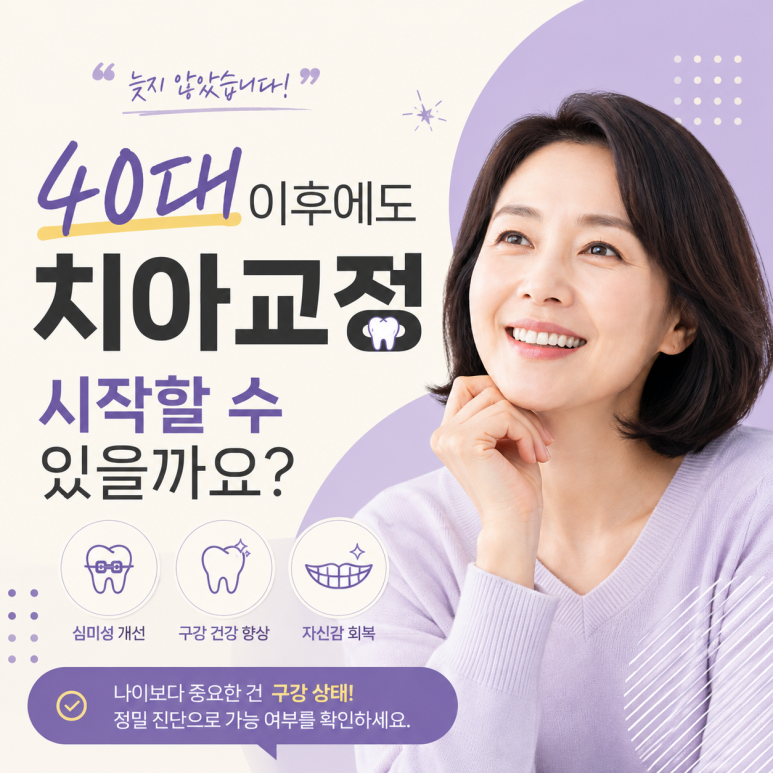
Many people think of orthodontic treatment as something mainly received by adolescents who are still growing or people in their 20s and 30s. As a result, even when they are concerned about the alignment of their teeth or their bite, people over 40 may hesitate, wondering, “Isn’t it too late to start now?”
However, whether orthodontic treatment is possible is not determined by age alone. Even after 40, treatment can certainly be considered if the condition of the teeth, gums, and alveolar bone supporting the teeth is suitable for orthodontic treatment.
Some people actually begin looking into orthodontic treatment after middle age because they have experienced discomfort from irregular tooth alignment or bite problems for many years, or because they have noticed changes such as increasing gaps between their teeth or changes in their alignment.
So, how does orthodontic treatment after 40 differ from orthodontic treatment at a younger age, and what should be checked before treatment?
Can teeth still move in your 40s?
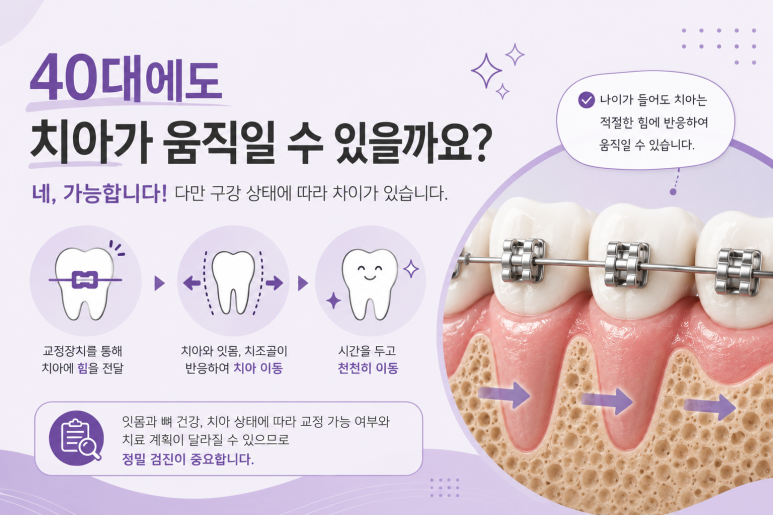
Orthodontic treatment involves applying an appropriate amount of force to the teeth to move them in the desired direction.
When force is delivered to the teeth through orthodontic appliances, changes occur in the periodontal ligament and alveolar bone around the teeth, allowing the teeth to move gradually. This principle does not disappear once a person reaches adulthood, so tooth movement itself is possible even after 40.
However, the treatment environment differs between orthodontic treatment during growth and adult orthodontic treatment.
During growth, the development of the jawbones can be used as part of treatment, whereas adults have already completed their growth. Therefore, when there is a significant skeletal issue, there may be limits to how much can be improved through tooth movement alone.
In addition, as age increases, people are more likely to have various oral conditions, such as gum disease, reduced alveolar bone, cavities, or dental prostheses. For this reason, a thorough examination before treatment is even more important.
In other words, rather than assuming that “orthodontic treatment is impossible because I am in my 40s,” it is important to first determine whether the teeth can be moved safely given the current oral condition.
There are various reasons to consider orthodontic treatment after 40.
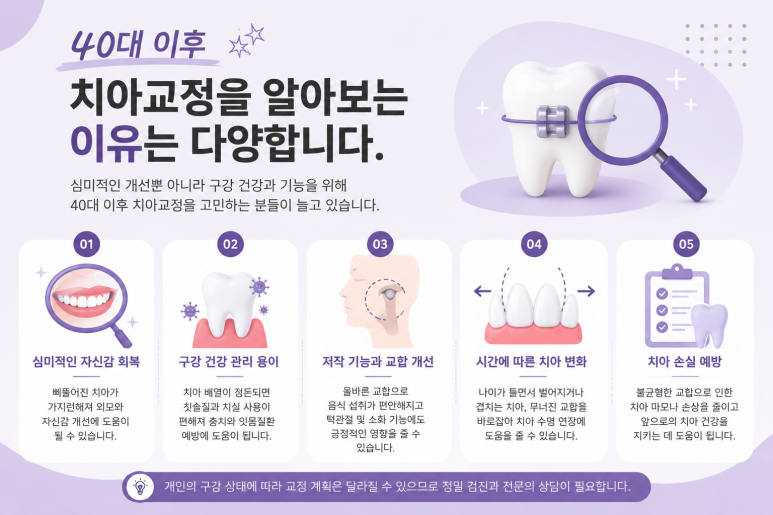
The reason adults begin orthodontic treatment is not necessarily limited to the cosmetic goal of creating straighter teeth.
When teeth overlap or are crooked, some areas may be difficult for a toothbrush to reach adequately. Food particles and plaque can easily remain in these areas, making oral care more difficult.
In addition, if there is malocclusion in which the upper and lower teeth do not come together properly, excessive force may be concentrated on certain teeth, or discomfort may occur when chewing.
Some people had relatively straight teeth when they were younger but later developed overlapping front teeth or gaps between their teeth. This is because tooth alignment can change even after adulthood due to various factors, including tooth loss, changes in gum condition, and changes in the bite.
For these reasons, orthodontic treatment in your 40s may be considered not only for cosmetic improvement but also to organize the alignment of the teeth and the bite and to make future oral care easier.
The most important consideration in orthodontic treatment in your 40s is gum health.
If you are planning orthodontic treatment after 40, periodontal health is an area that requires especially careful evaluation.
Because the teeth are supported by the gums and alveolar bone, the condition of the surrounding tissues is important when moving the teeth.
Applying orthodontic force excessively when gingivitis or periodontitis is progressing, or when there has been significant loss of alveolar bone, may place stress on the gums. Therefore, if your gums frequently swell or bleed, your teeth feel loose, or your gums have receded significantly, your periodontal condition should be evaluated before orthodontic treatment.
When necessary, treatment may begin with scaling or periodontal treatment to control inflammation before orthodontic treatment is started.
Having periodontal disease does not necessarily mean that orthodontic treatment is impossible. However, it is important to develop a treatment plan that sufficiently considers the current condition and stability after treatment.
Can you have orthodontic treatment if you have implants or crowns?
After 40, it is not uncommon for people to have teeth covered with crowns following cavity treatment or root canal treatment, or to have dental implants.
Having a crown or other dental prosthesis does not necessarily make orthodontic treatment impossible. If the condition of the tooth roots and surrounding tissues is suitable, those teeth can be included in the orthodontic plan. The method of attaching orthodontic appliances may also be adjusted depending on the condition of the prosthesis.
However, implants differ from natural teeth.
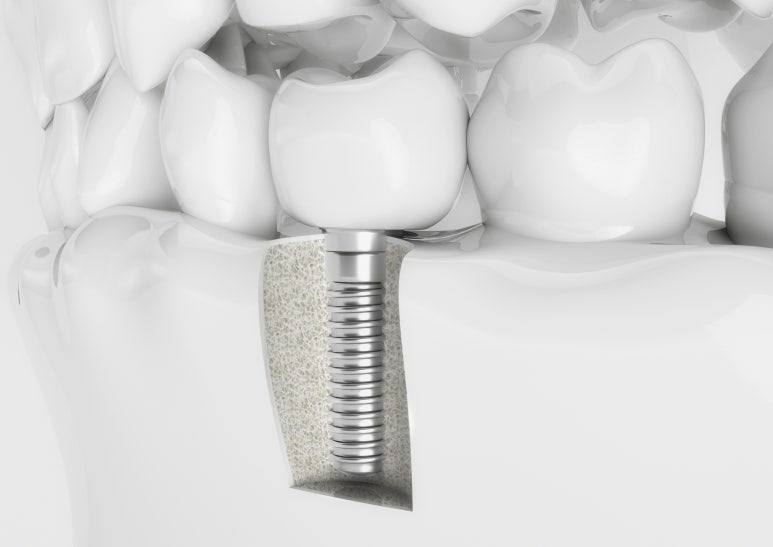
Natural teeth can move when orthodontic force is applied through the periodontal ligament and the surrounding bone changes. Implants, on the other hand, are directly integrated with the alveolar bone, so it is difficult to move them with orthodontic force in the same way as natural teeth.
Therefore, when planning orthodontic treatment for someone who already has an implant, the treatment plan must consider the implant’s position and determine how the surrounding natural teeth should be moved.
Conversely, if both implant treatment and orthodontic treatment are needed, one possible approach, depending on the situation, may be to first adjust the tooth alignment and space through orthodontic treatment and then place the implant in an appropriate position.
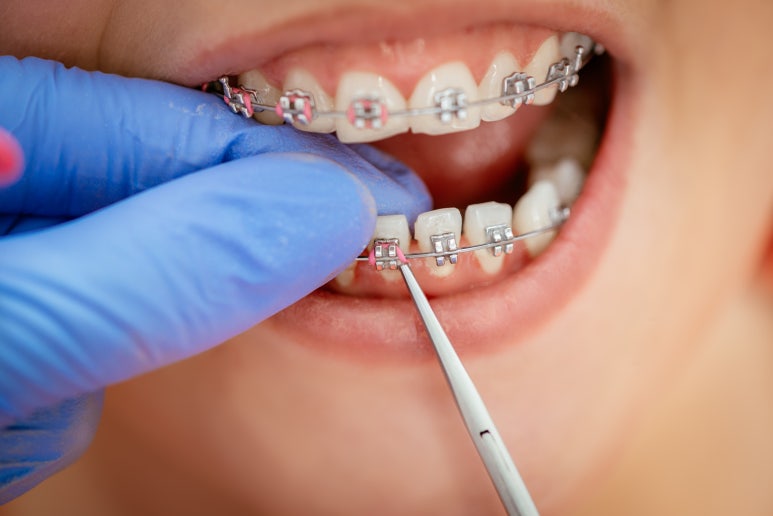
Does orthodontic treatment take longer in your 40s?
Some people wonder, “If I am older, will my orthodontic treatment take twice as long?”
The duration of orthodontic treatment is not determined by age alone. It may vary depending on how irregular the initial tooth alignment is, whether extractions are needed, the distance the teeth must be moved, the bite, the condition of the alveolar bone and gums, the orthodontic method used, and the patient’s cooperation.
However, because an adult’s growth and oral environment differ from those during the growth period, the orthodontic force may need to be adjusted within a safe range while monitoring the speed of tooth movement and periodontal condition.
Especially when the gums or alveolar bone are weak, it is important to monitor the condition of the surrounding tissues continuously and move the teeth in a stable manner rather than trying to move them quickly.
Therefore, instead of simply comparing your treatment duration with that of someone else, it is better to confirm your estimated treatment period through a thorough examination.
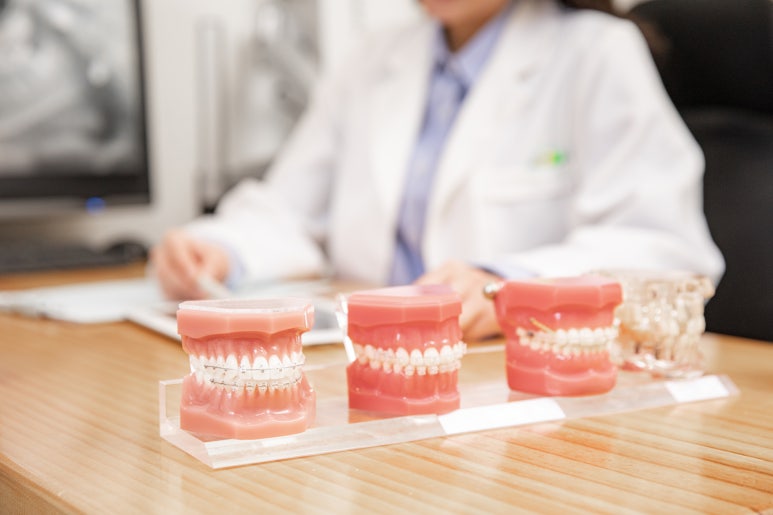
A thorough examination is even more important in adult orthodontic treatment.
When planning orthodontic treatment after 40, it is difficult to establish an accurate treatment plan by examining only the visible alignment of the teeth.
In addition to tooth alignment and the bite, the roots of the teeth, alveolar bone, gum condition, relationship between the jawbones, and the presence of existing prostheses or implants must all be evaluated comprehensively.
If cavities or periodontal disease are found, it is also necessary to plan the order in which these conditions will be treated alongside orthodontic treatment.
Because each patient’s current oral condition is different, treatment methods and duration, whether extractions are needed, and which orthodontic appliances can be used may vary even among people of the same age in their 40s.
Therefore, rather than determining whether treatment is possible by searching for similar cases online, the priority should be to accurately assess the condition of your own teeth and gums through a thorough examination.
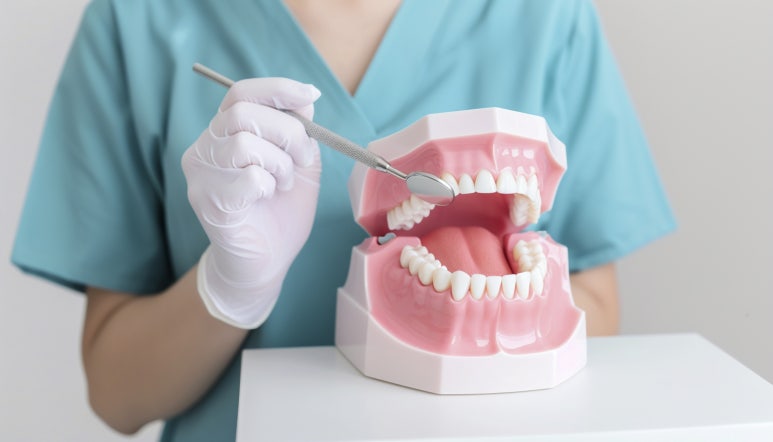
You need to pay even closer attention to oral care during orthodontic treatment.
After starting orthodontic treatment, more careful oral hygiene is needed than usual.
When orthodontic appliances are attached, food can become trapped easily around brackets and wires, and brushing may become more difficult. If plaque remains for a long time, it can lead not only to cavities but also to gum inflammation. It is therefore advisable to use an orthodontic toothbrush, interdental brush, dental floss, and other tools to clean carefully around the appliances.
Especially after middle age, some people may already have weakened gums or risk factors for periodontal disease. For this reason, regular examinations are important to check the condition of the gums along with the progress of tooth movement.
If gum bleeding recurs during orthodontic treatment, swelling persists, or the teeth feel excessively loose, it is better to have the condition checked by a dental professional rather than waiting without guidance.
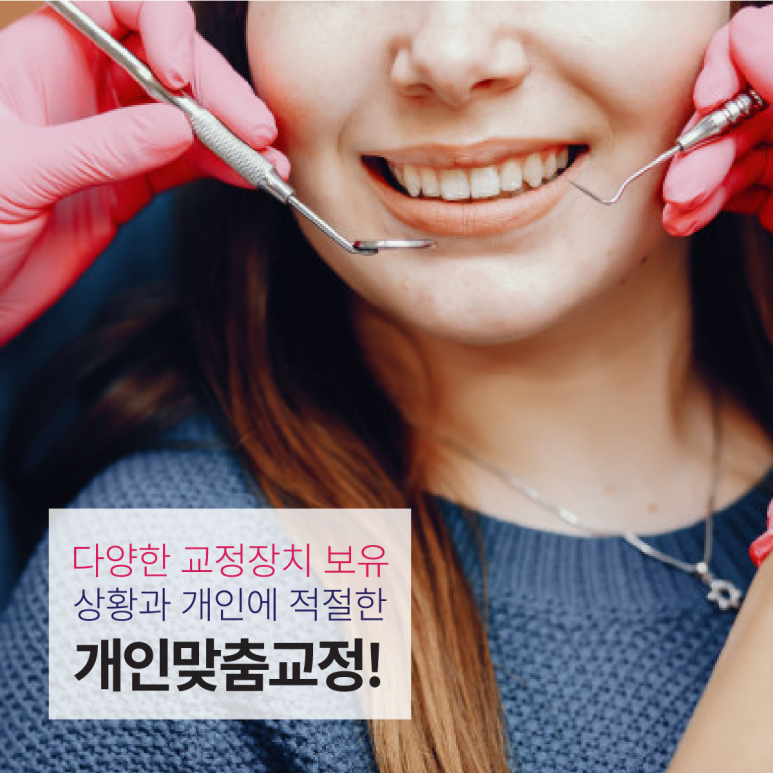
Orthodontic treatment after 40
At S Leader Dental Hospital, an orthodontic clinic near Konkuk Univ. Station
Have your condition carefully evaluated
Being in your 40s does not mean that it is too late to start orthodontic treatment. If the teeth, gums, and alveolar bone are in a condition suitable for orthodontic treatment, treatment to improve tooth alignment and the bite may still be considered after middle age.
However, adult orthodontic treatment requires careful examination before treatment because there are many factors to consider, including the condition of the gums and alveolar bone and the presence of existing prostheses or implants.
At S Leader Dental Hospital, an orthodontic clinic near Konkuk Univ. Station, we carefully evaluate not only the current alignment of the teeth and the bite but also the overall oral condition, and establish an orthodontic plan suited to each individual based on these findings.
If you have been hesitating about orthodontic treatment because of your age, first undergo a thorough examination and have a sufficient consultation to determine which treatment options are available for your current condition.


Konkuk Univ. Station Orthodontic Clinic :: S Leader Dental Hospital.