Hello, I am Shim Seong-hwan of Gunja Station Dental Clinic, S Leader Dental Hospital, which is celebrating its 22nd anniversary this year.
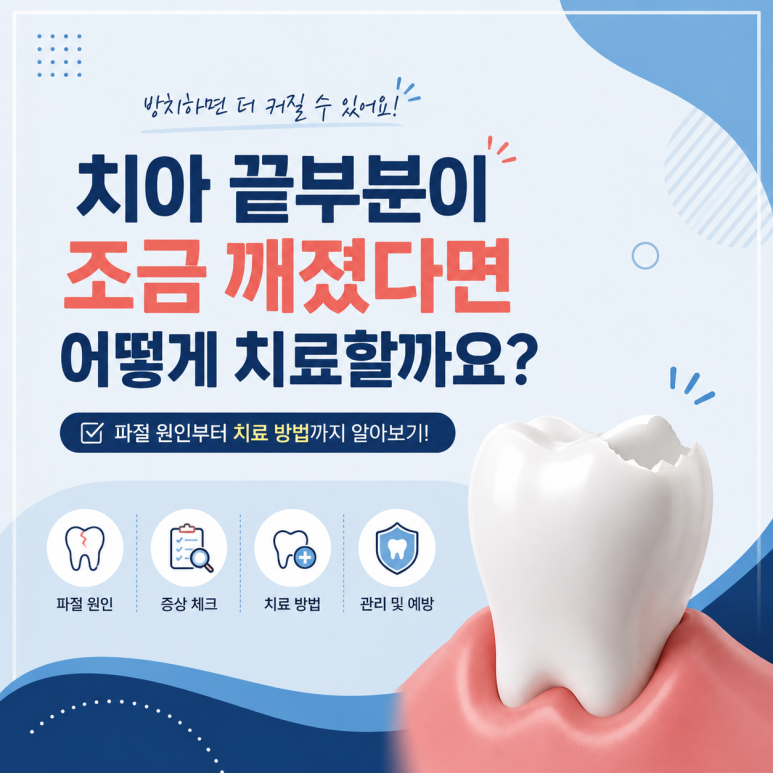
There are times when you feel a rough spot on your tooth with the tip of your tongue while eating, or notice in the mirror that the tip of a tooth is slightly chipped.
If the tooth is not significantly broken and there is no pain, it is easy to think, “Would it really be a problem to leave it as it is?” In particular, people often delay treatment when only a very small part of the front tooth is chipped or a small portion of a molar has broken away.
However, it is difficult to determine the condition of a fractured tooth based only on how large the damage appears on the surface. In some cases, only a small amount of enamel has broken away, while in others the fracture may extend inward to the dentin or close to the nerve.
Therefore, if the tip of a tooth is slightly chipped, it is important to identify the extent and cause of the fracture and determine the treatment appropriate for its current condition.
Why Do Teeth Suddenly Chip or Break?
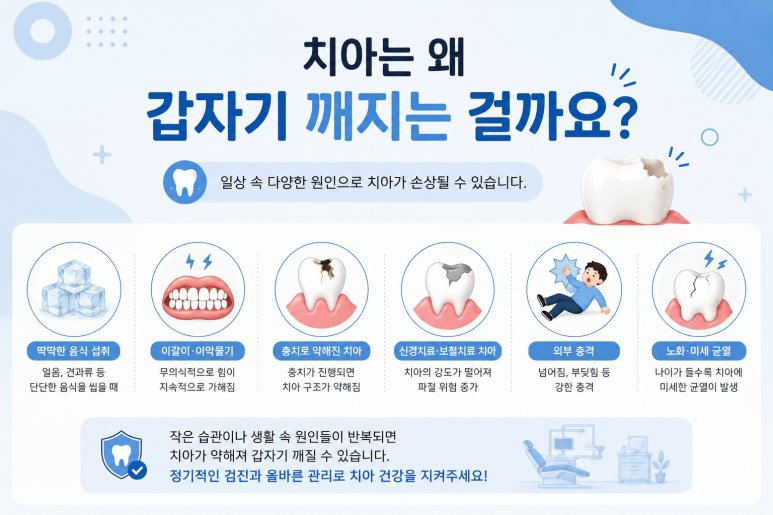
Although teeth are hard tissues, they can chip or develop cracks when subjected to a strong impact or repeated force.
One common cause is the habit of chewing hard foods. When you bite down forcefully on hard items such as ice, candy, nuts, or foods containing bones, a large amount of force can be transferred to the tooth in an instant, causing the tip to chip.
Teeth grinding and clenching can also have an effect. If you grind your teeth forcefully while sleeping or frequently clench them during the day, continuous pressure may cause microscopic cracks, and part of the tooth may eventually break away.
Teeth that have been weakened by extensively progressed tooth decay or that have received large fillings or inlay treatments may also be relatively vulnerable to fracture.
Teeth that have undergone root canal treatment should also be evaluated with consideration given to the amount and condition of the remaining tooth structure.
In addition, the tip of a front tooth may chip due to direct impact, such as from a fall, collision, or injury during sports.
Is a Slightly Chipped Tooth Fine if There Is No Pain?
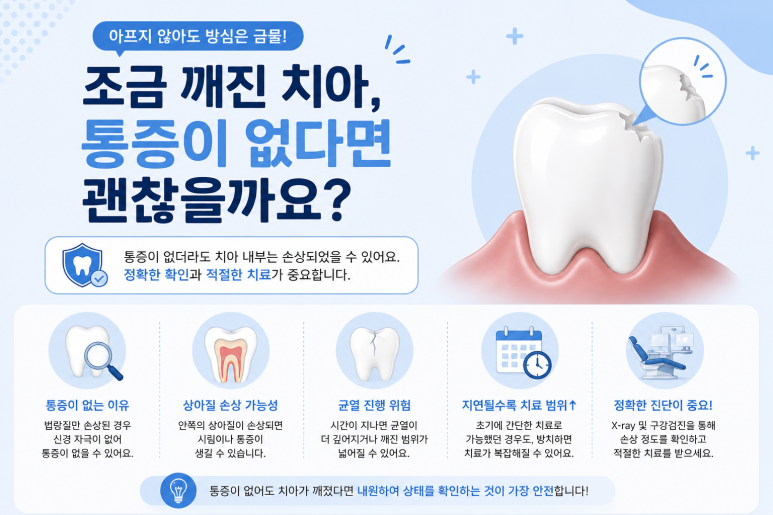
Sometimes a tooth can be chipped without causing any pain at all.
The outermost layer of a tooth is made of a hard tissue called enamel. If the fracture is limited to the enamel, the nerve may not be directly stimulated, so you may not feel any noticeable pain.
However, the absence of pain does not necessarily mean there is no problem.
If the fracture extends deeper and exposes the dentin, sensitivity may occur when eating cold or hot foods or sweets. In addition, even if there are no noticeable symptoms at first, discomfort may develop over time if the fractured area expands or the crack becomes deeper.
If you experience a brief, sharp pain when chewing or pain only when force is applied in a particular direction, it is also worth checking whether there is a crack inside the tooth.
Therefore, rather than focusing only on whether there is pain, it is important to determine how deeply the tooth has actually been damaged.
Treatment May Vary Depending on the Extent of the Fracture
Not every patient needs the same treatment when the tip of a tooth is chipped.
The treatment may vary depending on the extent and location of the fracture, the amount of tooth structure remaining, and whether the nerve has been damaged.
If only a very small portion of the tooth surface has chipped, leaving it sharp or rough, gently smoothing the area may be considered when necessary to reduce discomfort.
If a small chip occurs in a cosmetically noticeable area, such as the tip of a front tooth, composite resin treatment using a tooth-colored material may be used. This restores the shape of the tooth by filling in the chipped area with resin.
On the other hand, if the fracture is too extensive to achieve sufficient shape and strength with resin alone, prosthetic treatment such as an inlay, onlay, or crown may be considered.
If the tooth has fractured deeply, exposing the nerve or causing inflammation of the nerve, root canal treatment may be necessary. Crown treatment may also be performed afterward to protect the remaining tooth structure.
In other words, even teeth that look similar from the outside as “slightly chipped teeth” may require different treatments.
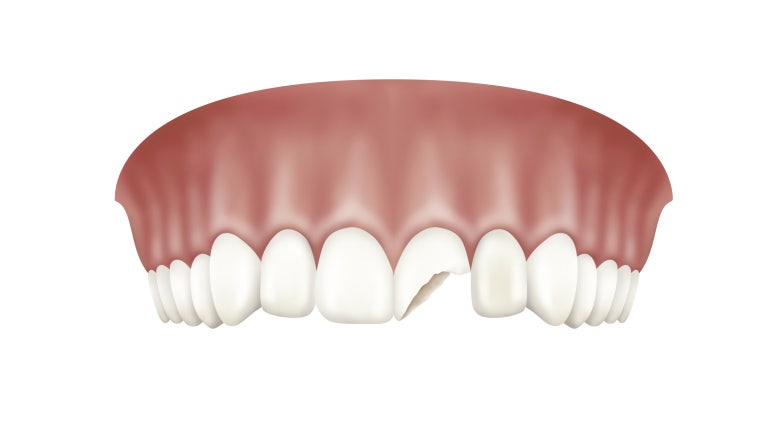
How Is a Chipped Front Tooth Treated?
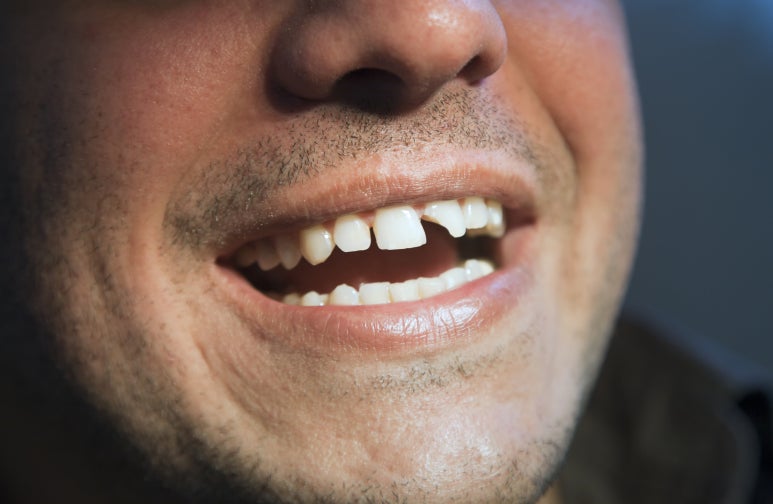
Because front teeth are highly visible when you smile or speak, even a small fracture can cause significant cosmetic concern.
If a small amount has chipped from the tip of a front tooth and there is no nerve damage, resin may be used to restore the shape and color of the chipped area.
However, front teeth continuously receive force when biting into or tearing food. Therefore, the location and size of the fracture, along with the bite, should be evaluated together.
In particular, if the front teeth come together forcefully or you grind or clench your teeth, force may become concentrated again on the area restored with resin, increasing the possibility of another fracture. For this reason, it is advisable to also examine the bite and habits that may be contributing to the problem.
If the fracture is extensive or the tooth has chipped repeatedly, it may be necessary to consider whether another treatment method is needed.
What Should Be Checked When Part of a Molar Is Chipped?
Molars continuously receive strong chewing forces because they break down and grind food.
Therefore, when part of a molar is chipped, it is important not only to examine the portion that has broken away but also to determine whether the remaining tooth structure can withstand chewing forces stably.
In some cases, the inside of the tooth has been weakened by decay, leaving only the outer portion intact until it suddenly breaks during a meal. Teeth around an old inlay or a large filling may also fracture.
If the fracture is small, treatment with resin or an inlay may be possible. However, if there is insufficient remaining tooth structure or a substantial portion of the chewing surface has been damaged, treatment that protects a wider area of the tooth, such as an onlay or crown, may be necessary.
Therefore, when evaluating a molar fracture, it is important to examine not only the size of the chip but also any existing decay, restorations, and the bite.
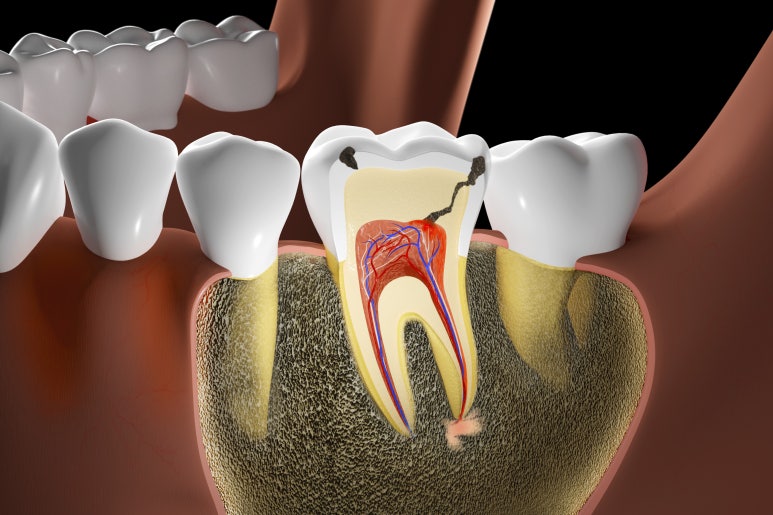
What Happens if a Chipped Tooth Is Left Untreated?
A small fracture does not necessarily worsen quickly, but because the chipped area continues to be subjected to chewing forces, the extent of the fracture may increase depending on the condition of the tooth.
If the chipped surface is sharp, it may repeatedly irritate the tongue or the inside of the cheek and cause an injury.
In addition, if the dentin is exposed, sensitivity may occur, and it is necessary to consider the possibility that bacteria could enter through the damaged area and lead to tooth decay or nerve problems.
A tooth that could initially have been treated with a relatively simple method may require more extensive treatment if additional fractures occur.
In particular, if pain develops when chewing, the chipped area gradually grows, the tooth changes color, or the gums become swollen, it is advisable to have the condition checked.
Lifestyle Habits Are Also Important for Preventing Tooth Fractures
To help prevent tooth fractures, it is important to reduce habits that place excessive force on the teeth.
It is best to avoid biting into ice or using your teeth to break excessively hard foods whenever possible. Using your teeth to tear open packages or bottle caps can also place unexpectedly strong forces on them.
If you grind or clench your teeth severely, it is advisable to have your teeth checked regularly to determine whether they are becoming worn or developing cracks.
In addition, teeth with decay or old restorations may be structurally weakened, so regular checkups to monitor their condition can also help prevent fractures.
At Gunja Station Dental Clinic, S Leader Dental Hospital
Have Even Small Tooth Fractures Checked First
A slightly chipped tooth does not necessarily require extensive treatment. If the fracture is small, the tooth’s shape may sometimes be restored with simple smoothing or resin treatment.
However, it is difficult to determine the condition inside a tooth based only on the visible size of the fracture. The necessary treatment may vary depending on whether the dentin or nerve has been damaged and whether the crack extends further inside the tooth.
At Gunja Station Dental Clinic, S Leader Dental Hospital, we carefully examine the location and extent of the fracture, the condition of the nerve, the bite, and the condition of the surrounding teeth before planning treatment suited to the tooth’s current condition.
Rather than leaving a slightly chipped tooth untreated for an extended period simply because it does not hurt, it is important to accurately assess its current condition and, when necessary, receive appropriate treatment at the right time to help maintain the health of the natural tooth.

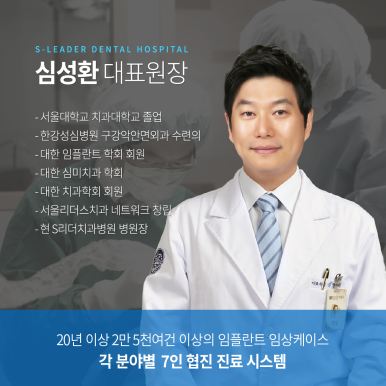



Gunja Station Dental Clinic :: S Leader Dental Hospital