Hello, this is S Leader Dental Hospital, a Mangu-dong dental clinic celebrating its 22nd anniversary this year.
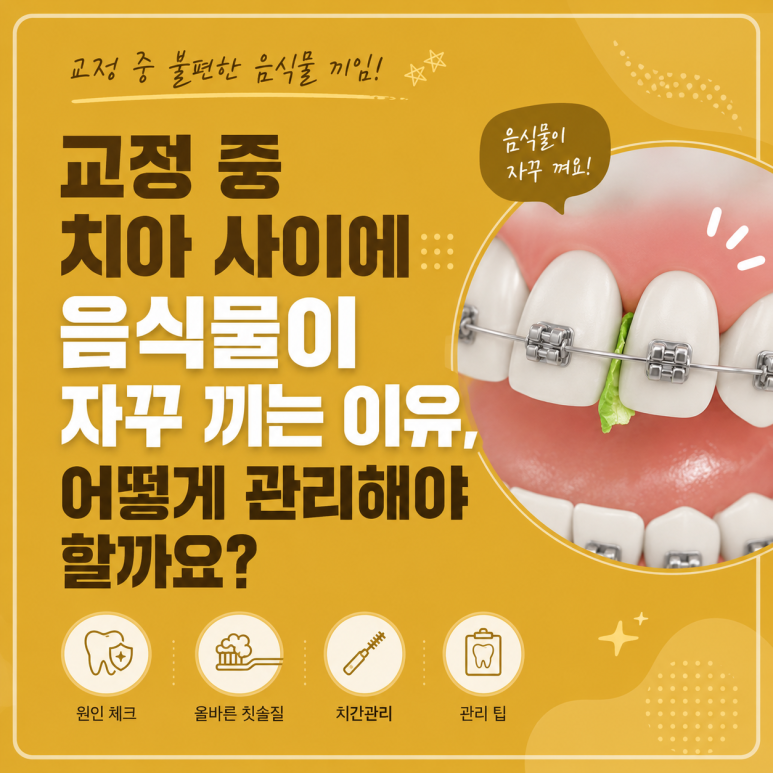
Many people experience difficulties with oral care that they did not pay much attention to before starting orthodontic treatment.
In particular, you may have experienced food frequently getting stuck between your teeth after eating, or food remaining between your brackets and wires and causing discomfort.
Even after brushing carefully, you may notice food remaining when you look in the mirror, or feel concerned because food stuck between your teeth does not come out easily.
“Food did not get stuck this much before orthodontic treatment. Why does it keep happening?”
“Is it because my teeth are moving?”
“Will brushing thoroughly be enough?”
Food getting stuck easily during orthodontic treatment is not simply due to the presence of orthodontic appliances. During treatment, the positions of the teeth and the spaces between them continue to change, while various appliances, such as brackets and wires, are attached to the tooth surfaces.
Therefore, brushing in the same way as before orthodontic treatment may not be enough to remove food or plaque remaining between the teeth and appliances.
Orthodontic treatment is not only about straightening the teeth. It is also important to maintain a healthy oral condition throughout treatment while preventing cavities and gum disease.
Today, S Leader Dental Hospital, a Mangu-dong dental clinic, will take a detailed look at why food keeps getting stuck between the teeth during orthodontic treatment and how to manage it.
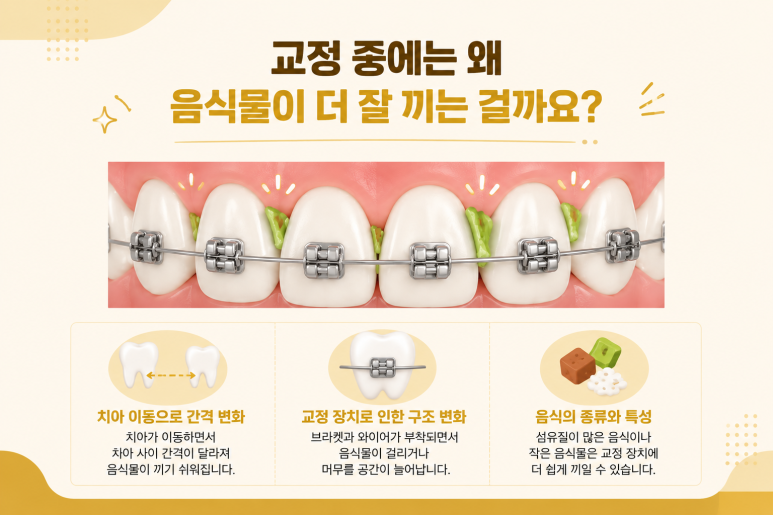
Why does food get stuck more easily during orthodontic treatment?
When orthodontic treatment begins, brackets are attached to the teeth and connected with wires to apply a consistent force.
The teeth gradually move according to the orthodontic force, and the spaces between the teeth may also change depending on the stage of treatment.
Because structures such as brackets and wires are added, the spaces where food can remain naturally increase as well.
In particular, fibrous foods such as meat and vegetables can easily get caught on the wires, while grains of rice and small pieces of food may remain around the brackets or between the teeth.
For this reason, during orthodontic treatment, it is necessary to develop the habit of identifying and managing areas where food is likely to remain, rather than simply brushing frequently.
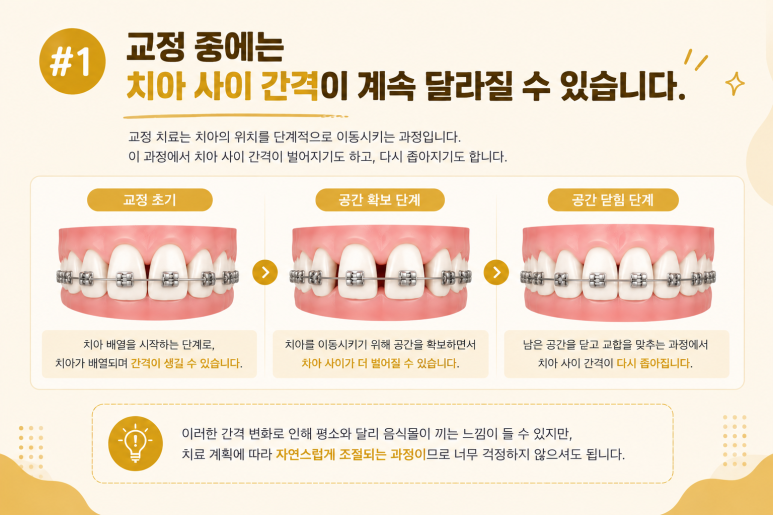
#1. The spaces between your teeth may continue to change during orthodontic treatment.
Orthodontic treatment does not move all the teeth to their final positions at once.
The process involves aligning crooked teeth, creating the necessary space, moving the teeth in the planned direction, closing any remaining spaces, and then finely adjusting the bite between the upper and lower teeth.
During this process, spaces between teeth that were originally close together may temporarily widen, or spaces may gradually become narrower.
In particular, when a new space forms between the teeth, food that did not previously get stuck may frequently enter it.
If food did not get stuck much at the beginning of orthodontic treatment but starts getting stuck repeatedly between specific teeth at some point, changes in the spacing caused by tooth movement may be a contributing factor.
Since the spaces may be adjusted again as treatment progresses, it is better to check the current movement of your teeth through regular orthodontic appointments rather than attempting to adjust the appliances yourself.
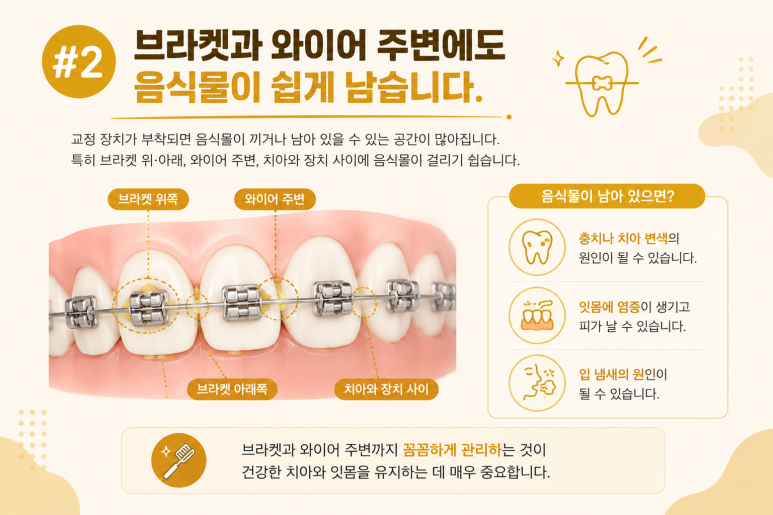
#2. Food can also easily remain around the brackets and wires.
Teeth without orthodontic appliances have relatively smooth surfaces, so food can be removed comparatively easily through brushing.
During orthodontic treatment, however, each tooth has a bracket attached to it, with a wire running through the brackets.
As a result, food can easily become caught above or below the brackets or between the wires and teeth.
Food may remain especially around the molars, which directly chew food, rather than around the front teeth. Areas on the inside that are difficult to see may also be more challenging to manage.
Simply moving the toothbrush from side to side may not clean around the brackets sufficiently.
Therefore, it is important to change the angle of the toothbrush slightly while brushing so that the bristles reach both the upper and lower parts of the brackets.
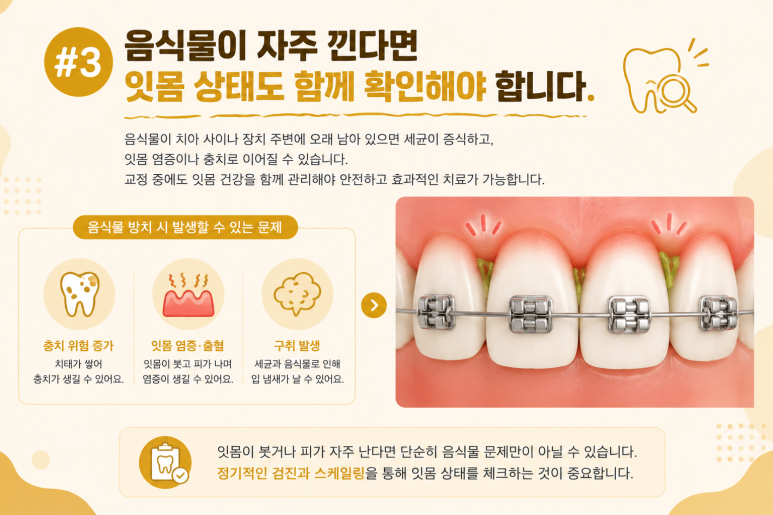
#3. If food frequently gets stuck, you should also check the condition of your gums.
Food getting stuck during orthodontic treatment should not be viewed as merely an inconvenience.
If food remains between the teeth for a long time, bacteria can multiply and plaque may form.
If plaque is not removed properly, the gums may swell or bleed during brushing, and bad breath may occur. If inadequate care continues for a long time, the risk of cavities or gum disease may also increase.
In particular, because plaque can easily accumulate around the brackets during orthodontic treatment, decalcification may occur, causing parts of the tooth surfaces to appear white.
Therefore, if gum bleeding, swelling, or pain occurs along with frequent food impaction in a particular area, it is advisable to have your oral condition checked rather than simply removing the food.
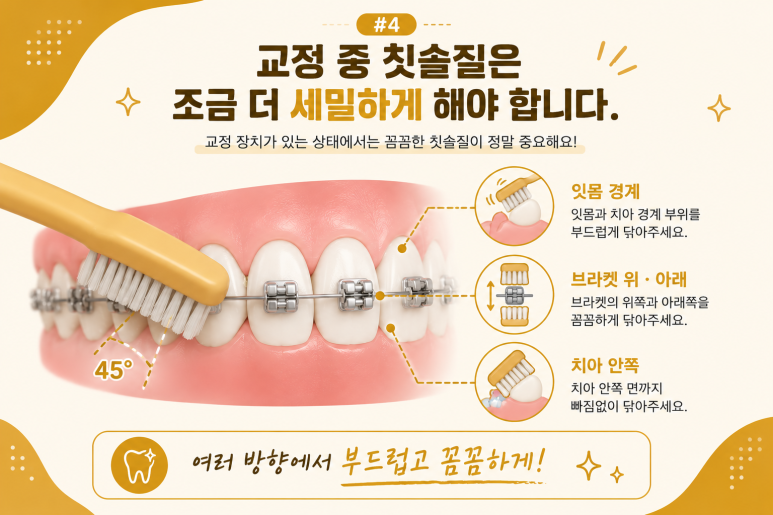
#4. Brushing should be more detailed during orthodontic treatment.
The foundation of oral care during orthodontic treatment is, of course, brushing.
After meals, it is advisable to develop the habit of brushing whenever possible so that food does not remain around the appliances for a long time.
First, brush along the boundary between the teeth and gums, and then brush the upper and lower parts of the brackets separately.
Slightly tilting the toothbrush toward the brackets may help remove food and plaque remaining around the appliances.
Finally, it is important not to miss the chewing surfaces and inner surfaces of the teeth.
Applying more force does not make your teeth cleaner. In fact, it can irritate the gums, so brushing carefully from multiple directions is more important than brushing forcefully.
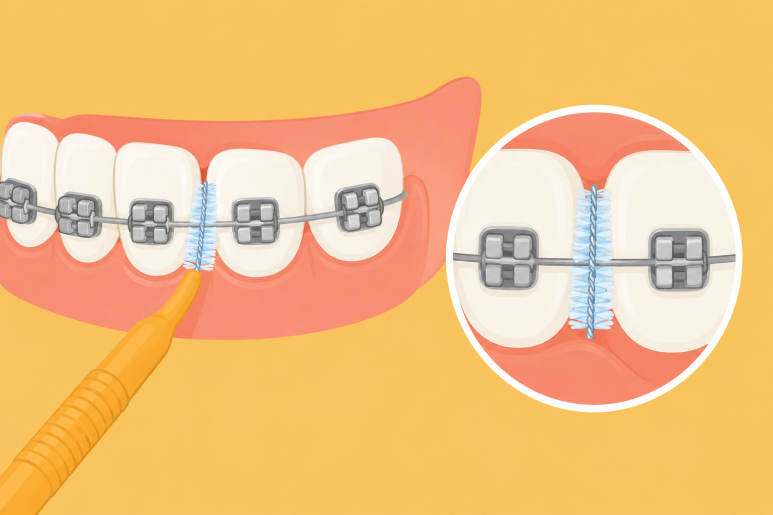
#5. Try using an interdental brush as well.
An interdental brush can be used for areas that are difficult to clean with a regular toothbrush alone.
Interdental brushes are useful not only between the teeth but also for narrow areas such as between the brackets and wires.
If food is caught under the wire or beside a bracket, you can gently insert an interdental brush within a comfortable range to remove it.
However, interdental brushes come in various sizes, so you should avoid forcing a product that is excessively large for the spaces between your teeth.
Because the spaces between your teeth may continue to change as orthodontic treatment progresses, it is advisable to use a size appropriate for your current condition.
Repeatedly using an interdental brush that does not fit properly can cause unnecessary irritation to the gums, so it is important to check the proper method of use.
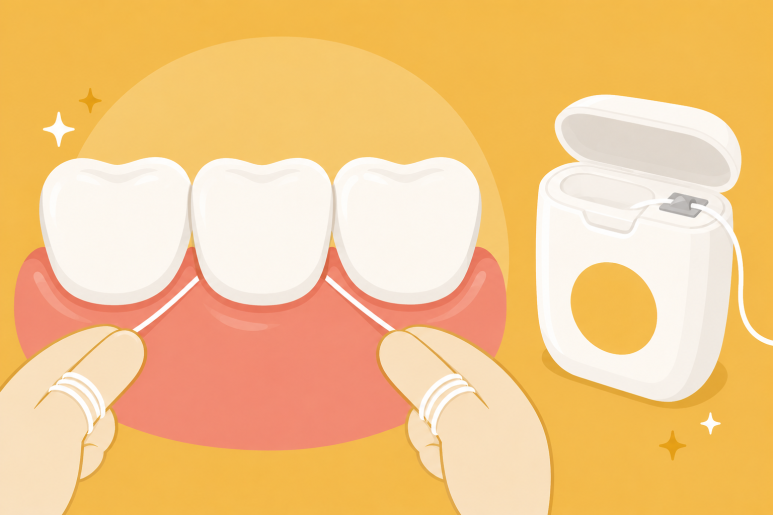
#6. You can use dental floss during orthodontic treatment as well.
People undergoing bracket treatment sometimes give up using floss because the wires make it difficult to insert floss in the usual way.
However, floss can still be used during orthodontic treatment.
With orthodontic floss or an auxiliary tool such as a floss threader, you can pass the floss under the wire to clean between the teeth.
Floss helps remove not only food between the teeth but also plaque from the tooth contact surfaces that toothbrush bristles cannot adequately reach.
It may initially feel time-consuming and inconvenient, but once you become familiar with the technique, it can help with oral care during orthodontic treatment.
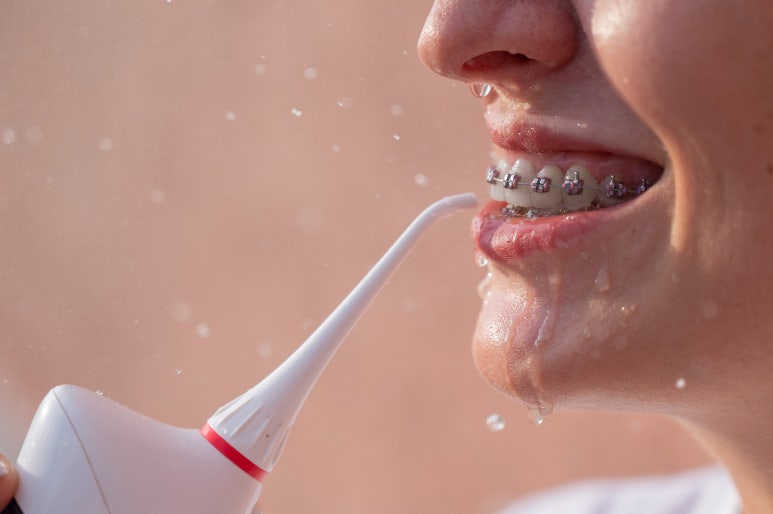
Can a water flosser replace brushing?
Many people also use a water flosser during orthodontic treatment.
Because it uses a stream of water, it may help remove larger pieces of food caught between brackets or wires, and it can be convenient for managing areas that are difficult to reach by hand.
However, using only a water flosser cannot completely replace brushing or flossing.
This is because plaque attached to the tooth surfaces may not be sufficiently removed by a stream of water alone.
Therefore, a water flosser should be used as an auxiliary method alongside brushing and interdental care.
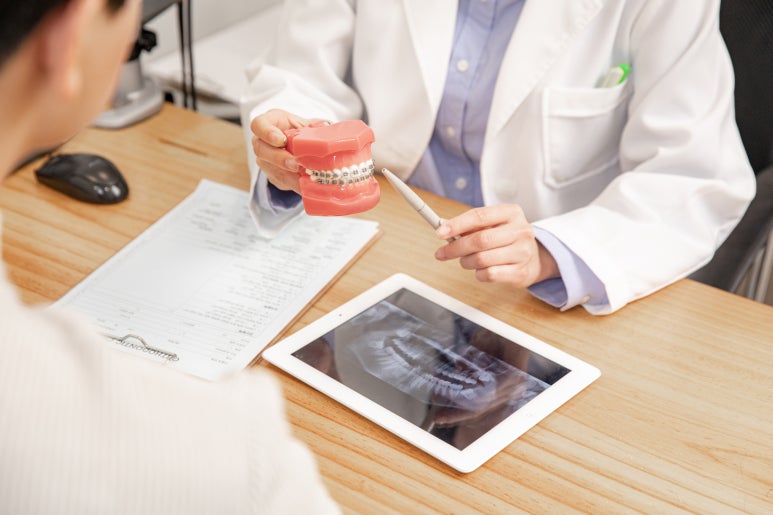
What is just as important as orthodontic treatment
is oral care throughout the treatment period.
Orthodontic treatment is carried out over a relatively long period.
As important as moving the teeth into proper alignment is maintaining healthy teeth and gums until treatment is complete.
Although food getting stuck easily because of orthodontic appliances can occur to some extent naturally, leaving it untreated can lead to the buildup of plaque and tartar, which may result in cavities or gum inflammation.
Therefore, while making proper brushing the foundation of your routine, it is advisable to use an interdental brush, dental floss, and, when necessary, a water flosser appropriately to carefully manage the areas around the appliances as well.
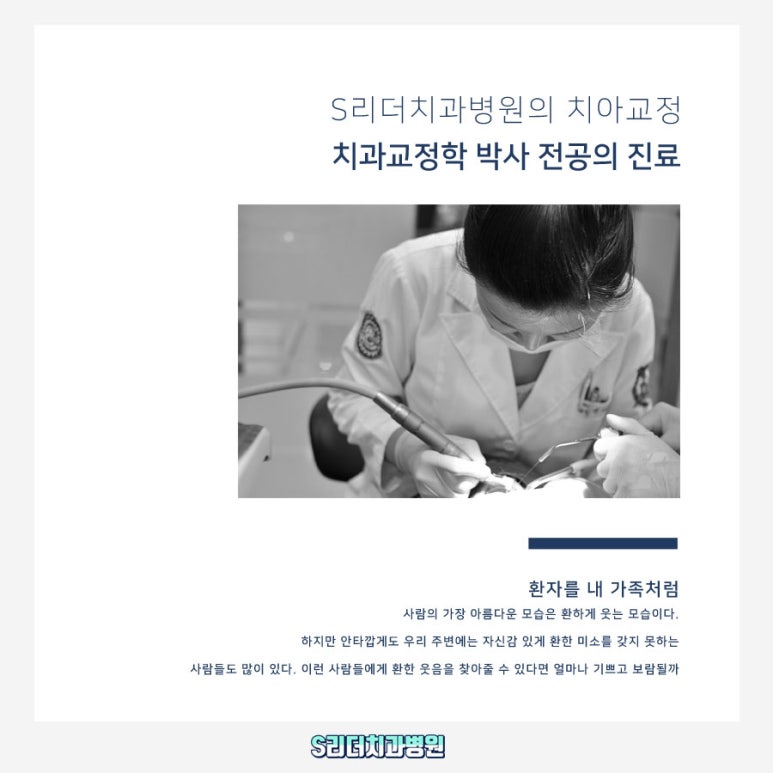
At S Leader Dental Hospital, a Mangu-dong dental clinic, we monitor not only the movement of the teeth during orthodontic treatment but also the condition of oral care around the appliances and between the teeth as treatment progresses.
If food becomes particularly stuck in a specific area during orthodontic treatment, or if your gums frequently swell and bleed despite brushing carefully, it is advisable to have your current oral condition checked rather than worrying about it alone.
Orthodontic treatment requires consistent care from the moment the appliances are attached until the day they are removed. Small daily oral-care habits can play an important role in maintaining healthy, clean teeth after orthodontic treatment is complete.
We hope you continue your orthodontic treatment in a healthy manner by carefully managing the changing spaces between your teeth and the areas around the appliances.


Mangu-dong Dental Clinic :: S Leader Dental Hospital