
Hello. This is Mary Plastic Surgery Clinic, where we pursue natural and beautiful changes.
It is said that the six nutrients essential to our body are called the six major nutrients.
These six major nutrients refer to carbohydrates, proteins, and fats, which are used as basic sources of energy, as well as water, minerals, and vitamins.
In particular, many people do not fully understand the role of vitamins and minerals, and quite a few people do not take them at all.

In fact, due to today’s Westernized eating habits and nutritionally unbalanced diets that contain excessive amounts of carbohydrates and fats, the term “hidden hunger” was coined.
In the past, malnutrition was mainly caused by a lack of food and not being able to eat enough, whereas today’s hidden hunger can be described as being caused by biased and improper eating habits.
For this reason, malnutrition today can be seen as a harmful habit that leads to fat accumulation, obesity, and adult diseases caused by poor dietary habits.
Among the nutrients often missed in these eating patterns is vitamin.
Whenever each vitamin is deficient, the body sends out warning signals.
Today, let’s take a look at vitamin D, which especially needs to be supplemented.
What Are the Roles of Vitamin D and Why Do We Need to Take It?

Vitamin D is generally a type of vitamin that is absorbed in the body through exposure to sunlight.
However, many people today get insufficient sunlight, and during the daytime when the sun is out, they usually spend time indoors.
In particular, even when people do go out in the sun, they often apply a lot of sunscreen to protect their skin from ultraviolet rays.
Since ultraviolet rays must pass through the skin for vitamin D to be synthesized, there are practical limits to obtaining vitamin D from sunlight.
So what does vitamin D do, and why should we take it?

First, vitamin D helps the absorption of calcium.
One of the benefits of vitamin D is that it supports calcium absorption.
Calcium is also an important component for maintaining bone density.
For this reason, vitamin D indirectly helps maintain bone density and support skeletal muscle health.
Bone diseases such as osteoporosis are symptoms especially common among women going through menopause.
Therefore, for menopausal women, it is important to take calcium along with vitamin D carefully and consistently.
Second, vitamin D helps improve high blood pressure.
Vitamin D increases the elasticity of blood vessels and helps improve blood flow, protecting the body from cardiovascular diseases such as high blood pressure.
For this reason, it is said to help supplement the effects of medication even for people who already have conditions and are taking blood pressure medicine.
Finally, one of the benefits of vitamin D is improving inflammation in the body.
It is said to be effective in preventing the proliferation of inflammatory cells that create inflammation and in boosting immunity.
In addition, it also helps protect the body from chronic diseases such as diabetes and adult diseases that can arise as inflammation levels increase.
What Is the Recommended Daily Intake of Vitamin D?
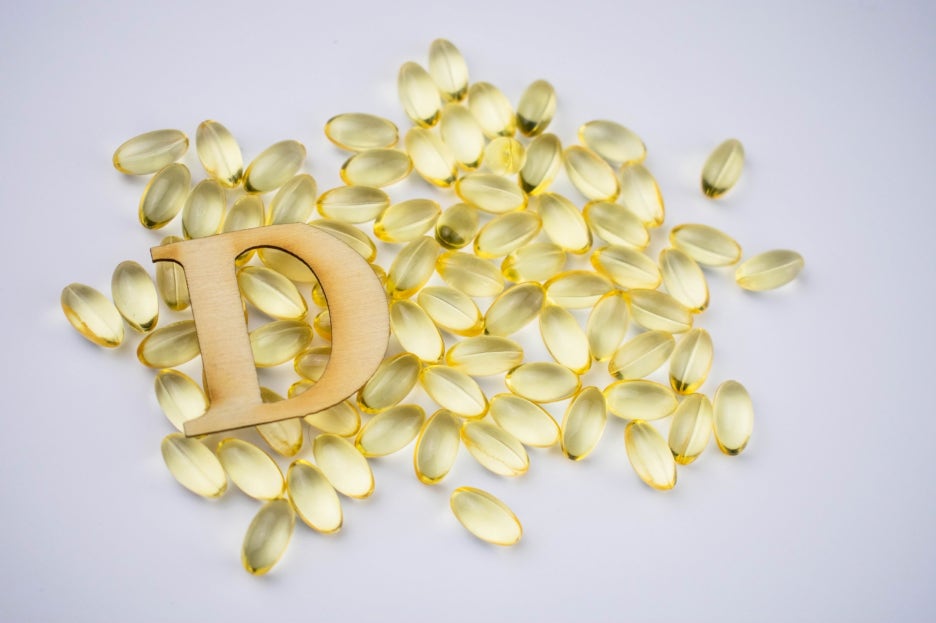
For these various benefits of vitamin D, it is important to take it consistently and regularly while following the recommended daily intake.
Vitamin D is a fat-soluble vitamin, so if too much accumulates in the body, side effects such as nausea and abdominal pain can occur, so caution is needed.
Also, because it is a fat-soluble vitamin, taking it after eating other foods may improve absorption.
The recommended daily intake of vitamin D is about 4,000 IU to 5,000 IU, and the recommended vitamin D concentration in the body is said to be 40 to 60 mg/ml.
What Are Foods Rich in Vitamin D?

So, what foods are rich in vitamin D?
The first is salmon.
Salmon contains unsaturated fatty acids such as omega-3.
100 g of salmon contains as much as three times the recommended daily intake of vitamin D, and because unsaturated fatty acids increase vitamin D absorption, it can be considered a more effective food.
The second is eggs.
Eggs, also called a complete food, are one of the foods rich in vitamin D.
In addition to vitamin D, they are characterized by a balanced variety of nutrients such as protein, fat, zinc, and minerals.
It is said that if you consume two egg yolks, you can absorb 82% of the recommended daily intake of vitamin D.
The third is mushrooms.
Mushrooms are characterized by the synthesis of vitamin D when exposed to sunlight, similar to humans.
Although the amount of vitamin D varies depending on the type of mushroom, it can be absorbed through this process.
Among them, shiitake mushrooms and wood ear mushrooms are said to be representative foods rich in vitamin D.
Finally, there are seaweeds such as miyeok.
Seaweeds, which are foods rich in vitamin D, contain abundant vitamin D and various minerals such as potassium and zinc, so they are also said to help boost immunity.
In particular, they are rich in iodine and dietary fiber, so they are said to be effective in improving constipation and swelling.









Previous image
Next image