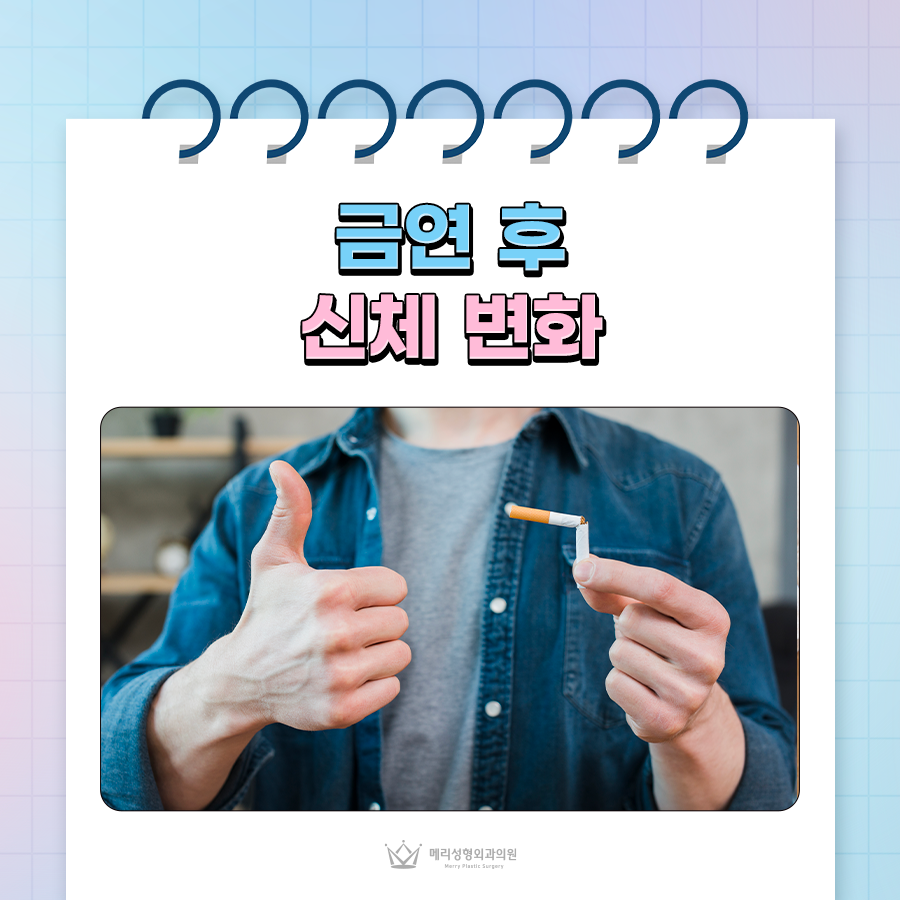
Hello. This is Merry Plastic Surgery Clinic, which pursues natural and beautiful changes.
People often say that alcohol is a necessary evil and cigarettes are a social evil.
It is true that drinking and smoking are not helpful to health in any situation.
This was especially true for cigarettes.
Because they are also addictive, many smokers have tried to quit for the sake of their health.
However, quitting smoking is not as easy as it sounds.
As mentioned earlier, because it is addictive, quitting can also come with withdrawal symptoms, making the process very difficult.
Today, let’s take a look at nicotine withdrawal symptoms and the body changes that occur after quitting smoking.
Why do nicotine withdrawal symptoms occur?
Withdrawal symptoms are symptoms that occur during the body’s recovery process, so they are not entirely bad.
In general, after 1 to 3 months of quitting smoking, nicotine withdrawal symptoms gradually disappear.
Most nicotine withdrawal symptoms occur because the components in cigarettes are substances that affect the nervous system.
Among the components of cigarettes, nicotine in particular is known to cause strong withdrawal symptoms.
Acetylcholine is a substance that helps transmit signals between nerve cells.
By breaking down and absorbing this acetylcholine, nicotine temporarily has a mood-relieving effect.
The reason people who smoke regularly light up when they are stressed or want to calm anxiety and nervousness is that they become addicted to this uplifting feeling.
As nicotine accumulates in the body, its addictive power becomes stronger, so it is no exaggeration to say that nicotine is the main reason most nicotine withdrawal symptoms occur.
What are nicotine withdrawal symptoms?
So, what kinds of nicotine withdrawal symptoms are there?
First, you may experience anxiety, restlessness, irritability, and a short temper.
As mentioned earlier, nicotine breaks down acetylcholine and promotes dopamine release.
Dopamine is a substance released when we feel pleasure.
It is often referred to as dopamine addiction when people constantly seek short-form content or something stimulating.
Because nicotine temporarily increases dopamine, smoking can ease feelings of stress, but as time passes and nicotine levels drop, you may become even more irritable.
Second, there may be problems with brain function, such as decreased concentration.
Nicotine, caffeine, alcohol, and similar substances temporarily help the brain become more alert.
As a result, concentration may improve, but when you quit smoking, temporary confusion can occur.
Third, binge eating may occur.
In fact, it is common to see people who smoked for a long time gain weight after quitting.
This is caused by binge eating due to quitting smoking.
When dopamine drops sharply, the brain starts looking for substitutes to provide stimulation.
Among foods, those high in sugar are said to be sought out more because they can rapidly raise dopamine levels for a short time.
That is why many people choose nicotine gum or nicotine candy to reduce withdrawal symptoms.
What foods are good when quitting smoking?
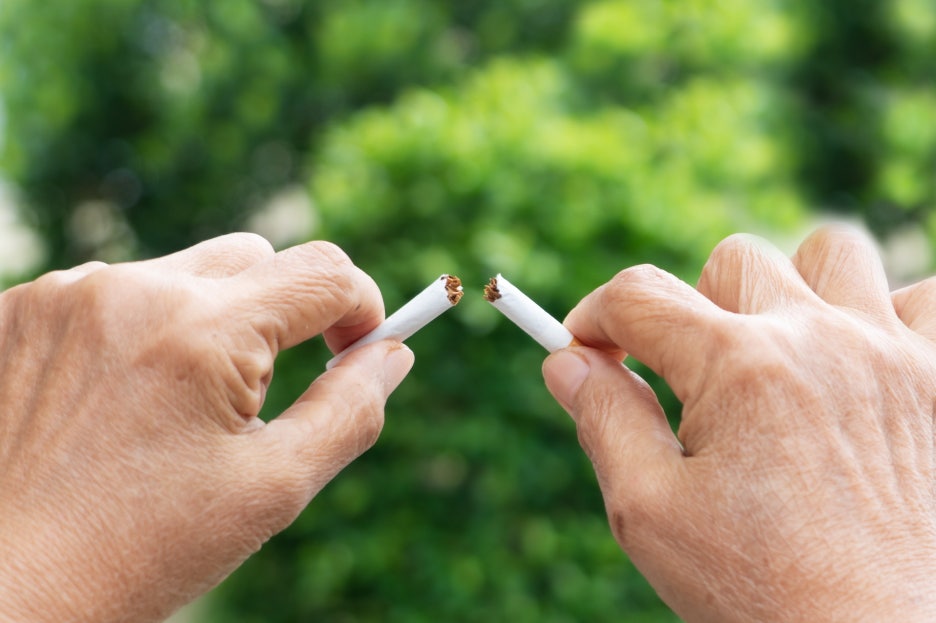
So, what foods are good when quitting smoking?
First, dairy products can help you quit smoking.
In a survey of foods that make cigarettes taste more unpleasant to actual smokers, milk was named as one of the top choices.
Apples are also said to be one of the good foods to eat when quitting smoking.
They are low in calories, high in moisture, and can satisfy people looking for something sweet.
In particular, the vitamins and fiber in apples are said to help prevent binge eating and reduce the urge to smoke.
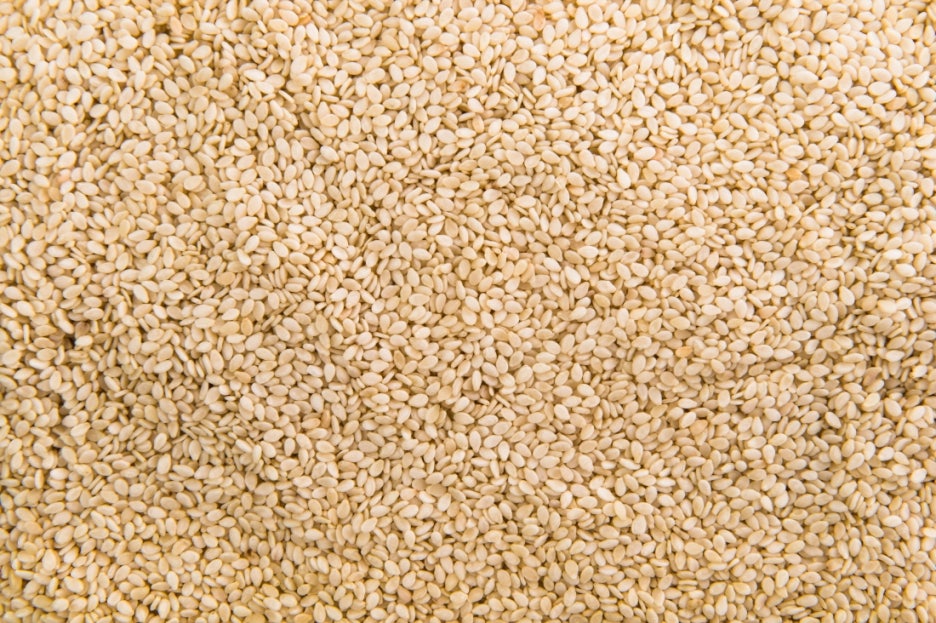
Brown rice is also a good food to eat when quitting smoking.
Among withdrawal symptoms, some people rarely experience constipation.
Smoking also affects the digestive system, and nicotine is said to further stimulate the activity of the gastrointestinal tract.
When nicotine is stopped, stomach activity slows down, which can lead to constipation.
Therefore, eating brown rice is said not only to increase fullness but also to help eliminate stool buildup in the intestines.
Sea mustard is also one of the good foods to eat when quitting smoking.
Sea mustard, a type of seaweed, is rich in vitamin A, so it is said to help eliminate nicotine accumulated in the body.
In addition, the phlorotannin in sea mustard is said to activate sleep-related substances in the body and help improve feelings of restlessness and insomnia.
What are the body changes after quitting smoking?
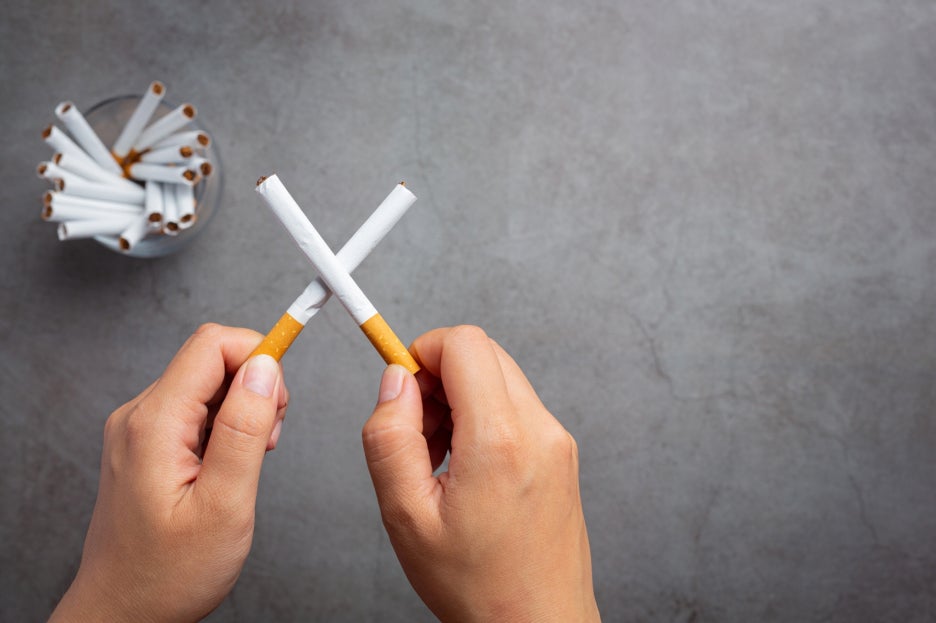
As withdrawal symptoms disappear, body changes after quitting smoking gradually begin to appear.
First, many people already know that lung function improves.
It is said that in smokers, lung function is impaired and lung cells die quickly, greatly increasing the risk of lung cancer.
Simply quitting smoking can improve lung capacity along with the regeneration of damaged nerve cells.
If you look at the lungs after 7 days of quitting, lung function has partially recovered, and after 10 days, recovery levels increase to about 30%.
Lung function is said to normalize over about 3 months after quitting, and after 9 months, cilia growth begins again.
As these lung cilia recover, the risk of exposure to respiratory diseases also decreases.
In other words, people who have had cough, phlegm, shortness of breath, rhinitis, and similar symptoms may feel the body changes after quitting smoking more easily.
Feelings such as restlessness, stress, and anxiety, which are nicotine withdrawal symptoms, may also gradually ease as the urge to smoke weakens.
Furthermore, the chance of being exposed to cardiovascular disease and similar conditions also decreases.
Today, we looked at body changes after quitting smoking.
Please remember that cigarettes are harmful not only to yourself but also to the precious people around you through secondhand smoke, and try taking on the challenge of quitting.
Thank you.









Previous image
Next image