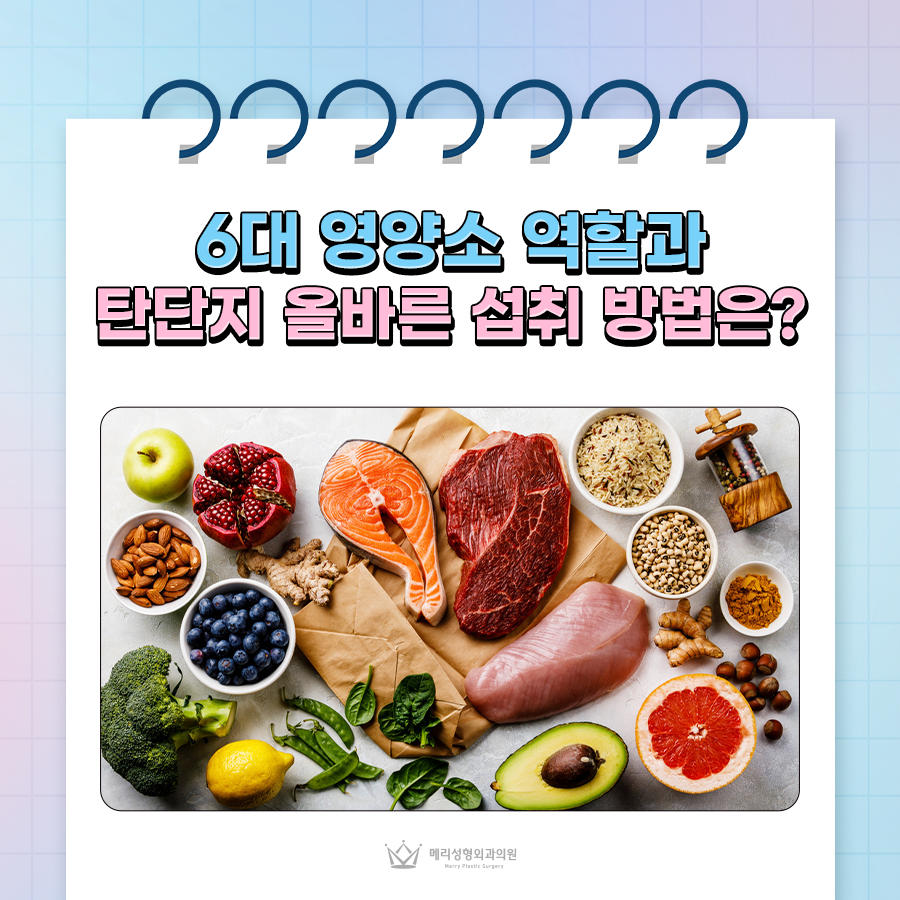
Hello. We are Merry Plastic Surgery Clinic, which pursues natural and beautiful changes.
In general, when consuming food, we often say that the balance of nutrients should be maintained.
Among them, the essential nutrients needed by the body are divided into a total of six types.
Each of the six essential nutrients consists of components necessary for the body to function, and if they are lacking, they can cause problems, so it is important to maintain balance through food intake.
However, due to Westernized diets in modern society, many people fail to consume enough of the six essential nutrients, and the term “hidden hunger” has also emerged.
Today, let’s look at the roles of the six essential nutrients and how to properly consume carbohydrates, proteins, and fats.
What are the roles of the 6 essential nutrients?
✅ Water

The indispensable component in our body is moisture, or water.
Since about 60% of the body is made up of water, if water equivalent to about 5–10% of body weight is lacking, dehydration symptoms can occur, and in severe cases it can even lead to death from acute shock, so a certain amount of water must be supplied every day.
In addition, water helps regulate sodium and blood concentration in the body, removes waste products, and is needed for various metabolic activities such as temperature regulation, nutrient absorption, and digestion.
✅ Vitamins

Some people think vitamins are optional, but generally, so-called essential vitamins are nutrients necessary for bodily functions.
Vitamins are needed for metabolism, immune support, cell growth and protection, and diseases can develop depending on which vitamin group is deficient.
There are about 13 types of essential vitamins, including A, B, C, D, E, and K, and among them, the vitamin B group is needed in the body for vitality and antioxidant support.
The vitamin B group includes thiamine, niacin, biotin, pantothenic acid, riboflavin, B6, B12, and others.
✅ Minerals
Calcium, potassium, iron, sodium, zinc, magnesium, and others fall under minerals, that is, inorganic substances.
Such minerals are nutrients that help form bones and teeth and increase their density.
In addition, they are components necessary for various bodily activities, such as maintaining fluid balance and helping secrete neurotransmitters.
✅ Carbohydrates

Among the roles of the 6 essential nutrients, carbohydrates, proteins, and fats can be considered the main sources of energy.
Because of this, many people cut out carbohydrates when dieting, but it is better to consume at least a small amount of carbohydrates if possible.
That is because carbohydrates act as the energy source needed for the body to move and help promote the energy needed for activity and the function of the central nervous system.
✅ Protein

Protein is an essential nutrient needed for the growth and repair of body tissues.
It is especially essential for the repair of tissues such as muscles, skin, hair, and organs.
In addition, protein is necessary for enzyme secretion, hormone regulation, and immune support.
Many people are advised to increase their protein intake after exercise.
In particular, after strength training, the improvement in strength comes from the recovery of damaged muscle fibers, and protein is needed to recover this damage, so an adequate amount must be supplied.
In addition, protein also plays a role in oxygen transport and in producing hemoglobin in red blood cells.
✅ Fat
Fat stores energy in the body and protects organs.
Fats can be divided into several types depending on the kind.
Among them, essential fatty acids cannot be synthesized or produced by the body, so they must be consumed through food.
Fats can help protect body temperature and support brain function and organ protection.
How should carbohydrates, proteins, and fats be consumed properly?

Today, we looked at the roles of the 6 essential nutrients.
Among them, what is the proper way to consume the representative energy sources: carbohydrates, proteins, and fats?
First, protein is said to be needed in sufficient amounts, but if consumed in excessive amounts, nitrogen waste can accumulate excessively in the body.
Therefore, when consuming protein, we recommend an intake of 1.0–1.5 g per 1 kg of body weight.
The proper way to consume carbohydrates is to take them in appropriate amounts.
If carbohydrates are severely lacking in the body, short-term hypoglycemia can occur, and in the long term, nervous system symptoms such as lack of sleep and nervousness may appear.
However, if carbohydrates are consumed in excess, blood sugar remains high, insulin is secreted excessively, and the likelihood of triglyceride accumulation increases.
Therefore, if you are usually dieting or need to manage your condition, we recommend consuming at least about 100 g of carbohydrates and, if possible, choosing whole grains such as brown rice, whole wheat, and oats, or whole wheat bread, which undergo less refining.
Lastly, the proper way to consume carbohydrates, proteins, and fats includes using fat appropriately.
If fat is consumed in excess, there is concern about obesity and cardiovascular disease.
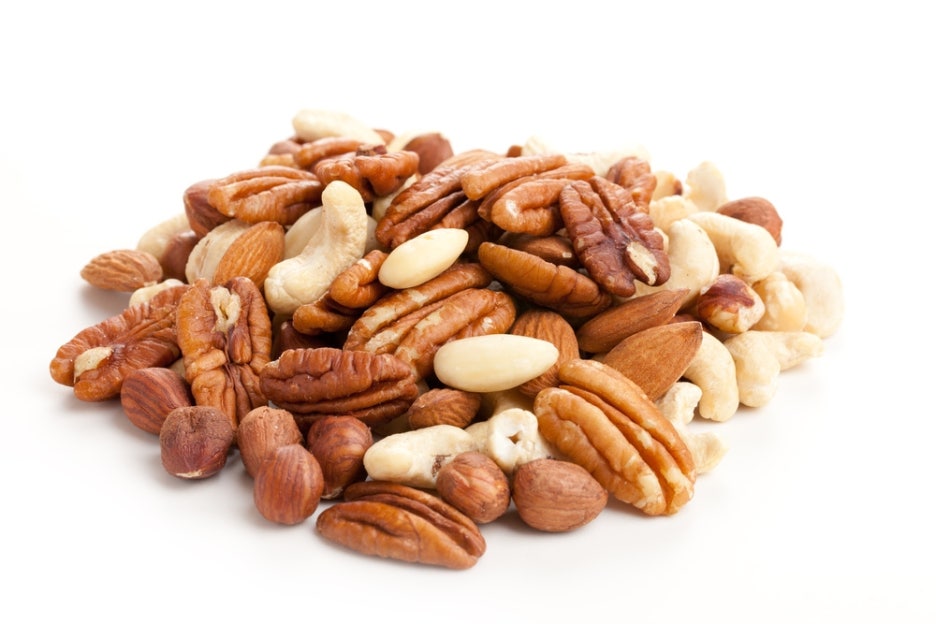
Therefore, fat intake should be set so that it does not exceed 25% of total daily calories, and rather than fats found in animal products or trans fats, it is better to increase intake of unsaturated fatty acids such as omega and DHA found in fish and nuts.









Previous image
Next image