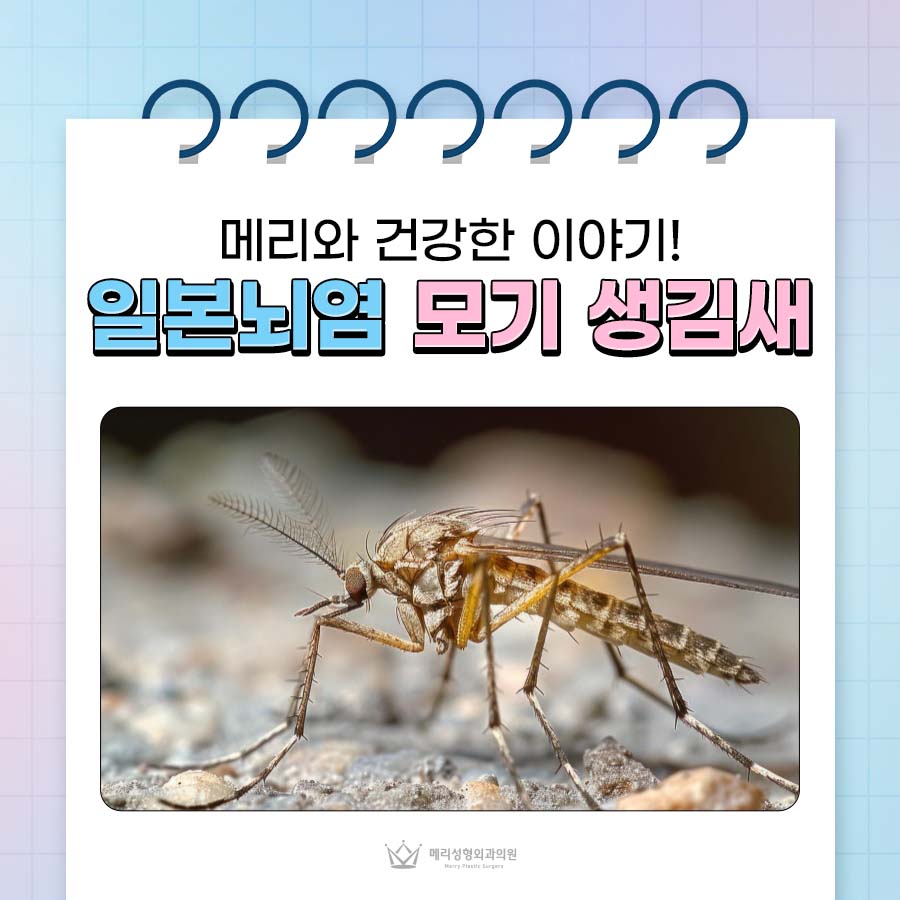
As summer arrives, an unwelcome visitor comes with it: the mosquito. Mosquitoes can carry diseases harmful to humans, so they should be watched out for. The Korea Disease Control and Prevention Agency said that, as more than 50% of the collected mosquitoes in Gyeongnam and Jeonnam were confirmed to be small red house mosquitoes, which are Japanese encephalitis mosquitoes, it issued a nationwide Japanese encephalitis alert on the 25th.
The small red house mosquito, the vector mosquito for Japanese encephalitis, is a type of house mosquito. It is a mosquito that transmits Japanese encephalitis and is distributed in Korea, as well as Japan, China, the Philippines, and other places. Today, let’s briefly look at the appearance of the Japanese encephalitis mosquito that you should be careful of in summer, the symptoms of Japanese encephalitis, and Japanese encephalitis vaccination.
Appearance of the Japanese encephalitis mosquito, the small red house mosquito
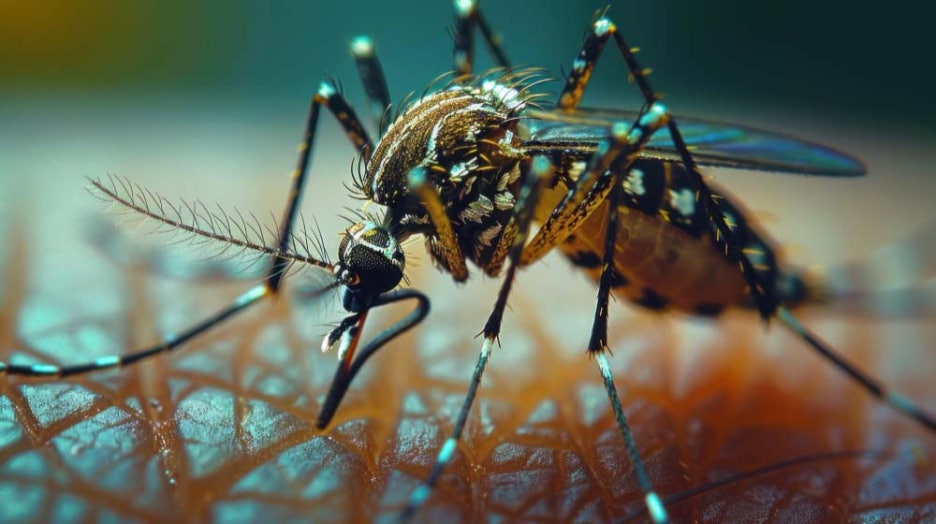
Image for reference
Physical characteristics
✔ Overall dark brown color: The vector mosquito that transmits Japanese encephalitis is mainly known as the small red house mosquito. In appearance, the Japanese encephalitis mosquito is generally dark brown with no distinct markings.
✔ Small size: Another feature of the Japanese encephalitis mosquito is its small size. It is a small mosquito, measuring about 4.5 mm.
✔ Broad white band in the center of the proboscis: A distinguishing feature of the Japanese encephalitis mosquito is the broad white band in the center of the proboscis. This is a physical characteristic of the small red house mosquito.
Activity time
✔ Nocturnal: The small red house mosquito, which carries Japanese encephalitis, is mostly active in the evening and at night. The risk of being bitten by mosquitoes is higher in the evening.
✔ Humid environments: It tends to prefer water edges and humid areas. This is one of the reasons extra caution is needed in summer.
Symptoms of Japanese encephalitis
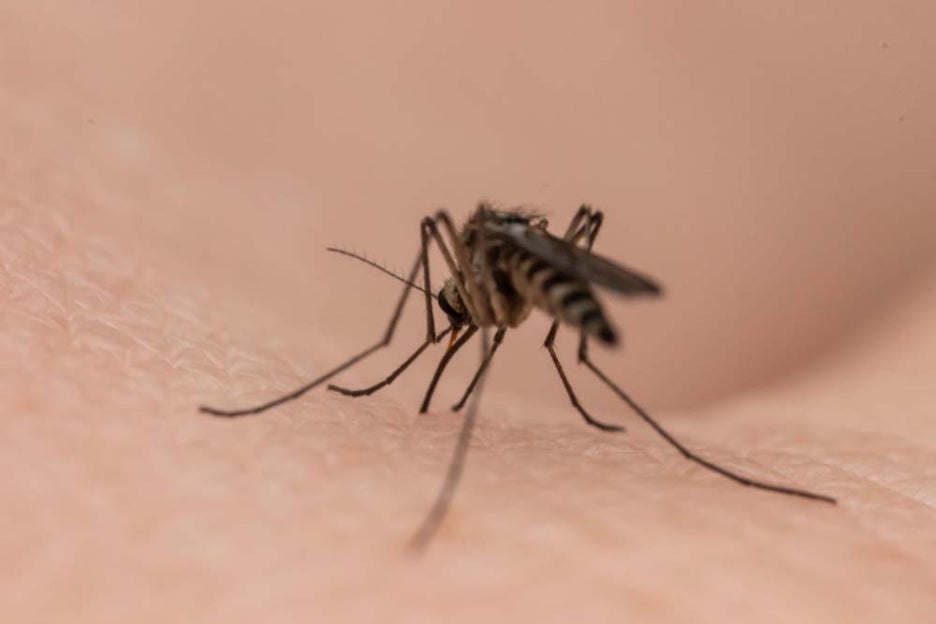
Image for reference
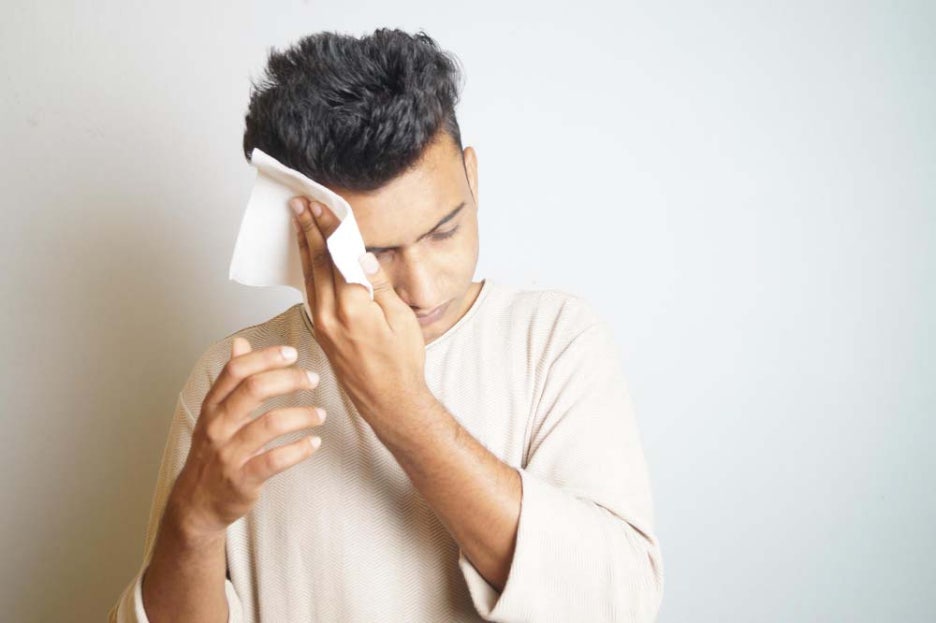
If bitten by a small red house mosquito carrying the Japanese encephalitis virus, most people have no symptoms or only mild symptoms with fever. However, some patients can progress to fatal acute encephalitis, so caution is needed. Among these, 20–30% may be at risk of death, so it is not good to take Japanese encephalitis symptoms lightly.
There is an incubation period before Japanese encephalitis symptoms appear, and the incubation period may occur 5 to 15 days after being bitten by a mosquito. The course of the disease can be divided into the prodromal stage, acute stage, subacute stage, and recovery stage depending on the symptoms. Symptoms appear suddenly and may include a fever above 39°C, headache, dizziness, vomiting, abdominal pain, and sensory disturbances.
-日本뇌염 incubation period
5 to 15 days after being bitten by a mosquito
-Prodromal stage (2–3 days)
Early symptoms appear. Symptoms such as high fever with headache, tachycardia, aching arms and legs, vomiting, and diarrhea may occur.
-Acute stage (3–4 days), subacute stage (7–10 days)
Symptoms become more severe. Symptoms such as chills, high fever, and vomiting may occur. Symptoms affecting the brain and nervous system may also appear.
-Recovery stage (4–7 weeks)
As the fever subsides, symptoms gradually improve. However, a stiff facial expression, as if wearing a mask, may appear.
How to get vaccinated against Japanese encephalitis?

So far, we have looked at the appearance of the Japanese encephalitis mosquito and the symptoms of Japanese encephalitis.
There is no specific treatment for Japanese encephalitis. If symptoms occur, treatment focuses on relieving symptoms and preventing complications.
However, there is a way to get vaccinated against Japanese encephalitis.
Vaccinations can be received at public health centers or general clinics and hospitals. There are two types of Japanese encephalitis vaccines: a live attenuated vaccine and an inactivated vaccine, and the vaccination schedule and 대상 vary depending on the vaccine.

✅ Inactivated vaccine
✅ Live attenuated vaccine
- Primary series: 1 dose at 12 to 23 months of age, and the second dose 12 months after the first dose
✅ Who should receive the Japanese encephalitis vaccine as an adult?
Adults age 18 or older with no vaccination history who 1) live in risk areas, 2) are scheduled to work in risk areas during the transmission season, 3) are foreigners who moved from non-endemic areas and are living long-term in Korea, or 4) are travelers to countries at risk for Japanese encephalitis are advised to get vaccinated.
Precautions to prevent mosquito bites from Japanese encephalitis mosquitoes
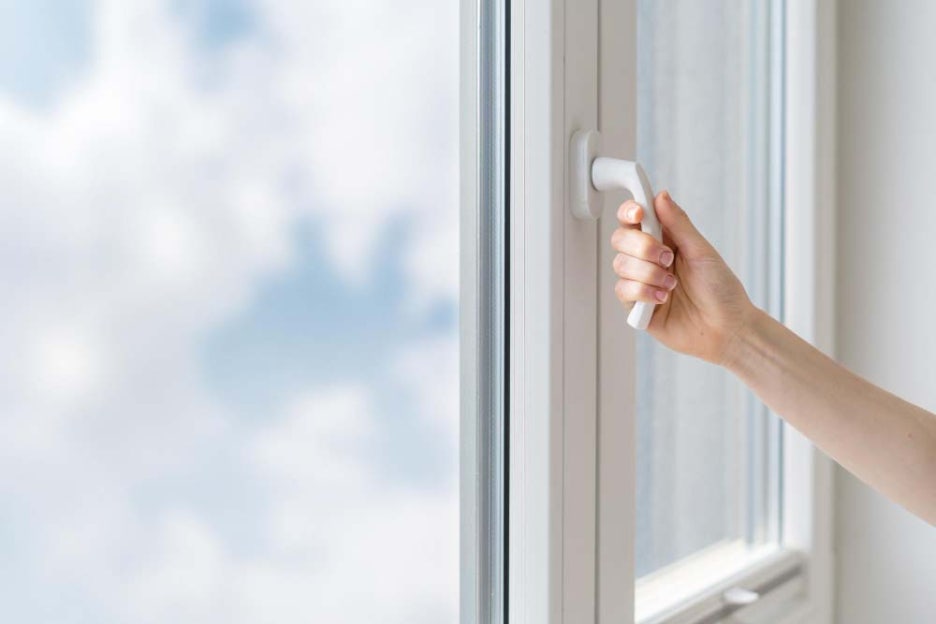
To prevent Japanese encephalitis, vaccination is important, but above all, it is best to be careful not to get bitten by mosquitoes. The small red house mosquito, the vector mosquito for Japanese encephalitis, is nocturnal, so it is advisable to avoid nighttime activities when mosquitoes are active and to check window screens and mosquito nets at home.
-
Do not engage in nighttime outdoor activities from April to October, when mosquitoes are active (from just after sunset to just before sunrise)
-
When going out at night, wear light-colored, long-sleeved clothing and loose-fitting clothes
-
Use mosquito repellent on exposed skin to prevent mosquitoes from approaching
-
Avoid strong perfumes or cosmetics that may attract mosquitoes
-
Check window screens to prevent mosquitoes from entering from outside, and use mosquito nets indoors
-
Remove standing water so that puddles do not form around the house (the main habitat of mosquitoes)

 Previous image
Next image
Previous image
Next image