Starting some time ago, as summer arrives, news reports in Korea have often included stories about jellyfish sightings. This year was no exception. With many jellyfish-sting accidents reported at beaches on the East Coast of Gangwon Province, visitors heading to the sea during the summer are being urged to be careful.
Among them, the jellyfish currently drawing attention is the 'Nomura's jellyfish.' Nomura's jellyfish is a species found along the coast of China, and it is said to have entered the eastern and southern coasts of Korea in large numbers following ocean currents.
It is said to have many tentacles and strong venom, so one individual can cause harm to multiple people. Today, we will look into Nomura's jellyfish, which is currently appearing, and learn about the symptoms of jellyfish stings and what to do when stung.
What Is Nomura's Jellyfish?
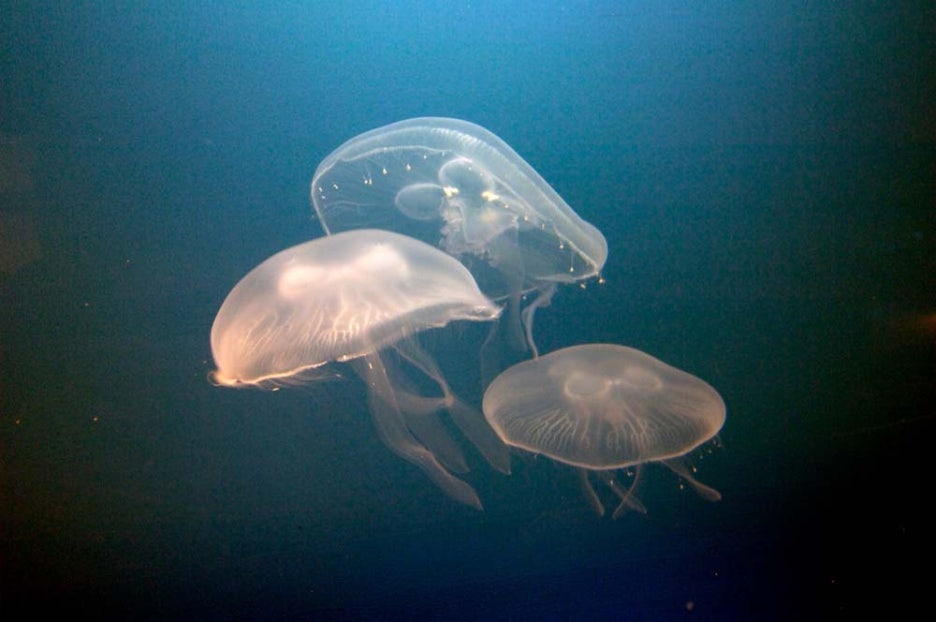
Image for reference
Nomura's jellyfish is said to originate from the coast of China and enter Korea along ocean currents from late June.
It is a cnidarian in the order Rhizostomeae of the class Scyphozoa, and it may be observed in waters near Korea around May. It is relatively large, measuring about 1 to 2 meters, and its strong venom makes it a cause of jellyfish-sting accidents in summer.
Overall, it has a yellowish-brown body, and adults are considered a large species with an umbrella diameter of around 50 cm and tentacles around 3 m in length. It is mainly found in surface waters at depths of within 3 m.
The recent increase in this species is thought to be due to environmental pollution and the indiscriminate overfishing of its natural predators, such as sea turtles and filefish, which has reduced the number of predators and allowed the population to rise rapidly.
Symptoms of Jellyfish Stings
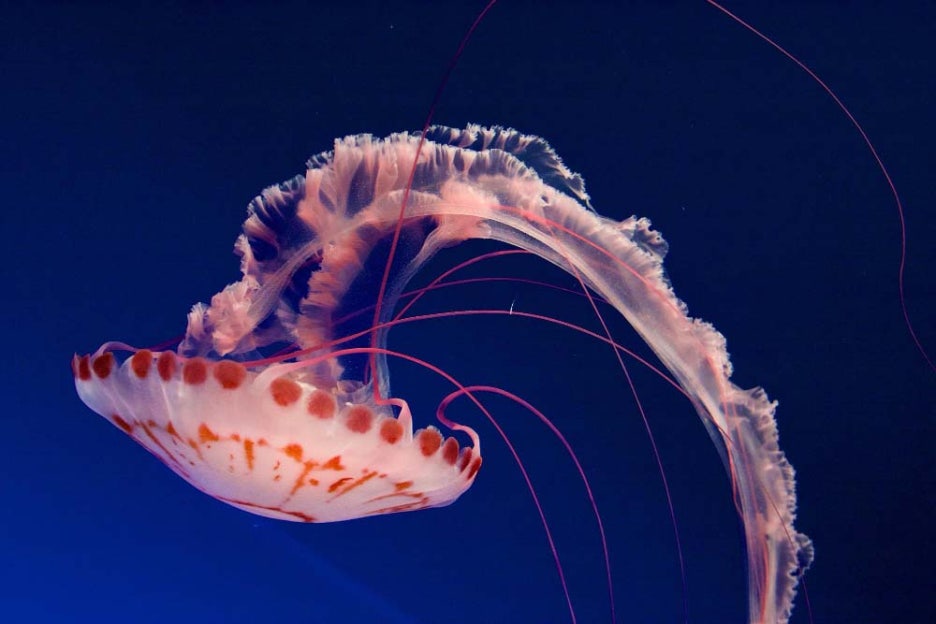
Image for reference
So, what symptoms can occur when stung by the Nomura's jellyfish, which is currently a concern?
Nomura's jellyfish is said to have as many as 52 types of venom. Jellyfish tentacles have stinging cells, so the moment of contact, various toxins released at the cellular level can enter the body through the stingers and cause abnormal symptoms.
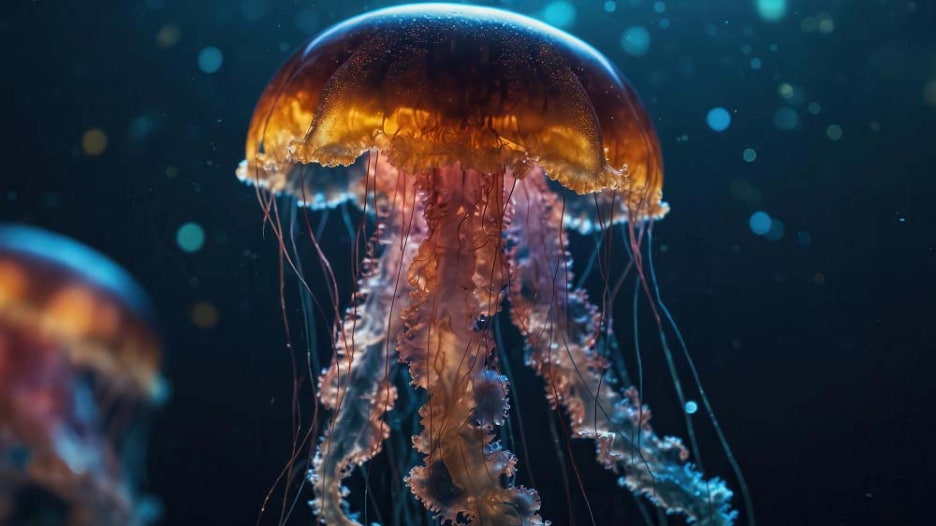
Image for reference
Symptoms of a Nomura's jellyfish sting are characterized by whip-like marks with erythema.
It can also cause itching and a stinging sensation on the skin. Symptoms vary from person to person, and in severe cases, an anaphylactic reaction can put life at risk. Therefore, if you suspect that your symptoms were caused by a jellyfish sting at the beach, it is best to respond appropriately with the first aid measures for jellyfish stings.
✔ Swelling of the skin
✔ Stinging sensation
✔ Whip-like marks with erythema
✔ (If it affects the central nervous system) chills, fever, muscle paralysis, difficulty breathing, etc.
First Aid for Jellyfish Stings

So far, we have looked at the symptoms of jellyfish stings. As jellyfish appearances become more frequent in summer, interest in what to do when stung by a jellyfish is also growing.
Areas of the sea with heavy foam or many floating materials are more likely to have jellyfish, so it is best to avoid getting close to them. Even dead jellyfish can still contain venom, so if you find one, do not approach it carelessly. In particular, if you are stung by a jellyfish, you must respond quickly so the venom does not spread.
Here are the first aid steps for a jellyfish sting.
I hope that with proper first aid, you can protect your health if you are stung by a jellyfish.
✅ Immediately get the injured person out of the water, and if the sting covers a large area or the condition is poor, call emergency services right away
✅ Check the patient’s condition, and if there is an emergency such as difficulty breathing, perform CPR including rescue breathing
✅ If stung by a jellyfish, wash the area quickly with seawater or saline to prevent the venom from spreading (tap water, bottled water, and vinegar are prohibited)
✅ If jellyfish stingers are embedded, use a credit card or plastic ruler to scrape and lift them out in the opposite direction of the stinger and remove them directly
✅ If a jellyfish is attached to the body, do not try to pull it off by force; it is better to remove it using a nearby object

So far, we have looked at what to do when stung by a jellyfish.
If you are stung by a small jellyfish and the stingers are not easy to see, it is advisable to visit a medical facility immediately and receive appropriate treatment.
The way to prevent jellyfish stings is not to swim in waters where jellyfish are present.
Before enjoying the sea, it is a good idea to check jellyfish-related information and watch your surroundings carefully.
It is also best to reduce skin exposure as much as possible by wearing a full-body swimsuit, long-sleeved clothing, and shoes.







Previous image
Next image