Hello. We are Merry Plastic Surgery Clinic, pursuing natural and beautiful changes.
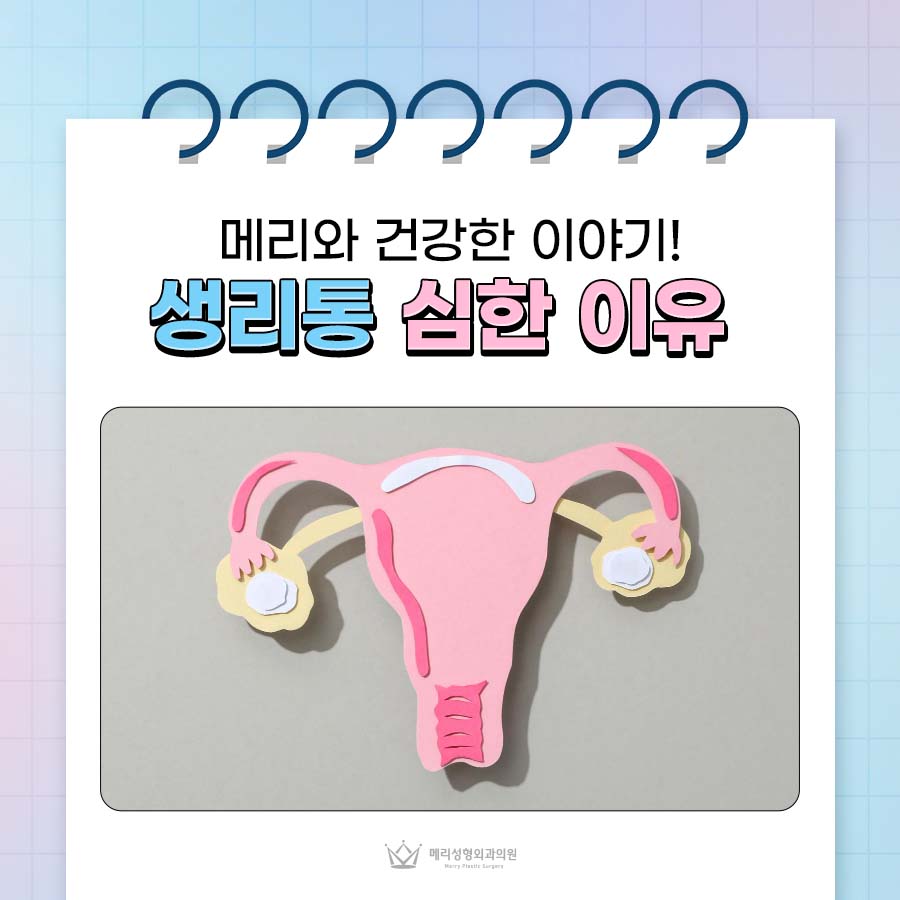
Today, we would like to talk about menstrual cramps, an issue that many women experience to some degree.
When people think of “menstrual cramps,” some may think of it as just mild discomfort or a brief pain that passes quickly. But for some people, it can be a source of severe pain. Today, let’s briefly look at what menstrual cramps are, the reasons they can become severe, and how to relieve severe menstrual cramps.
What Are Menstrual Cramps?

Menstrual cramps refer to abdominal pain experienced by women during the menstrual cycle.
Any woman can experience them, and they can occur before or after the start of menstruation. They can appear in various forms, from mild discomfort to severe pain that makes daily life difficult, so the intensity of menstrual cramps can differ from person to person.
Menstrual cramps are broadly divided into two types, and most common cases fall under “primary dysmenorrhea.”
-
Primary dysmenorrhea: General pain related to the menstrual cycle, pain that occurs during menstruation without any specific underlying disease. It usually lasts for 2 to 3 days starting with the onset of menstruation.
-
Secondary dysmenorrhea: Pain caused by diseases related to reproductive organs such as the uterus (endometriosis, uterine fibroids, etc.)
Reasons Menstrual Cramps Become Severe
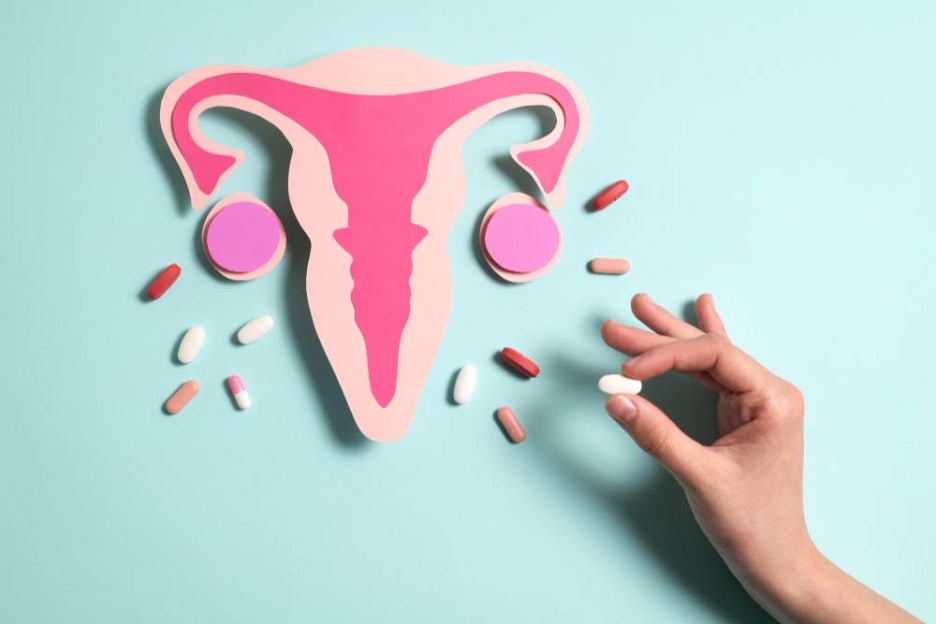
If your menstrual cramps become worse and your menstrual flow also increases, you may want to suspect menstrual pain caused by an underlying condition. In such cases, it is a good idea to visit a medical institution for a detailed diagnosis of the cause. The following are representative conditions that may be considered reasons for severe menstrual cramps. If your cramps have suddenly become more severe than before and your menstrual flow has increased as well, please pay attention to the information below.
- Endometriosis
One reason menstrual cramps can become severe is endometriosis. This condition occurs when tissue that should be inside the uterus exists outside the uterus. In particular, endometriosis is a representative form of secondary dysmenorrhea and can cause infertility, so appropriate treatment is recommended.
- Uterine fibroids
Next, menstrual cramps may worsen due to uterine fibroids. Uterine fibroids can be experienced by most women. When estrogen levels, progesterone, or female hormones are excessively secreted, fibroids may grow and cause pain.
- Irregular lifestyle habits
Lastly, irregular lifestyle habits can also be a reason menstrual cramps become severe. Irregular meals, lack of sleep, frequent drinking, and stress can affect uterine health and hormones, which may worsen menstrual cramps. Relieving stress through light exercise and improving blood circulation can help.
How to Relieve Severe Menstrual Cramps
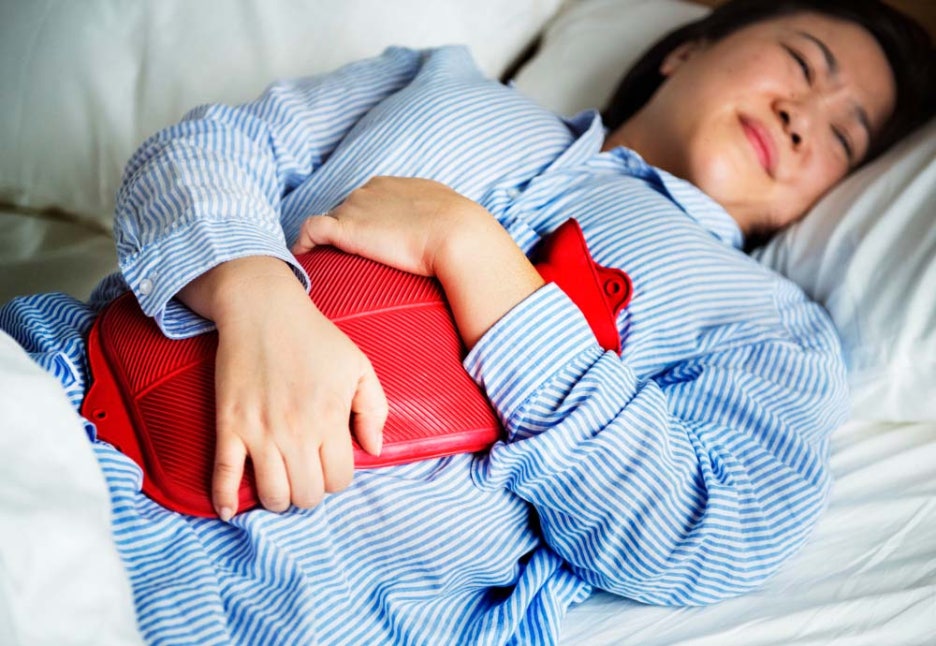
So far, we have looked at what menstrual cramps are and the reasons they can become severe. If menstrual cramps are too intense, it can be difficult to continue daily life.
Although the intensity of menstrual cramps can temporarily worsen depending on your condition, if it happens repeatedly, it is a good idea to get a detailed examination at a medical institution. In daily life, the following methods may help manage severe menstrual cramps.
- Warm the abdomen
As a way to relieve severe menstrual cramps, it is good to first warm the abdomen. A warm compress on the abdomen can help blood circulation and may ease symptoms when cramps are severe.
- Take pain relievers
If menstrual cramps are very severe, pain relievers can help. It is good to start taking them 1 to 2 days before menstruation begins. However, if you are about to undergo surgery, have a peptic ulcer, suspect an ulcer, or have gastrointestinal bleeding, it is best to avoid taking them.
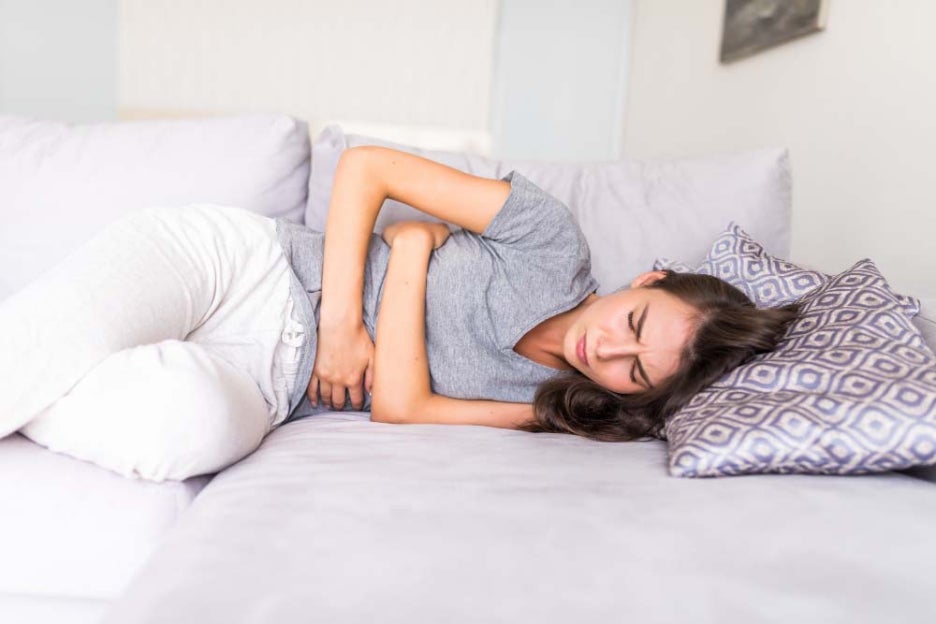
- Positions that help relieve menstrual cramps
Changing your posture may help relieve severe menstrual cramps. Rather than lying flat on your back, lying on your side in a fetal position can relax tension in the abdominal skeletal muscles and help ease cramps.
- Drink enough water
Lastly, it is good to drink plenty of water. Drinking water can help reduce swelling during menstruation and may help reduce pain. Drinking warm water can be even more effective because it improves blood circulation.
If you suffer from severe menstrual cramps, I hope the methods above will help you manage your symptoms. If the symptoms continue, please receive an appropriate diagnosis and treatment from medical professionals.






Previous image
Next image