Hello, we are Merry Plastic Surgery Clinic, and it’s always a pleasure to meet you.
As awareness of antibiotic misuse in Korea has grown, antibiotics are increasingly seen as something to fear and avoid. But should we really avoid taking them altogether?
I think I heard a lot about the Joseon Dynasty during infectious disease classes in medical school. Stories about many people sadly dying because there were no antibiotics, and stories about Joseon kings dying from nothing more than boils...
If you look into the causes of death of Joseon Dynasty kings, you find that many lives were taken by diseases that are relatively easy to treat today. Boils, sepsis, pneumonia, infectious diarrhea... In those days, there were no treatments, so many kings had to leave the world at a young age.
Through today’s story, I’d like to think together about the importance of appropriate antibiotic use.
Causes of Death of Joseon Dynasty Kings
If you look at the Annals of the Joseon Dynasty, infectious diseases often appear as a common factor behind the kings’ deaths.
-
King Hyeonjong (18th): boil → sepsis → death
-
King Sunjo (23rd): worsening digestive disease → suspected sepsis
-
Kings Munjong, Seongjong, Yeonsan-gun, etc.: suspected deaths from bacterial infection
-
King Gyeongjong: enteritis-related diarrhea → treatment failure
In particular, sepsis can now have a much higher survival rate with appropriate antibiotic treatment and intensive care, but in the Joseon Dynasty, there were limits to what the royal physicians could do with acupuncture and herbal medicine.
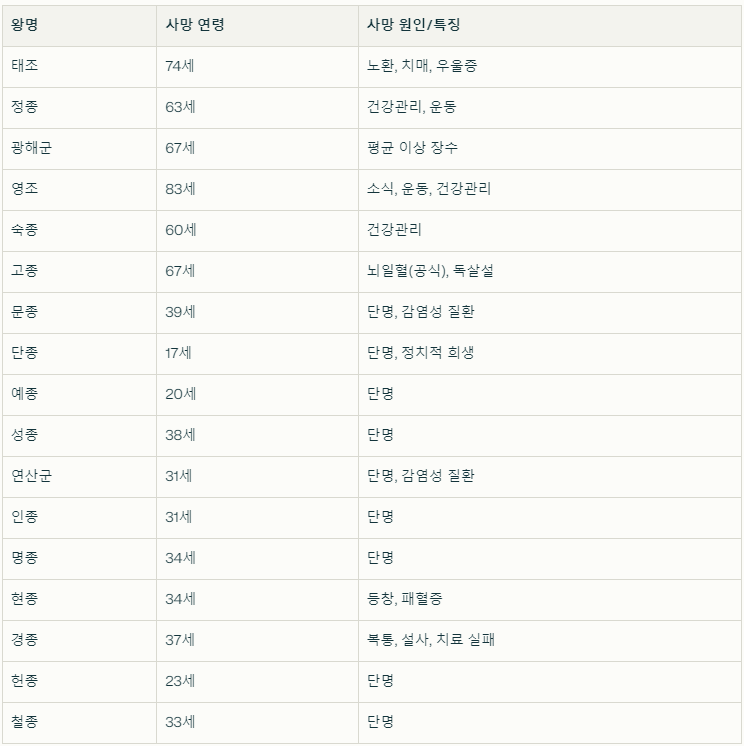 A summary of long-lived and short-lived kings in the Joseon Dynasty
The greatest gift of modern medicine
Until penicillin was discovered in 1928, infectious diseases were humanity’s greatest enemy. The boils (skin abscesses), pneumonia, and sepsis that afflicted Joseon Dynasty kings were mostly diseases caused by bacterial infection, and today they can be improved with relatively simple antibiotic treatment.
-
Boils, furuncles → antibiotics + incision and drainage
-
Sepsis → early antibiotic administration + intensive care
-
Pneumonia → appropriate antibiotics according to the causative bacteria
If antibiotics had existed in the Joseon Dynasty, the average lifespan of the kings who died young would have been much longer.
However, is antibiotic overuse causing another crisis...?
The problem is that in modern society, antibiotics are being used too easily, and we are raising another enemy: resistant bacteria (superbugs).
-
Automatically prescribing antibiotics for a cold → ❌
-
Unnecessary antibiotic use for viral infections → ❌
-
Stopping prescribed antibiotics on your own because your symptoms improved → ❌
This kind of overuse eventually creates bacteria that antibiotics no longer work against, and in the future, we too could become helpless before sepsis without a treatment, just as in the Joseon Dynasty.
Antibiotics must be taken only when truly necessary, after identifying the correct causative bacteria, and by following the proper dosage and duration.
In particular, for severe infections such as sepsis, pneumonia, and urinary tract infections, prompt administration can save lives. But for ordinary colds or viral infections, antibiotics are not helpful.
-
Cold · flu → no antibiotics needed (mostly viral)
-
Bacterial pneumonia, urinary tract infections → antibiotics needed (doctor’s judgment)
-
Sepsis → immediate antibiotic administration is essential
The illnesses that Joseon kings suffered from are mostly conditions that can be sufficiently treated today, but in that era, treatment options were lacking. The weapon we have now, antibiotics, is a precious asset. Only by using it correctly can future generations also benefit from it.
References
-
『The Annals of the Joseon Dynasty』 (National Institute of Korean History)
-
Korean Academy of Medical Sciences, Infectious Disease History Report
-
The Korean Society of Infectious Diseases, "Guidelines for Proper Antibiotic Use"
-
Numerous articles cited from Newsis, Health Korea, etc.
Merry Plastic Surgery Clinic always thinks about the best information for your health.
This has been Merry Plastic Surgery Clinic, where it’s always a pleasure to meet you.