Hello.
This is AB Plastic Surgery.
There are several techniques for alar reduction, and each method has different effects and uses.
The method called “non-incisional alar reduction” or “alar tying” at some hospitals simply narrows both sides of the nasal base with thick thread. Because it relies on the strength of the thread, it does not have a very large effect and is a surgical method that has a high chance of returning to its original state. However, this method can correct excessive flaring of the alar when smiling, so for people who are worried about that, it can be a good option.
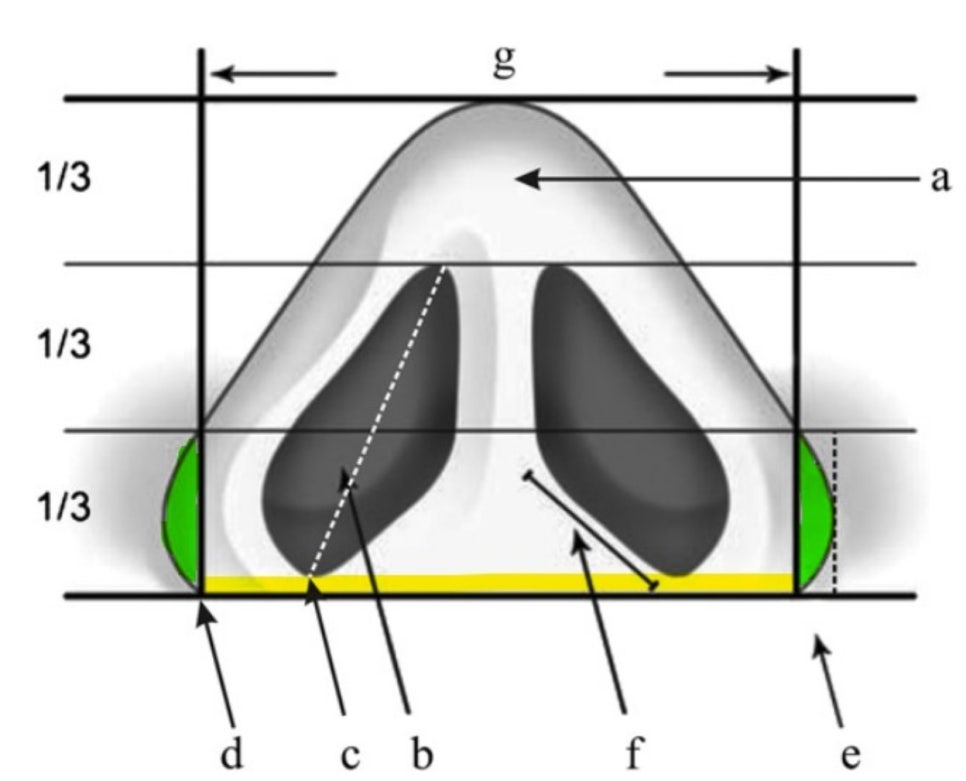
The difference between lateral and medial will be easy to understand if you look at the figure above. Medial reduction decreases the left-right width of the yellow area (alar base width), and lateral reduction decreases the green area (alar flaring).
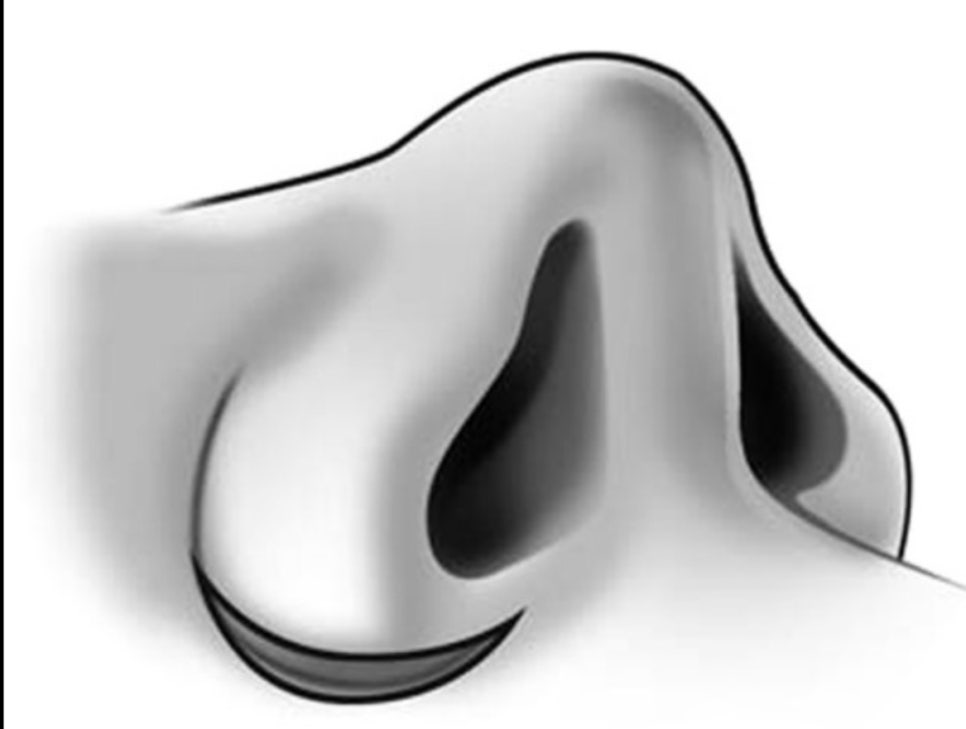
The lateral alar reduction shown in the figure above is called Weir excision, and it reduces the flaring of both alae. This is a feature commonly seen in East Asians, and when viewed from the front, the alae can look puffy, which is not aesthetically desirable, so many people worry about it. When this surgery is performed together with tip surgery, it has the effect of tightening the skin and can also improve a bulbous nose with thick skin.
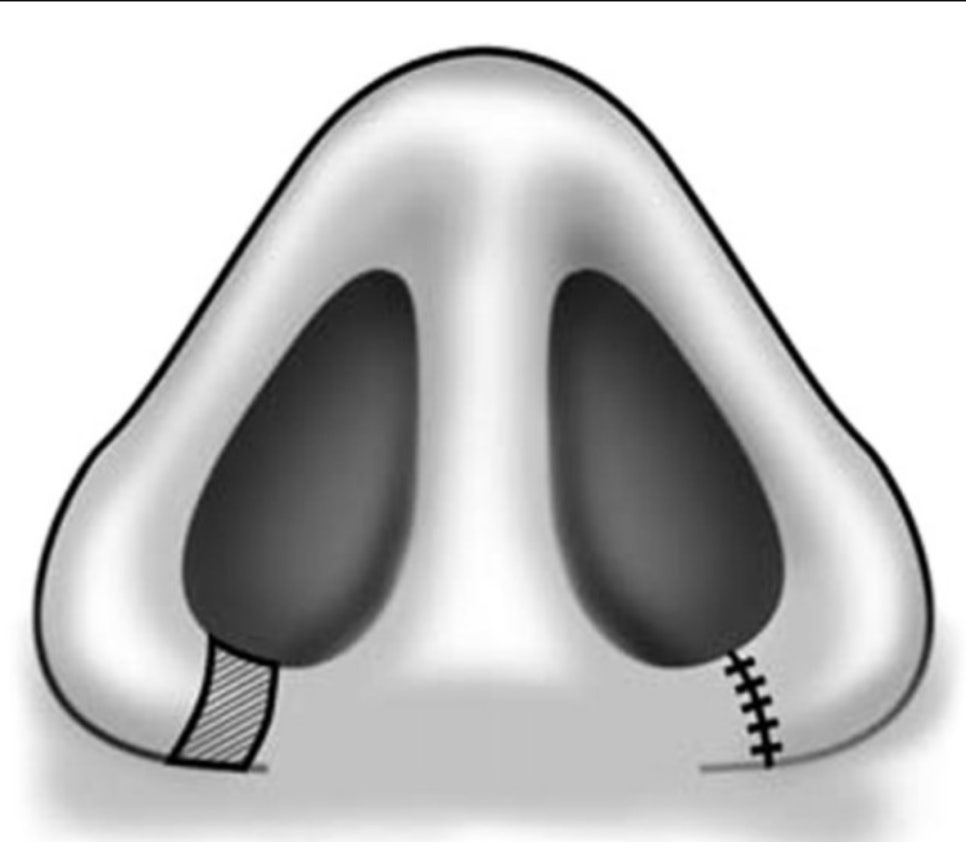
The figure above shows medial alar reduction, called Sill excision, which reduces the nasal base. Unlike lateral reduction, the scar is hidden inside the nose, which is an advantage in terms of scarring. In addition, if the nostrils are excessively large, the size of the nostrils can also be reduced. In fact, when the nasal tip is raised, the alar tissue also gathers toward the tip, so the width of the base does decrease. However, if the base area is still wide, this can be a good additional procedure. Also, when performed together with tip surgery, the amount of reduction can be decreased, allowing the procedure to be performed more safely.
The reason these two methods are distinguished and their indications are determined separately is that, for example, if lateral alar reduction is needed but medial alar reduction is performed, the alar flaring may become even more pronounced and the appearance may worsen, because each method has a different purpose.
For reference, in patients who have both a wide nasal base and alar flaring, medial and lateral reduction are often performed together.
If you have any additional questions, please leave a comment!
Thank you :)
Image source: Behnam Bohluli et al, Nasal Base Surgery, Oral Maxillofacial Surg Clin N Am 2012;24:87–94
#ABPlasticSurgery #LeeJongseok #Rhinoplasty #AlarReduction #AlarTying #NonIncisionalAlarReduction #MedialAlarReduction #LateralAlarReduction