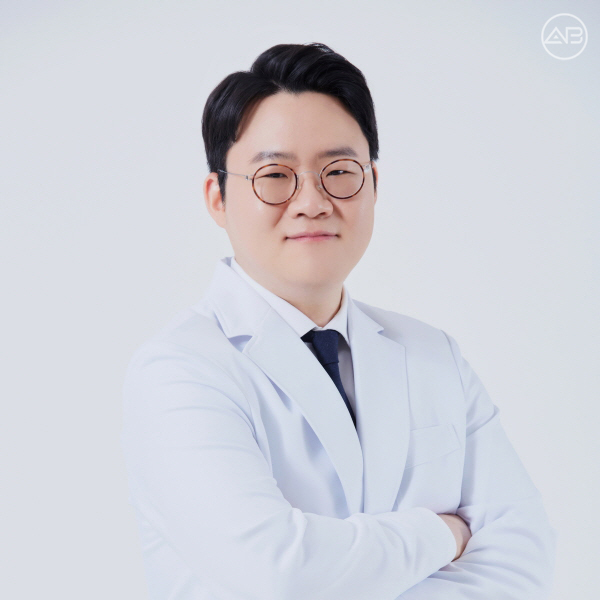
Director Ma Seong-hwan of AB Plastic Surgery
With the winter break and year-end season, the number of patients seeking revision male rhinoplasty is increasing.
This is a time of year when demand for cosmetic surgery rises annually because patients can secure enough time for postoperative recovery, but
recently, cases of considering nose revision surgery due to structural and functional problems that appeared after the first surgery, beyond simple cosmetic purposes, have increased significantly.
In particular, capsular contracture, nostril asymmetry, and changes in the shape of the nasal tip are being cited as the main reasons for revision surgery.
According to AB Plastic Surgery, the most common cause of the increase in revision male rhinoplasty is capsular contracture.
Capsular contracture is a representative complication that can occur after the first surgery, and persistent inflammatory reaction is mainly considered the cause.
When inflammation occurs, the body excessively produces fibrous tissue, and as this tissue contracts, it can pull on the support structure of the nasal tip, causing a snub-nose deformity or a feeling of hardness. If this condition progresses, it can lead not only to deformities of the nasal bridge and tip but also to functional problems such as breathing difficulties.
Nostril asymmetry is also cited as a major cause of revision nose surgery in men.
Because men tend to have thicker skin and firmer cartilage, even minor errors from the first surgery can become more noticeable over time.
If a deviated septum or a crooked nasal bridge was not sufficiently corrected during the first surgery,
or if the nasal tip support structure was formed asymmetrically, the degree of exposure and size of the left and right nostrils may differ, causing aesthetic dissatisfaction.
Recently, changes in male patients' preferences have also been analyzed as affecting the increase in revision surgery.
Unlike in the past, when the atmosphere favored a 'high and strong nose,' more people now want a natural male nose line that harmonizes with the facial skeleton.
Accordingly, dissatisfaction with the results of the first surgery, such as an overly raised nasal bridge, an excessively upturned nasal tip, or nostril exposure, has increased, and demand for corrective revision continues to grow.
For the success of such revision male rhinoplasty, an accurate diagnosis and a customized surgical plan are essential.
The condition of the septum, cartilage damage, degree of adhesion, and the state of any implant should be precisely assessed using 3D-CT and other methods,
and based on this, a surgical strategy should be established that considers both structural restoration and aesthetic design.
Simple external reshaping alone makes it difficult to resolve problems such as capsular contracture, nostril asymmetry, and nasal tip deformity.
In particular, nose revision surgery is more difficult than the first surgery.
This is because scar adhesions formed during the first surgery restrict tissue movement, and the already damaged support structure must be restored again.
If capsular contracture has progressed, the skin may become firmer and blood supply may decrease, increasing the risk of additional inflammation and side effects when using implants.
Accordingly, reconstructive surgery using autologous tissue such as autologous costal cartilage and autologous dermis is recommended,
as it helps reduce the risk of inflammation and is advantageous for achieving stable long-term results.
Director Ma Seong-hwan of AB Plastic Surgery said, "Because men have anatomical characteristics such as skin thickness and cartilage strength, revision surgery requires very precise structural analysis," and added, "Capsular contracture or nostril asymmetry can worsen over time and even accompany functional problems,
so an integrated treatment approach that considers function and structure at the same time, rather than simple cosmetic improvement, is important."
He continued, "Winter is a season with favorable conditions for recovery,
but whether to undergo revision surgery should be carefully decided by comprehensively evaluating the stability of the existing tissue and the extent of damage."
Source: https://www.medisobizanews.com/news/articleView.html?idxno=132087