Hello, I am Dr. Park Seong-hun, director of AB Plastic Surgery.
Today, I would like to explain hump nose correction.
A hump nose, as the name suggests, refers to a nose with a drooping tip resembling the beak of a hawk.
The appearance varies depending on the degree of drooping and the shape of the face, but you can generally think of a witch’s nose or a cartoon-like drooping nose. Compared with the height of the area between the eyebrows and the hump, the tip of the nose is often lower, making the nose appear relatively longer.
You might think that hump nose correction simply involves shaving down the bone. However, a hump nose has a complex structure in which the nasal bone, the cartilage below it, and the transitional area are connected. Because these areas appear relatively prominent, removing too much of all of them can cause an open roof deformity, in which the inside of the nose becomes connected to the breathing passage. This can lead to significant functional discomfort and increase the possibility of inflammation, as well as creating a secondary problem in which the space must be covered again through an osteotomy.
Therefore, the differences in the properties of bone and cartilage tissue must be accurately understood and distinguished. They must then be safely removed and refined to prevent recurrence and create a satisfactory shape.
Recurrence may be caused by a callus, which is normal bone tissue formed during the bone-healing process after hump nose correction. It may also occur when the cartilage and transitional area were insufficiently corrected during the procedure, or when techniques such as osteotomy were not performed precisely on the bone tissue.
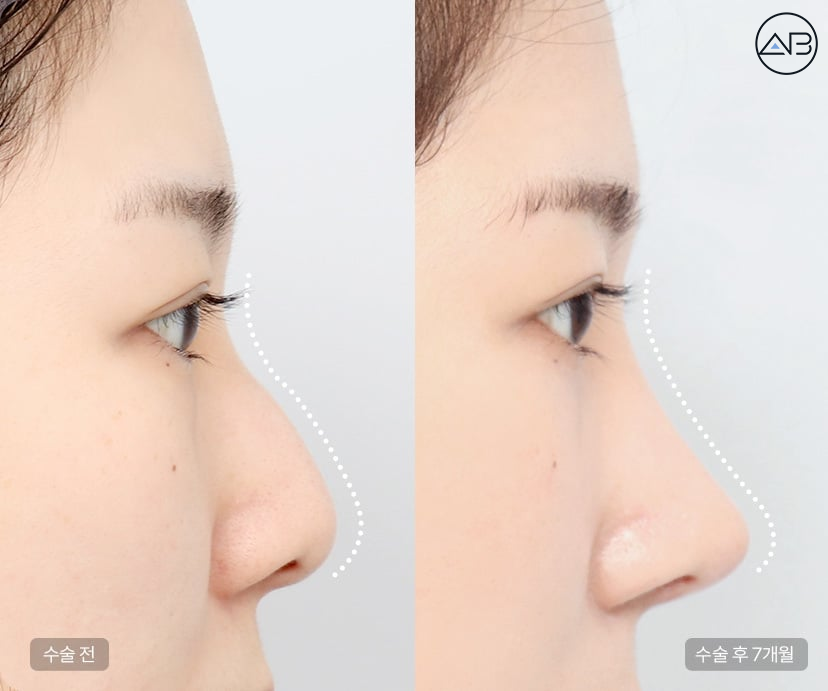
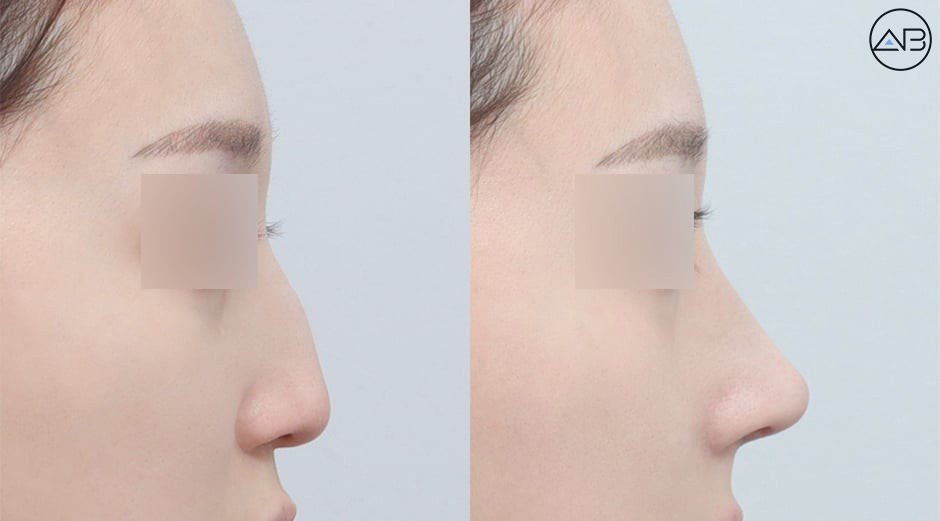
When the degree of prominence is significant, it should naturally be removed through techniques such as osteotomy as part of hump nose correction, and the overall nasal bridge line should be refined. In cases where the prominence is not severe, such as a pseudo-hump, rather than removing too much, the protruding area should be refined and the tip of the nose should be naturally supplemented with autologous cartilage to balance the bridge and tip and achieve a natural result.
When the hump is high, using an implant can result in excessive height and may make the nose look longer. In such cases, implant-free rhinoplasty may be an appropriate option. However, if a hump is present but the nasal bridge and area between the eyebrows are low, an implant may be necessary.
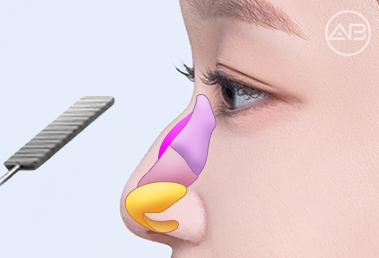
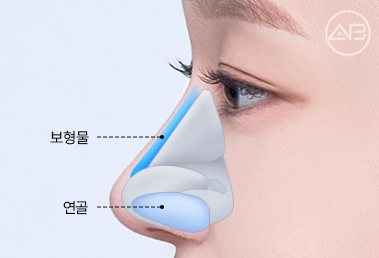
High hump > Implant used
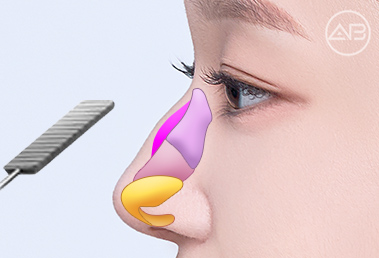
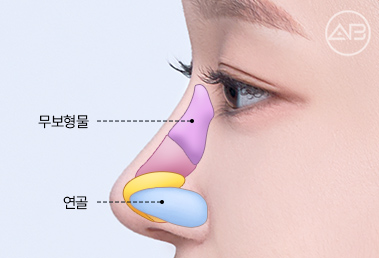
Low hump > Autologous cartilage used (implant-free rhinoplasty)
In particular, during implant-free rhinoplasty, osteotomy must be approached somewhat more carefully because no implant is used. However, it is a key technique that corrects not only the height of the hump but also the width and silhouette of the nasal bridge as seen from the front. Since many types of hump noses appear excessively wide not only from the side but also from the front, moving the nasal bones inward through osteotomy can create a natural and slender nasal bridge line.
Meanwhile, even when the nasal bridge is low and the hump is prominent, requiring the use of an implant, customized implants are increasingly being used to minimize the possibility of additional inflammation and bleeding associated with the techniques described above.
When an individualized approach suited to the characteristics of the bone and cartilage is combined with precise techniques to improve the frontal contour, it becomes possible to create the smooth, refined line the patient wants.
Meanwhile, even when the nasal bridge is low and the hump is prominent, requiring the use of an implant, customized implants are increasingly being used to minimize the possibility of additional inflammation and bleeding associated with the techniques described above.
When an individualized approach suited to the characteristics of the bone and cartilage is combined with precise techniques to improve the frontal contour, it becomes possible to create the smooth, refined line the patient wants.
If you have any further questions about AB Plastic Surgery’s hump nose correction and implant-free rhinoplasty, please visit the clinic and consult with a specialist who has a strong anatomical understanding and extensive surgical experience.
Implant-free rhinoplasty