Living with different appearances, personalities, and characteristics is completely natural. But sometimes people feel anxious about those differences, get hurt by them, and keep worrying about them until they become a personal complex. Once such thoughts take root in the mind, they are not easy to get rid of. People considering inverted nipple surgery are probably in a situation somewhat like this. The moment they notice that their own appearance is different from what others generally have, and that because of that difference they dislike their own body or must go through greater inconvenience than others and pay closer attention to self-care, their confidence drops and dissatisfaction with themselves grows. That is why they try to improve the condition proactively.
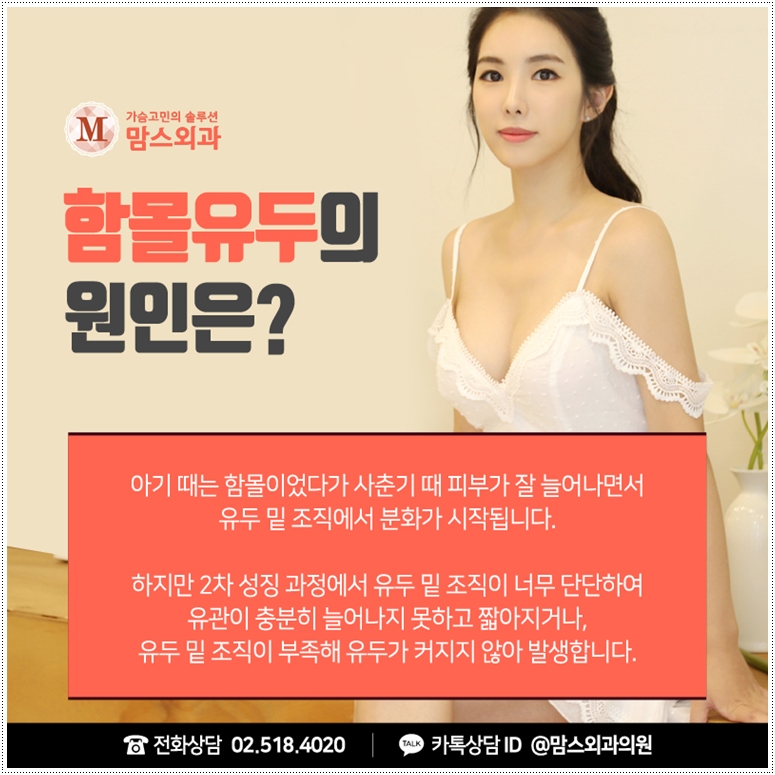
The area that is supposed to have a protruding nipple-like shape sometimes ends up sunken inward, flat, or level. It is said that about 3% of all women have this type of shape. Looking only at the percentage, it is by no means an extremely small number, but because it is not a part of the body that is always exposed in daily life, many people seem to worry about it alone and struggle internally even more. Normally, during puberty and the development of secondary sexual characteristics, the breasts develop and grow, and the nipples grow as well. The glandular tissue and ducts inside the breast must also develop together, but if the tissue is too firm and the ducts cannot stretch enough, or if there is not enough tissue and the protruding part cannot grow properly, it can end up with this different shape.
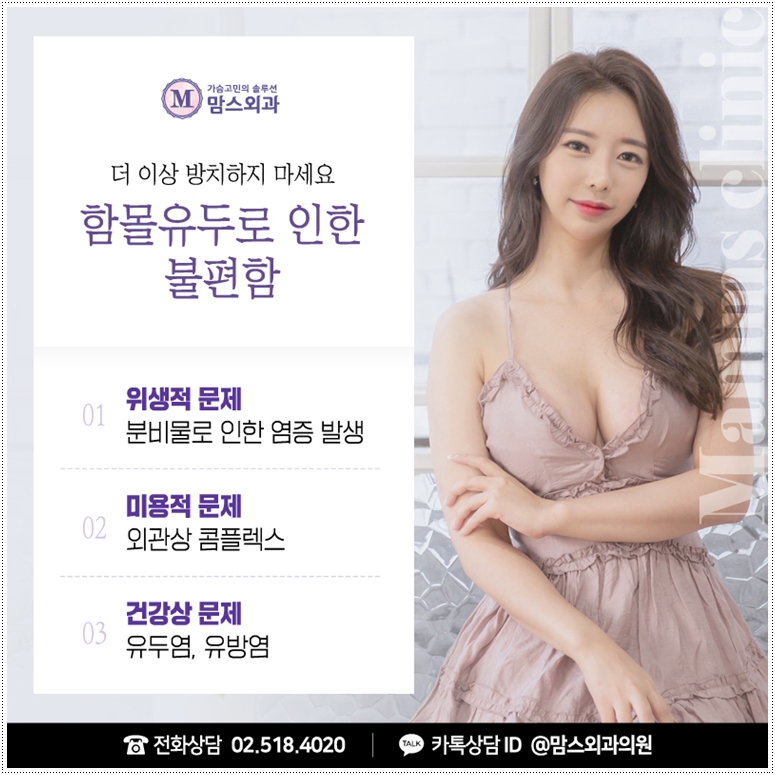
When the shape is not protruding but instead sunken inward, it can cause more than just a visual difference and a lingering complex. Various problems may follow. The first inconvenience people often complain about is hygiene management. The nipple is an area where even a small amount of discharge can occur, but unlike in a typical case, if it is sunken inward, discharge or naturally occurring skin debris can have trouble falling out properly and may easily accumulate in the crevices. That is why extra care is needed to keep it clean. If care is neglected, problems such as inflammation can easily occur. And connected to that issue, in severe cases, inflammation can develop in the breast area, causing pain and hardship.
In addition, because the shape is different from others, difficulties can arise when breastfeeding. In the end, some people decide to undergo inverted nipple surgery because of these inconveniences. However, if you look into information after making that decision, you may come across different opinions. Some say correction is possible with commercially available devices, while others say that even if inverted nipple surgery is performed, it returns to its original state over time, so they are unsure of its effectiveness. Some people say they were able to breastfeed after the procedure, while others say they could not breastfeed afterward. These differences occur because there are several methods, and each person must find the method that suits them best.
In other words, even if two people have nipples with the same sunken shape, not everyone is the same. As mentioned earlier, one reason for this shape is that the tissue did not grow enough during development in puberty. That also means the degree of severity can differ depending on how much growth was lacking. The degree varies from person to person, and the situation they are in and the type of inconvenience they experience because of the unusual shape are all different, so the procedure should be planned accordingly.
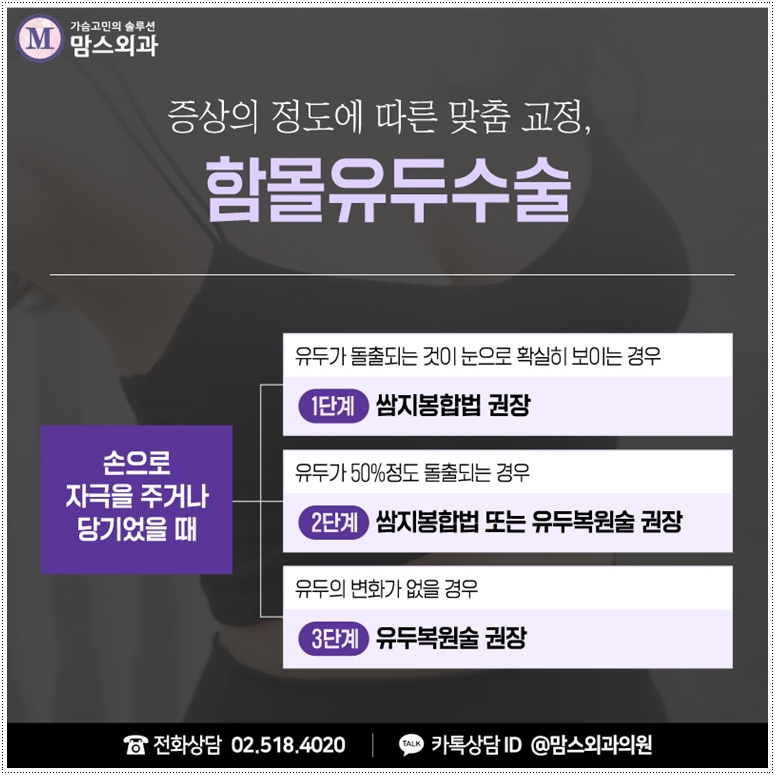
The first thing to consider is determining the direction of surgery according to the severity of the symptoms. Inverted nipple surgery can generally be divided into three stages of severity. The judgment is based on how much the nipple can be brought out by hand pulling or stimulation. If it clearly protrudes when pulled, it is considered mild, or stage 1. If about 50% can be brought out, it is stage 2. If no change is seen no matter how much it is pulled or stimulated, it is stage 3. Among these, stage 1 and some mild stage 2 cases can be improved with the purse-string suture method, which preserves the ducts and allows breastfeeding, but more severe cases require nipple reconstruction, which does not allow breastfeeding.
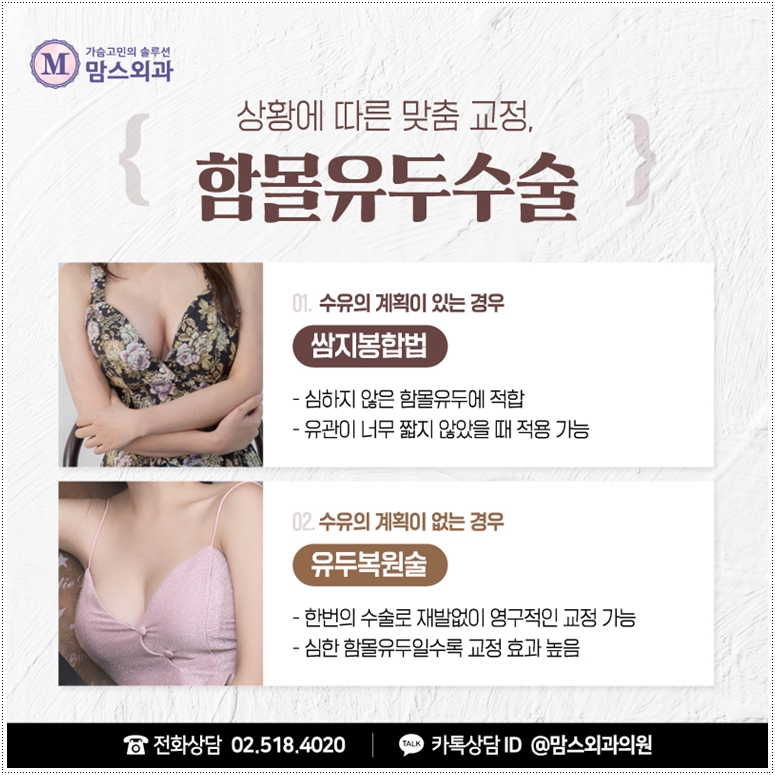
The second thing to check is whether there is a plan to breastfeed. If there is a possibility of breastfeeding in the future and a person has such a plan, they can check the severity of their symptoms and, if possible, improve them through the purse-string suture method. With this approach, it was possible to bring the nipple out and breastfeed. On the other hand, if breastfeeding may still be possible in the future but the condition is too severe for sufficient correction with the purse-string suture method, it would be better to definitively improve it with nipple reconstruction after breastfeeding. If there is no plan to breastfeed, the issue can be corrected at once with nipple reconstruction, which has a low chance of recurrence.
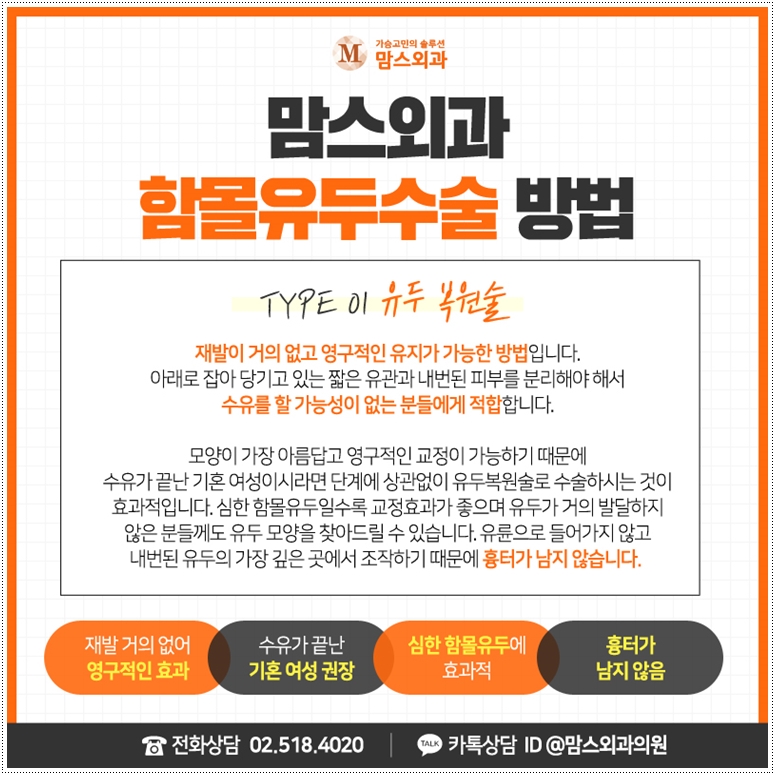
So how are these methods of inverted nipple surgery different from one another? First, nipple reconstruction removes the cause that creates the sunken shape and resolves the problem that way. The problem is the short ducts pulling the nipple inward. If these ducts are separated from the outer skin, the original protruding shape can be restored. However, because the ducts must be detached, breastfeeding is not possible after this type of surgery. On the other hand, because the root cause is addressed, the chance of the same problem recurring is greatly reduced, and the shape can also look more natural.
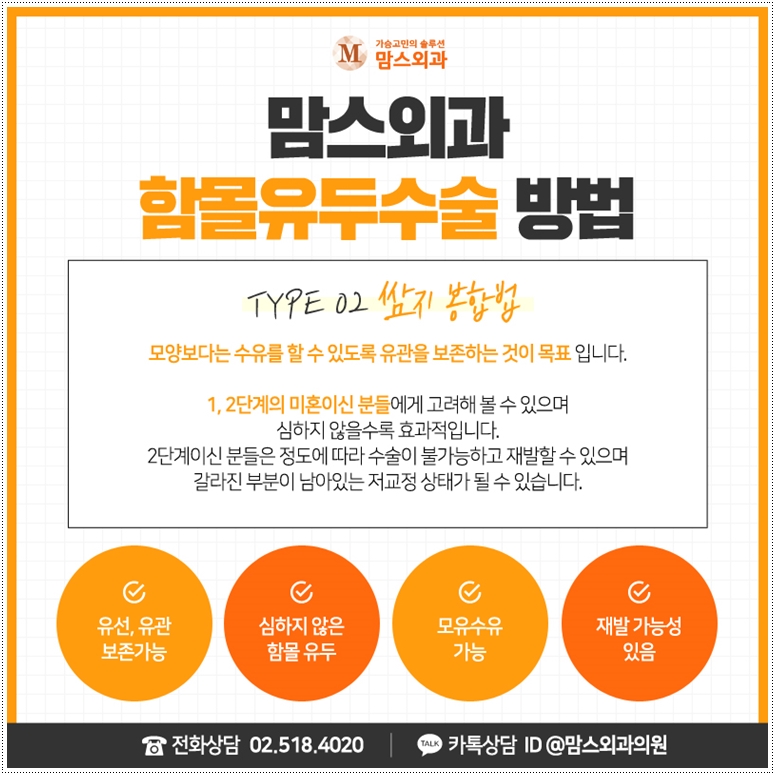
By contrast, the purse-string suture method aims to bring the sunken part outward while preserving the ducts. To explain the principle simply, the inwardly sunken part is pulled outward, and then the lower part is tied with sutures as if wrapping it, so that it is pulled and held in place without going back in. However, because this method is used, if the inward pull from inside is too strong, it is difficult to secure it properly. That is why it can be performed only in less severe stages.
It may be because inverted nipple surgery is not something people think about often, and they tend to look for methods like devices for correction, since it is unfamiliar, difficult to talk about with others, and hard for people around them to notice. Some may wonder whether they are the only one reacting this sensitively. In fact, there is no one right answer. Everyone has things that make them uncomfortable and uneasy. What matters is how those concerns are relieved and improved. Even if you think of it as simply improving the shape, it can still be hard to find a place to talk through the situation and share your concerns. I recommend discussing it at a clinic that focuses only on the breast and properly understands the causes of these problems and the structure of the breast. Especially because it is not a visible area, if you speak with another woman about your concerns, you may feel more at ease and receive more careful care.
It should always be kept in mind that if the procedure is performed without properly considering each person's different characteristics and severity of symptoms, recurrence may occur later or the results may not be sufficient. Therefore, before starting, it is a good idea to carefully check how accurately the current severity of symptoms and each person's situation are assessed and diagnosed before planning the procedure. If a clinic overlooks the fact that the treatment must be customized for each person, it may be less trustworthy or less satisfying. To avoid regret and to achieve a more secure and confident sense of self, I hope you can make a careful decision about inverted nipple surgery.