Even if you have overcome the hurdle of breast cancer,
various unexpected problems can follow
after surgery.
The breast deformity that occurs after the removal
of cancer tissue is distressing enough,
but the more noticeable asymmetry on both sides
can be an even greater source of stress.
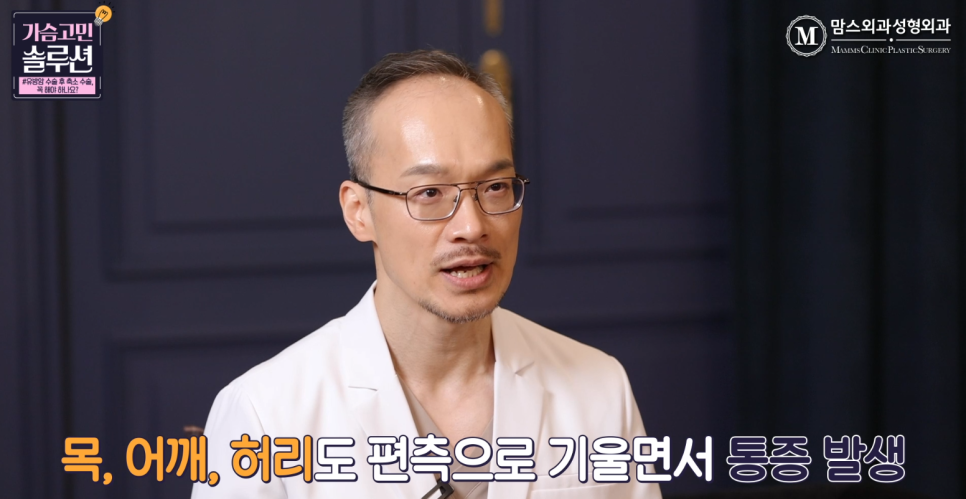
When asymmetry occurs, even wearing underwear can
feel uncomfortable because the balance is off,
and the neck, shoulders, and lower back may also lean to one side,
which can gradually lead to pain.
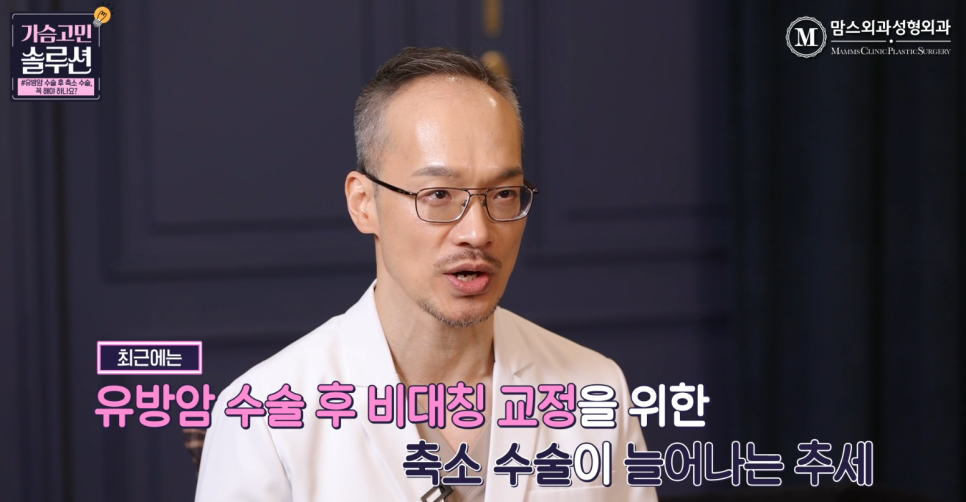
In the past, even if this kind of asymmetry occurred,
many people simply accepted it as fate and endured it.
Recently, the number of cases in which the opposite breast is
actively reduced to correct this asymmetry caused by breast cancer surgery
has been increasing.
If breast cancer has led to the removal of one breast,
reduction surgery to match the other side
can be considered a necessary procedure
from aesthetic, psychological,
and practical health perspectives.
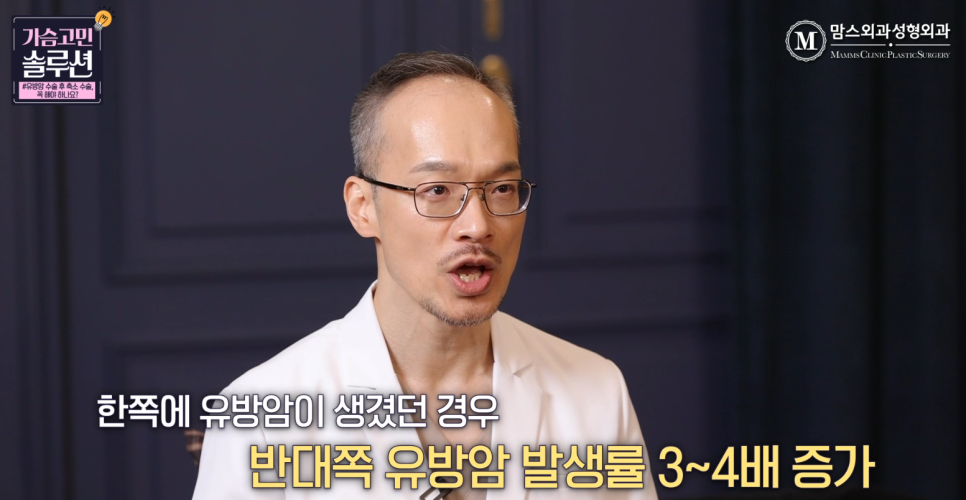
In cases where breast cancer has occurred on one side,
the likelihood of breast cancer developing in the healthy opposite breast
increases by about 3 to 4 times.
Also, although it is not always the case,
among people who develop breast cancer,
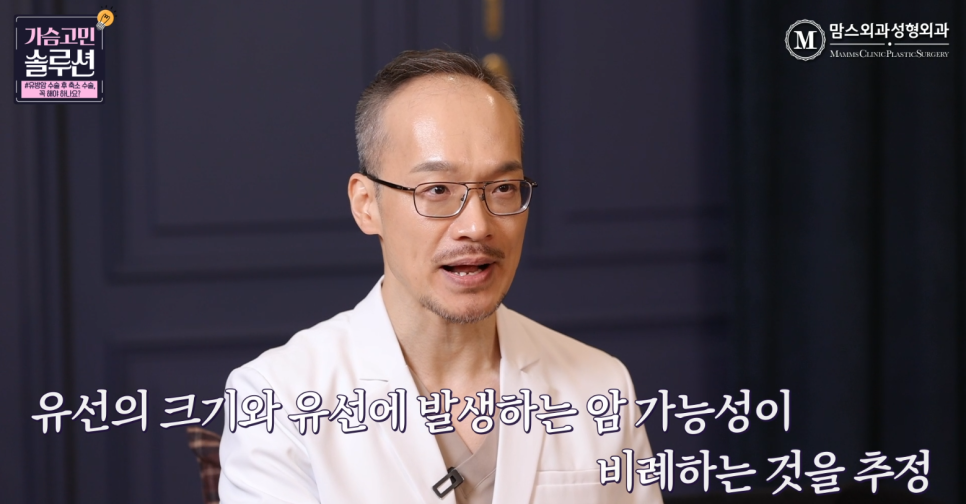
it is often seen that the breasts are quite large.
This may be estimated to be because the larger the glandular tissue,
the greater the possibility of cancer occurring in that tissue,
proportionally to its volume.
In cases where the breasts are large,
the left-right asymmetry caused by breast cancer removal
becomes more pronounced,
so it is necessary to correct it and restore balance.
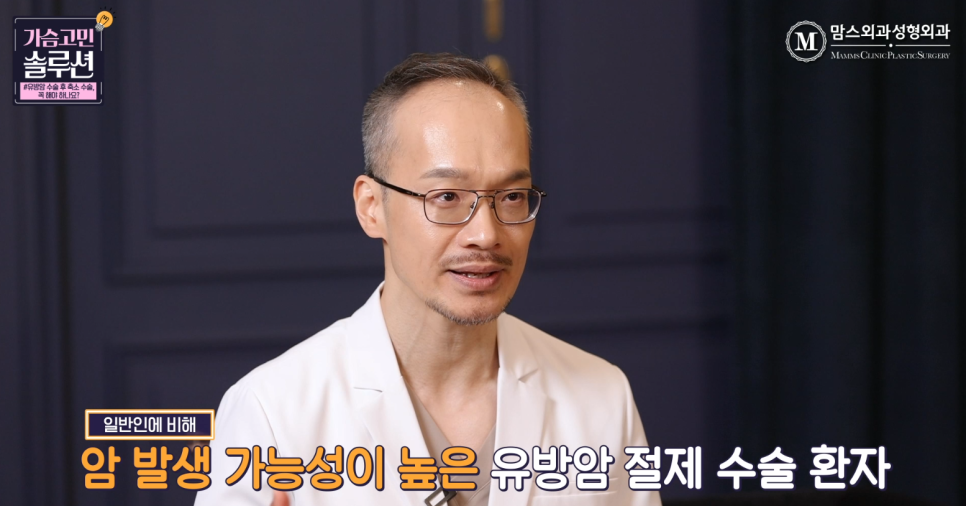
Because the risk of cancer developing later in the breast that has not developed cancer
is higher than in the general population,
reducing the amount of glandular tissue
can also be helpful for preventive purposes.
When performing reduction surgery after cancer surgery,
there is one point that requires special attention.
It is the problem of delayed wound healing that can occur on the side that underwent cancer surgery.
Generally, when we talk about reduction surgery,
the larger and more sagging side is relatively harder to operate on.
Based on that reasoning, one might think that operating on the breast
that did not undergo cancer surgery,
if it is more sagging and larger, would be much more difficult,
but in reality, it is the opposite.
Correcting the distorted shape by operating on the smaller breast
that underwent cancer surgery is a much more difficult issue.
The reason is the tissue changes caused by radiation therapy,
which is performed to prevent recurrence after surgery.
The breast tissue in the irradiated area undergoes fibrosis and,
generally, feels very firm to the touch.
This fibrotic tissue is not merely hard to the touch;
it also affects the condition of the blood vessels,
changing blood flow so that it is not as good.
This also has a negative impact on wound healing.
Generally, when performing cancer surgery,
it is most important to reduce the possibility of recurrence,
so rather than considering the appearance left after surgery,
the focus is placed entirely on removing the cancer as cleanly as possible
without recurrence.
For this reason, after cancer surgery,
deformities such as hollows or distortion are often unavoidable.
People like this visit our clinic to restore shape and correct asymmetry,
and to treat this,
we must perform a tissue flap procedure that turns excess tissue inside the breast into an island-like flap
and moves it together with the blood vessels.
When performing such surgery,
if the tissue has become fibrotic due to radiation therapy,
the chances of delayed wound healing or inflammation increase.
Therefore, in addition to achieving good symmetry between both sides,
it is also very important during the postoperative healing process
to closely monitor the internal condition through ultrasound examinations
and to provide more active wound care.
✅Breast reduction surgery after breast cancer surgery | ✔Is it absolutely necessary!?✅
▼Watch the video▼