These days, after having surgery
or after treating a wound,
many people use
medical waterproof tape.
I also use waterproof tape from the third day after surgery
so that people who have undergone reduction surgery
can shower as early as possible.
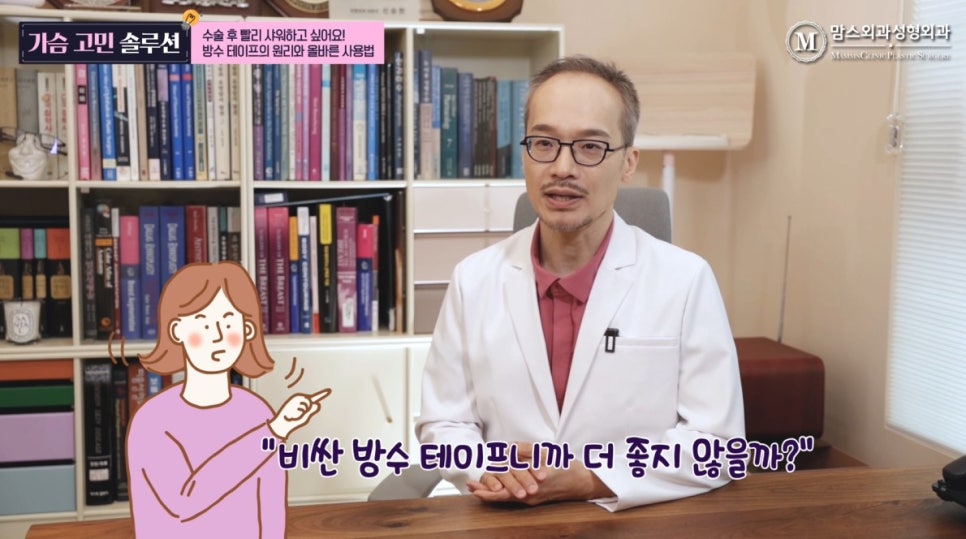
Waterproof tape has now become commonplace.
Some people may think it must be good just because
they applied a more expensive tape,
but sometimes, because it is not used properly,
its waterproof function is reduced
or its moisture-permeable function does not work well,
which can actually have a negative effect on the wound.
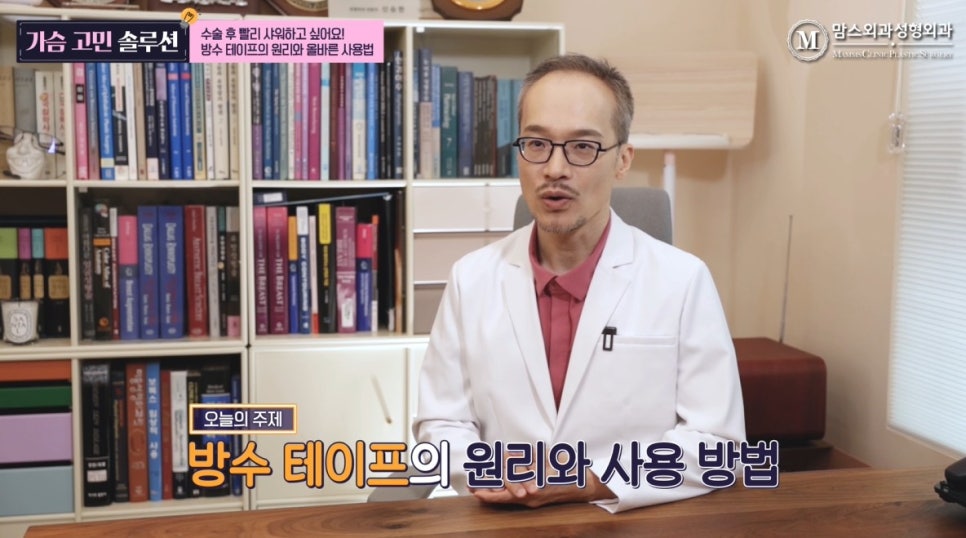
Today,
we will take a look at the principles of this waterproof tape
and how to use it correctly.
'Isn't it enough if no water gets in?'
You might think that,
but if that were the case, you could get the same effect
even by sticking on ordinary plastic tape.

The main functions of medical waterproof tape
Waterproofing
Moisture permeability
These two things are important.

It works on the same principle as the Gore-Tex membrane
commonly used as a material for hiking clothes.
External water cannot enter from the outside,
but internal sweat is released to the outside.
In the 1960s, an engineer at DuPont
stretched a synthetic resin fabric called Teflon
and discovered that tiny cracks formed on the surface.
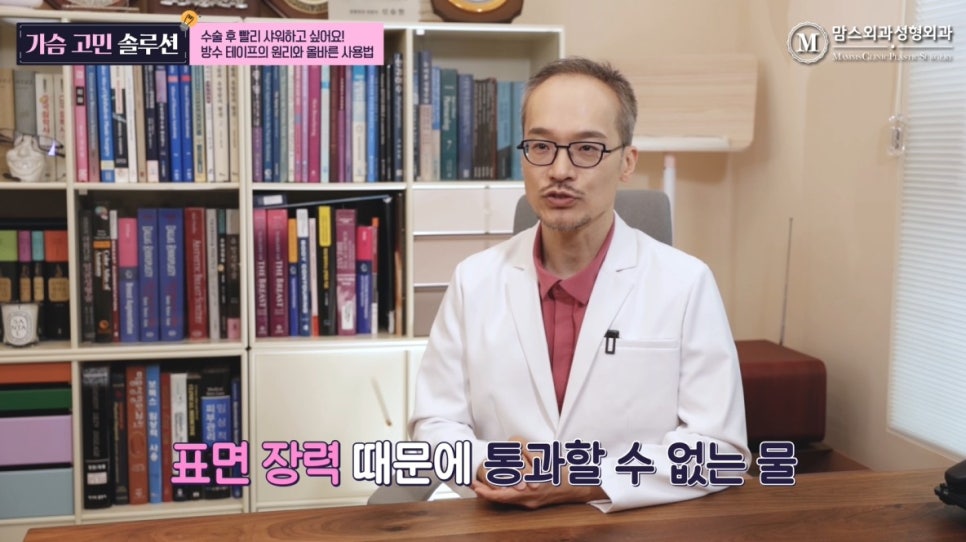
These holes were so small that liquid water
could not pass through because of surface tension,
but since they were still holes,
they were large enough for sweat to pass through.
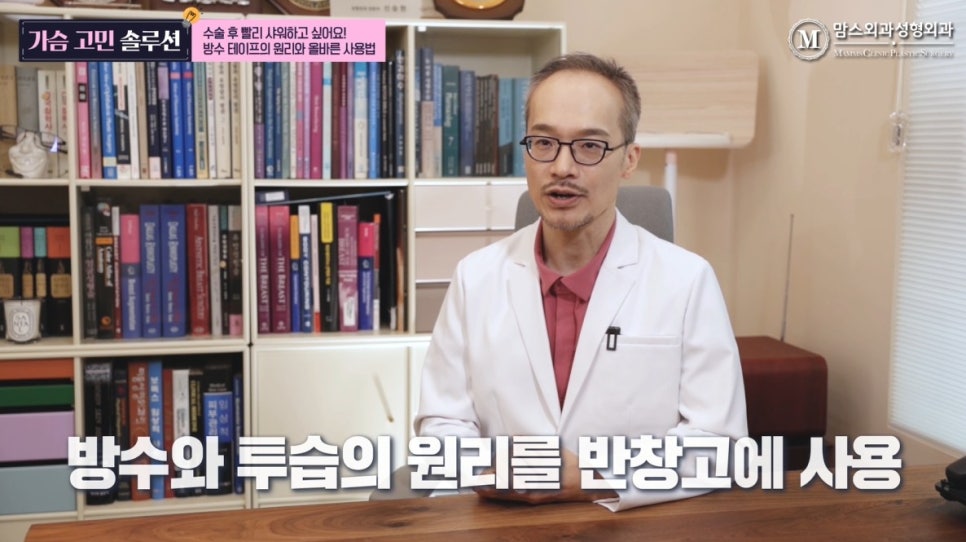
This principle of waterproofing and moisture permeability
is used in bandages applied to the human body as well.

As mentioned,
even though it is waterproof tape,
unlike what people generally think,
it does not completely block the outside and inside.
It blocks external water,
while allowing internal sweat and moisture
to be properly released,
and is used as a medical dressing product.

How should waterproof tape be used and managed?
Waterproof tape is broadly composed of
two elements.
One is the adhesive part,
and the other is the waterproof film (plastic membrane).
These two elements work together
to prevent water from seeping in.

Therefore, the first thing to be careful about is
the adhesive part.
When applying the tape so that water does not seep into the wound during showering,

-
Clean the area around the wound thoroughly
-
Make sure there are no wrinkles or bubbles on the adhesive side
-
Seal the edges as carefully as possible
You need to apply it well.

Next are the precautions regarding
the waterproof film.
If waterproof tape stays wet for a long time,
a water film forms on the surface.
Even if water cannot get inside,
the holes through which internal moisture must escape
are blocked by this water film,
so the moisture-permeable function can be lost.

In such cases, the wound can become excessively macerated,
so after showering, be sure to dry the tape
with a clean towel and a hair dryer.
After applying waterproof tape and showering,
pat it dry with a clean towel
to remove the larger droplets,
then use a hair dryer
to dry it well until the remaining moisture is gone.
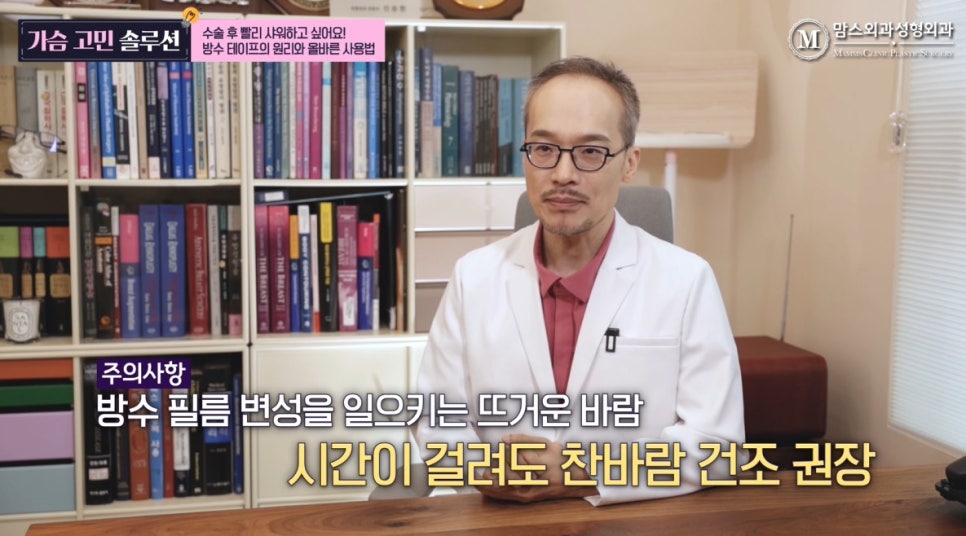
At this time, please keep in mind:
If you use hot air,
the waterproof film may become deformed,
so even if it takes a little more time,
I recommend drying with cool air.

Waterproof tape,
if you use it with just a little care,
can reduce discomfort and help you manage your wounds more cleanly after surgery.