Hello.
This is Moms Surgery & Plastic Surgery Clinic.
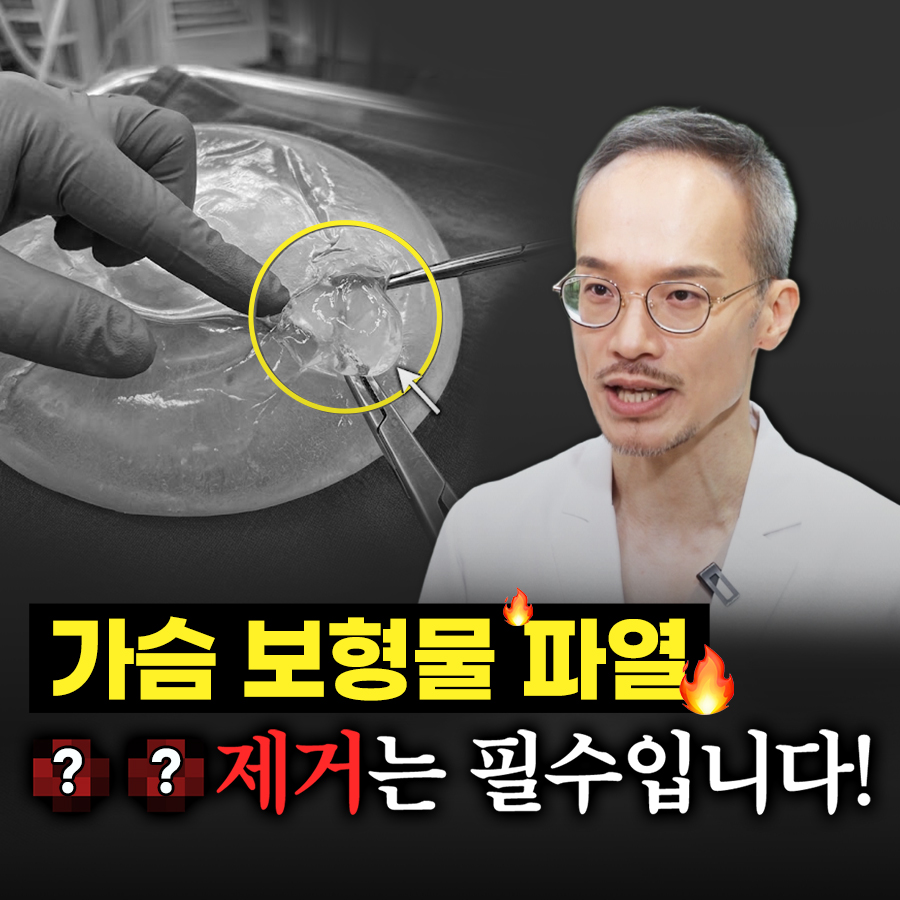
When people hear that there may be a problem with a breast implant,
many of them first worry,
“Could this be immediately dangerous?”
However, in reality,
a ruptured implant does not always cause
severe pain or sudden changes right away.
The body forms a membrane called a capsule
around the implant.
Because this membrane provides an additional layer around the implant,
the silicone contents often do not spread rapidly
in the early stages.
However, even if everything appears normal on the outside,
“changes may still be progressing inside the body.”
Because of these characteristics,
when considering removal of a ruptured implant,
it is important to clearly understand the current condition.
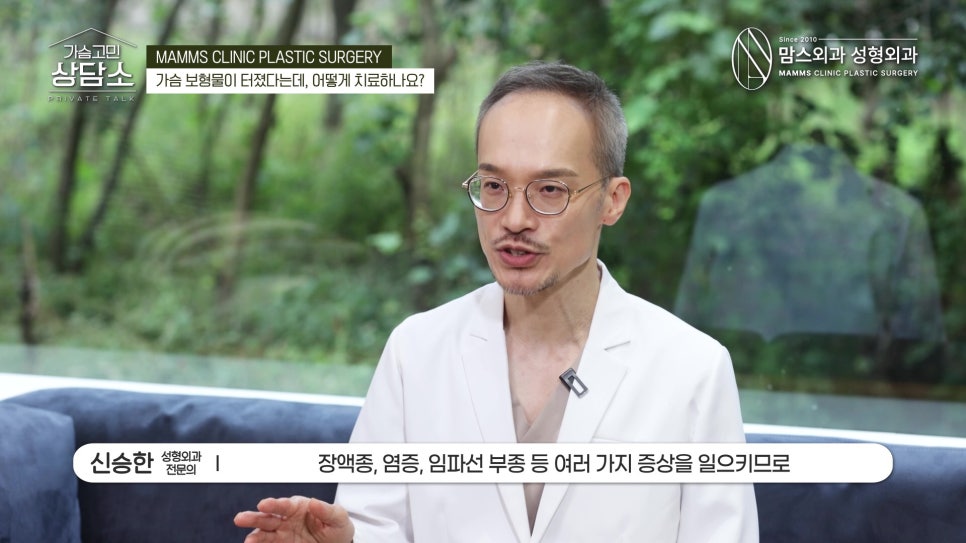
Why Removal Is Necessary After an Implant Rupture
The inside of an implant contains
silicone material in gel form.
The problem is that, over time,
this material may affect the body's tissues.
Common examples include:
• Seroma formation
• Inflammatory reactions
• Swelling of the lymphatic vessels
• Irritation of surrounding tissues
These changes may continue to develop.
Even if there are no particular symptoms at first,
discomfort may increase over time.
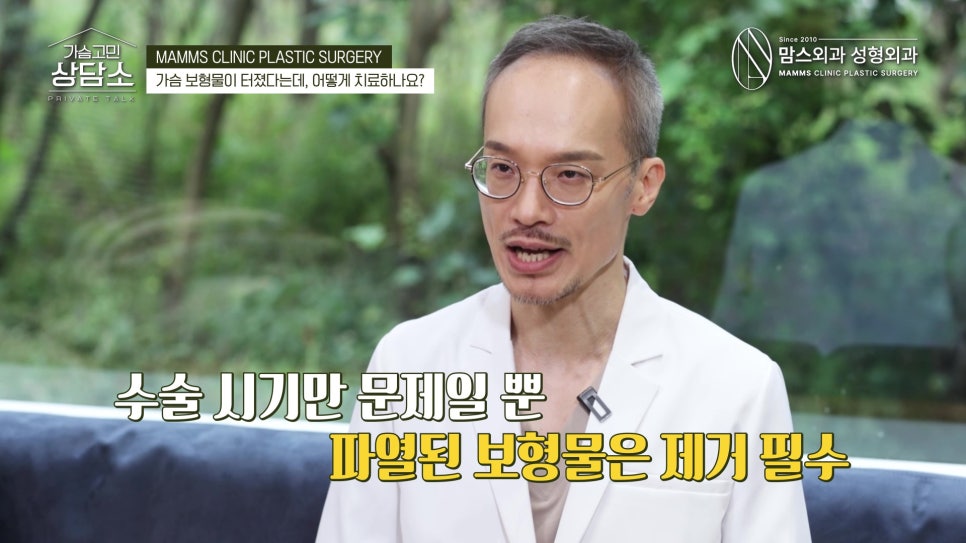
Therefore, once a rupture has been confirmed,
the only question is when surgery should be performed;
the ruptured implant must be removed.
Is Removing the Implant Alone Enough?
Many people think that implant removal surgery
simply involves taking out the implant inside.
In reality,
the surgery requires a much more complex process.
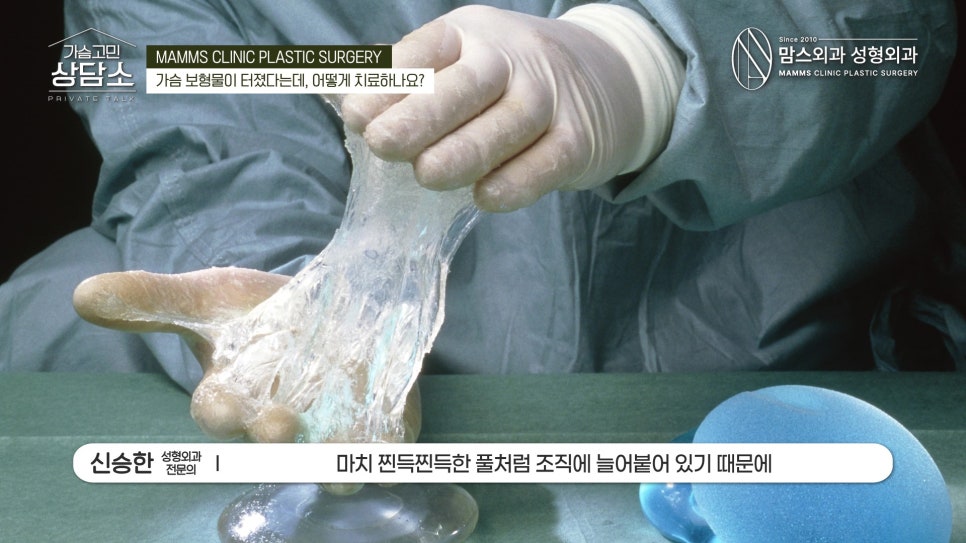
This is because the contents of a ruptured implant
often become a sticky gel
and adhere to the surrounding tissues.
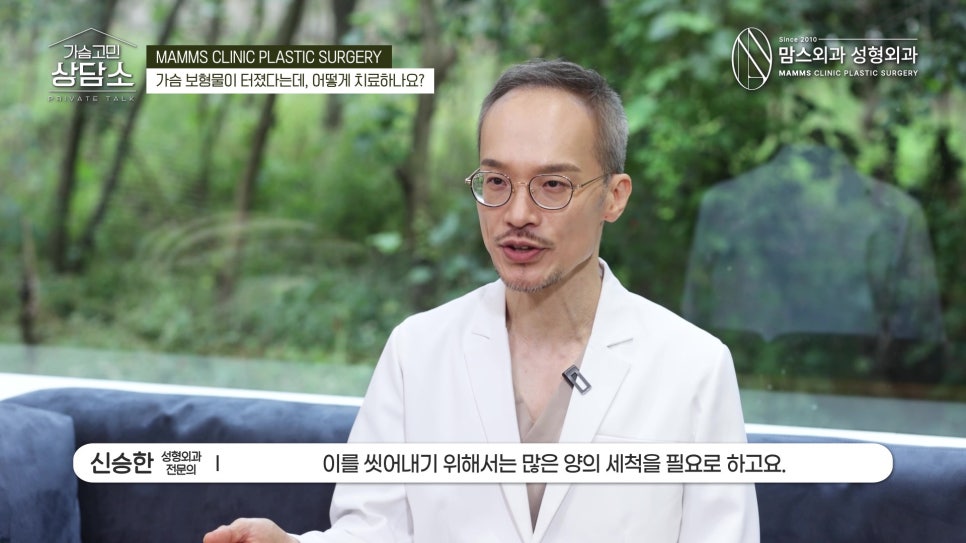
In this condition,
simple removal may not be sufficient,
and thorough irrigation is necessary.
In particular, with older ruptures,
silicone may have spread between the surrounding tissues,
so a more careful approach is important.
The Capsule as a Key Cause of Rupture
The actual cause of an implant rupture
is often related to capsular contracture
rather than simple external impact.
Capsular contracture is a condition in which
the capsule around the implant
becomes excessively thick.
As the capsule gradually contracts,
it continuously compresses the implant.
As a result, the implant surface
may fold or wrinkle,
and repeated compression over a long period
can eventually lead to tearing.
“The condition of the surrounding capsule is more important than the implant itself.”
Therefore, when removing a ruptured implant,
it is important to assess not only the implant itself
but also the condition of the capsule.
Why Capsule Removal Is Important
A capsule is not simply a foreign substance.
It is tissue that the body creates on its own
to surround the implant.
Under normal circumstances,
it forms very thin and soft.
However, when contracture becomes severe,
the capsule may thicken
and become hard.
If this condition is left as it is,
it may contribute to:
• The possibility of seroma formation
• Recurrent inflammation
• Internal adhesion problems
• Pain and discomfort
Therefore, when contracture and rupture occur together,
it is often appropriate to consider removing the capsule as well.
Why Capsule Removal Is Challenging
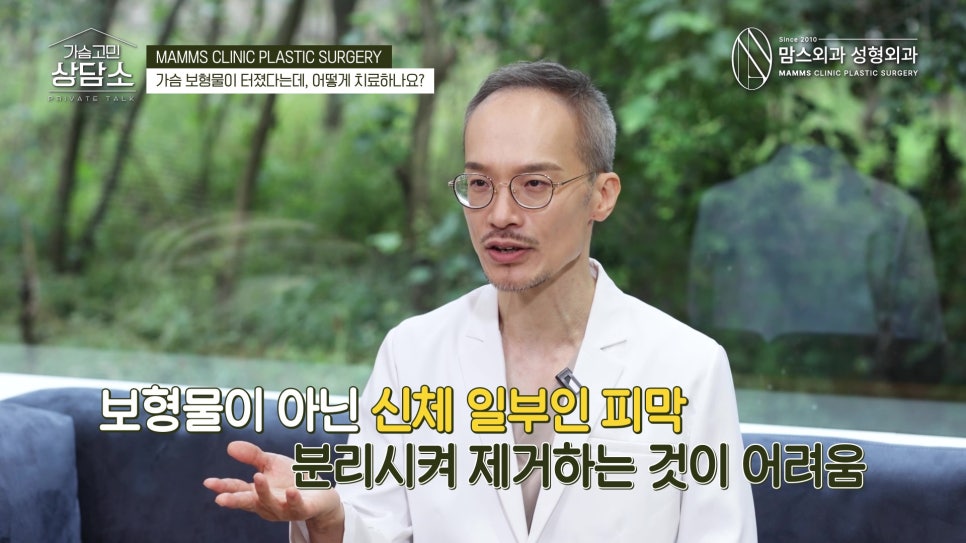
Capsule removal
is a more difficult process than many people expect.
Because the capsule is tissue formed by the body,
it is often attached to the muscles
and surrounding tissues.
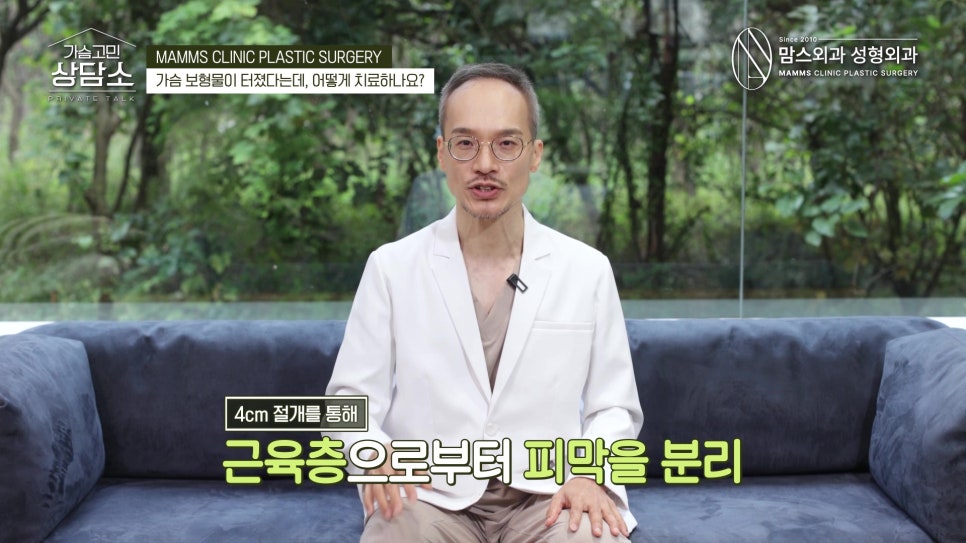
It must be separated piece by piece
through a limited incision,
so a meticulous surgical process is required.
Bleeding may also occur during removal,
and in some cases it may be difficult to secure a clear view,
which can lead to differences depending on the surgeon's experience.
For these reasons,
some cases involve removing only the implant
and leaving the capsule in place.
However, when contracture is severe,
it is important to consider the long-term aspects as well.
Options After Removal
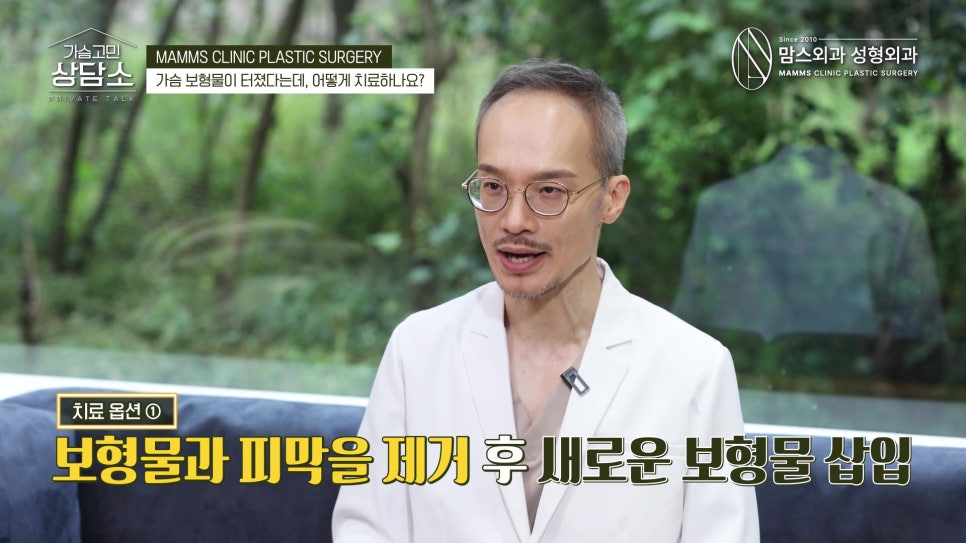
After removing the implant and capsule,
two main options may be considered.
The first is replacement with a new implant.
In many cases, the goal is to maintain natural volume
with a slightly smaller size than before.
In particular, as time passes,
many people come to prefer a more natural contour
than they did in the past.
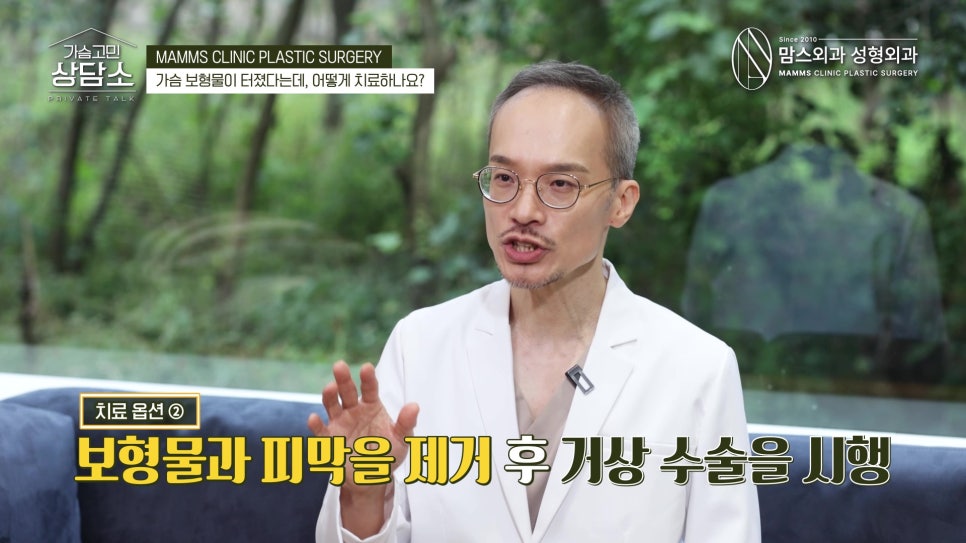
The second is to proceed with a lift alone,
without using an implant.
This approach improves sagging
without inserting an artificial implant again.
After experiencing implant-related problems,
many people prefer a natural shape
and consider a lift alone.
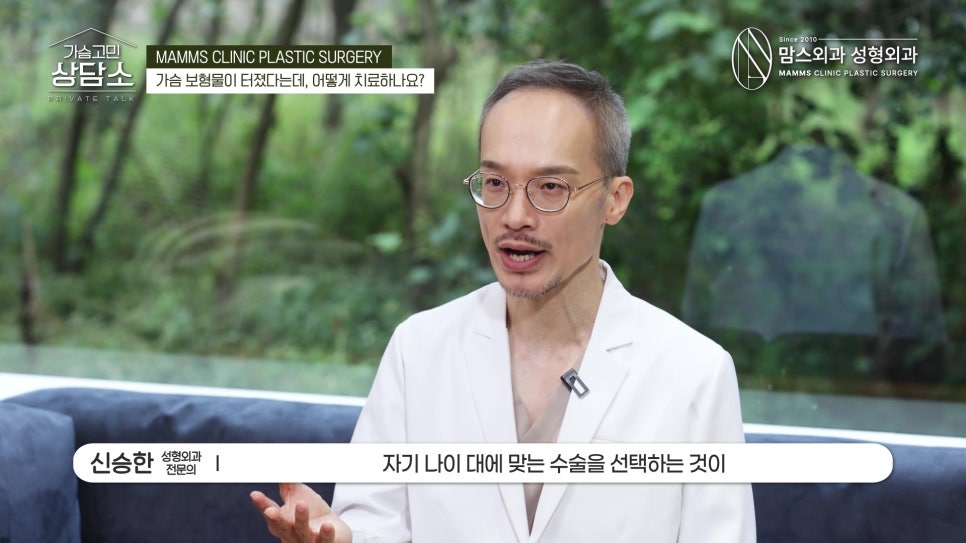
Choosing an Approach Suited to Your Current Condition Is Important
A breast implant rupture
can be difficult to address
as simply a problem of the implant having “burst.”
This is because several factors must be assessed together,
including the degree of contracture,
the condition of the capsule,
and whether inflammation or a seroma is present.
The surgical plan may also vary depending on whether
you plan to use an implant again after removal
or pursue a more natural lift-based approach.
Rather than automatically maintaining a large volume,
an approach suited to your current age,
skin condition,
and lifestyle goals
may affect long-term satisfaction.
Thank you.