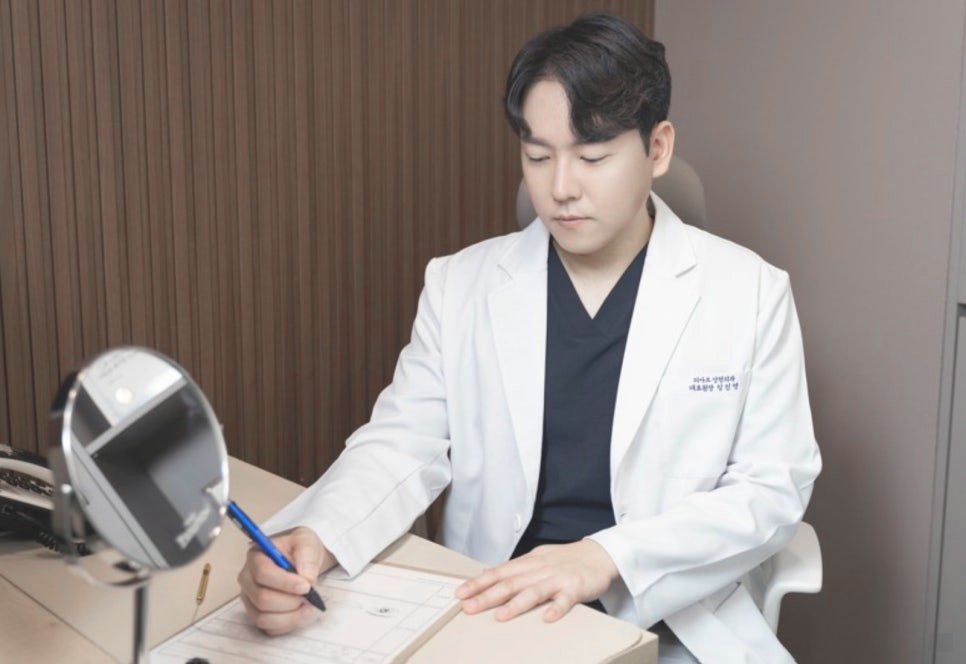
Hello. I am Lim Jin-young, the director of Piaf Clinic.
With summer approaching, many people are visiting dermatology clinics near Seokchon Station for body Botox or retouch treatments.
You went to a dermatology clinic for another treatment because the results were not as noticeable as expected, only to hear:
“Your muscles are naturally large.”
“You can’t achieve the result in just one treatment.”
If you have ever heard things like this, you must have felt extremely frustrated.
There are two main reasons resistance develops more often in the body than in the face.
-
High doses
-
Frequent retouch treatments
If you are experiencing these symptoms but are thinking, “Wasn’t enough product used?” or “I guess I need one more retouch,” you may actually be creating side effects instead.
In my practice as a plastic surgeon, I often see people undergo excessive treatment because they believe a retouch will improve the result. I would like to take this opportunity to explain why getting a retouch unconditionally is not advisable, so please take a moment to read this post.
- Signs that resistance has developed

When you receive the treatment at a dermatology clinic for the first time, your shoulders may feel lighter and their lines may look more attractive for five to six months. However, the effect may disappear after two months with the next treatment, and then in less than a month after the one after that, with the duration gradually becoming shorter.
The representative signs of resistance are as follows.
Shoulders (trapezius muscles): Even two to three weeks after receiving injections at a dermatology clinic, the raised trapezius lines do not come down at all. The heavy, stiff pain is also exactly the same as before.
Legs (calves): When standing on tiptoe, the calf bulges do not become softer and remain firm and prominent.
Systemic resistance (spreading to the face): If antibodies develop in the body, even when a small amount is later injected into the face—such as for a square jaw or glabellar wrinkles—the antibodies in the body immediately seek out and destroy the foreign substance. Eventually, this can result in a state in which no dermatology clinic can produce an effect.
- Seokchon Station Dermatology Clinic: Why resistance develops more easily with body Botox

You are probably aware that the antigen response occurs more quickly when injections are given in the body than when they are given in the face.
The amount injected into facial areas at a dermatology clinic—such as the glabella, crow’s feet, and dimpled chin—is usually only about 10–20 units (U) per area, even when all the areas are considered together. Depending on the saline dilution ratio, this is generally a very small amount of approximately 0.2 cc to 0.5 cc.
So what about the body?
The trapezius muscles receive 100–200 units on both sides combined, while the calves receive high doses of 200–300 units or more. Converted into cc, this means that 2–6 cc or more may be injected at once—an amount 10 to as much as 30 times greater than that used in the face.
The body recognizes the toxin as a foreign substance. What happens when a large amount of this foreign substance is administered?
The body regards it as a threat and produces large quantities of antibodies to eliminate it.
Resistance develops during this process, the effect decreases, and the cycle of receiving another treatment is repeated.
Then does that mean I can never receive it again?

First of all, I do not recommend making a dermatology appointment without careful consideration.
If an antigen has developed due to retouch treatments, you may become permanently prone to resistance.
As mentioned earlier, high doses are dangerous, but an even more dangerous approach is receiving multiple treatments at short intervals. Receiving several injections over a short period causes antigens to form most rapidly.
This is also why the result can strangely become less satisfying and look increasingly unnatural the more injections you receive.
If it is truly necessary, it is best to proceed only after hearing the physician’s opinion and determining that there is no problem. If a clinic immediately agrees to provide a retouch simply because you ask for one, I recommend reconsidering that clinic.
- How to proceed without side effects
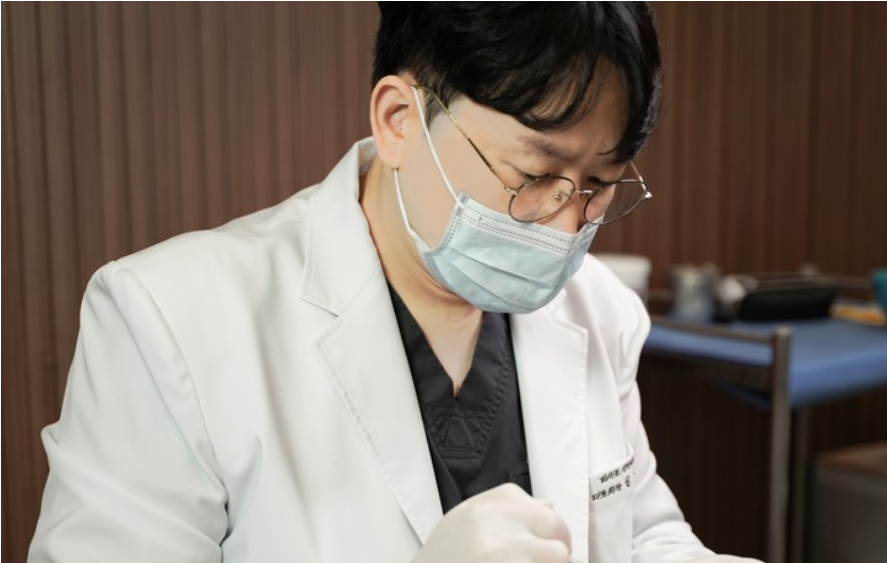
How can you receive treatment while reducing these side effects?
.
- Wait at least three to four weeks.
This substance does not produce an immediate response after it is injected.
Just as you need to plant a seed and wait for a tree to grow, it takes at least three to four weeks for the fascia to become fully paralyzed and gradually atrophy.
- Target the area accurately.
You may have seen what happens when you press one side of a balloon and the other side bulges out.
Because the trapezius muscles cover such a large area, the main muscle needs to be suppressed during the first treatment. However, because the main muscle cannot be used, surrounding areas that had not previously been working may temporarily engage and protrude.
If this is overlooked and another injection is given into the protruding area, the retouch cycle will be repeated.
Experienced dermatology medical staff diagnose this as a compensatory response and have the patient wait until the overall muscle balance is established.
- Whenever possible, complete the treatment with one properly measured dose from the beginning.
Let me give you an example. When making clothes, is it easier to cut them roughly and patch them together later? Or is it easier to measure accurately from the beginning and cut everything perfectly in one go?
A truly skilled dermatology clinic begins with an accurate diagnosis. I am sorry to say that clinics where treatment begins as soon as you sit down may find it difficult to carry out this diagnosis thoroughly.
This is because the medical staff must have the patient lower their arms, turn their neck, and examine the thickness and movement of the muscles three-dimensionally from multiple angles.
They also inject only the precisely measured amount that can complete the treatment in one session without causing resistance. In other words, the difference in skill lies in adjusting the treatment so that the risky situation of requiring another treatment does not arise in the first place.
If you develop symptoms like those described above, please do not go to just any dermatology clinic and ask, “Please give me a retouch.” Listen to the medical professional’s diagnosis and plan, and proceed at a clinic where you feel comfortable with them.
Above all, please reconsider clinics that unconditionally comply with every patient request, as they may not pay sufficient attention to resistance.
This has been information from a dermatology clinic near Seokchon Station. At Piaf Clinic, the clinic director personally handles everything from consultation to treatment.


| Contact Information |
|---|
| Main Number: 02-420-8883 |
